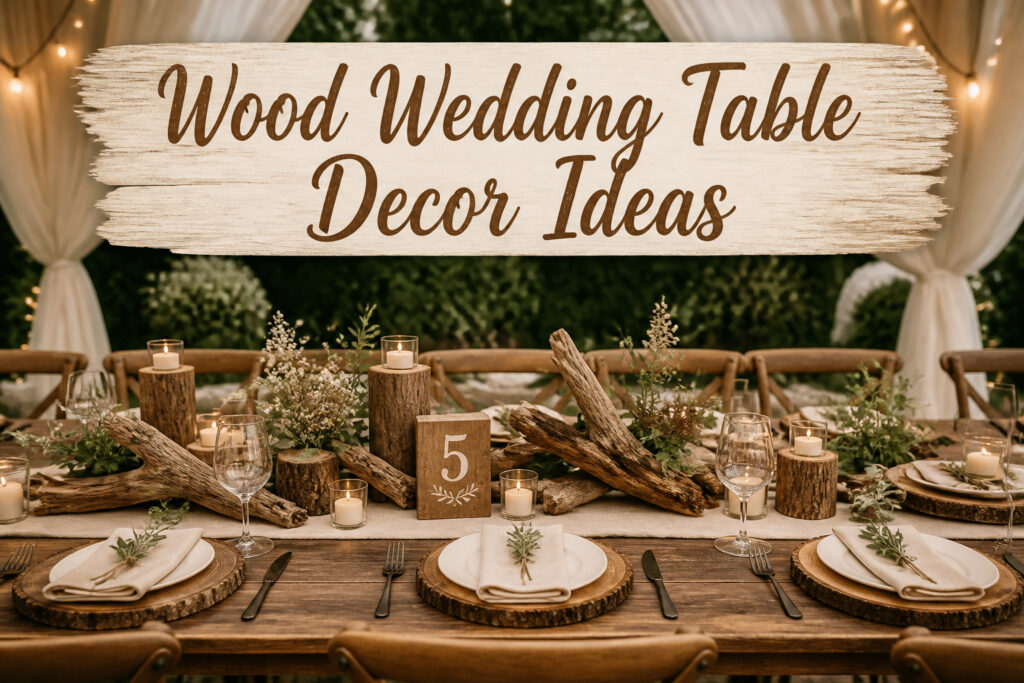
Wood wedding table decor in 2026 runs from free pallet scraps to solid oak chargers, and the only thing that separates the ones guests remember from the ones they ignore is whether the wood stays dry through dinner. Birch logs look pristine at setup until spilled wine and condensation start lifting the bark; felt pads, not sealant, are what actually save them.
1. Wooden Centerpieces with Logs and Branches

Logs, branches, and wooden boxes give centerpieces a structure that fresh flowers alone rarely manage. Birch logs in particular run pale and graphic against dark table linens, which is why I hauled a crate of them to a barn wedding in Vermont in October 2022. The bark looked pristine at setup, but six hours of body heat and spilled wine tested it more than I expected. A few guests knocked rings against the pale surface, and the bark at one end started to lift where condensation pooled from a low candle. The ones that survived best sat on felt pads that kept moisture from wicking upward, and the couple later told me they burned the drier halves in their fireplace that winter. Wooden boxes work on the same principle but give you a cavity to work with; moss, votives, and short-stemmed blooms sit inside rather than on top, so the wood becomes a frame instead of a pedestal. Branches need weight at the base or they read as temporary, which is why I now drill a half-inch hole through any branch over eighteen inches and sink it onto a dowel in a box or log round. The felt pad matters more than the finish; raw birch scuffs, but it does not delaminate the way sealed wood can when the seal fails at the grain.
2. Wooden Table Numbers and Signage
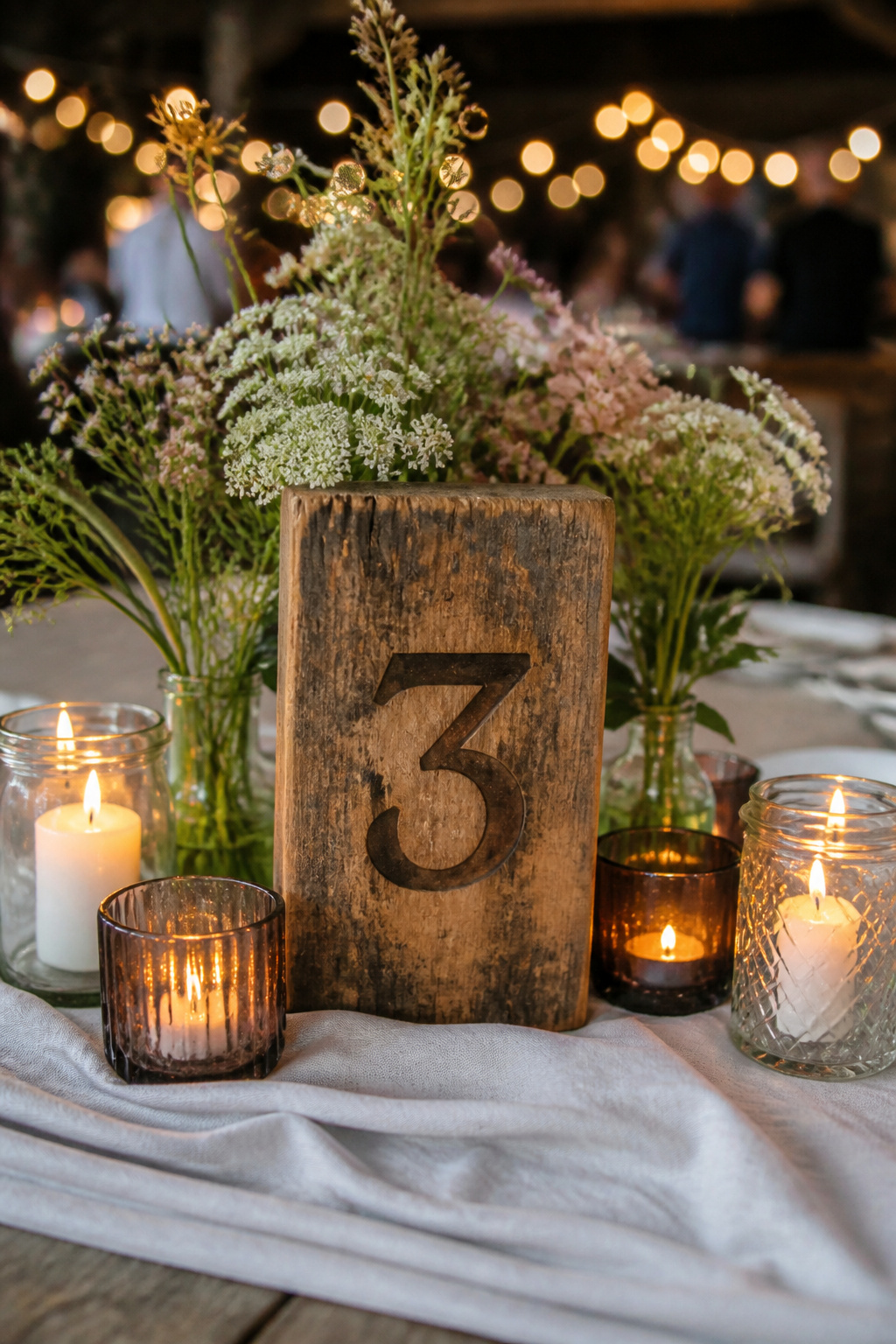
Reclaimed wood table numbers do more than point guests toward their seats; they carry the grain and wear of earlier use, so the rustic character arrives built-in rather than applied. Two approaches consistently stand out: numbers routed or burned into salvaged barn boards, and names drawn from a shared story instead of digits.
At a summer wedding outside Asheville, the couple assigned each table a name from the hikes they had done together, hand-burned into barn wood scraps the groom had collected from his family’s farm. The char sat deep enough to catch candlelight across the room, and guests spent the first ten minutes of cocktail hour circling the tables to read them all. Skip standard numerals if you have any shared vocabulary at all—song titles, street names from your first apartments, breeds of the dog you rescued together. The wood will already look like it holds history; let the words on it do the same.
The risk is legibility. Dark stain on dark grain, or overly ornate script, sends guests wandering. Test the contrast in the actual venue light, not under your kitchen fluorescents.
3. Wooden Chargers and Placemats

Wood chargers and placemats do something ceramic and metal alternatives rarely manage: they make the whole table setting feel intentional rather than assembled. The grain running beneath each plate ties the individual place settings into one continuous visual thread across the table.
I learned the hard way that not all chargers are the standard 13 inches you see at rental warehouses. For a March 2023 wedding, I ordered an 11-inch acacia set without checking the spec sheet. The dinner plates hung over the edges by nearly an inch and a half, which looked like a mistake rather than a design choice. The couple was gracious, but I replaced them with a proper 13-inch set for the reception. That half-inch of wood visible around a standard dinner plate is the difference between a frame for the meal and a base that disappears underneath it.
Thickness matters too. A charger under a quarter inch reads as flatware; half an inch or more gives the plate actual elevation and casts a small shadow that photographs with dimension. For placemats, go thinner, around an eighth inch, or the lip of the plate sits awkwardly high and guests chase food across the table.
4. Crates and Boxes for Floral Arrangements

Wooden crates and boxes give floral arrangements a structure that reads as intentional rather than improvised. The weight of the wood anchors tall centerpieces against a breeze from an open barn door or an overactive air conditioner, and the empty slats let stems fall in loose, uneven lines that look gathered rather than engineered.
I drove up to a farm in upstate New York last May and left with a stack of old apple crates, the kind with finger-width gaps between boards and a faint smell of last autumn’s fruit still trapped in the grain. Each one held four 4-inch mason jars in a neat row, the glass just visible below the crate walls. The setup looked clean at noon, but by hour three the wood had wicked water from two jars that sat a hair off-level. Dark stains feathered up the boards by the time the first guests arrived, and the wet grain swelled enough to make one jar sit crooked. The flowers held fine; the crates just looked older, faster, than I had planned.
If you source used boxes, seal the interior with a clear matte finish or line the bottom with a plastic tray cut to fit. The rustic look survives; the water damage does not have to.
5. Wood Slices as Coasters and Bases

Birch rounds about three inches across work as coasters under glasses or small bases for single-stem vases and bud jars. The flat grain and pale bark edge read as intentional rustic rather than unfinished. For a June 2022 wedding I ordered eighty of them. Twelve arrived cracked, split clean through the pith from dry shipping stress, so order at least fifteen percent extra and check them the day they land, not the week of.
The bigger headache was sap bleed. Fresh-cut rounds wept sticky resin through the first warm afternoon, and glasses left for an hour picked up amber spots that smeared when lifted. Sealing both faces with clear matte poly solved it, but that step added half a day of drying time I had not planned. For coasters, skip anything under two inches thick; thinner rounds cup as they dry and rock on the table. For floral bases, a half-inch hole drilled off-center lets a test tube sit flush without tipping when guests bump the cloth.
6. Wooden Utensils and Serving Dishes

Wooden utensils and serving dishes let you thread the same natural material through the table without adding another visual layer. Salad servers, cheese knives, and bread boards all read as decor that still does a job, which matters when every inch of rented table space counts.
I once photographed a set of olivewood salad servers the couple had ordered for every table. They arrived heavier than expected, almost awkward in the hand, and the weight changed how the pieces sat against the linen. The couple kept them for the head table only and swapped the guest tables for lighter bamboo. The olivewood still photographed beautifully in the close-up shots of their first course, and nobody at the other tables knew they were holding something different.
Serving boards work the same way. A long ash board for charcuterie, a small walnut dish for butter, a teak bowl for bread: each piece grounds the setting without needing flowers or candles beside it. The limit is the food itself. Once the board is empty, it is just wood on wood, so plan the refill or time the photo before the cheese disappears.
Budget-Friendly Reclaimed and Upcycled Wood

Reclaimed and upcycled wood keeps wood wedding table decor from eating the budget whole. Pallet wood costs nothing if you ask a local warehouse or hardware store, and the transformation takes an afternoon with a sander and a $4 can of stain. I watched a groom build directional signs for his reception tables out of three free pallets, a pack of sandpaper, and one quart of dark walnut stain. Total outlay: twelve dollars. The grain showed through, the edges stayed rough, and guests assumed he’d paid a calligrapher or rental company for the look.
The same approach works for table numbers, menu boards, or a welcome sign at the entry. Upcycled barn siding, old fence posts, or shipping crates carry patina that new lumber cannot replicate at any price. The trick is checking for splinters, nails, or chemical treatments before you start sanding. A lead test kit costs $10 and saves you from building decor that no one should lean against.
Aligning Wood Decor with Your Wedding Theme

The same oak slab can read farmhouse or mid-century depending on what sits on top. At one wedding I shot last spring, the couple paired raw-edge oak with burlap runners, mason jars, and dried grass; the wood looked rustic because everything around it was uncomplicated and organic. Three months later, another couple used the identical slab at a venue with clean lines, set it with white linen and simple stoneware, and the grain suddenly looked intentional, almost gallery-like.
The wood itself is neutral; the context decides the theme. For a rustic or farmhouse wedding, the sources keep pointing to simplicity as the guiding trait: hemp, tealight candles, herbs scattered loose. That same restraint, though, reads entirely different when the surrounding palette shifts to matte black or brass.
Let your overall theme guide every choice, not just the wood. The couples whose tables look deliberate are the ones who asked whether each element, from the venue walls to the floral arrangements, was speaking the same language. The ones who treated the slab as a blank stage rather than a statement piece got the cohesion they were after.
DIY Projects for Personal Wood Decor

A $25 woodburning tool and a pack of craft-store birch slices will get you table numbers that guests actually stop to look at. The bride I keep thinking about burned her own table assignments the week before her wedding, freehand, with no lettering template. The lines wandered. Some numbers sat higher on the slice than others, and the darkening was heavier where she lingered too long. The unevenness made them read as something found rather than bought, which was the whole point she was after.
The mistake that saves the project is stopping too early, not too late. A light first pass leaves you room to darken what needs emphasis, but a scorched groove is permanent. Practice on the back of your worst slice until the motion feels loose in your hand. The tool heats to roughly 750°F at its tip, enough to brown birch in under two seconds of contact, so speed matters more than pressure.
For signage, a soft pine plank from the hardware store runs about eight dollars and takes stain unevenly in a way that looks deliberate if you skip the pre-stain conditioner. Burn your "Welcome" or your menu headers directly into that raw surface, then seal with a matte polyurethane so the char does not rub off on white napkins. The total per sign lands under fifteen dollars, and the time cost is an evening with a podcast running.
Frequently Asked Questions
What are the essential elements of a wedding table setting?
A wedding table setting needs plates, silverware, and napkins at minimum. Chargers, tablecloths, floral arrangements, candles, and decor pieces like wood wedding table decor complete the look. Wood elements in particular, such as chargers or serving boards, tie individual place settings into one continuous visual thread across the table.
How do I choose the right table setting for my venue and season?
Think about the overall mood and how your reception decor fits within your venue and the rest of your aesthetic choices. The same oak slab can read farmhouse or mid-century depending on what surrounds it; raw-edge oak with burlap and mason jars looks rustic, while the identical slab with white linen and stoneware reads gallery-like. Let your overall theme guide every choice so each element speaks the same language.
How do rentals versus purchased décor differ for tableware in a reception?
Rentals are typically necessary for weddings larger than 50 guests to avoid waste, while purchasing may work for smaller events if you have storage and a plan for the pieces afterward. For wood wedding table decor specifically, buying select pieces like a $8 pine plank and a $25 woodburning tool for DIY signage can cost less than rentals, and you keep the finished piece.