Winter wedding dresses run from a satin ballgown with crystal beading down to a tea-length hem, and the fabric you pick matters more than the silhouette.
Satin blocks wind through an open church door, crepe holds structure without bulk, and the same lace bodice that feels heavy in July reads exactly right at 40 degrees.
What narrows the list is whether your ceremony stays indoors or sends you into slush for portraits, because a fur wrap you can shed for dancing and a long-sleeved crepe gown solve different problems in different spaces.
1. Satin Ballgowns
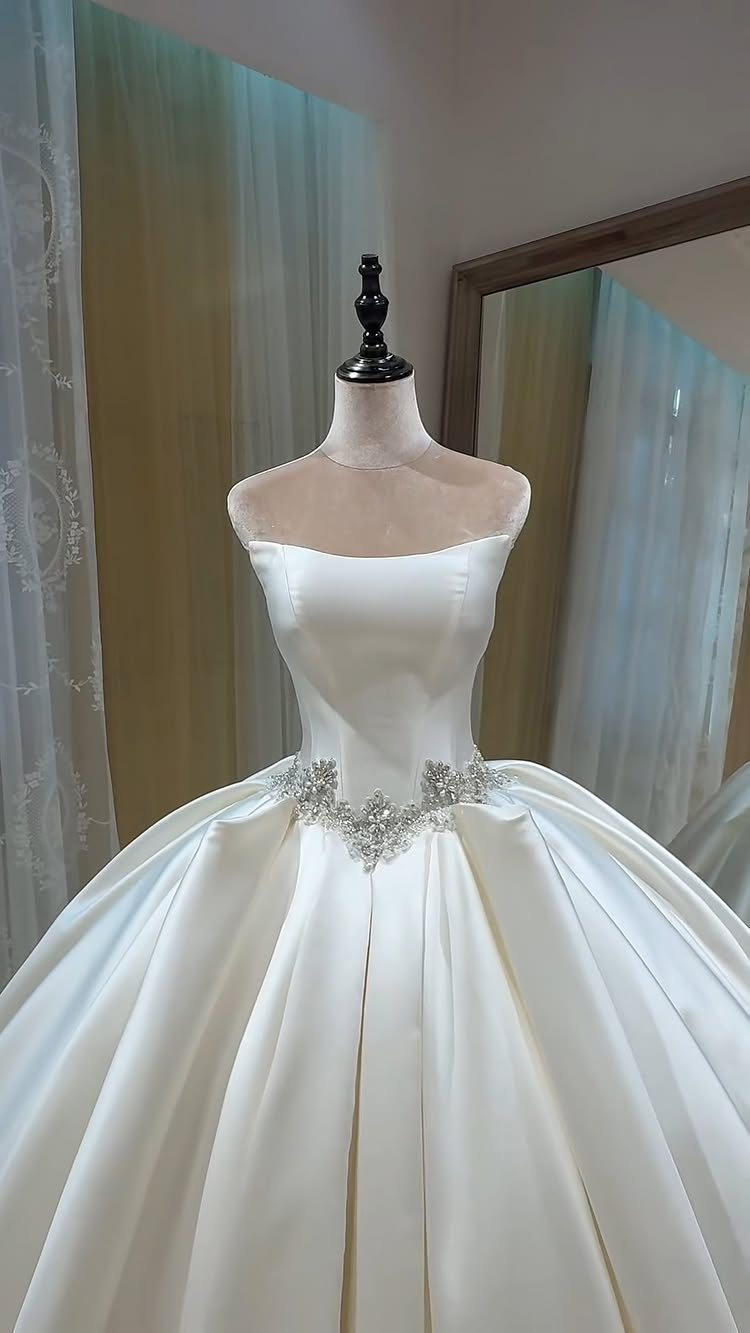
Satin ballgowns carry weight and warmth that lighter fabrics lose by December. The fabric catches low winter light differently than tulle, and the skirt’s volume traps air against your legs during outdoor portraits.
A basque waistline with crystal beading draws the eye upward and adds structure that photographs cleanly against white backgrounds.
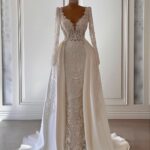
Long sleeves or an off-the-shoulder neckline balance the skirt’s fullness; the Yaroslava dress by Rara Avis pairs a high-neck lace bodice with satin in exactly this proportion.
2. Lace Wedding Dresses
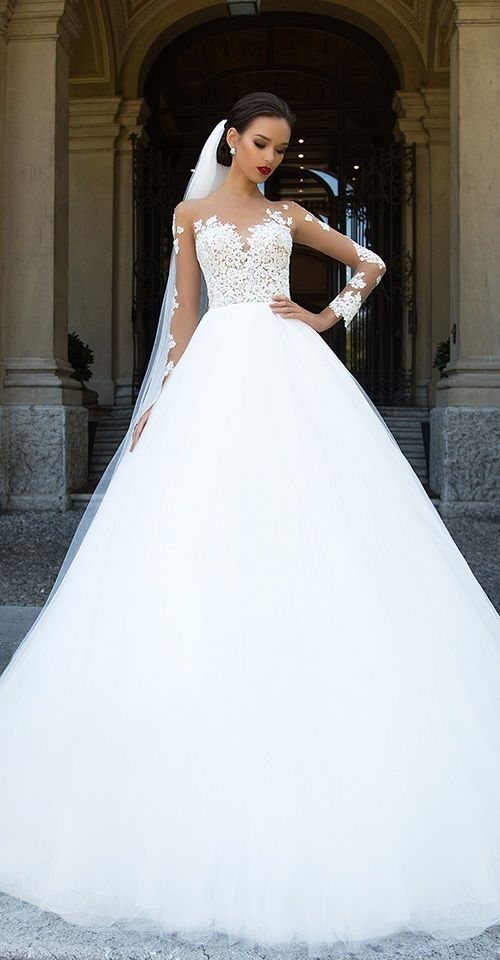
Lace reads as bridal in any season, but winter gives it a specific advantage: the same bodice that looks heavy in July feels appropriate when the thermometer drops.
Sheer long sleeves with floral appliqué, as in the Milla Nova styles, give coverage without the bulk of a separate jacket.
Lace needs more care than satin or crepe.
Lace snags on evergreen branches and catches on rough stone; if your ceremony or photos move through a garden or historic venue, bring a steamer and assign someone to check the train between shots.
Floral embroidery raises the price tier, but plain allover lace photographs nearly as well and leaves room in the budget for alterations.
3. A-line Dresses
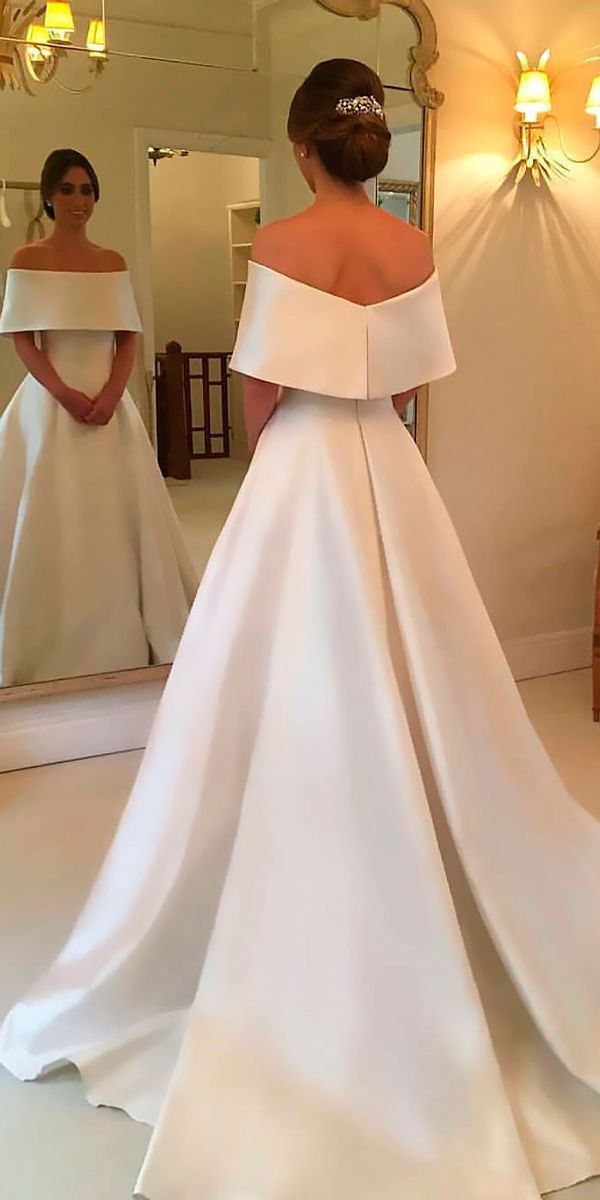
An A-line skirt falls from the natural waist or lower, leaving room for thermal leggings underneath without changing the silhouette.
An off-the-shoulder satin bodice shows one approach; a deep V-neck with long sleeves, per the Ester style, offers another for brides who want coverage without a high neck.
This shape suits nearly every figure, which matters when you’re ordering online or buying sample without time for alterations.
Puff sleeves and tiered tulle read more bohemian; mikado or plain satin reads more formal. Decide which side of that line your wedding falls on before you choose fabric.
4. Tea-length Dresses
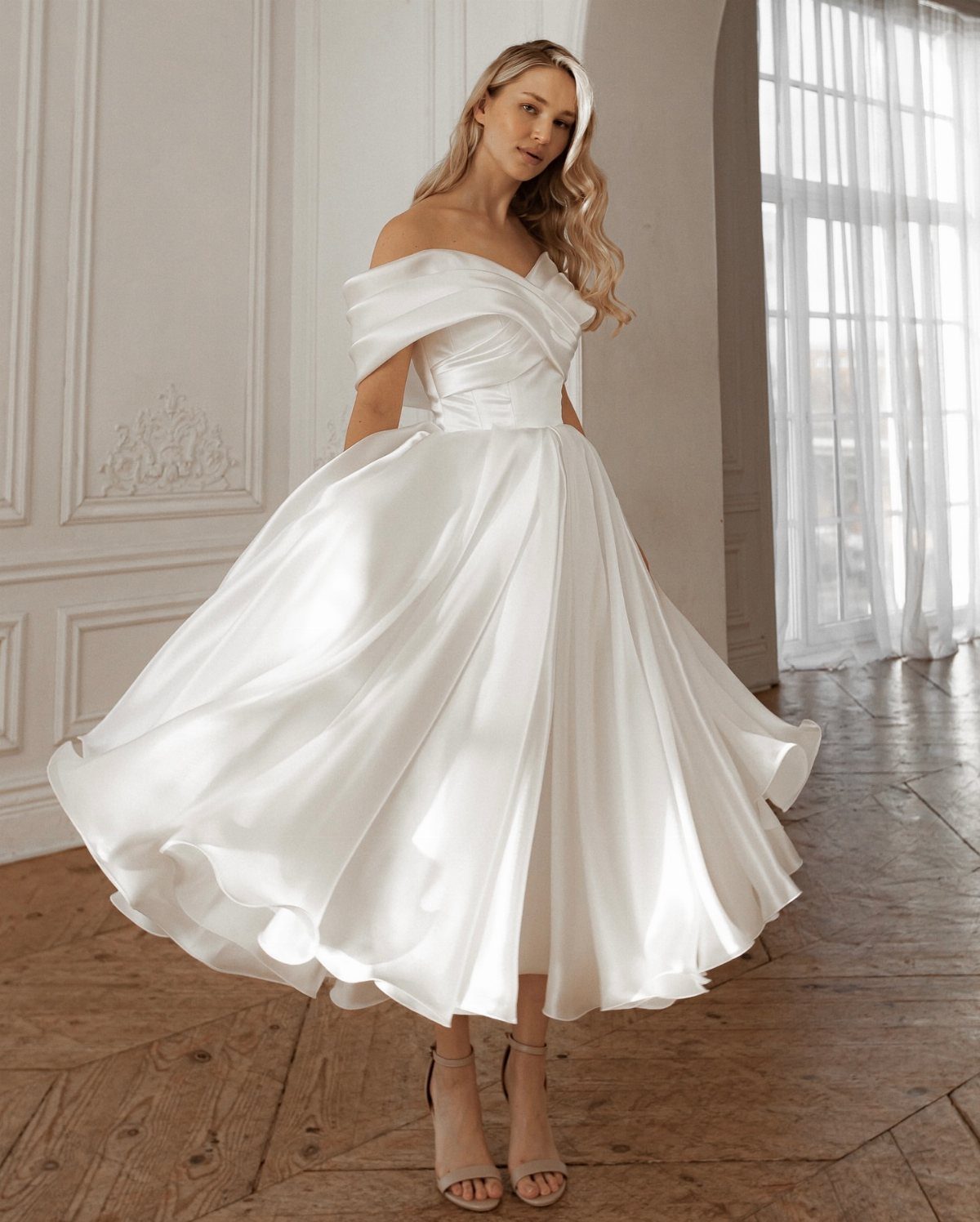
A hem that hits mid-calf exposes more leg than most winter brides expect, but the gain is mobility for dancing and no train to manage in slush.
An off-the-shoulder satin skirt, paired with a fur wrap between locations, solves the warmth problem without losing the look.
The 50s silhouette in the second reference runs shorter still, at true midi length.
That version needs careful undergarment choice; a full petticoat shows at the hem if the skirt is too sheer. Budget tip: tea-length gowns often cost less than floor-length from the same designer, and alterations are simpler.
5. Wedding Dresses with Faux Fur Wraps
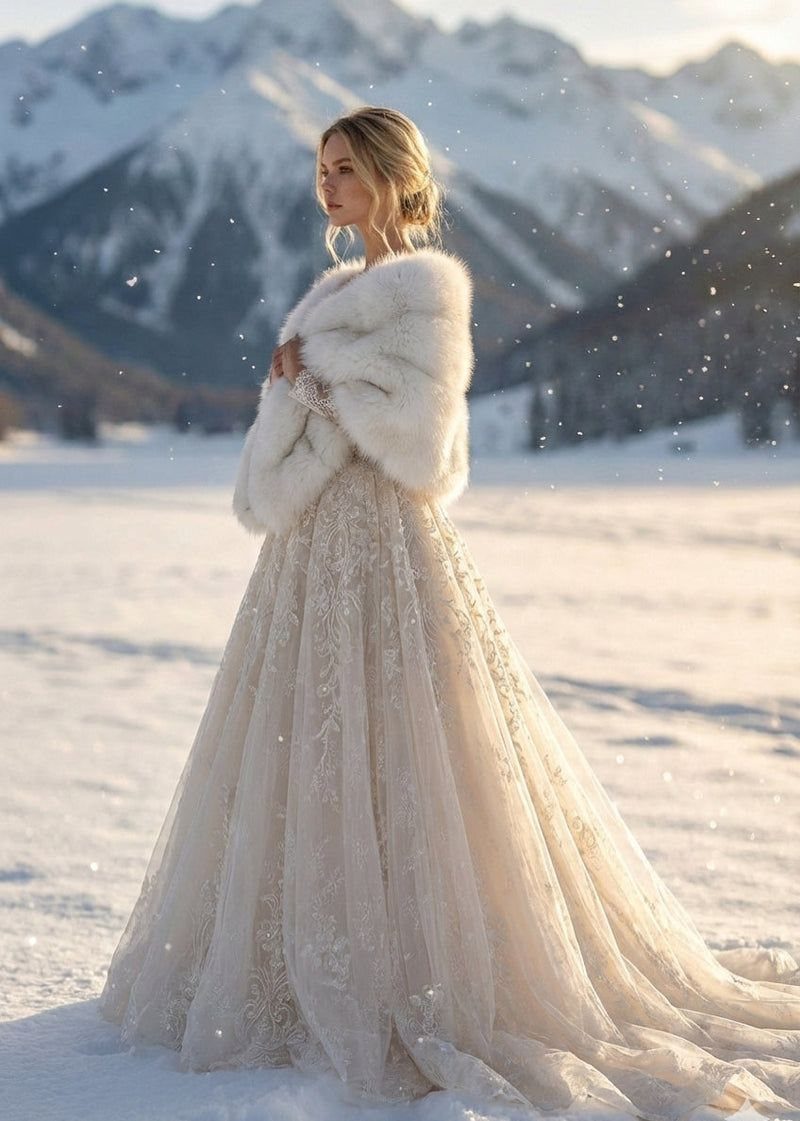
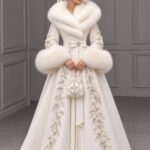
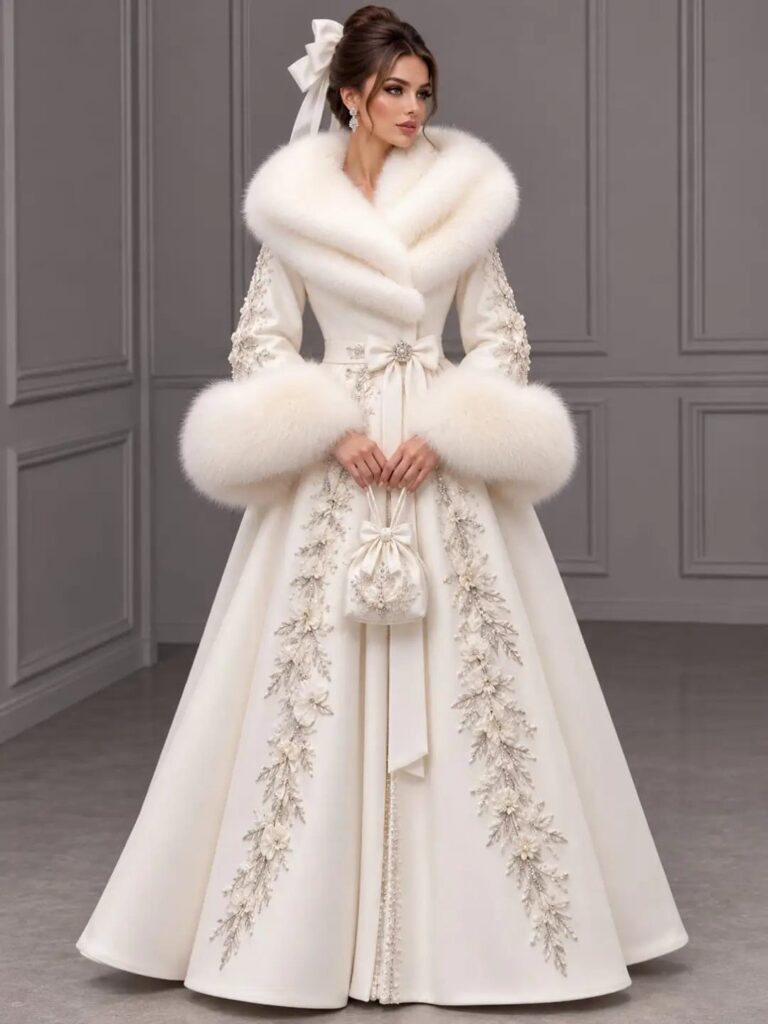
A faux fur stole turns any gown into a winter gown, which matters when you fell in love with a sleeveless dress in July and the wedding moved to January.
A white wrap is the standard choice, but ivory or even pale gray reads richer against snow and repeats in fewer formal photos.
Check the fiber content before ordering. Acrylic sheds; modacrylic or polyester blends hold their pile through an evening of hugging guests.
The stole should fasten or sit securely on the shoulders; one that slips requires constant adjustment and shows tension in every candid shot. A long veil and structured bouquet, as in the reference, balance the wrap’s volume.
6. Long-sleeved Wedding Gowns
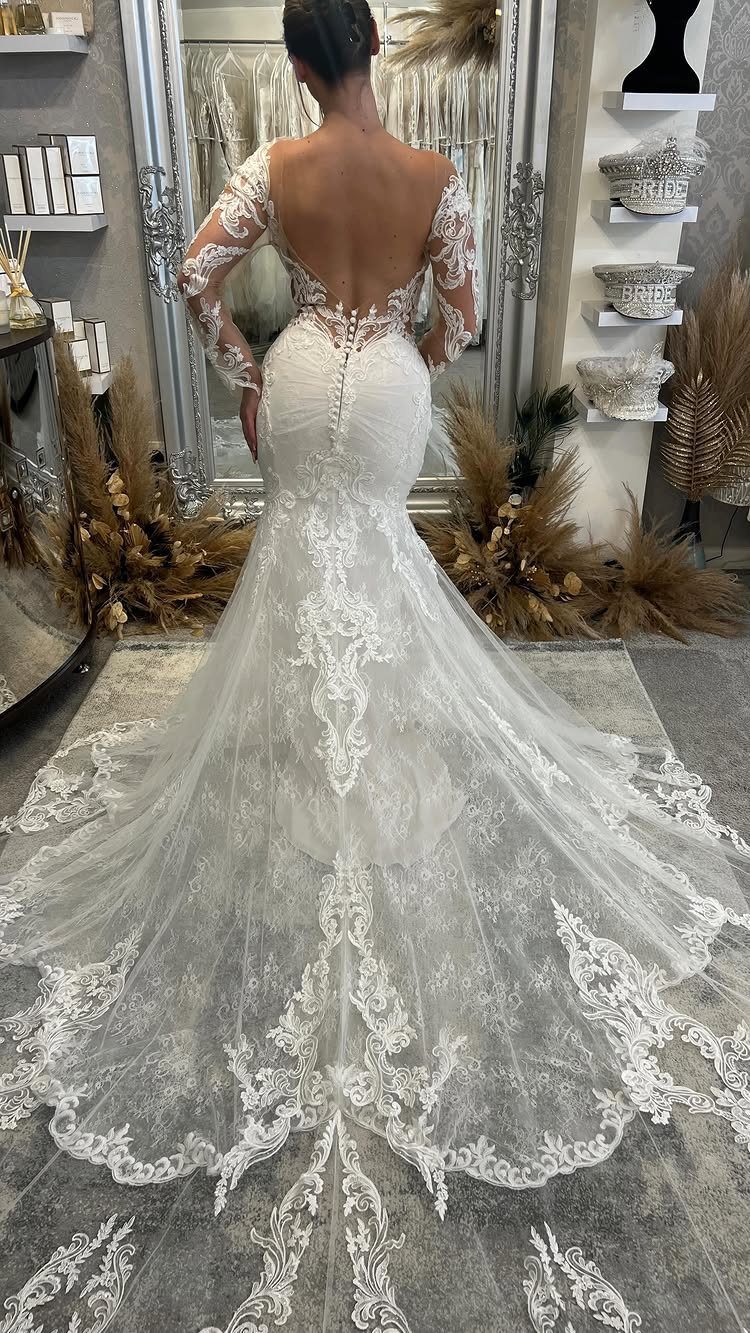
Long sleeves solve the winter problem directly: no separate cover-up to keep track of, no gap between glove and gown.
Lace sleeves on a fitted mermaid gown show the arm’s shape; crepe or chiffon sleeves read more modest and move differently.
The open back in the visible gown trades warmth for photographability, which is a choice only the bride can make.
For a ceremony in an unheated chapel or outdoor vows, a high neck and closed back in a heavier fabric like crepe retains more heat.
Embroidery and beading add weight and cost; plain sleeves in good fabric photograph cleanly and leave budget for alterations.
7. Mermaid Silhouettes
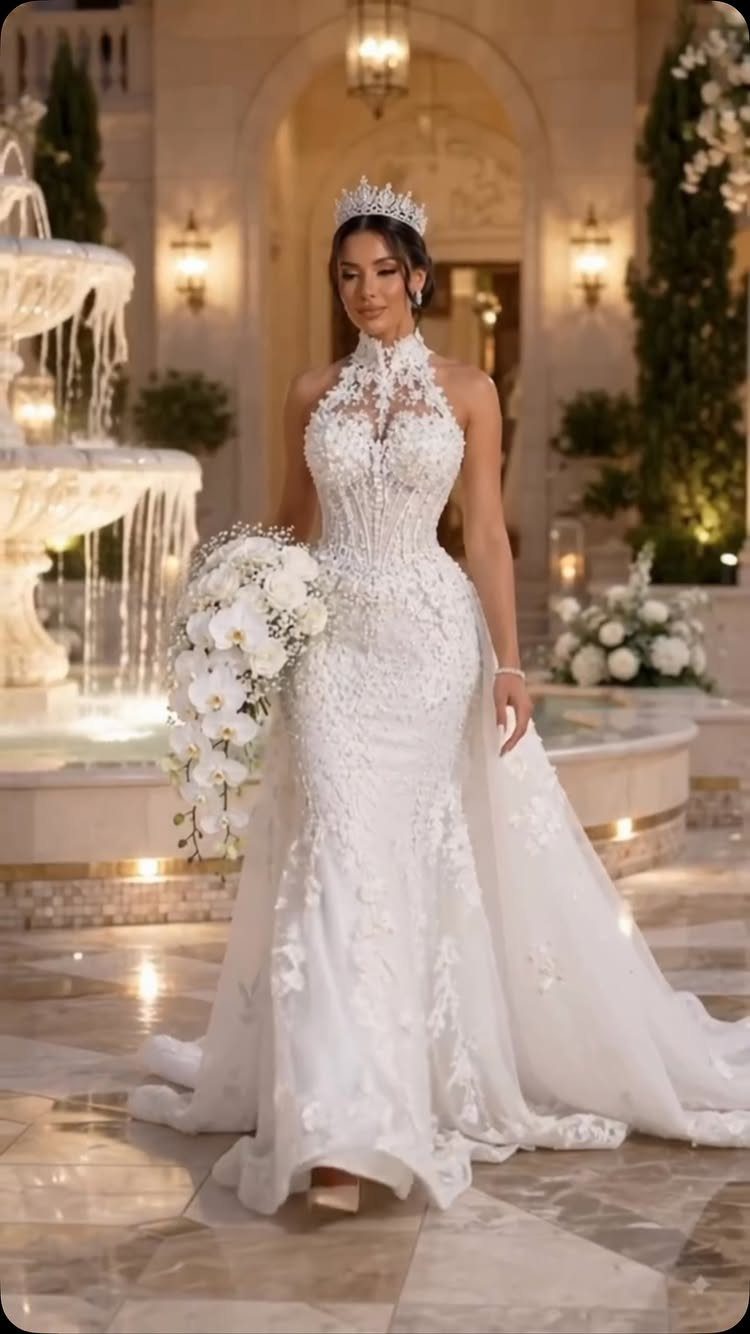
The mermaid silhouette holds the body close through the torso and hips, then flares below the knee with enough drama to justify a winter ballroom.
Sheer lace long sleeves with floral appliqués, as in the first reference, give coverage while keeping the fitted line intact; the lace trim along the train edge catches candlelight in a way plain fabric does not.
Crepe holds structure for the skirt flare but needs careful pressing before the ceremony.
An open back trades warmth for a line of photography down the spine; if your venue runs cold, a high neck and closed back in the same crepe keeps heat where the silhouette needs it.
The tiara and cascading bouquet shown balance the skirt’s volume without adding bulk at the waist.
Choosing Fabrics for Warmth
Satin, lace, and crepe each handle cold differently, and the choice matters more than the label suggests.
Satin traps still air against the body because of its tight weave and weight; the same density that gives it that low light catch in December photos also blocks wind through an open church door.
Crepe holds structure without the bulk, which helps in a fitted silhouette where satin would add pounds to the line.
Lace varies most of all: a dense allover pattern with backing runs warmer than sheer floral appliqué floating on mesh, though both read as lace in a catalog photo.
What surprised me in comparing sources was how little mention tulle and chiffon get for winter bridal wear.
Notes on guest dressing suggest layering knits under lighter pieces, but that approach works less cleanly for a bride where every line shows. Heavier fabrics solve the problem at the source rather than compensating after.
Accessorizing for Winter Weddings
A wrap or stole does more than add warmth; it changes the color temperature of your whole look against snow.
White, ivory, and pale gray all read as options, and the choice between them matters more than most brides realize until they see photos.
Gloves carry a practical problem the list entries do not address: the gap. A long sleeve ends at the wrist bone; a glove starts there or higher, but the transition shows in photos where arms bend.
The solution is either a sleeve that extends to cover the gap, as in the long-sleeved gown entries, or a glove long enough to tuck under the sleeve edge.
Fingerless lace gloves solve nothing; they keep no part of the hand warm and add visual clutter.
The knit sweater over a gown, suggested in one Pinterest note for courthouse dressing, reads differently at a formal winter wedding.
It works for a morning civil ceremony, less so for evening candlelight where the texture competes with the dress itself.
Color Palettes for Winter Weddings
Jewel tones for guests and classic white for brides creates a tension worth naming.
A bride in pure white surrounded by guests in emerald, burgundy, and sapphire reads as the center of the composition; the same bride in ivory or blush against those tones risks looking like another guest who chose poorly.
If your dress runs warm in undertone, test it against the swatches your bridesmaids are considering, not in isolation.
Velvet for a bride is possible but heavy; the pile reads luxurious in candlelight and dated in flash photography.
If your photographer uses mostly natural light or film, the risk lessens. For digital with on-camera flash, satin or crepe handle the light more predictably.
Layering for Warmth
Wraps and stoles count as accessories; layering as structure means something else.
A separate coat or jacket that reads as part of the look rather than an afterthought takes planning. Notes on guest dressing emphasize chic outerwear, and the same logic applies to a bride moving between locations.
The problem is proportion.
A ballgown skirt fills a car door; adding a fitted coat over it requires either a coat cut to the same volume, which most women do not own, or a cape or cloak that drapes over the whole silhouette.
The faux fur wrap entries solve this for the shoulders and upper body only; for full coverage, a lined velvet cloak or wool cape with a hood handles snow and wind without crushing the skirt’s shape underneath.
For a bride, this means a fine cashmere turtleneck under a sleeveless crepe gown, or a thin merino layer beneath a lace bodice.
Fiber weight thin enough to disappear under the dress line limits the warmth gained. This approach suits a heated indoor ceremony with brief outdoor portraits, not a full outdoor winter service.
Frequently Asked Questions
What do brides wear in a winter wedding?
Brides tend toward long-sleeved gowns, satin ballgowns, and lace dresses with coverage. A faux fur wrap or stole can turn any gown into a winter piece, which helps when plans shift from summer to January.
What are the wedding dress trends for winter 2026?
Long sleeves, rich colors, and heavier fabrics are the directions for 2025-2026, with Pinterest boards tracking elegant long-sleeve styles, courthouse chic, and boho coverups.
Jewel-toned guest dressing against a white or ivory bride creates a composition where the bride reads as center; testing your dress undertone against bridesmaid swatches matters more than chasing the season’s stated look.