These ideas run from a free favor in a friend’s garage to a vintage car rental, and the one that belongs in your wedding depends on whether you have a few minutes to set up a shot or longer to wait for the right light.
Smoke bombs fail half the time, a crossed-heel ring detail needs to happen before anyone walks in the shoes, and the best smiles and hugs come when nobody knows the camera is there.
1. Bridesmaids in Robes
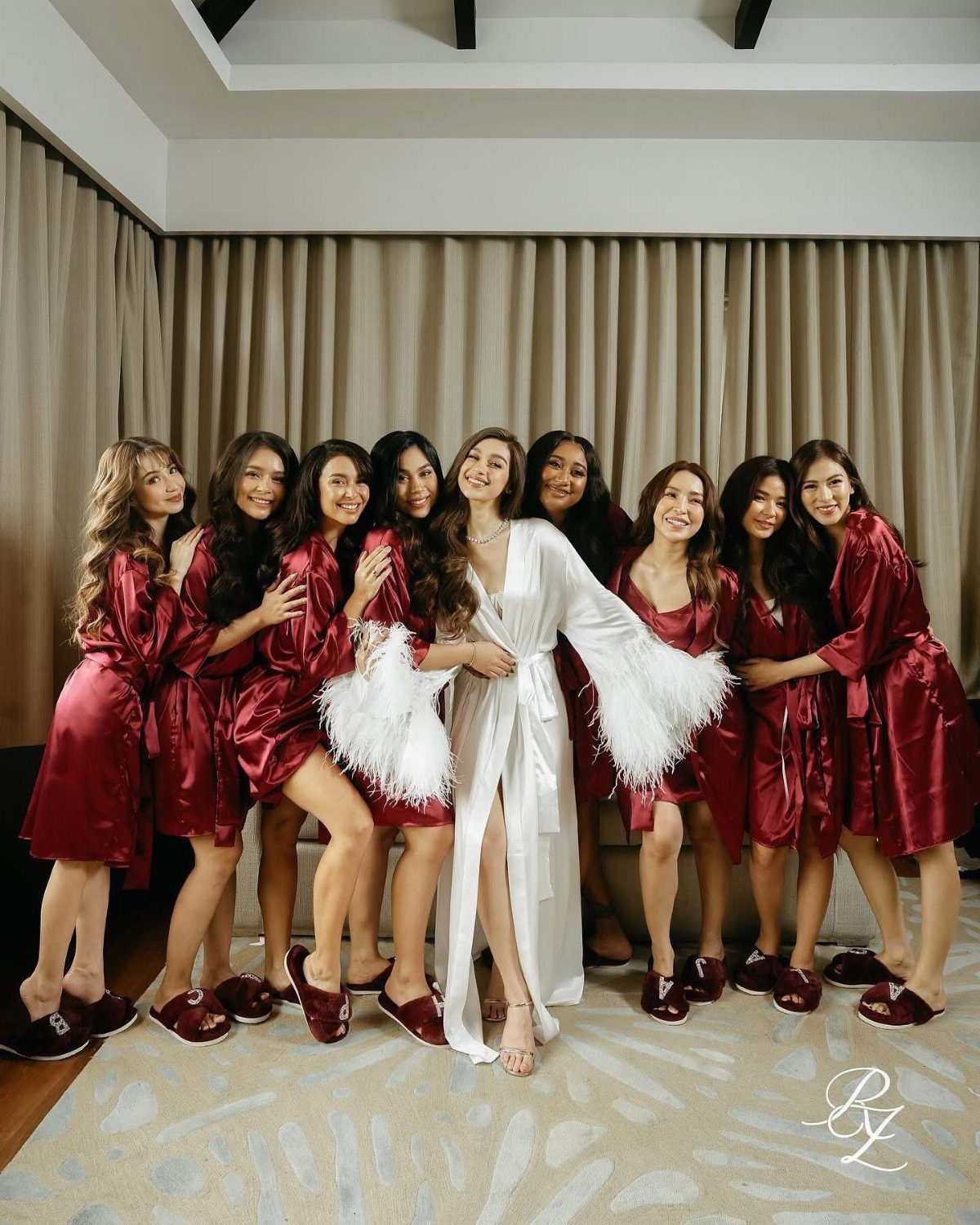
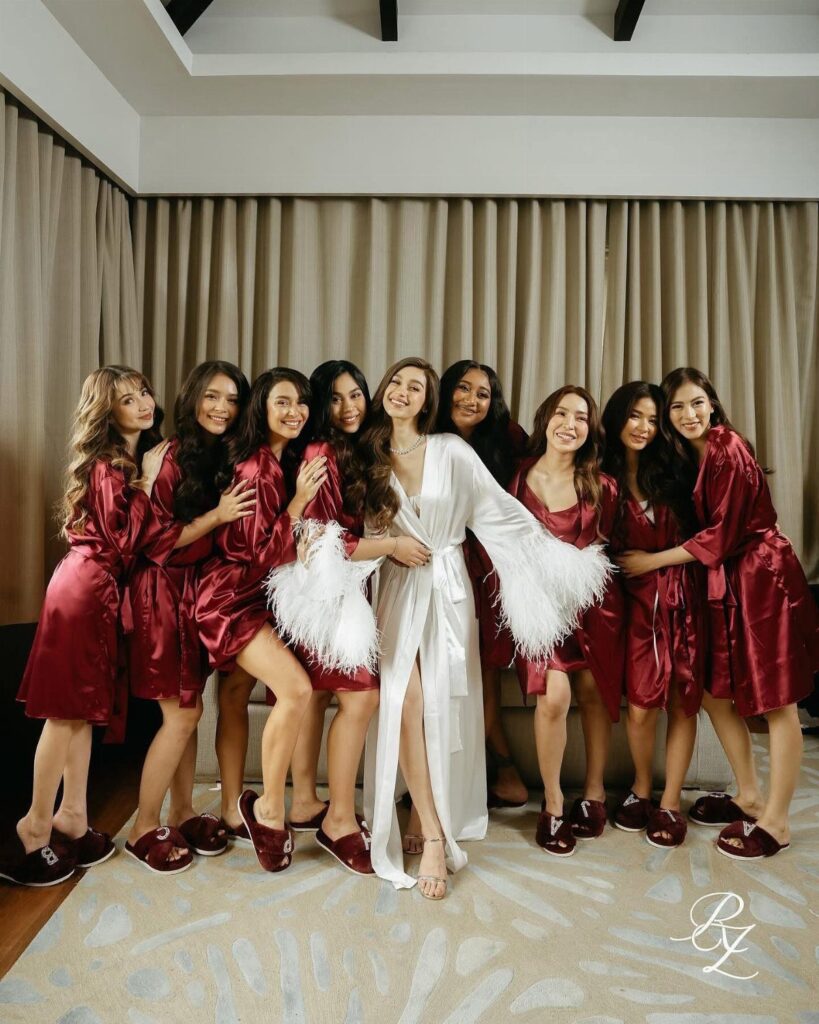
A getting-ready shot with your bridesmaids in matching robes turns the chaos of the morning into something worth framing.
The bride wears white, the bridesmaids wear a single color, and the wedding dresses hang nearby where they can catch the light.
Maroon satin photographs warm against almost any wall color, but the real choice is coordination, not shade.
Pick one color for the whole party and a fabric that reads as dressy even in a hotel room. Satin or silk works; cotton reads as pajamas.
If the dresses are nearby, hang them on matching hangers at staggered heights so they do not block faces. The photo needs a short setup and one clean corner.
2. Unplanned Shots of Smiles, Tears, Hugs
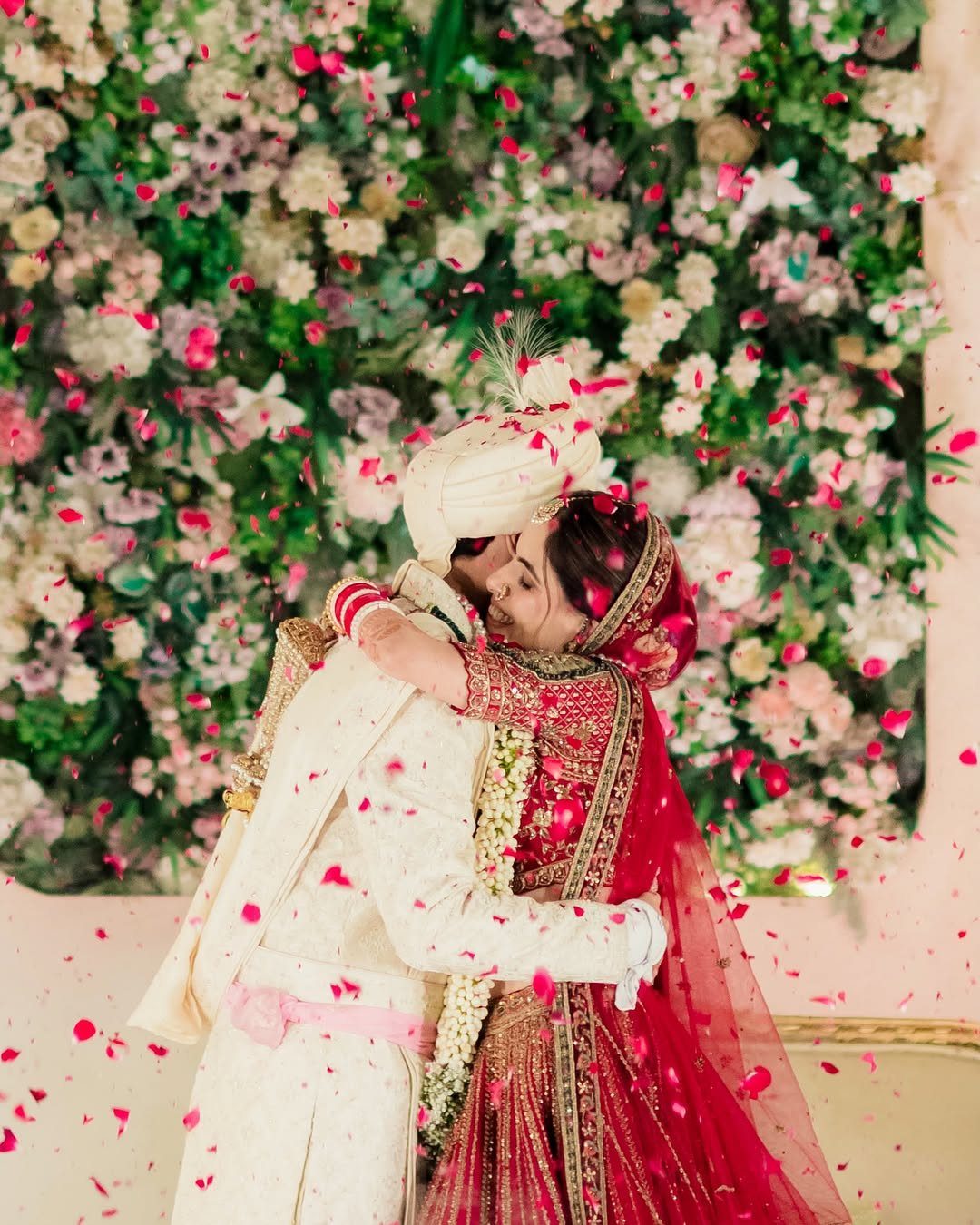
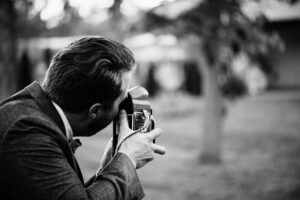
Guest cameras catch what the hired photographer cannot be everywhere to see.
I hand out disposable cameras at the welcome table with a short note asking for the unplanned moments: the hug that lasts too long, the laugh that crinkles eyes, the tear wiped away before anyone notices.
No posing, no hashtags, no app to download.
You lose some polish, but you gain sincerity.
A phone shot in bad light with real emotion beats a perfect portrait with a stiff smile. Collect the cameras at the end of the night and develop them all, even the blurry ones.
3. Vintage Vehicle Prop
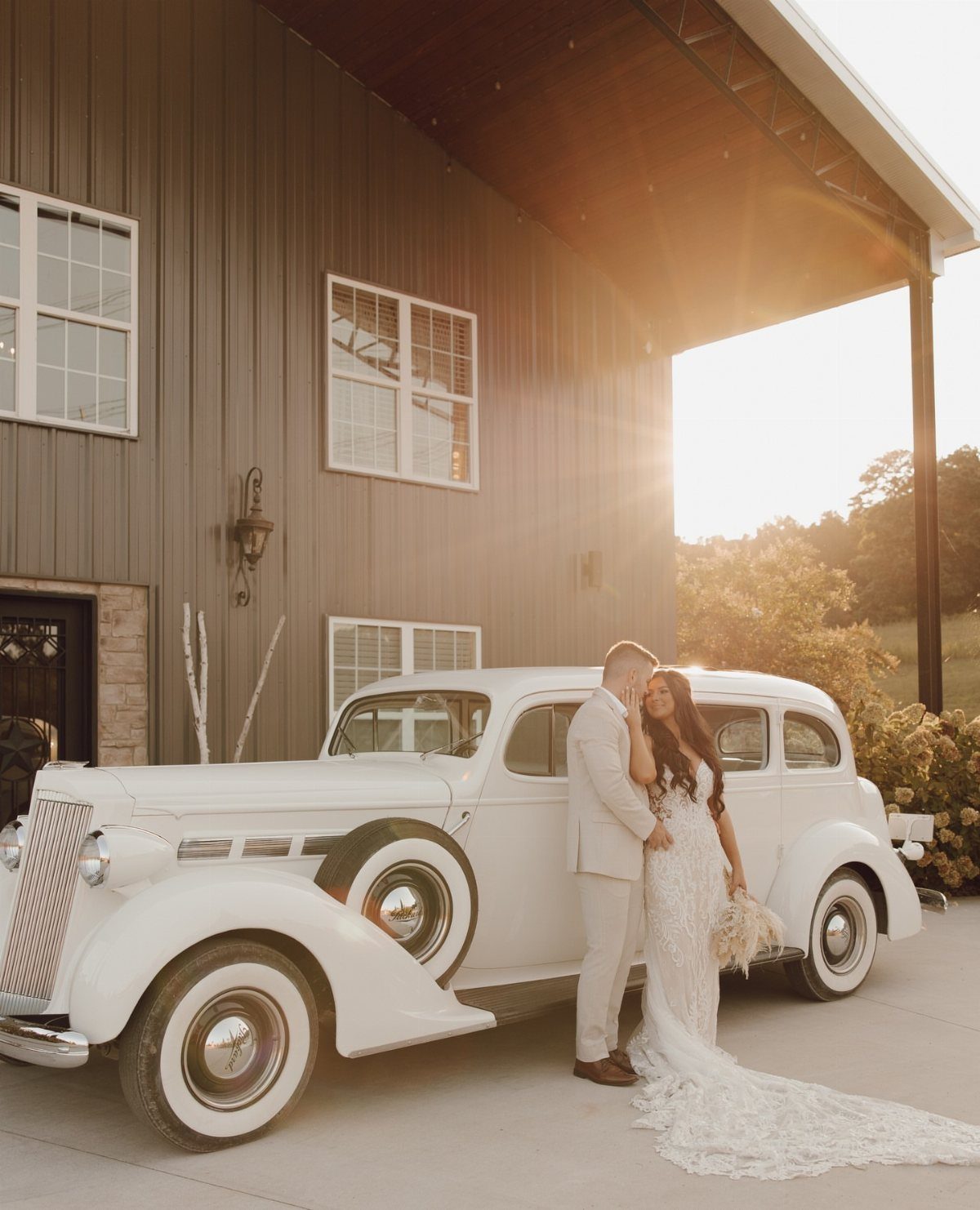
A vintage car gives a couple something to lean against, something to step out of, something to break the open-field stare that outdoor portraits fall into. A white Packard against a modern barn somehow makes both look better.
Bright colors work harder than black or cream in photographs, especially at golden hour when the light goes warm.
The vehicle does not need to run; it needs to park where the background is clean and the sun hits the paint. Ask the owner or rental company to arrive early enough to position it before guests do.
The cost runs a few hundred for a static prop, more if you want it for the getaway. For couples on a modest budget, a friend with a restored classic and a full tank of gas is the better move.
4. Colorful Smoke Bomb Backdrop
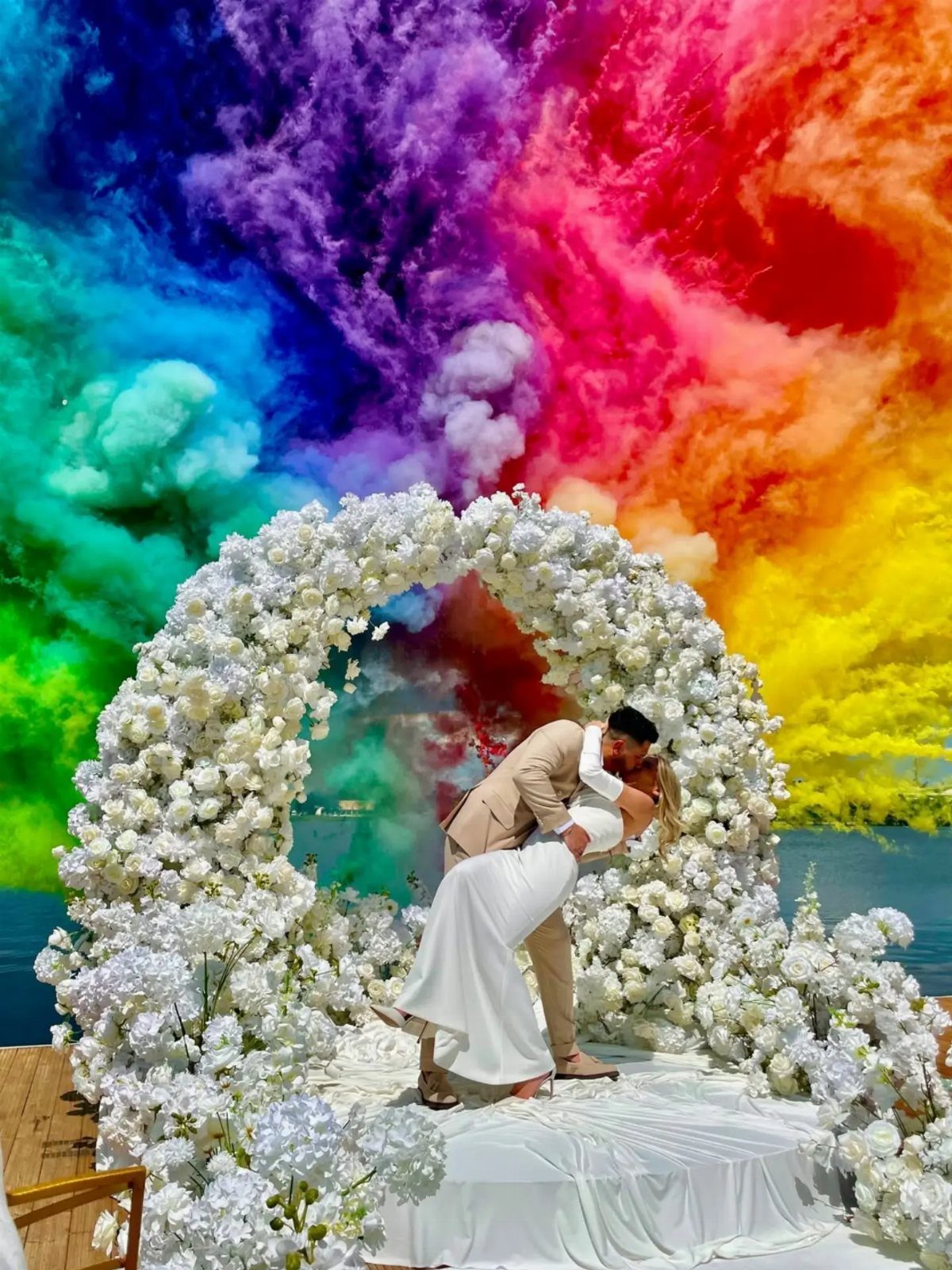
Smoke bombs turn a standard portrait into something that looks planned by a special-effects team. A couple under a white arch with colored smoke billowing behind them over water reads as celebration rather than stunt.
Check local fire codes before buying; some venues ban them outright and some require permits.
Wind direction matters more than you think: smoke drifts toward the camera or the guests, never where you want it. The photographer needs a fast shutter to freeze the color before it turns to haze.
I would test one bomb well before, not the morning of, and buy more than the math says you need. Half fail to light, half blow the wrong way, and the keeper rate is low.
5. Backlit Glowing Veil Portrait
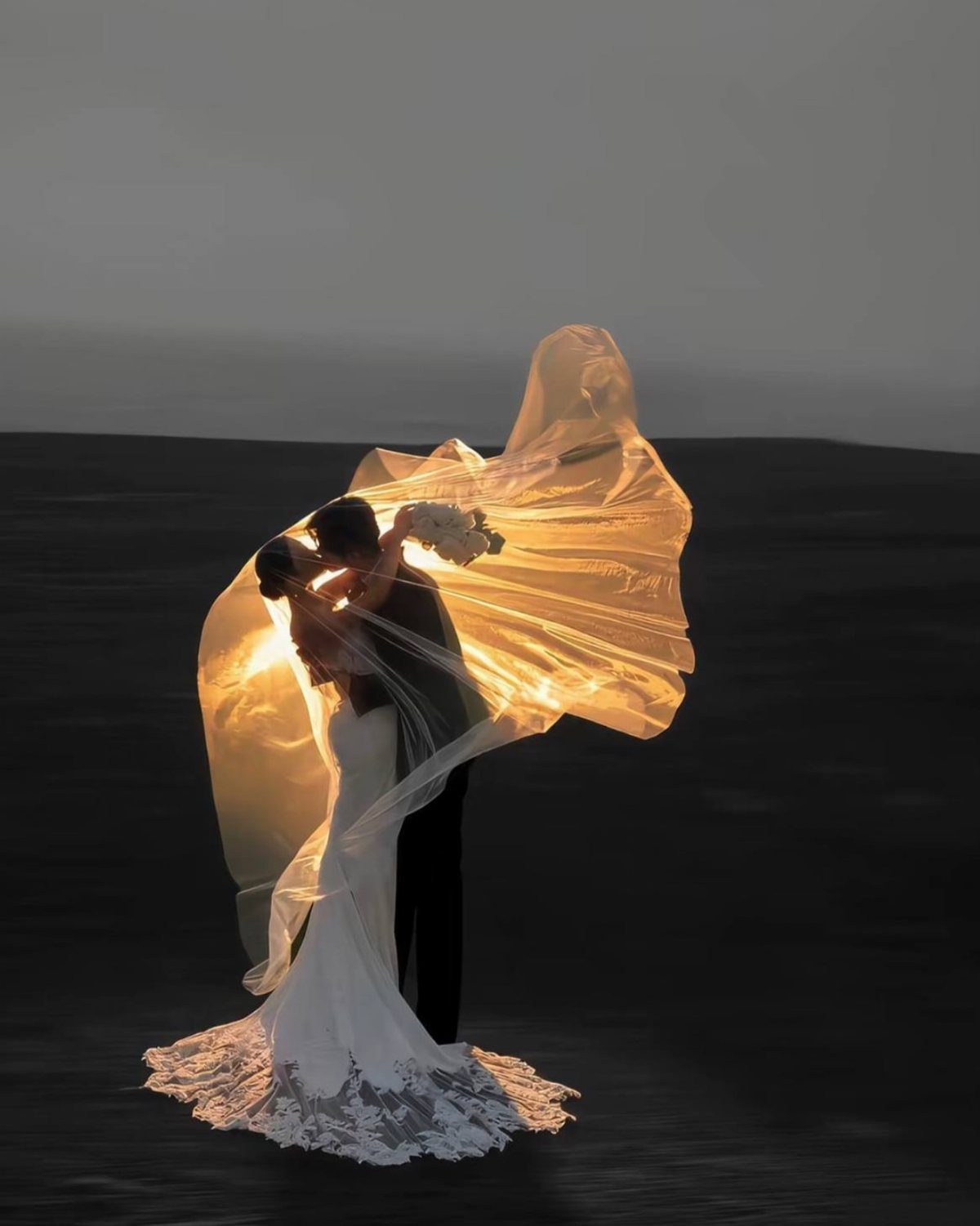
A veil lit from behind turns into a lantern at dusk, and the couple inside it becomes a silhouette with edges.
The veil billowing means wind or an assistant with a fan, and the light source placed low enough to glow through the fabric rather than blow out the top.
A single thick layer goes hot in spots. The shot needs darkness behind the couple, so this works after sunset or against deep shadow, not against a lit building.
I would plan this for the minutes after the sun drops, when the sky still has color but the foreground needs its own light. Miss that window and you are holding a flash in a field for an hour.
6. Motorcycle Getaway Photo
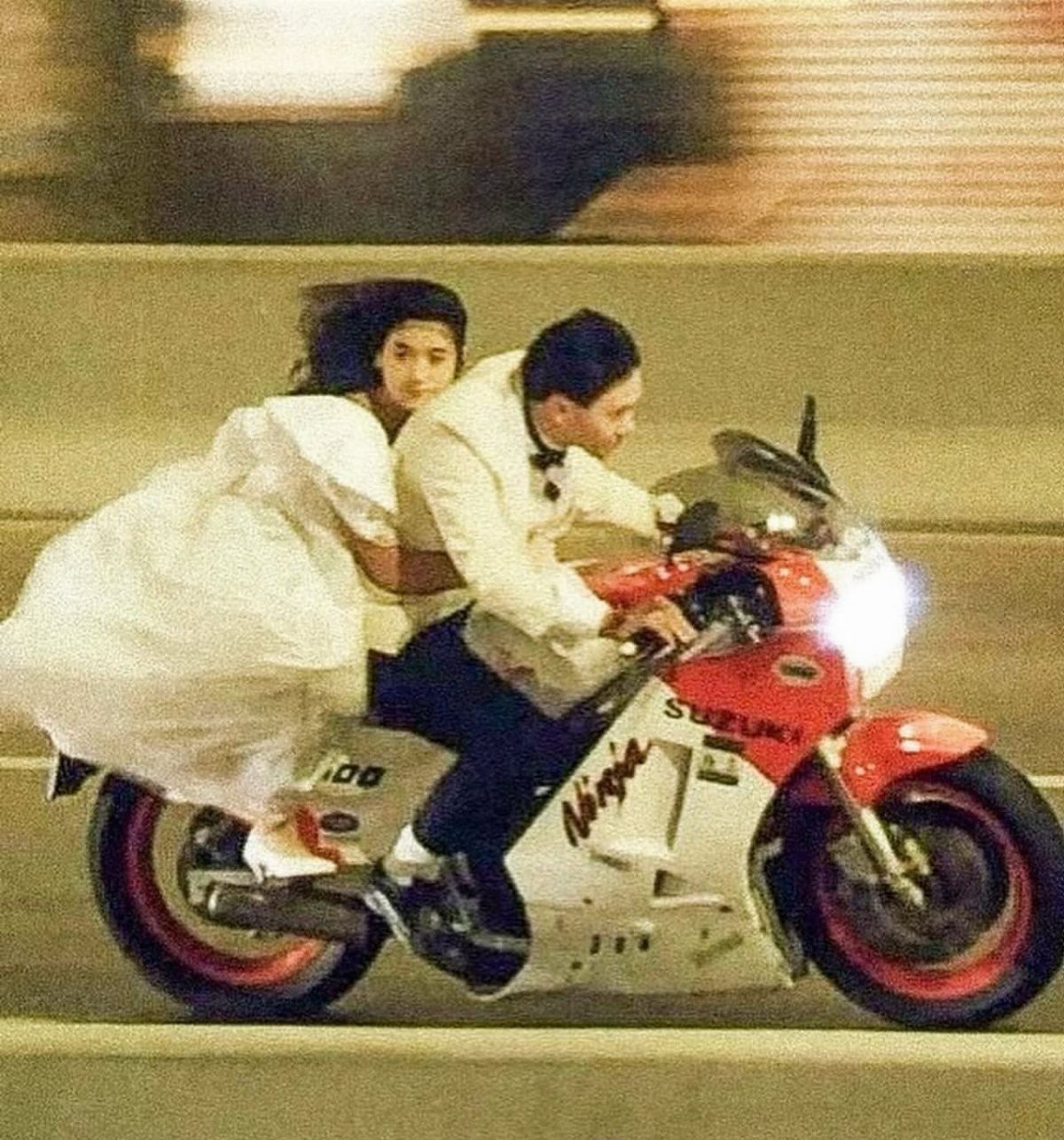
A motorcycle getaway in full wedding dress is the kind of idea that sounds better in planning than it photographs, until you see a shot like this: the bride in white straddling the seat behind the groom, the bike itself in red and white, the road empty enough to read as escape.
The dress is the problem.
Fabric catches in the chain, drags on the exhaust, balloons at speed. The groom in a tuxedo risks oil on the trousers before the reception starts.
Safety gear does not photograph well, so this is a low-speed roll for the camera, not the highway home. Check that your insurance covers a passenger in formalwear, or borrow a bike from a friend who will not sue.
7. Framed Ring Silhouette Composition
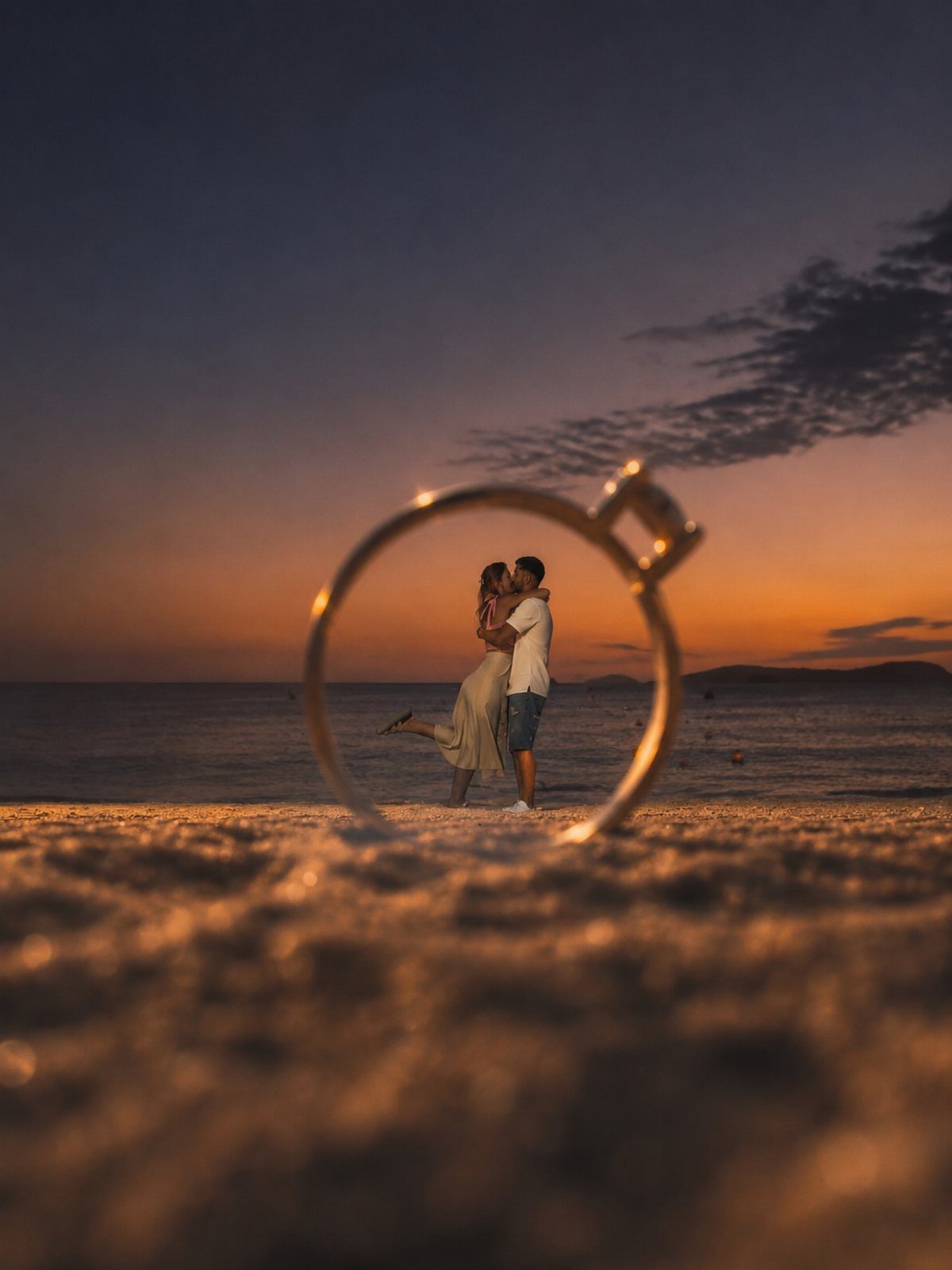
A large ring placed in the foreground turns a sunset beach portrait into a view through a porthole, with the couple kissing inside the circle.
This needs a narrow aperture and a patient assistant to hold the ring steady until the focus locks on both planes. Sand is unforgiving; bring a cloth to wipe the metal between tries.
I would use an oversized display ring, not the real band, and shoot while the sky still carries color before the sun drops below the horizon.
8. High-contrast Silhouette with Rings
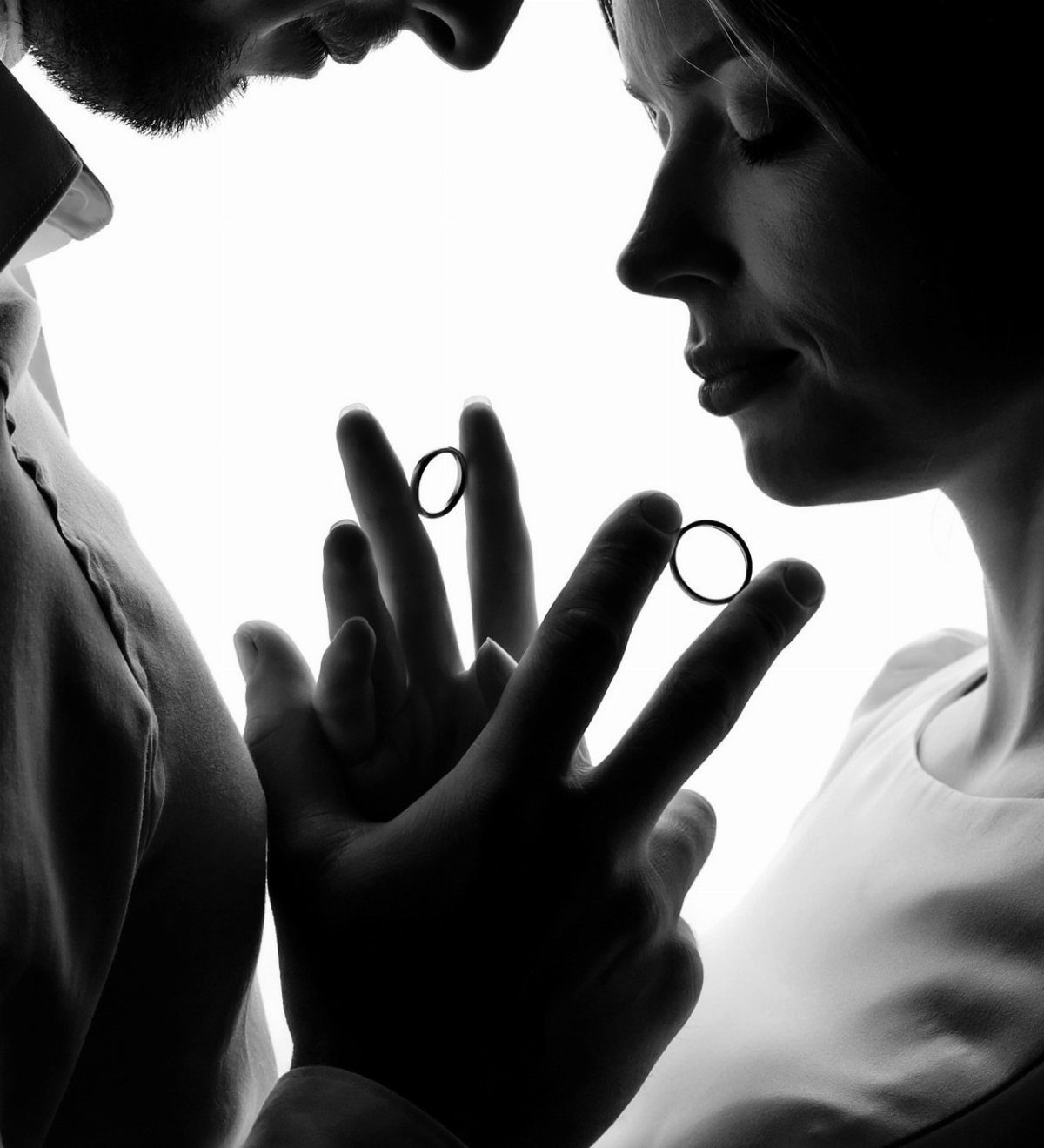
Two hands become one shape in black and white, the wedding bands catching light between fingertips where the silhouette breaks.
A pure white background and a single hard light source behind the couple give the edge you need. Their bodies block the light; their hands, held forward, let it through around the rings.
This is a studio shot, not a location one, and the couple must stand close enough that no gap shows between them. A tripod helps, since the pose is awkward to hold and the depth of field is thin.
9. Crossed Heels Ring Detail
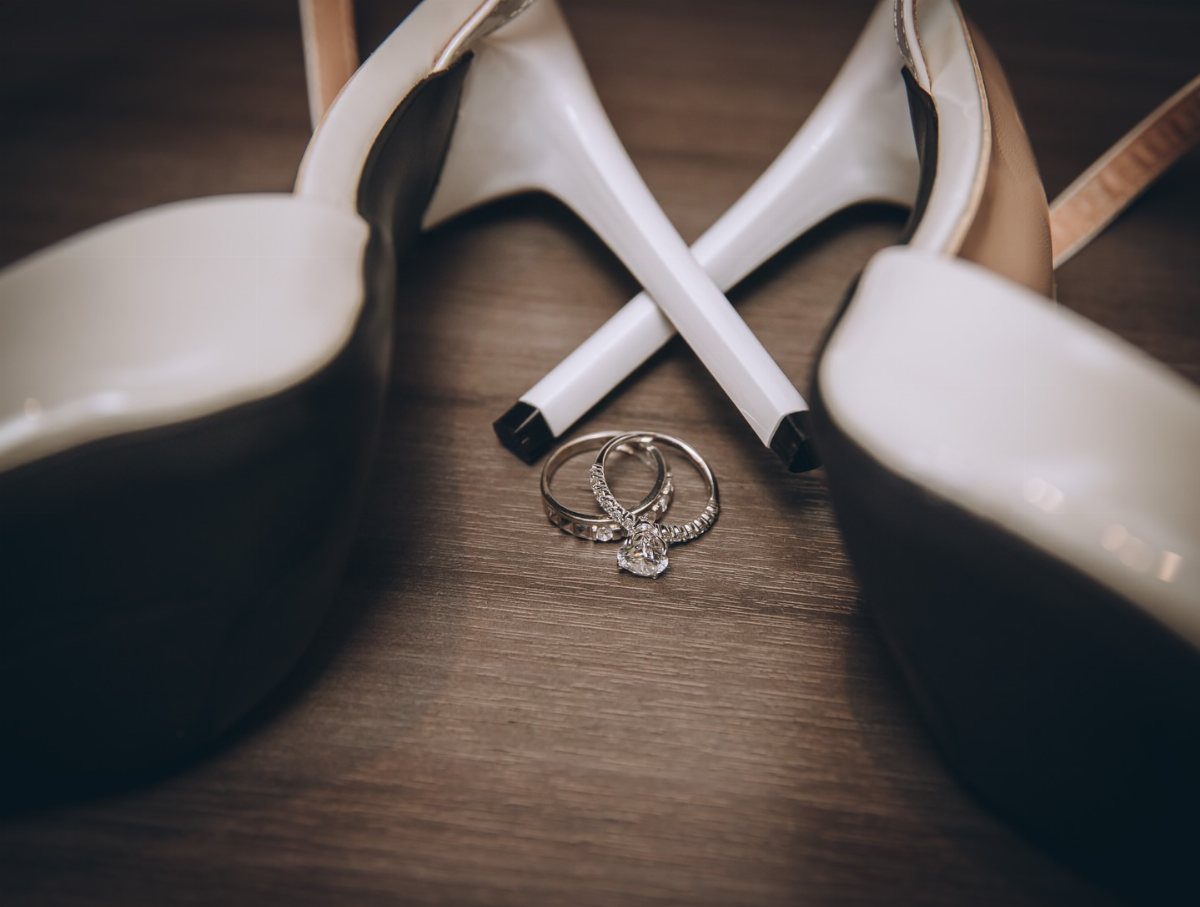
Crossed stiletto heels frame the rings like brackets, the dark wood underneath making the metal read brighter than it is.
The shoes need matching height and similar wear; scuffed heels catch light differently and the asymmetry distracts. Point the toes away from each other so the heels cross clean at the center, then place the rings where the X opens.
I would shoot this before anyone walks in them. One heel mark on the wood and the setup looks used, not chosen.
Using Natural Light
The best natural light for wedding photos comes from the edges of the day, not the middle. Early morning and late afternoon sun sits low enough to wrap around faces instead of punching down from overhead.
Open shade, the kind you find under a tree or the east side of a building, softens that light further without flattening it into gray.
Window light works the same way indoors.
A large window to one side of the couple gives dimension; two windows facing each other cancel each other out. I would scout the venue at the same hour as the ceremony, not at noon when the light lies.
The minutes after sunset still carry color in the sky, enough to read as daylight in a photograph if the foreground has its own source.
That window is narrow and easy to miss while guests are still hugging, so I watch for when the light turns soft and warm and start shooting then.
Organizing Guest Photos
Guest photos disappear without a system. I would set up a single cloud folder and print the QR code on tent cards at each table, not bury it in a wedding website guests forget to check.
The code should open straight to an upload page, no account creation, no app store.
3 steps is the ceiling for participation: scan, select, upload.
Every extra click loses somebody. A short note on the card helps, something like "Drop your photos here" rather than "Please consider sharing."
Disposable cameras, the kind I hand out at the welcome table, solve a different problem.
They catch the unplanned moments phones miss because nobody opens an app first. Collect them before the last guest leaves; the ones that walk out the door rarely come back.
Creating Lasting Memories
A photo collection becomes a story when the images share something beyond the date.
One couple I worked with asked guests to shoot every photo from waist height, the perspective of a child at the party. The result was strange and warm and unmistakably theirs.
Themes do not need to run through every shot. A single repeated detail, the same prop passed from table to table or a color guests are asked to wear, threads the day together without becoming a rule.
The couple in the list who used smoke bombs let multiple colors explode at once; that choice becomes part of the story if it shows up elsewhere.
DIY touches work when they are specific to the couple, not copied from a trend board. A ring silhouette against a sunset beach means nothing until it is your ring and your beach.
Capturing Candid Moments
The best candid photo I ever took at a wedding was of a grandmother laughing with her mouth full during the toast.
I was not the hired photographer; I was a guest with a disposable camera in my jacket pocket, and the shot was gone before I could have raised a phone.
Guest cameras work because guests stand where professionals do not, at the back of the room or the edge of the dance floor or the table where the single friends sit together.
They also shoot without the self-consciousness that creeps in when a paid lens points your way.
I would tell guests to look for the moment after the moment, the exhale after the posed kiss, the glance between parents when the couple turns away. Those frames carry more weight than the ceremony itself.
Frequently Asked Questions
What are some unique photoshoot ideas?
Colorful smoke bombs behind a white arch, a vintage vehicle as a prop, and a backlit veil portrait at dusk all turn standard shots into something memorable.
What makes good wedding photos?
Good wedding photos record real emotions and genuine interactions between guests. I shoot in RAW and edit with restraint, because the coral of your sister’s dress and the rust on the barn door are colors you chose for a reason.