The ideas below run from free saved bottles to brass lanterns that replace both vase and candleholder, and the one that fits your table depends on whether your hours or your dollars are the tighter budget.
1. Mason Jar Centerpieces
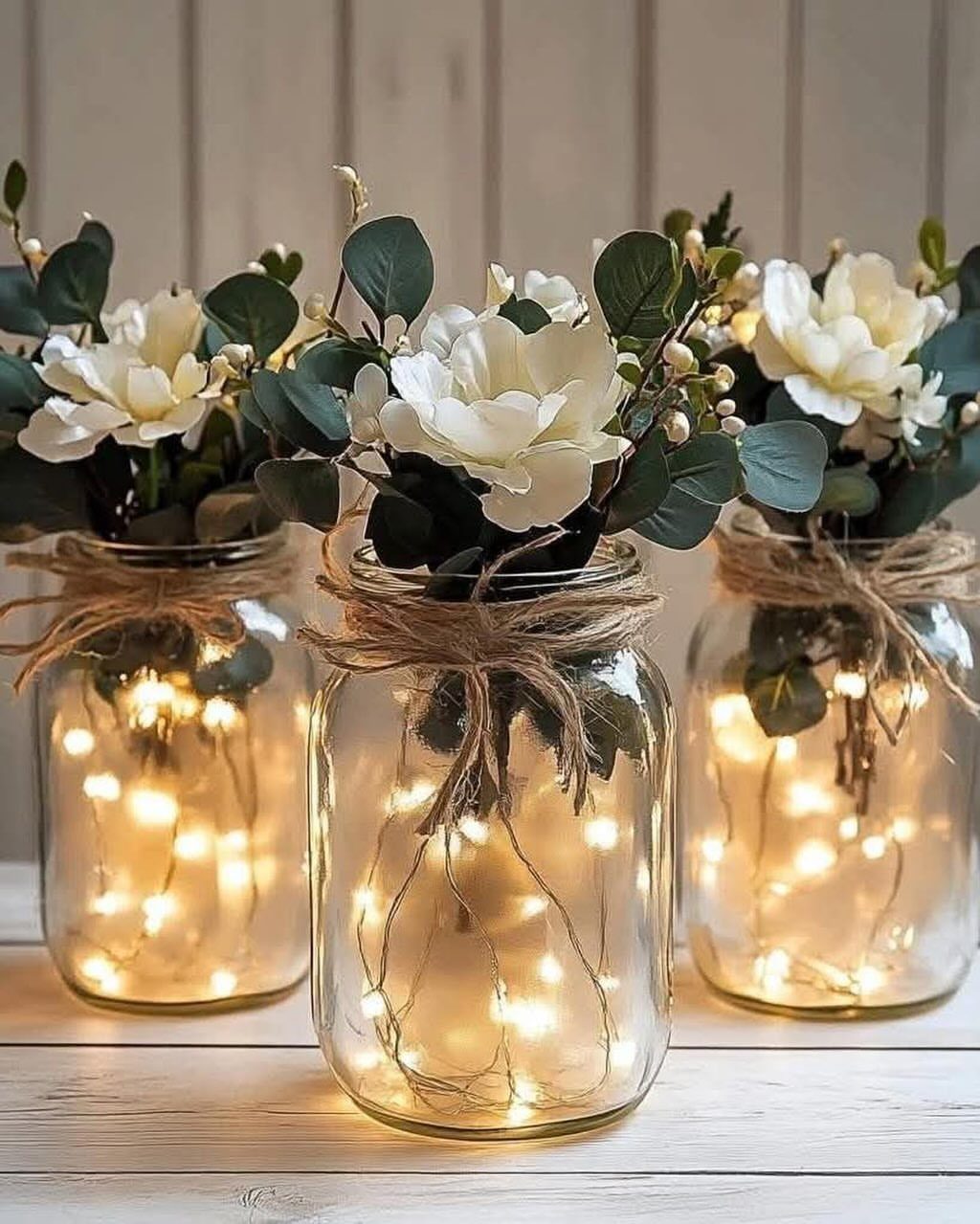
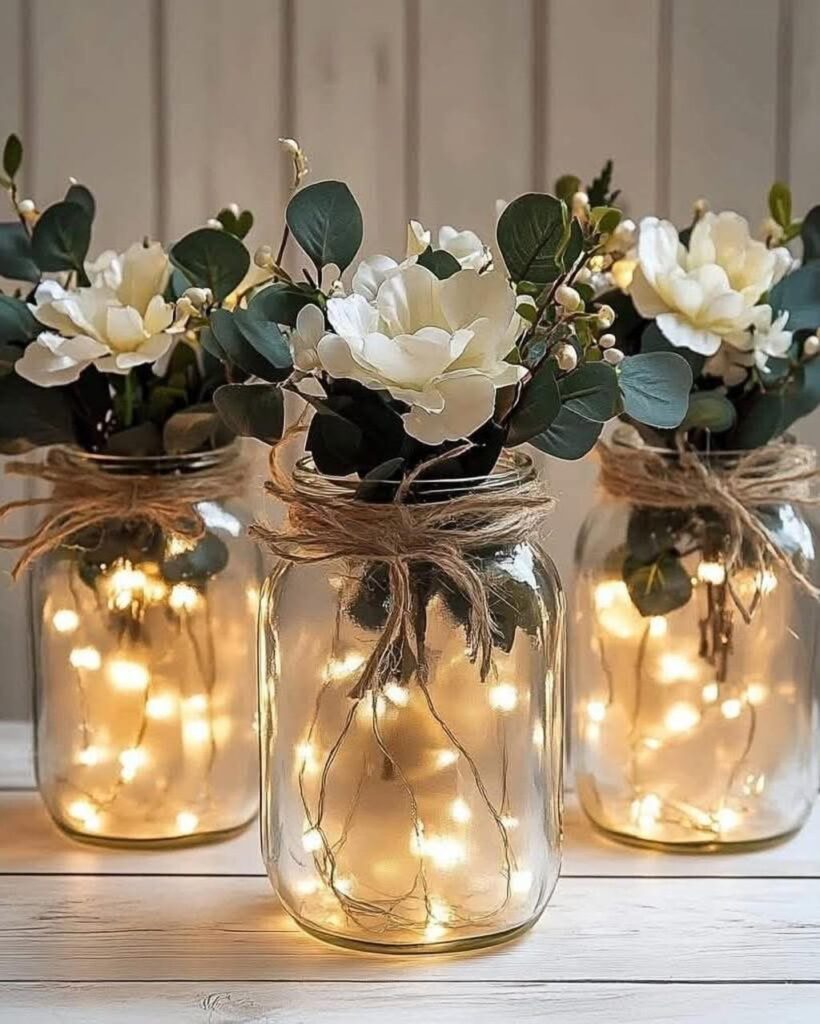
Mason jars glow at rustic weddings because they cost next to nothing and read as intentional, not cheap. 3 jars wired with fairy lights, filled with white blooms and greenery, each neck tied in twine.
Baby’s breath and pink roses are the flowers I see paired most often with this base.
A wood slice underneath grounds the arrangement and keeps glass from sliding on linen. The jars do not need to match; thrifted quarts and pints mixed together look gathered over time, which suits the theme better than a matched set.
This one works for couples who want guests to take centerpieces home.
2. Wood Slice Bases
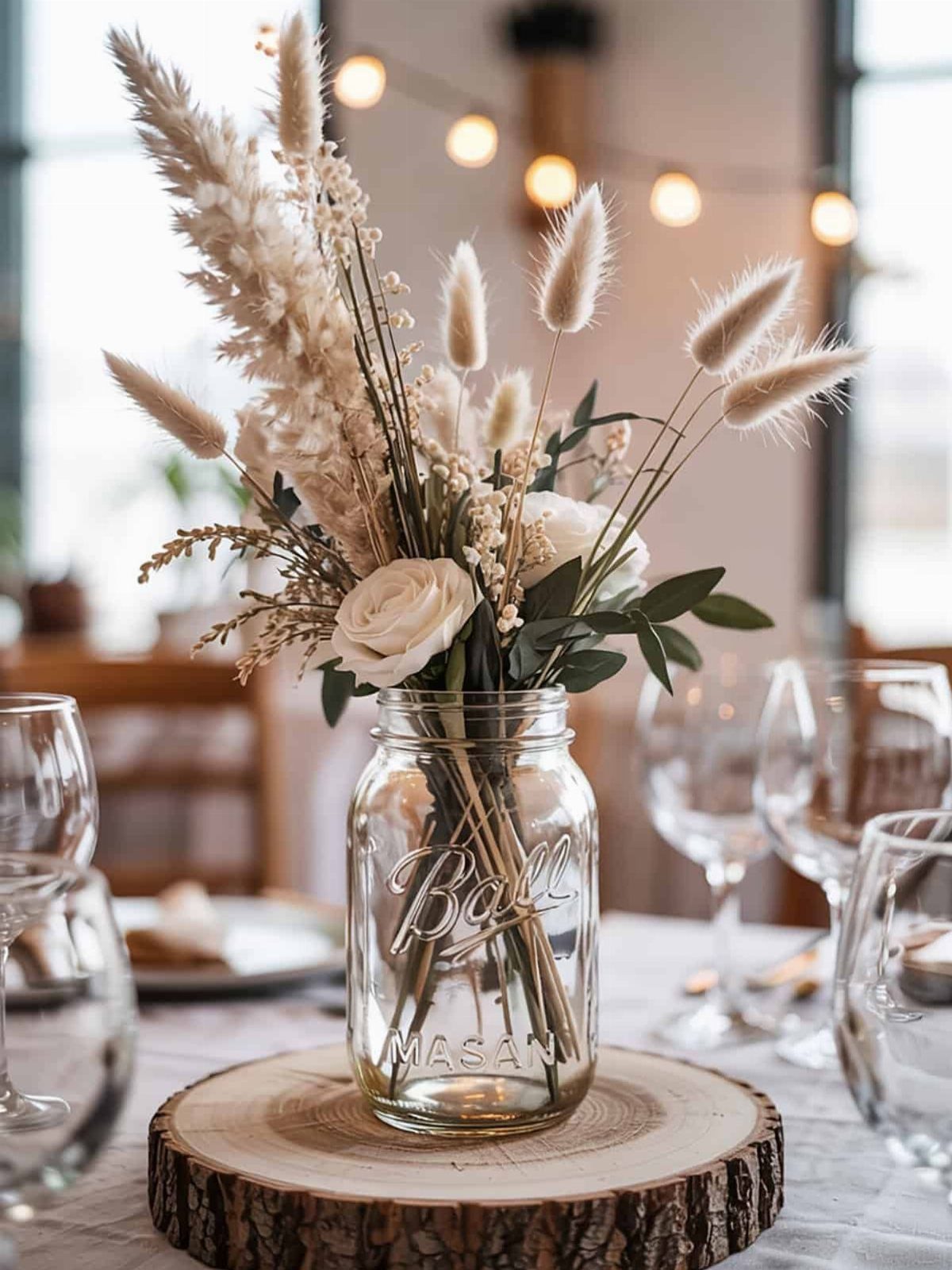
A wood slice base is the simplest way to turn any object into rustic decor.
Bark still on the edge gives more texture than sanded rounds but can shed; set it on a charger or small square of felt if the venue has white cloths.
Vases, candles, or small jars all read differently atop the same slice.
A single mason jar with white roses and dried bunny tails keeps the height low enough for conversation across the table. For a longer table, run two or three slices with varied heights of glass rather than one centered piece.
I would check slice diameter against plate size before committing; a small round can crowd a table set for eight.
3. Lantern Centerpieces
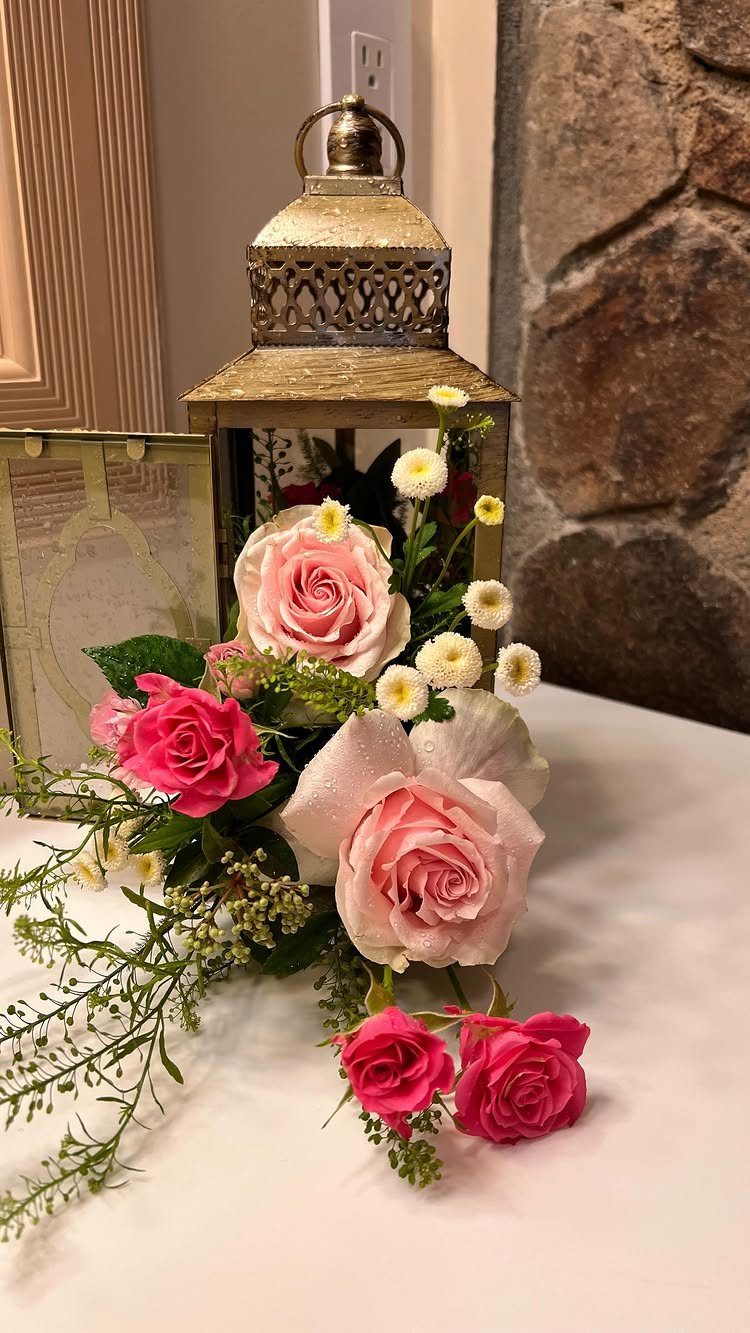
Lanterns carry a vintage weight that mason jars cannot. A brass door opens to let the florist build roses and small white flowers inside, turning a light fixture into a vessel.
Black metal reads more farmhouse; wood reads more cabin. Either material works with a pillar candle if the lantern’s glass is intact, though open doors mean flame needs watching.
Suspended paper lanterns are a different idea entirely; those belong over the table, not on it, and need rigging most venues require advance notice to approve.
A lantern centerpiece costs more per table than a jar arrangement but replaces both vase and candleholder.
4. Eucalyptus and Greenery Arrangements
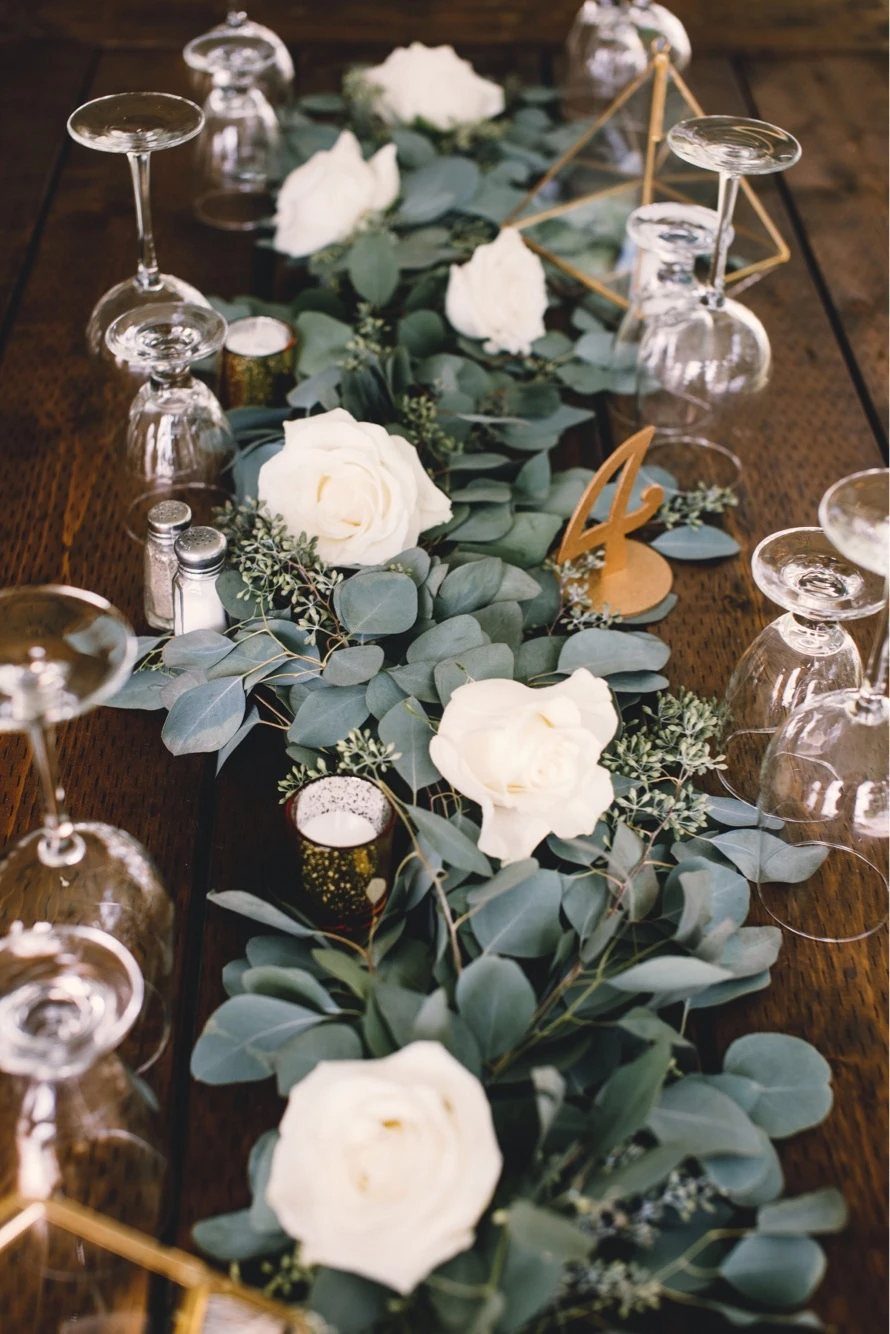
Eucalyptus runs the length of the table, seeded stems laid as a garland runner dotted with white roses and votives.
This is not a contained centerpiece; it needs the whole surface and works best on farm tables where the wood itself is part of the look.
The greenery does the heavy lifting, which keeps flower costs down. Eucalyptus and seeded eucalyptus both dry well and stay presentable through a long reception, though they will scent the room faintly, something to mention if any guest has allergies.
A garland this long takes time to build; order from a florist or set aside an afternoon with wire and stem cutters.
5. Floating Candles
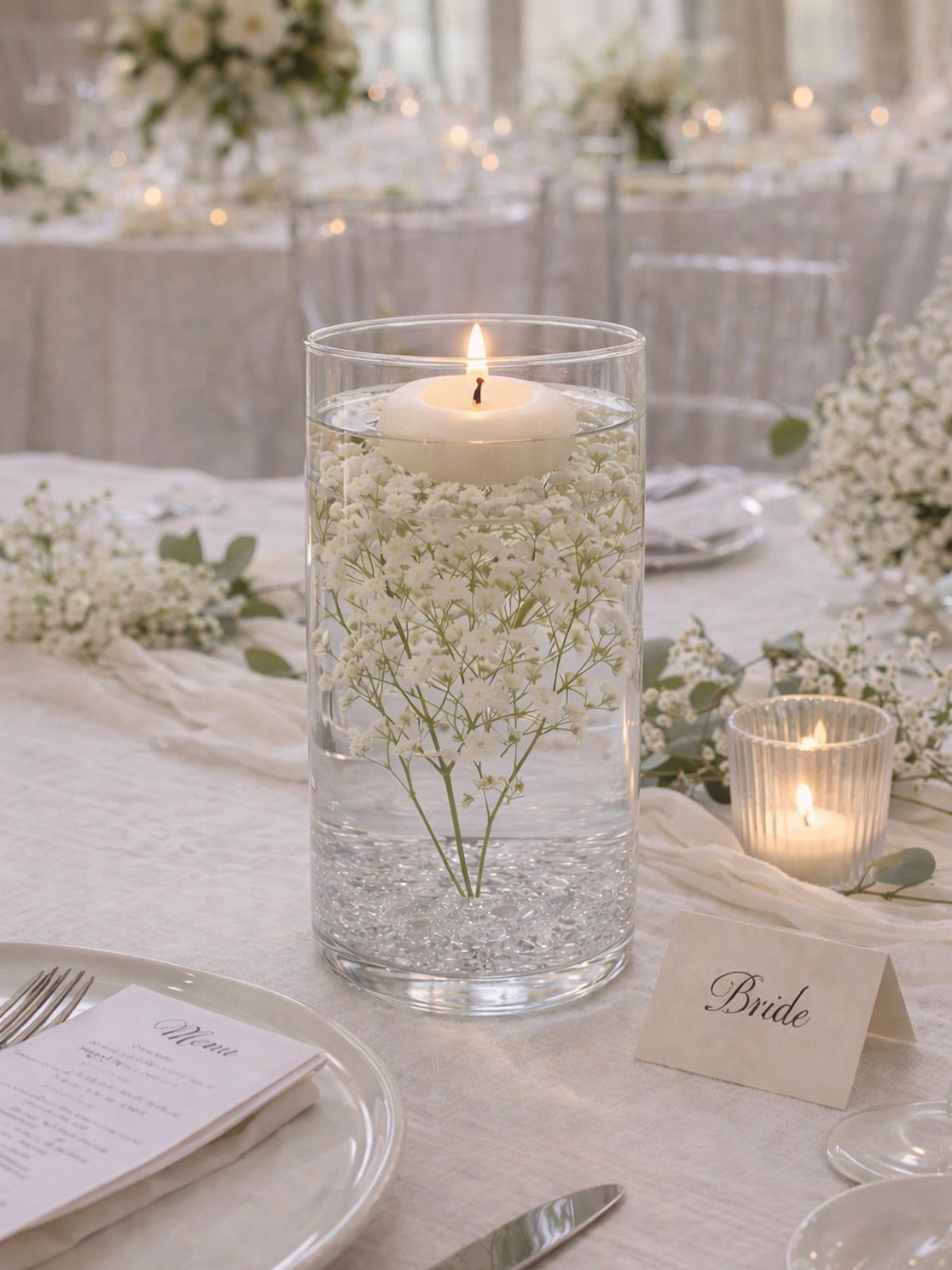
Floating candles need still air. Baby’s breath submerged below the flame works because the blooms are light enough to stay where arranged; heavier flowers sink and can shift to odd angles.
A mirror or reflective base doubles the light without doubling the candles.
Varying heights of cylinder grouped together need at least three per table to read as intentional rather than sparse. Pink roses in some versions replace the baby’s breath, though petals loosen and cloud the water over hours.
I would fill cylinders on-site, not before transport. One cracked base ruins the effect and the table beneath it.
6. Book Centerpieces
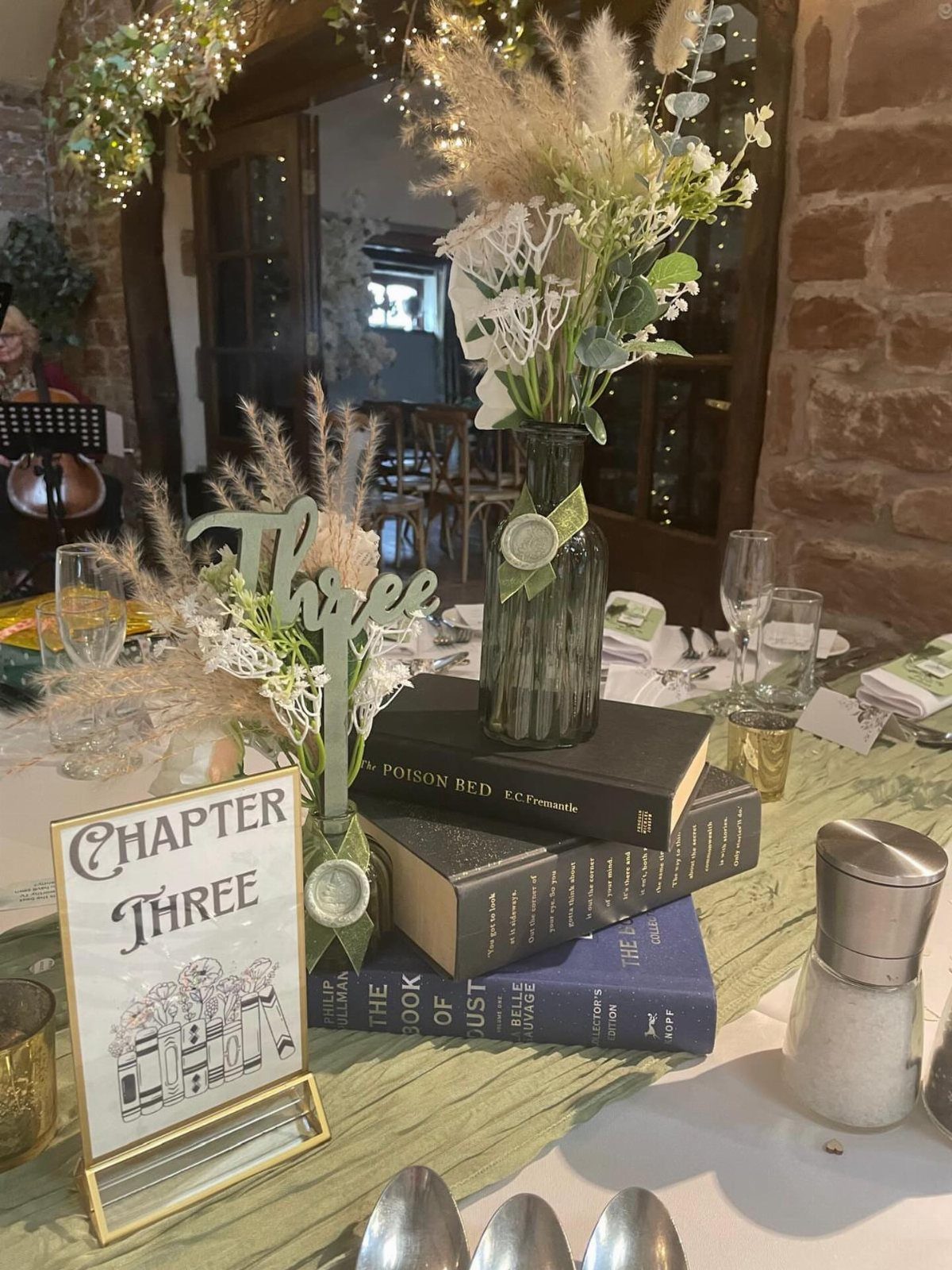
Stacked books center a table by adding height without adding flowers. Hardcovers topped with a single dried bloom in a glass bottle, plus framed table numbers that play on the chapter theme.
Antique books with worn spines and embossed covers look better than thrifted paperbacks, which can read as accidental.
A brass lantern and pillar candle as an alternative topping shifts the mood from literary to library; both need the stack stable enough that a guest’s elbow won’t send it over.
3 books is the minimum that reads as a deliberate pile.
This one suits couples with a personal collection to draw from or a weekend for estate sale hunting.
7. Terracotta Vases with Autumn Florals
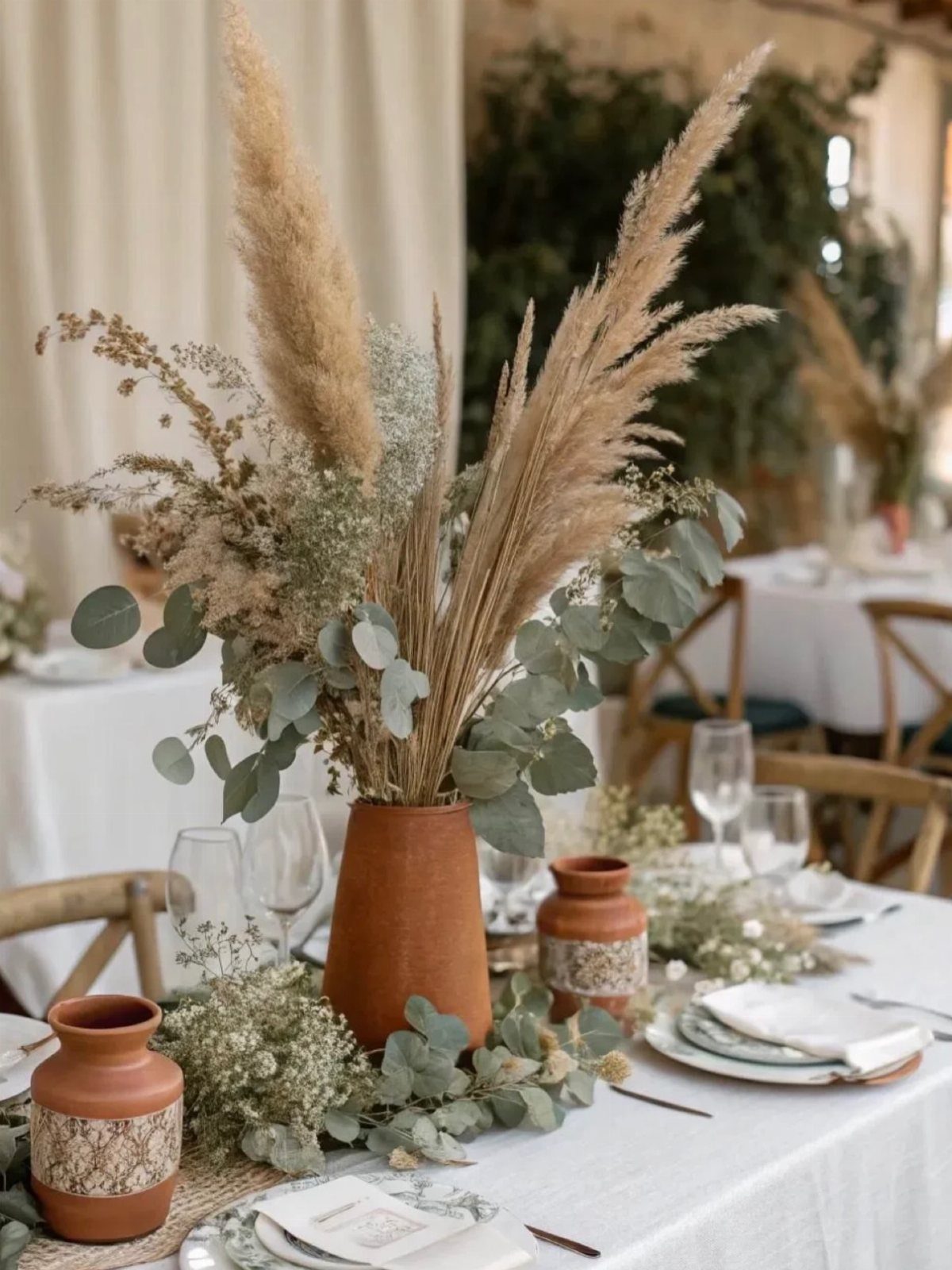
Terracotta holds heat in its color, which makes autumn florals look intentional rather than seasonal by default. Pampas grass and eucalyptus dry in place, so the arrangement lasts the full reception without water.
The vases need no matching; gathered shapes in warm clay tones look collected.
A wood slice underneath, borrowed from entry two, raises the cluster enough to clear plates. Cream roses soften the palette if the orange runs too bold.
I would keep the total height under fourteen inches for seated conversation. This one suits couples marrying in late September through November who want the season present without pumpkins or hay bales.
8. Glass Bottles with Flowers
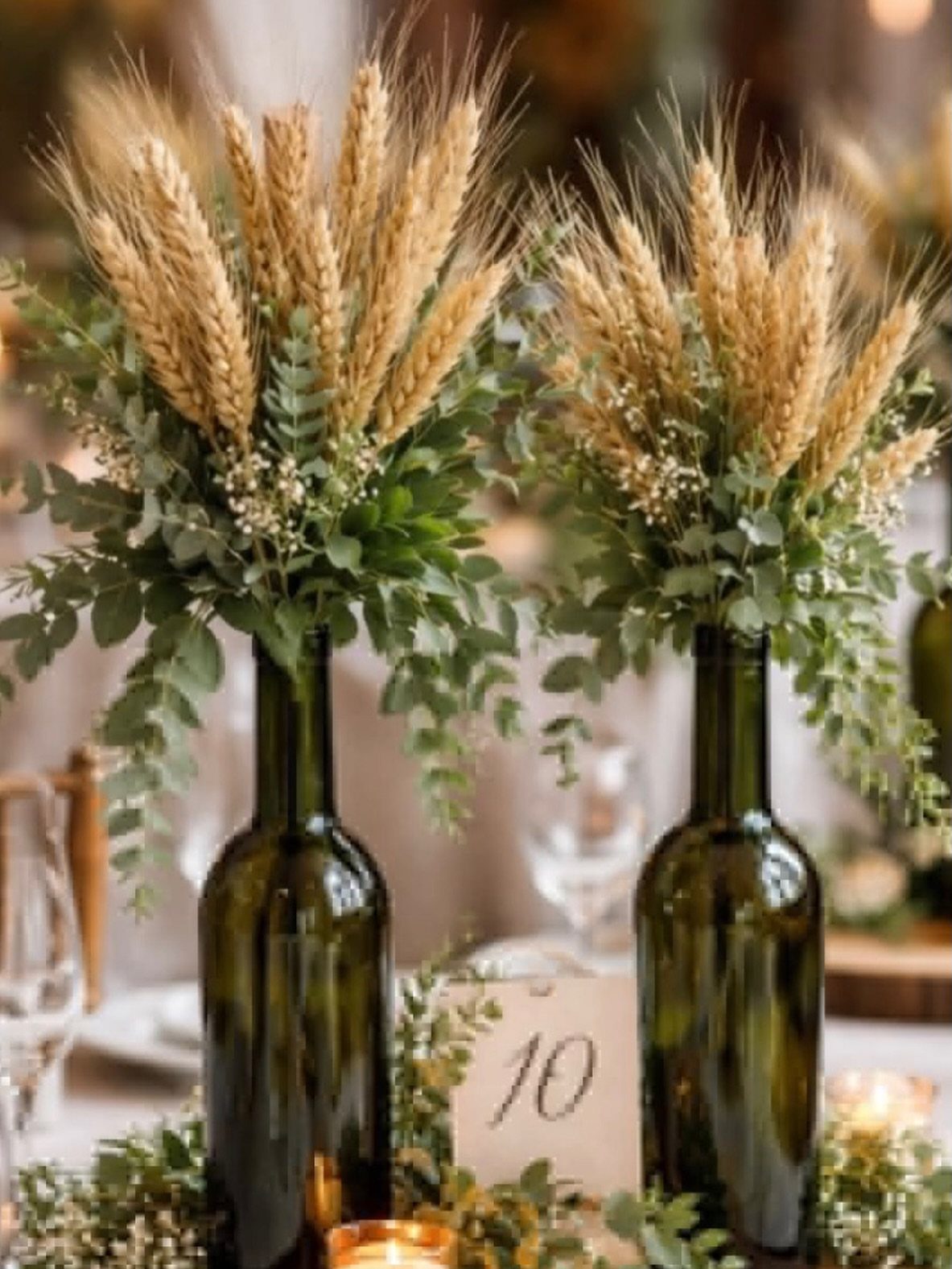
Green glass bottles, the kind olive oil or wine comes in, stand in as vases once labels soak off. Wheat stalks and eucalyptus fill the neck without crowding; single stems read as spare, which is the point.
Amber bottles warm the light passing through, clear ones keep it cool.
Scattered in threes across a long table, mixed heights keep the eye moving. The bottles cost nothing if you save them; a month of dinner parties supplies enough.
Number cards tucked beside, not into, the neck keep the table identifiable without florists’ fees. This suits the couple who already drinks wine together and has windowsills full of drying stems.
DIY Rustic Centerpieces
DIY rustic centerpieces work best when the materials look found rather than purchased.
Thrifted quarts and pints of mason jars, olive oil bottles with labels soaked off, or estate sale hardcovers all carry the worn surface that factory-distressing tries to fake. The time goes into gathering, not finishing.
A wood slice from a fallen tree, bark still on, needs only a felt square underneath to protect rental linen.
Wire and stem cutters will get you through an afternoon of eucalyptus garlands if the morning of the wedding is already spoken for, a florist can take that off your hands.
The common thread in projects that photograph well is restraint. One material does the statement; the rest supports.
Budget-friendly Ideas
Affordable rustic decor depends on what you already have access to.
The trade-off is time.
Estate sale hunting for antique hardcovers, label-soaking, stem-cutting: these save money only if your hours are yours to give. A couple working full-time jobs against a wedding date may find the florist’s fee worth more than the savings.
Seasonal Flowers
Seasonal flowers lower cost because they travel less and need less forcing.
Baby’s breath, used in mason jar and floating candle arrangements, is a year-round crop that stays inexpensive. Pink roses appear in both jar and floating versions; they are greenhouse-grown and available most months at moderate cost.
Seasonal wildflowers bring a gentle fragrance to rustic centerpieces, though their faint scent is a consideration for allergy-sensitive guests.
Autumn florals in terracotta vases, pampas grass and cream roses, suit late September through November when the material is at peak supply.
The seasonality is part of the look; forced summer blooms in October would read wrong even if they could be sourced.
Natural Materials
Natural materials in rustic centerpieces carry practical considerations. Wood slices with bark still on shed; a charger or felt square beneath protects tablecloths.
Twine on jar necks, burlap if it appears, and unsealed terracotta all absorb moisture.
These are fine in dry air but can stain linen if drinks spill and sit. Test a sample overnight on the actual table covering if the venue permits.
The materials also set weight.