These 12 wedding groom photos run from a quick overhead circle shot of the groomsmen to a full family group that costs you cocktail hour.
The deciding factor is how much patience your groomsmen have left: burn it early on silliness and the formal lineup suffers.
I work the window first, before clouds move or the sun drops, because natural light keeps skin looking like it does in his own mirror.
1. Walk with Groomsmen
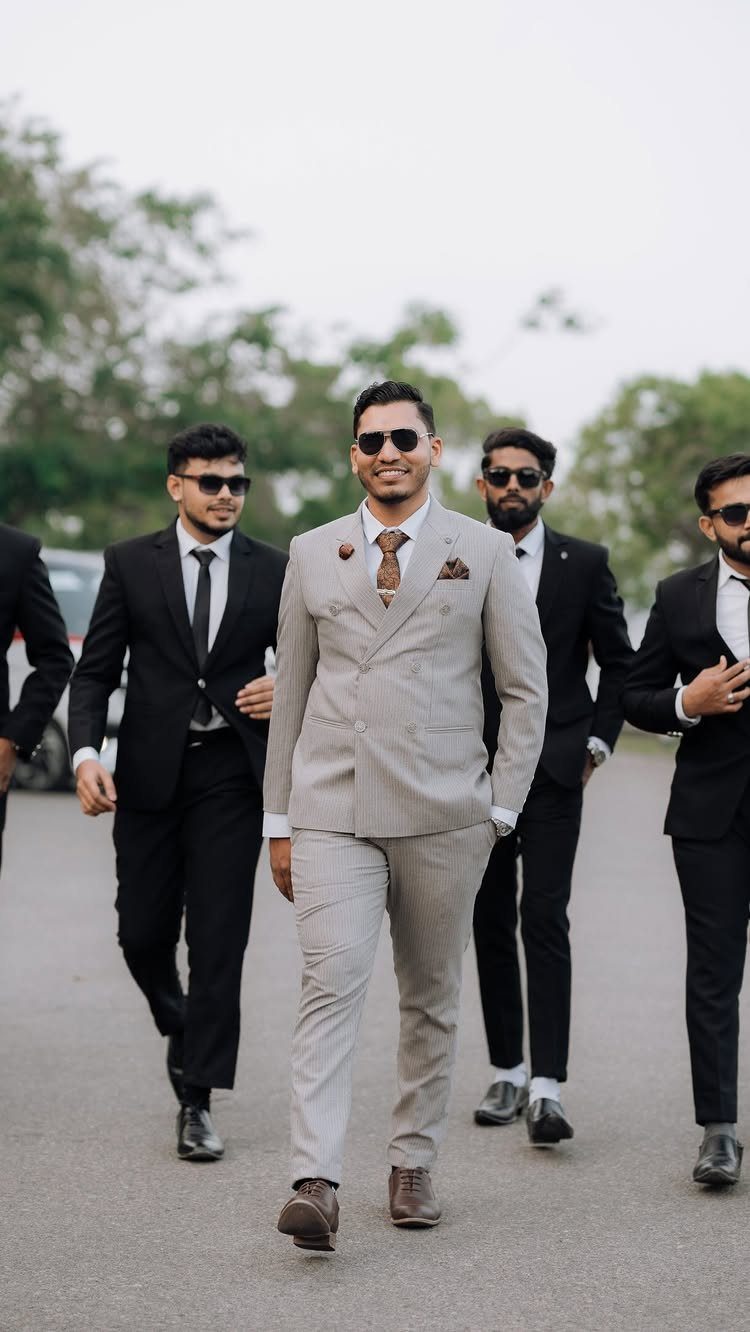
This shot frames the groom’s last walk before the ceremony as a bachelor, flanked by the friends who got him there.
The forward motion gives everyone something natural to do with their hands and eyes, which solves the stiffness that kills most group shots.
Tell the groomsmen to sling jackets over shoulders, keep sunglasses on, run through old stories.
Movement matters more than formation; a loose stagger reads better than a straight line. The photographer walks backward or shoots from a slight elevation to keep faces visible without anyone turning toward the lens.
Best light happens while you are still walking over, not once you are standing in place waiting, so build in the time. Rush this and everyone clenches up.
2. Groom’s Reaction
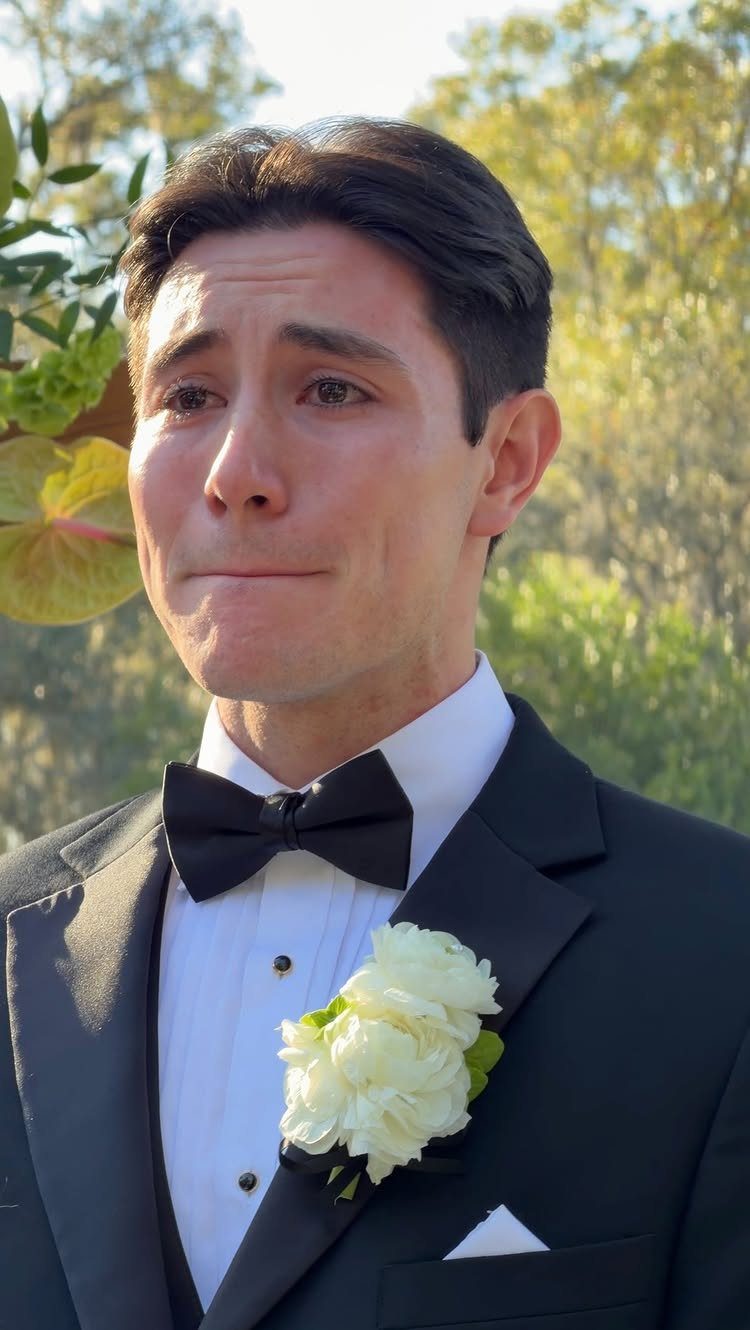
Some photographers wait entire weddings for this single frame. The groom’s face when he sees his bride carries weight no posed shot matches, whether they did a first look earlier or not.
Position someone near the groom with a clear sightline down the aisle or to the doorway, camera pre-focused on his face, not the couple.
The tears come fast and pass faster. A long lens keeps the photographer out of his peripheral vision; awareness of the camera flattens the reaction every time.
If the ceremony layout traps the groom with his back to guests until she arrives, station a second shooter across the aisle for the angle that catches his eyes.
3. Groomsmen Having Fun
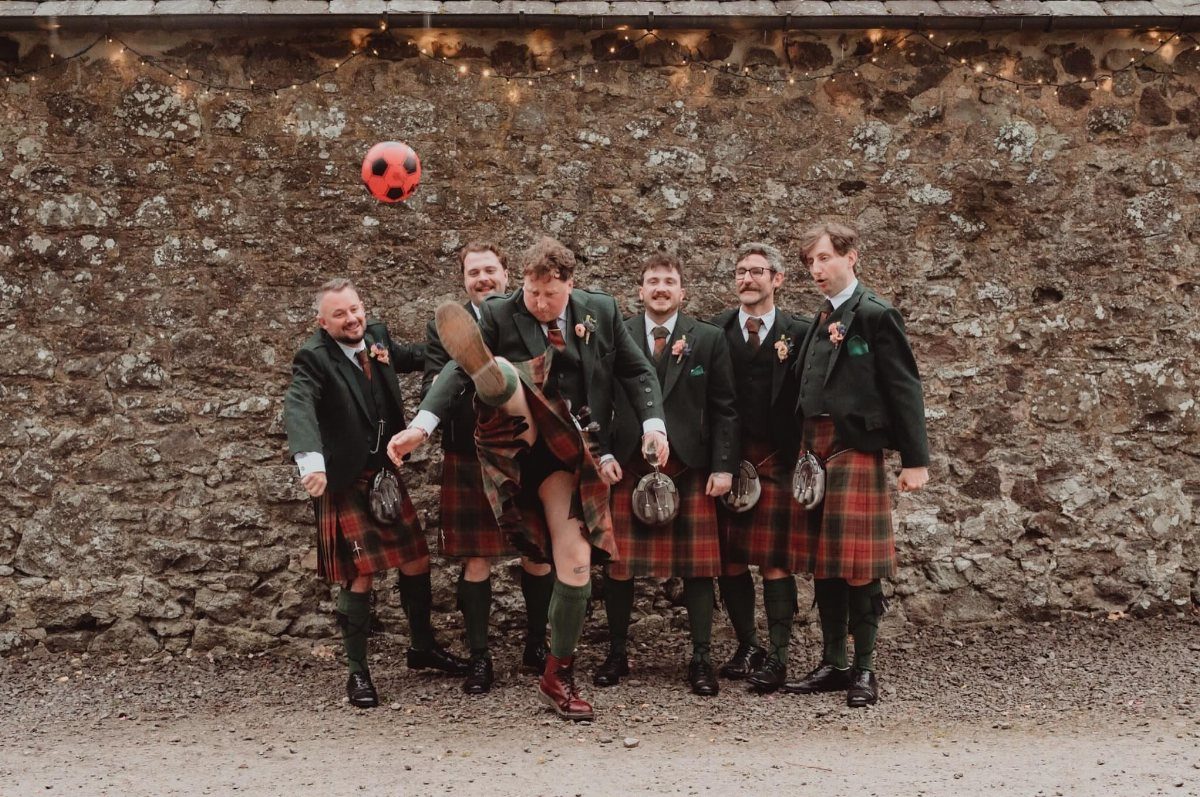
Formal portraits drain fast. Breaking the tension with something deliberately absurd, like a soccer ball against stone or a groom draped across laps, resets everyone’s shoulders and gets real laughter instead of the frozen grin that follows "say cheese."
The prop matters less than the permission.
Pick something with personal history, a team ball or an inside joke, or grab whatever sits nearby. One groomsman starts it, the rest react, the photographer stays ready for the moment after the joke lands.
Schedule this after the serious shots are safe in the camera, not before. Group patience for formality runs thin fast.
4. Groom’s Outfit Details
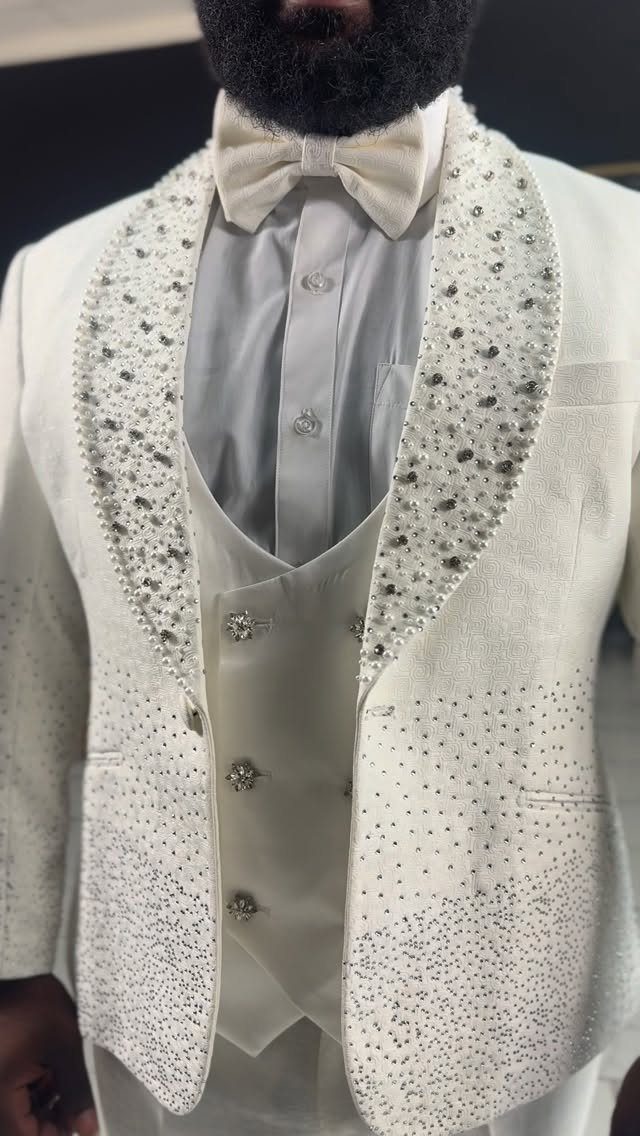
The suit is the largest single investment most grooms make in how they look that day, and the camera finds every detail: the lapel’s edge, how the boutonniere sits, whether the watch peeks from the cuff.
Shoot these before the jacket goes on, then again after. The vest alone, the tie knot, the pocket square fold.
Each becomes its own frame. A single rose or colored square against ivory or grey gives the eye somewhere to land without cluttering the line.
Ask the groom what he chose deliberately, the cufflinks or the lining. Those specifics anchor the set in his actual day, not a catalog shot.
5. Family Group Photo
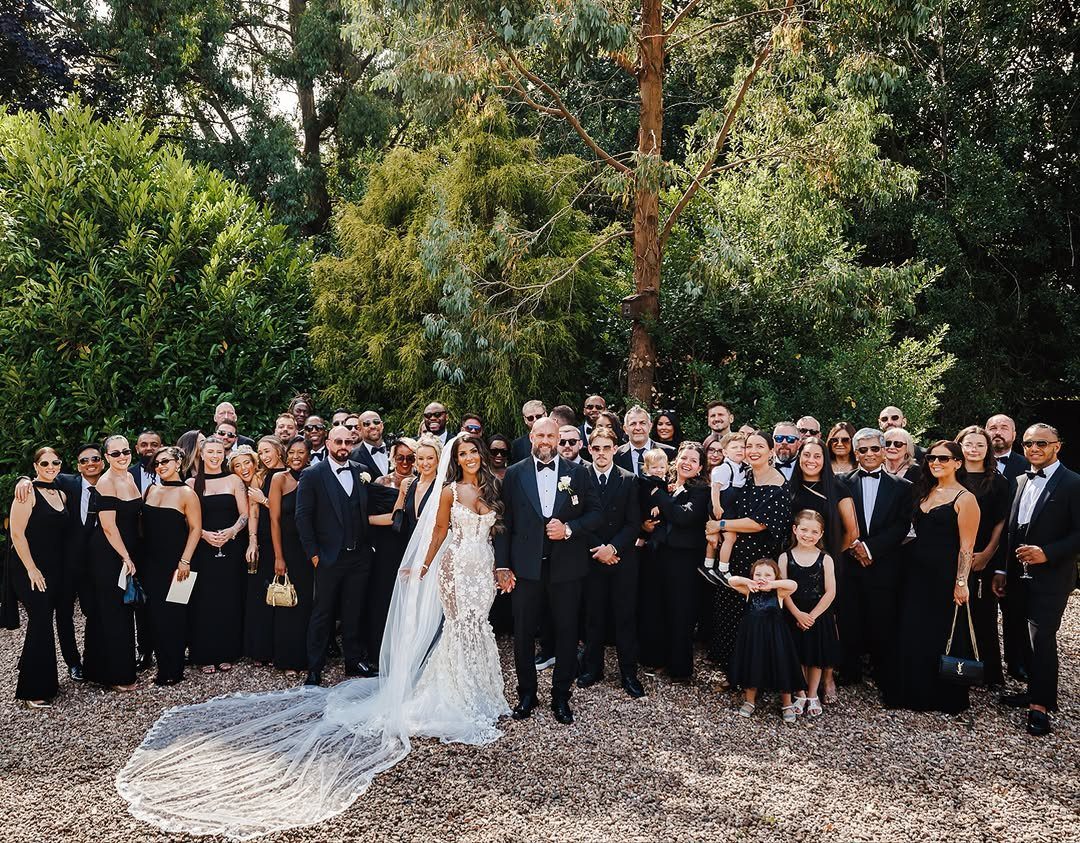
Weddings gather branches of family that may not share space again for years. The full group shot is the one frame that outlasts the couple, passed to children who never met the great-aunts at the edges.
This takes coordination. Outdoor gravel and open shade, like the setup here, avoids the squinting and color casts of mixed indoor light.
The trade is time. Twenty minutes for this shot means twenty minutes not eating or mingling.
Do it right after the ceremony, before anyone drifts to the bar or the bathroom, and announce the location during the last speech so stragglers know where to head.
6. Romantic Couple Photos
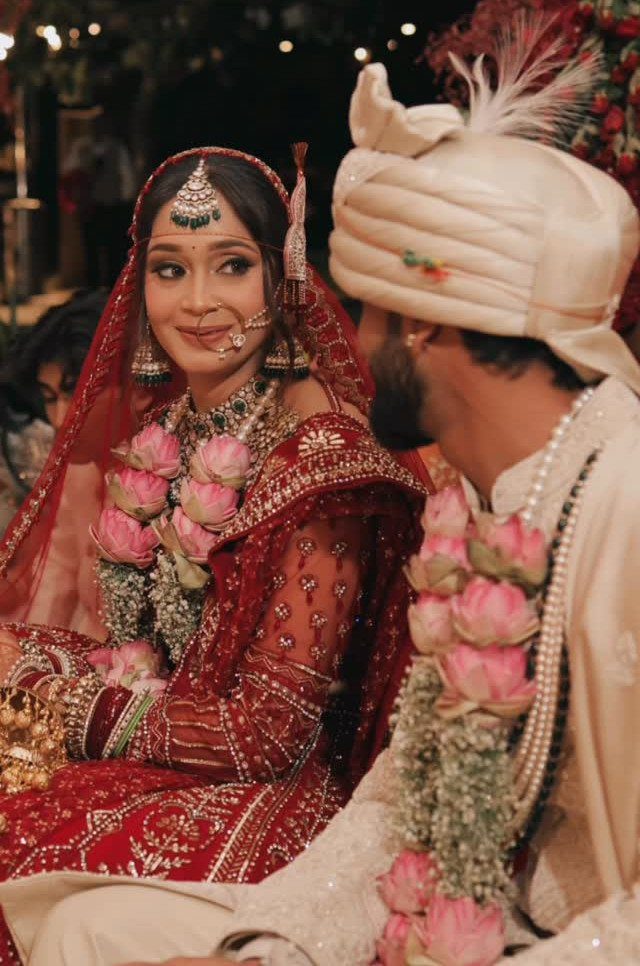
The best couple shots happen in the gaps. After the posed look-at-each-other, when the bride cracks at his expression and the real smile breaks through, that is the frame.
I set up the situation, then stop directing.
A long lens from across the room, or apparently checking my camera settings while they forget I am there. The garlands and ceremony clothes do the formal work; the image lives in the unguarded second after.
This needs time built into the day, not stolen from it.
A quiet gap between ceremony and reception, with food and drink waiting so no one watches the clock. The couple arrives relaxed, and the camera finds what is actually there between them.
7. Relaxed Groom Portrait with Drink
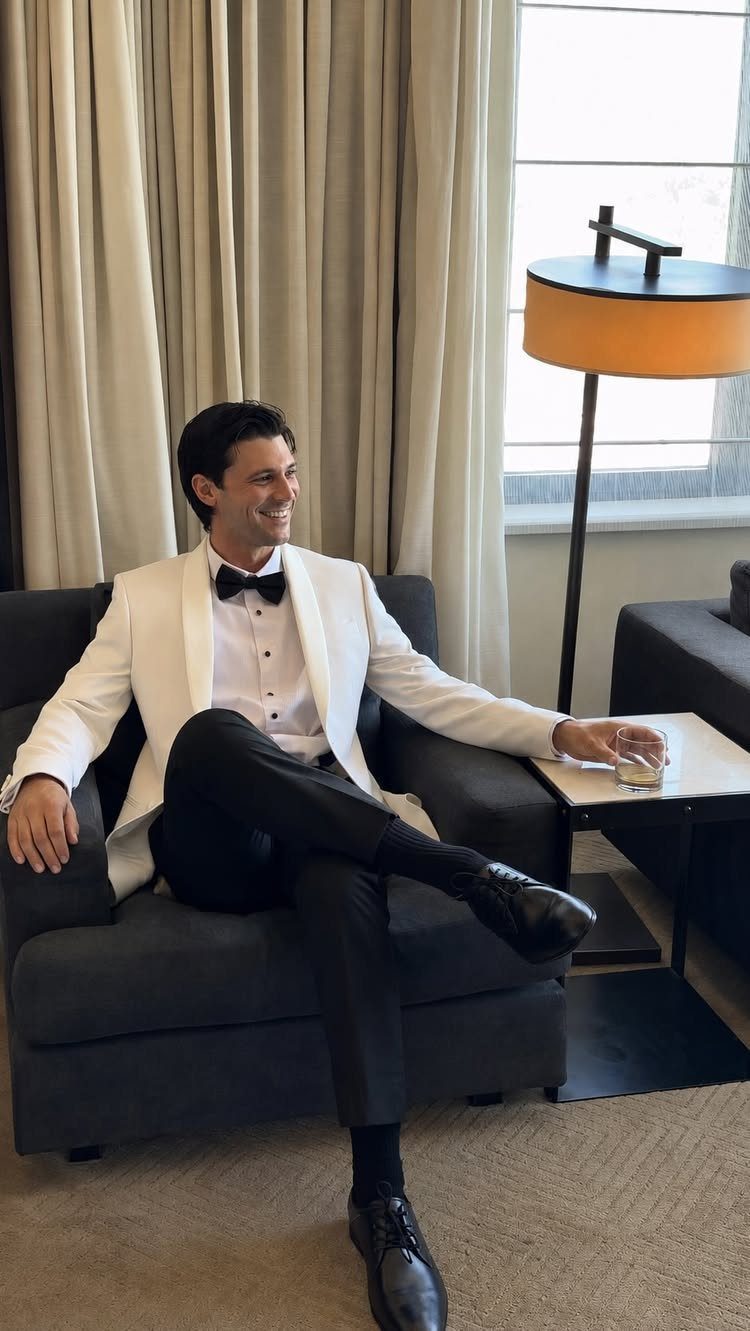
The chair matters as much as the glass.
Ask him to hold something he actually drinks, not a prop that goes untouched.
Whiskey, champagne, a beer he chose for the day. The glass stays at chest height or below; raised toward the lens turns the shot into an advertisement.
One light source from the side, window or softbox, catches the jacket’s texture without flattening it. Shoot before the ceremony, while the wait still feels like anticipation and not impatience.
8. Groom Getting Ready
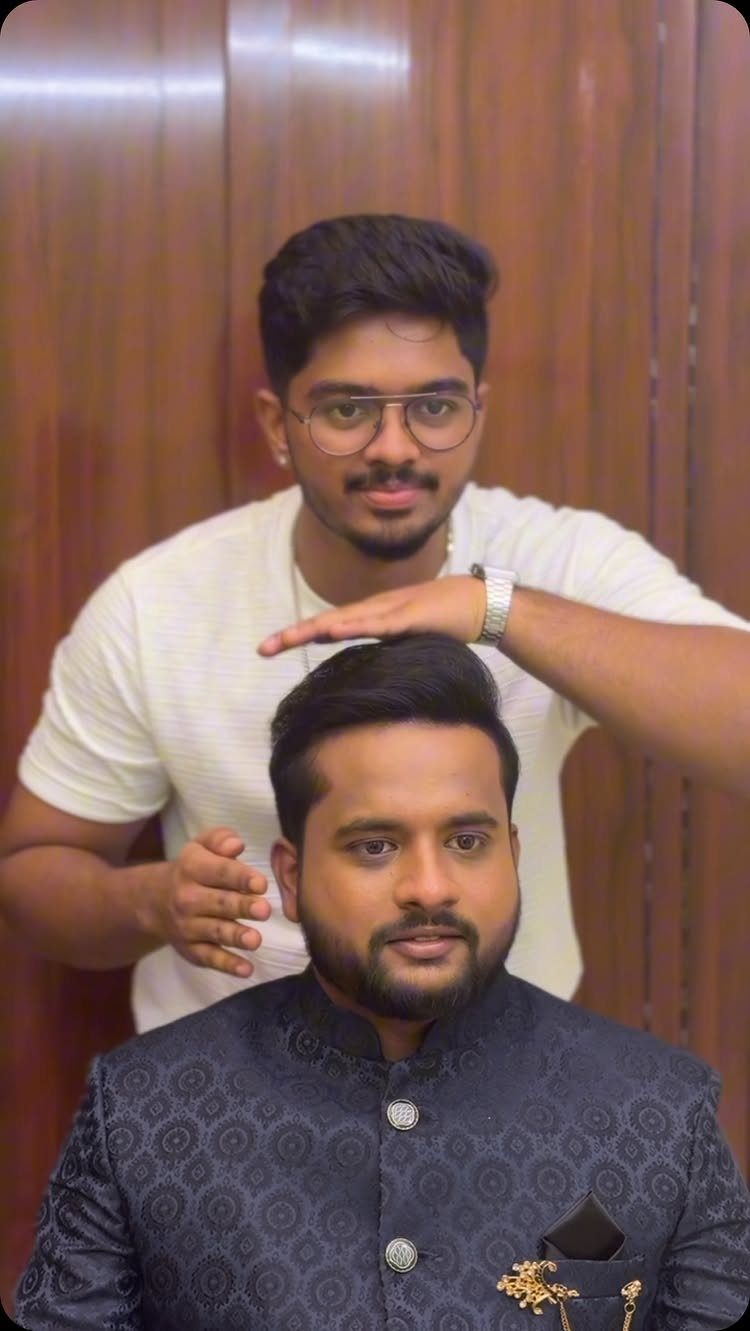
Hair and hands move fast in these minutes.
I stay back, use the window, and let the groom forget I am there. A flash would freeze the motion but kill the mood; natural light keeps the color of skin and fabric true to what the mirror shows.
The groom in the sherwani sat for styling, which gives time for both wide and tight frames: the room, the hands at work, the face in the glass. The wooden panels behind him add warmth without asking for attention.
Some grooms want no camera this early. That is the call, and it is worth respecting.
9. Traditional Groom Solo Portrait
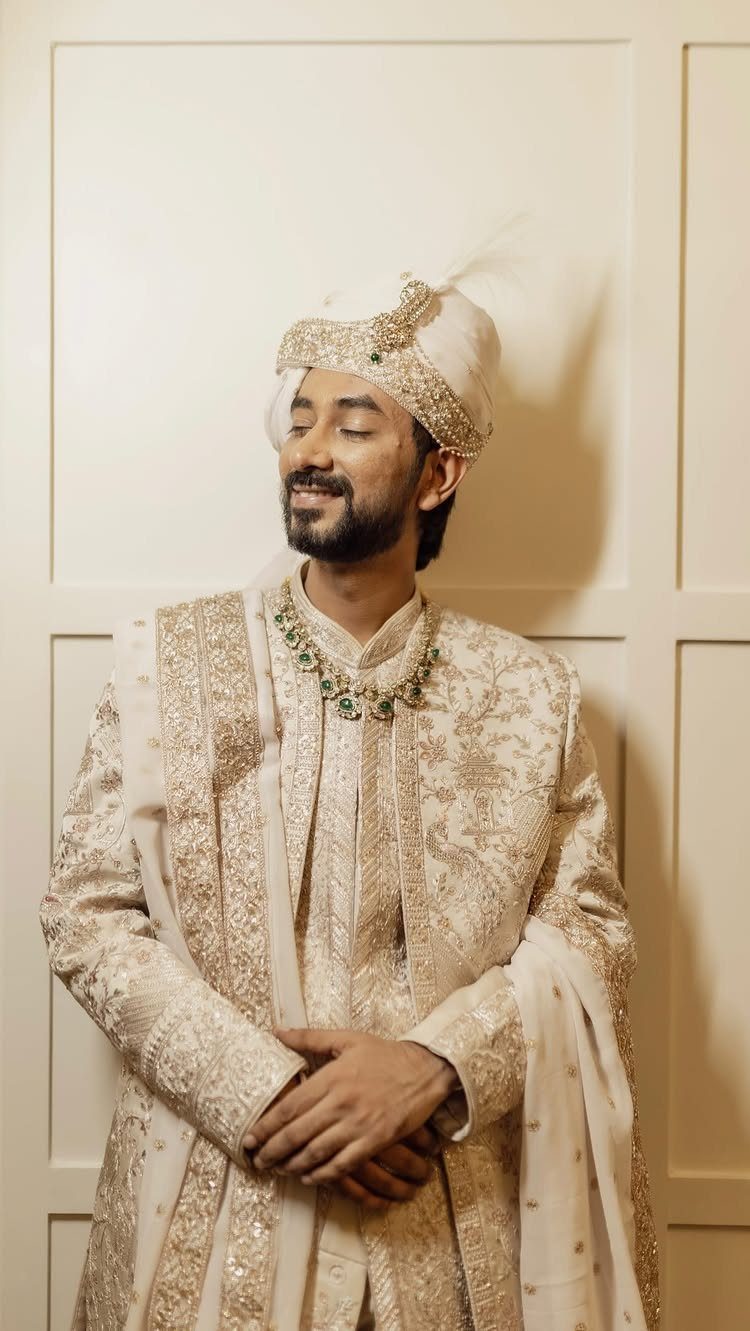
Closed eyes and clasped hands turn a pose into a portrait of someone at a threshold. The stillness reads as prayer or breath held before walking forward, and the camera rewards it with weight.
The turban’s feather and the necklace’s gold against cream give the eye detail to travel, so the background stays plain. A paneled wall, a single curtain, nothing that competes.
This is the frame grandmothers print. Take it before the couple shots, while the groom’s attention is his own and not already half with his bride.
Direct him once, then wait. The second after direction falls away is the one that lasts.
10. Full Wedding Party Portrait
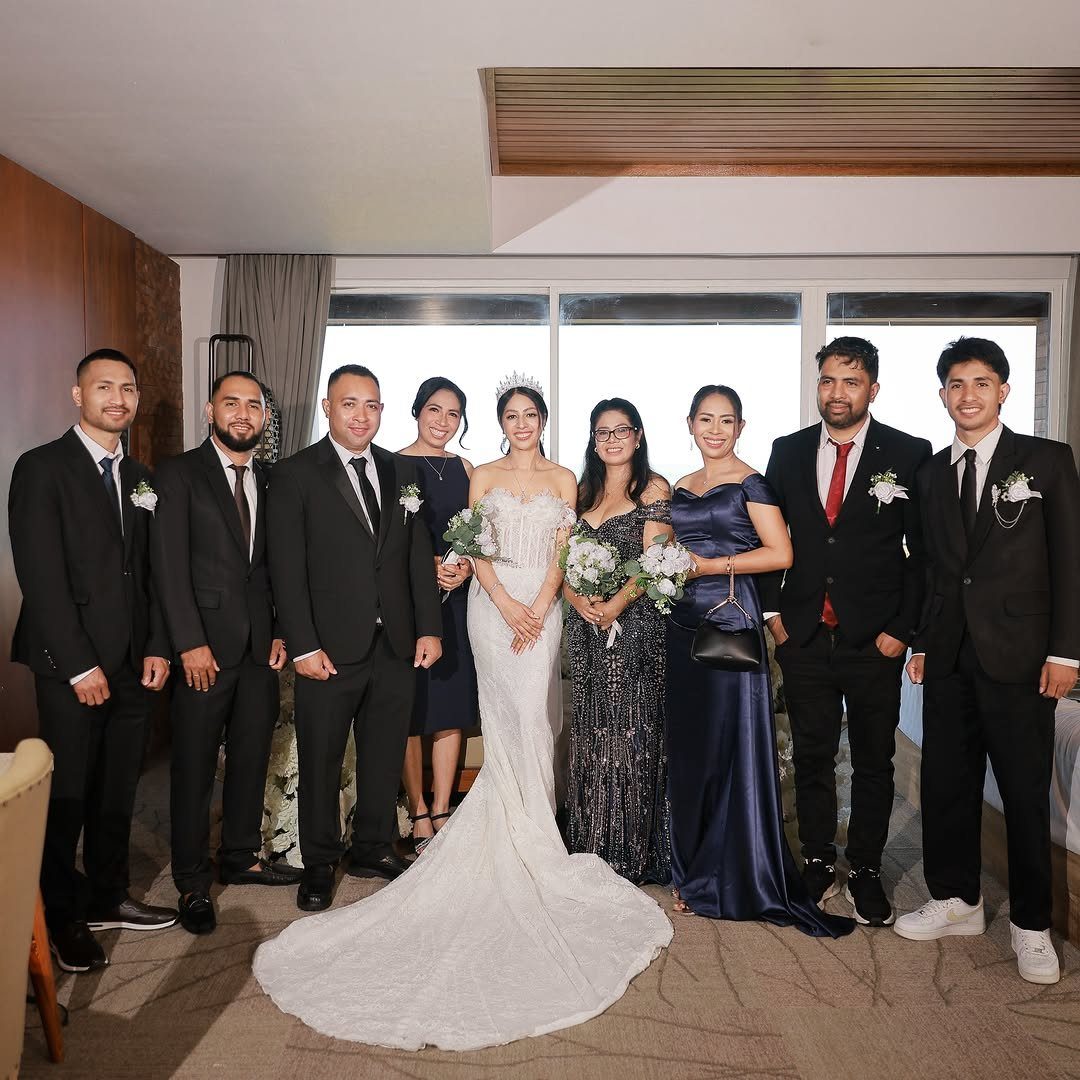
A full wedding party fills the frame fast, so plan the spacing before everyone gathers.
Indoor light, even and soft, keeps the bride’s white from blowing out and the dark dresses from turning to shadow. The tiara catches what it catches; do not add a flash to make it perform.
The bride stands central, the rest arrange by height and relation, not by gender in blocks. Mixed placement reads as the actual friendship group they are.
Do this once, quickly, after the ceremony. Appetites and attention scatter fast, and the shot they will want later is the one with everyone who was there, still clean, still present.
11. Overhead Groomsmen Circle Pose
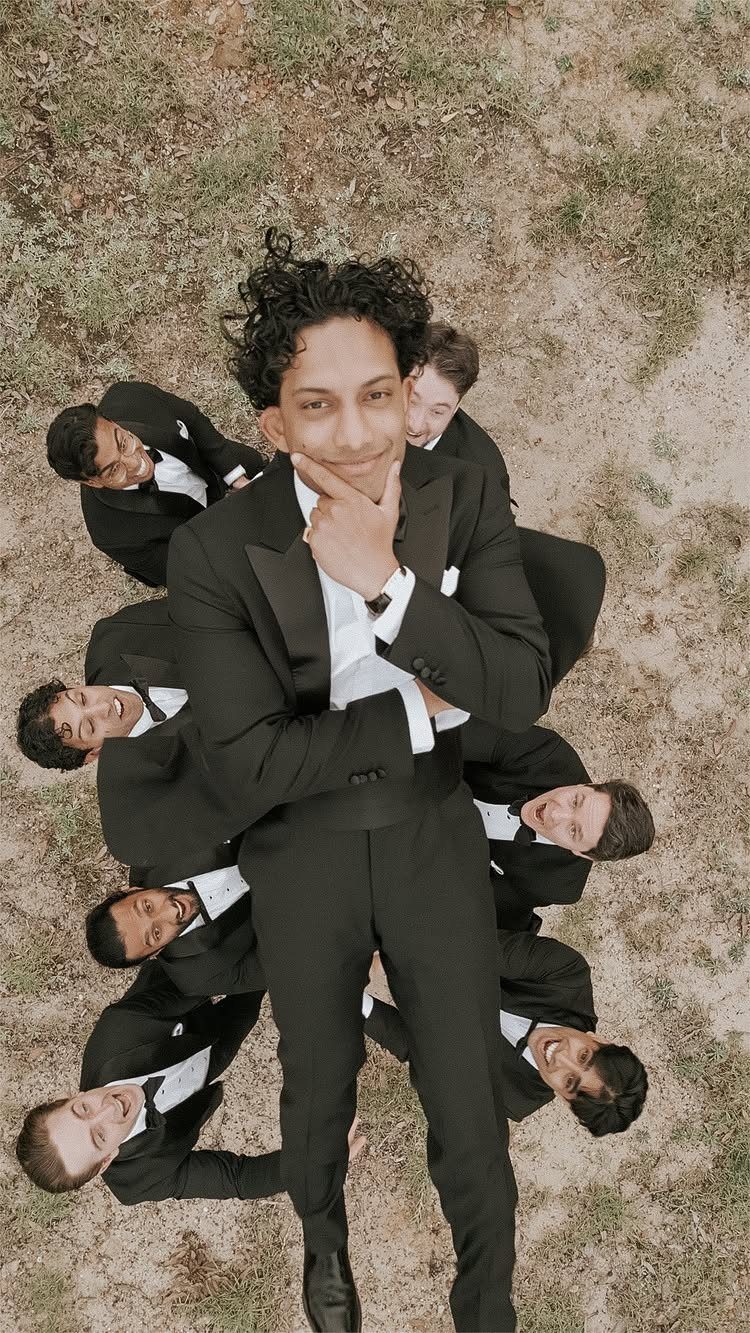
A ladder or a balcony gives the angle, and the groom looks straight up into the lens while the circle closes around him.
Grass grounds the shot in an outdoor wedding; concrete or carpet would read as parking lot or hotel lobby, which is a different joke entirely.
The groom’s arms stay at his sides or in his pockets.
Reaching out breaks the shape. The groomsmen lean in slightly, shoulders touching, so the ring reads as closed.
This is the silly shot, the one for the album’s back pages. Schedule it after the formal lineup is safe, when patience for standing still has already been spent.
12. Formal Groomsmen Lineup
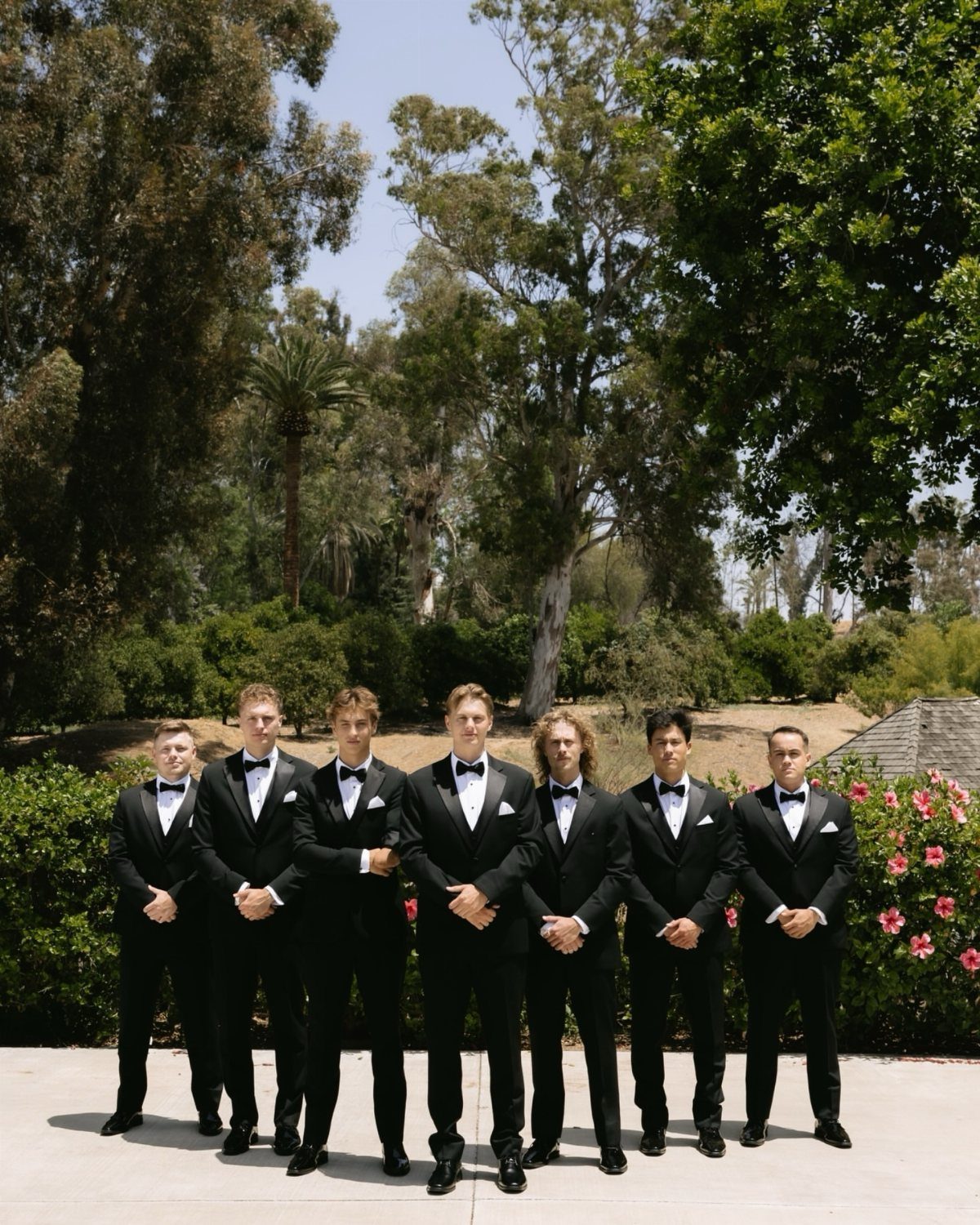
A straight line of groomsmen in matching black tuxedos and bow ties, with green trees behind them, keeps the look sharp and unified.
The uniformity is the point: this is the wedding’s official record, the image that goes to parents and newspapers.
Straight lines need checking.
Shoulders level, shoes forward, no one half a step ahead from eagerness or nerves. The outdoors solves lighting but adds wind; bow ties and boutonnieres want pinning, not trust.
Pink flowers in the background give color the men do not carry. The eye rests there between faces, which helps a long row read as individuals rather than chorus.
Shoot two frames: one smiling, one serious. The serious one ages better.
Importance of Candid Moments
Candid moments carry the weight the posed ones cannot.
The groom’s face when he thinks no camera is watching, the laugh that breaks after a joke lands wrong, the hand raised to a boutonniere for the fifth time: these are the frames couples return to.
The technique is subtraction.
I remove myself from the room they are in. The in-between moment arrives on its own; I only stay ready for it.
Rush the schedule and the groom stays aware of every lens.
Using Natural Light
Daylight keeps skin looking like it does when he checks the mirror at home. A flash would freeze motion but kill the mood, and the groom’s face under direct flash looks like no face he has seen before.
Window light is the standard I work from. It falls from one direction, which gives the jacket texture and the cheekbone an edge.
The constraint is speed.
Clouds move, the sun drops, a window that worked at 2:00 PM turns harsh by 3:00. I shoot the natural-light frames first, while the light still matches the anticipation in the room.
Encouraging Fun Interactions
Playful shots need permission more than props. The soccer ball, the draped pose, the ridiculous setup: these work because the group has already agreed to be ridiculous.
The personal history matters.
A team ball or an inside joke lands harder than a prop grabbed at random. The laugh is real because the reference is real.
Group patience for standing still runs thin fast, and the frozen grin follows "say cheese" if you open with silliness. Reset the shoulders after the formality, not before.
Capturing Emotions
The groom’s emotional arc runs from anticipation to reaction to relief, and each phase passes faster than the last.
The minutes before the ceremony, when anxiety and excitement mix in equal measure, are easy to miss while setting up for the processional.
The hand on the lapel, the glance toward the door, the breath held before stepping forward: these need no setup, only attention.
The tears when he sees his bride come fast and go faster; a long lens keeps me out of his side vision, because once he knows the camera is there the moment thins out.
The range matters as much as the peak. Happy tears, nervous hands, the exhale after the vows: the album needs all of them to tell the truth of the day.
Frequently Asked Questions
What are the bride and groom photos called?
I call them romantic couple photos, the ones where the couple forgets I am there. A long lens from across the room, or apparently checking camera settings while they forget you are there.
What should a groom never forget?
I do not keep a packing list, but I do watch grooms lose the day to hurry.
Build in time for the natural-light frames before clouds move or the sun drops, and for the gap between ceremony and reception when the couple arrives relaxed and the camera finds what is actually there between them.
What makes a great groom photo?
Movement and genuine reaction beat posed perfection. A long lens keeps the photographer out of his peripheral vision, because awareness of the camera flattens the reaction every time.