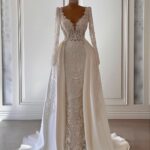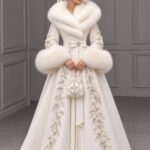
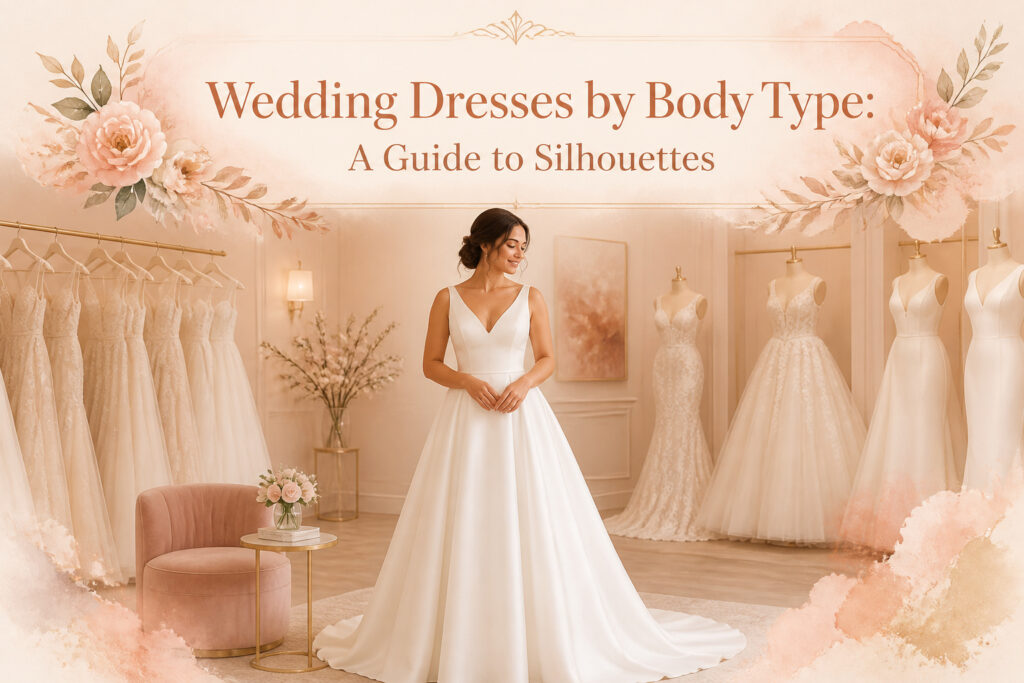
A wedding dress silhouette is a structural choice, not a style preference, and the right one depends on which part of your body you want the fabric to follow and which part you want it to correct. Nine style guides agree on the same pairings, but they rarely explain why a mermaid demands more confidence than an A-line, or why a ball gown only flatters when the bodice above it can stand on its own. The guide below maps each body type to the silhouettes that earn the "supportive" label, with the construction details, fabric weights, and neckline placements that make the pairing hold up past the first fitting.
Hourglass Figures and the Dresses That Follow Them
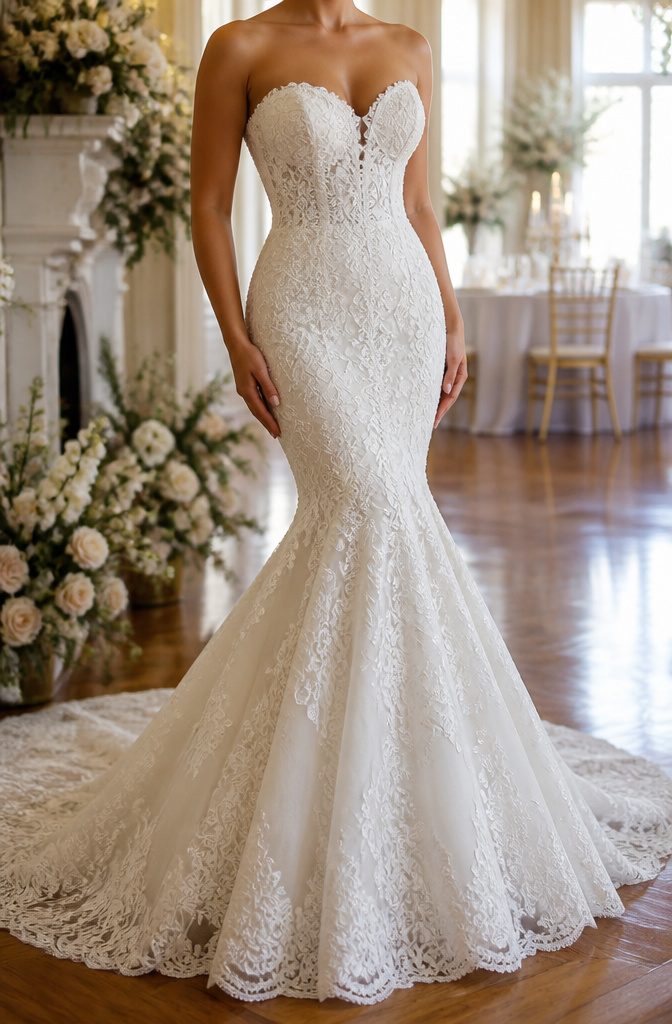
An hourglass figure, with hips and bust nearly equal and a defined waist, gives you the rare balance where a dress can follow your body instead of correcting it. Nine style guides point to the same trio: mermaid, fit-and-flare, and A-line.
The mermaid silhouette fits through the bodice, waist, and hips, then flares dramatically around the knees. A trumpet gown works similarly but breaks higher, above the knee, trading some drama for easier movement. Fit-and-flare starts its flare right at the waist, which softens the line while still tracking your curves. An A-line, less body-hugging than the other two, keeps the waist visible and lets the skirt flow freely from there.
Structured fabrics and a supportive bodice matter more here than volume or padding. A corset bodice can add waist definition if the gown’s built-in shaping needs help.
Show off your curves in a body-hugging mermaid or fit to flare silhouette—they are both perfect to complement your proportions.
What this means practically: you are choosing where the flare starts, not whether to show your shape at all. The mermaid demands the most confidence and the least need to move quickly; the A-line gives you both.

Silhouette: Mermaid ;Neckline:V Neck,Sweetheart;Hemline/Train:Brush/Sweep;Embellishment:Lace,Beads;Fabric:Organza;Add more boning to corset bodice.

Features: Mermaid wedding dresses for bride 2025 features satin, lace, long sleeve, off shoulder, strapless, v-neck, backless, train, bodycon, long, built-in bra, zipper.

Women's Sweetheart neckline Lace up Corset Bridal Ball Gowns Beach Mermaid Wedding Dresses for Bride with Train
Pear-Shaped Brides and Balance Below the Waist
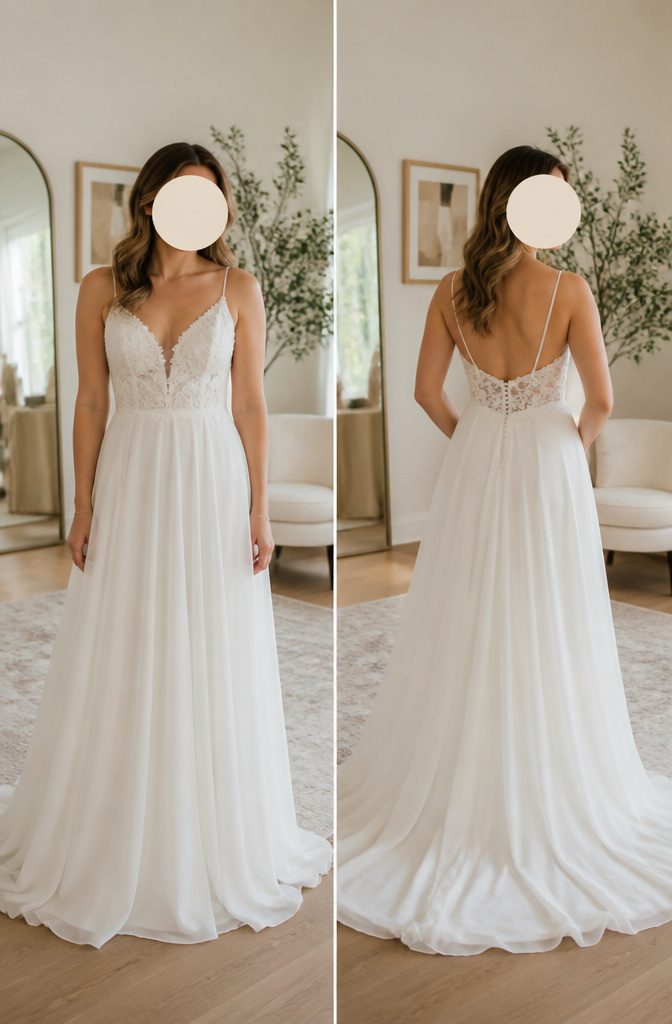
A-line, ball gown, and empire waist silhouettes are the three styles that come up most reliably for pear-shaped brides, and the pattern is consistent enough that ten separate guides document the pairing. The logic is the same across all three: each draws the eye upward while letting fabric skim rather than cling to the hips.
An A-line gown fits close through the bodice, then flares gradually from the natural waist. That flare starts high enough to avoid pressing against the widest part of the hip, which creates a longer vertical line without adding volume where it is not needed. Ball gowns push the same idea further, using a dramatically full skirt to balance proportion through contrast rather than concealment. The waist stays defined, and the eye reads the overall shape as symmetrical. Empire waist dresses move the seam up to just below the bust, which elongates the leg line and lets the skirt fall in soft folds from a point well above the hip.
Embellished or detailed bodices strengthen the effect by giving the upper body something to compete with the lower half for attention. Off-the-shoulder necklines and cap sleeves can also help level out shoulder width against hip width. For the skirt itself, tulle and chiffon tend to behave better than clingier fabrics like satin, which can catch and emphasize rather than glide over the area you want to soften.

Features: Lace applique, tulle, v neck, mermaid, sleeveless, zipper, backless, plus size wedding dresses for bride.


Cocktail Dress: Wedding guest party dress, semi formal holiday dress with wrap hem, v neck ruffle a-line midi knee length prom dress, mother of bride dress. Please do refer to the DRESSTELLS size chart before placing your order, not AMAZON SIZE CHART
Apple-Shaped Bodies and Where to Place the Waist
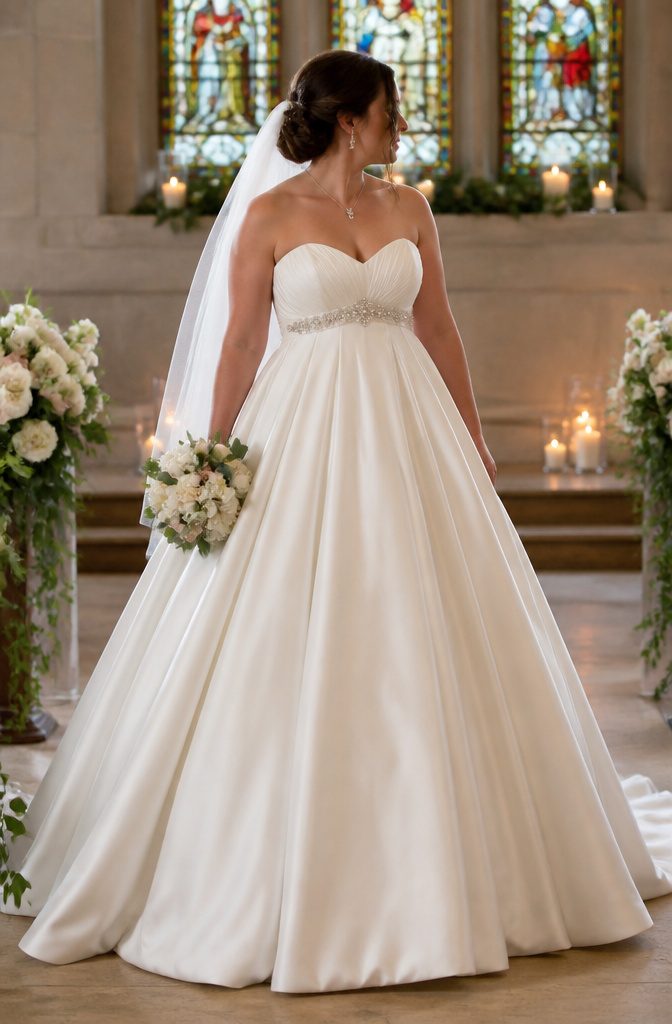
A bride with a fuller midsection than bust and hips has an apple-shaped figure, and the waistline placement is what makes or breaks the dress. An empire waist sits just below the bust, letting the skirt flow freely from that high point instead of gripping the stomach. Nine different style guides point to this same combination for apple shapes: empire first, then A-line, then ball gown.
The empire cut does two things at once. It highlights the narrowest part of the torso, and the falling fabric creates a longer line for the legs. A soft A-line works similarly, skimming past the midsection while adding structure through the bodice. For drama, a ball gown with a fitted top and voluminous skirt rebalances the silhouette entirely, drawing the eye up and out rather than center.
V-necklines and sweetheart cuts help by opening the décolletage, and ruching around the midsection can add gentle definition without clinging. Lightweight fabrics matter here, too. Heavy material builds bulk where you want drape, so smooth, airy layers keep the line clean from bust to hem.

ELEGANT DESIGN: Stunning A-line wedding dress featuring a sweetheart neckline and beautifully detailed bodice with intricate embellishments

Feature:Lace appliques wedding dresses for bride, tulle wedding dress, a line bridal gown, long sleeves,sweetheart,backless,train, ball gown,built-in bra, back zipper.

Rectangle Shapes and Creating Curves With Structure
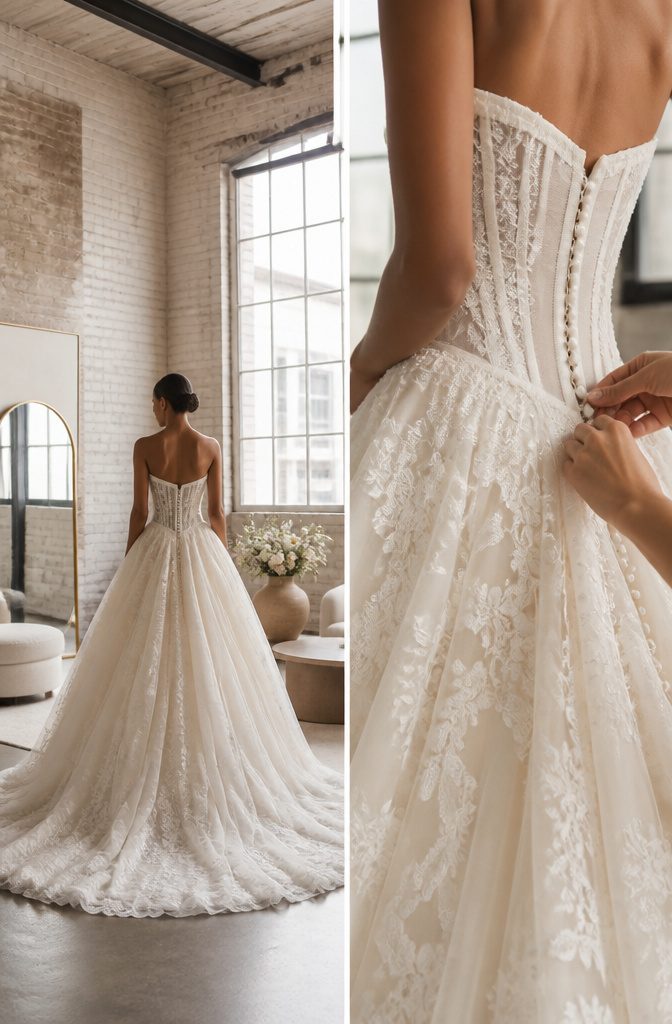
A rectangle frame, where shoulders, waist, and hips sit at roughly the same width, needs structure to read as shape rather than line. The ball gown does the heaviest lifting here: a cinched bodice paired with a full skirt builds an hourglass from architecture, not anatomy. I have seen this silhouette turn a straight figure into something sculptural, the waist appearing because the dress insists on one.
The sheath works at the opposite end, hugging the body close enough that the subtle curves already there become visible. Draped or ruched fabric adds dimension without bulk, and a defined waist, whether built in or added with a belt, keeps the eye from sliding straight down. A shapeless, straight-cut sheath ruins what the rectangle body has; structure is the whole point.
A-line splits the difference, flaring gradually from the waist to suggest softness without the ball gown’s volume. It creates a gentle hourglass, understated but present.
What to skip: anything boxy or columnar that follows the body’s own straight line. Eight independent guides on wedding dresses body type agree that unstructured cuts flatten an already flat silhouette. Cap sleeves or a high front slit add interest elsewhere, drawing the eye to vertical breaks rather than horizontal uniformity.
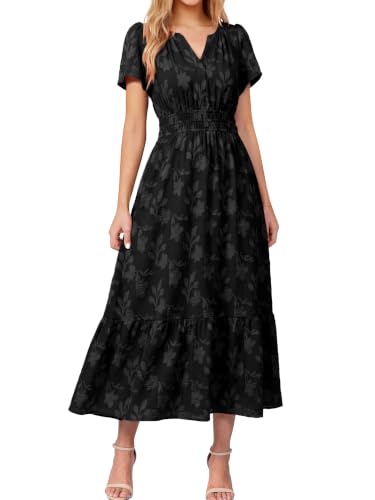
BURNOUT FABRIC - S=4-6, M=8-10, L=12-14, XL-16-18.Crafted from 100% polyester, No Lining, exquisite burnout floral maxi dress offers a soft, textured feel. Lightweight and breathable, this summer maxi dress features a classic V-neck and short sleeves for ultimate comfort and style

Mesh Material - Crafted with lightweight,Soft to the touch,flowy floral mesh fabric with lining,the breathable material drapes beautifully,creating a soft,romantic movement with every step,perfect for women embracing the warm spring and summer days
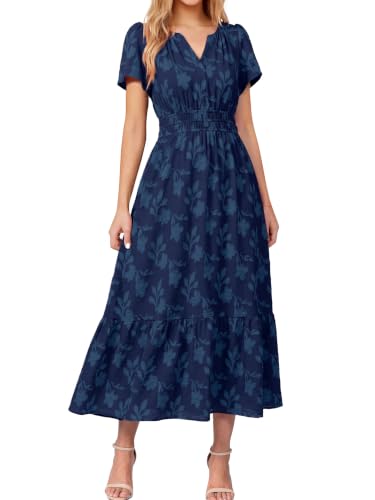
BURNOUT FABRIC - S=4-6, M=8-10, L=12-14, XL-16-18.Crafted from 100% polyester, No Lining, exquisite burnout floral maxi dress offers a soft, textured feel. Lightweight and breathable, this summer maxi dress features a classic V-neck and short sleeves for ultimate comfort and style
Inverted Triangles and Softening the Shoulder Line
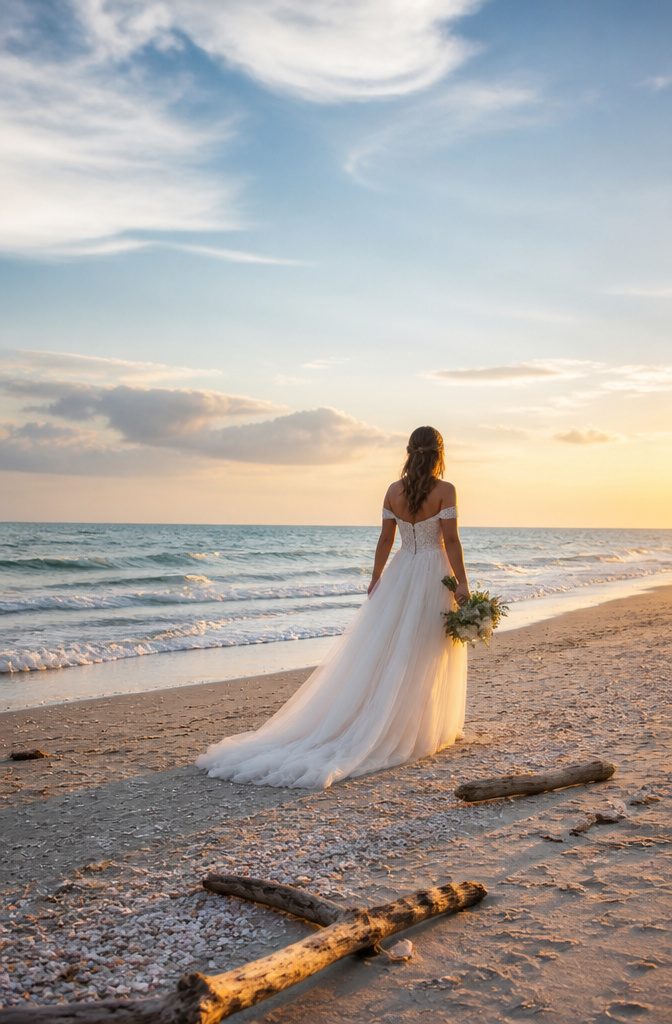
Broad shoulders and a narrower hip line call for volume below the waist to balance the frame, and three silhouettes do this consistently well. A-line dresses flare gently from the waist, softening the shoulder line without adding overwhelming bulk. Ball gowns take that further with a dramatic full skirt that creates more even proportions between top and bottom. Empire waist styles sit just below the bust and let the skirt flow freely, which elongates the legs and draws attention upward while covering the natural waist for a slimmer overall silhouette.
What convinced me, reading through the guidance on this shape, is how unanimous the direction is: eight separate sources point to this same trio for inverted triangle figures. Simple, unadorned tops keep attention away from the shoulders, while ruffles or cascading details at the hip add the femininity some brides want. Avoid cap sleeves or high necklines that emphasize what you’re trying to soften. The goal is proportion, not hiding anything; these silhouettes achieve it by adding structure where the body runs narrower.

Modern Minimalist Statement - Feel polished in this high neck wedding dress, a soft white mermaid wedding dress in smooth satin with a dramatic bow back, perfect for brides who want a clean, modern look for city hall, beach, or chapel ceremonies

DESIGN: Elegant strapless ball gown silhouette featuring a romantic sweetheart neckline and voluminous tulle skirt perfect for a fairytale wedding

TIMELESS BALL GOWN SILHOUETTE: Step into special occasions in a satin gown shaped with a classic empire waist and a full, flowing skirt. The elegant long silhouette creates a polished look designed to stand out at weddings, galas, and celebrations.
Petite Frames and the Length That Matters
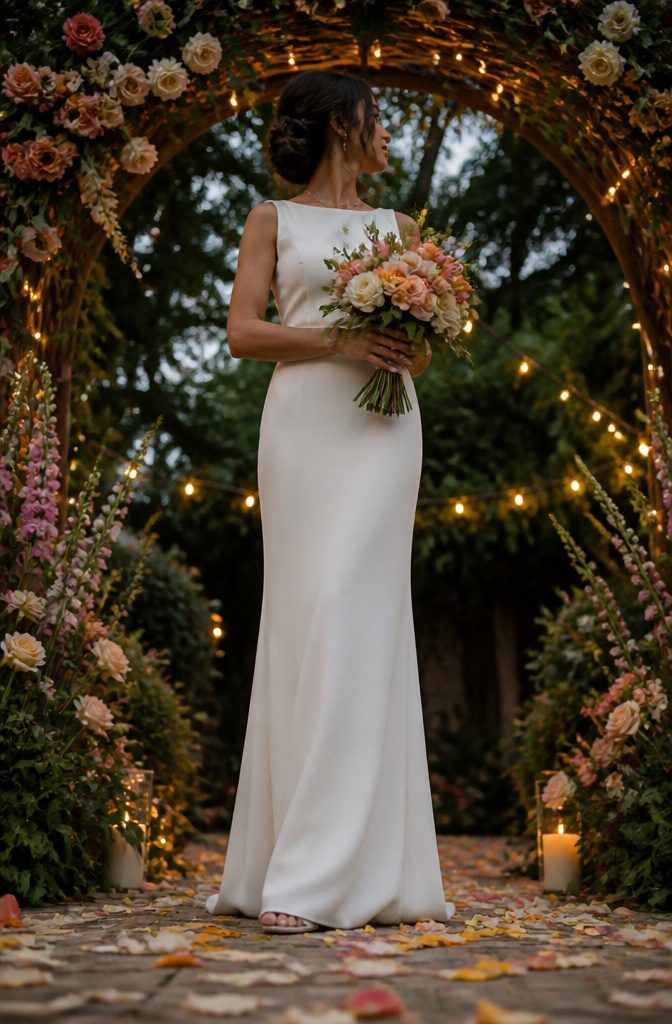
A sheath dress runs straight from shoulder to hem with almost no flare, and on a frame under 5’4", that uninterrupted vertical line reads as height you do not actually have to possess. The sources back this combination strongly: seven of them point to sheath, tea-length, or column silhouettes as the reliable choices for petite brides. Tea-length hits mid-calf rather than sweeping the floor, which keeps the skirt from swallowing your legs entirely. You still get the wedding-dress moment without the fabric pooling around you like a child playing dress-up. Column works similarly, skimming the body in one long stroke.
What sinks petite frames is volume that breaks that line. Heavy skirts, bulky trains, or excessive gathering at the hip chop your silhouette into horizontal bands. Lightweight fabrics and clean edges do the opposite work, letting the eye travel up and down without interruption. A tea-length cut also opens up the ankle and lower leg, which creates the same lengthening trick as a nude shoe. If you want a little shape, trumpet flares below the hip rather than at the waist, preserving that long central column while adding curve where it will not shorten you. The hem should never overwhelm the frame; proportion matters more than ornament.

THE EDIT BY DB STUDIO: A curated collection by David's Bridal, offering trendy, versatile dresses for every special moment—from weddings to everyday celebrations.

Sexy Curves -- Mermaid dress is adorned with delicate lace shell, eyelash lace details and off shoulder design.

Features: Lace corset prom dress for women,strapless mermaid formal evening dress,pleated chiffon bridesmaid dresses,long lace wedding guest dress,corset bodice ball gowns,formal party dress with slit.
Plus-Size Brides and Supportive Silhouettes
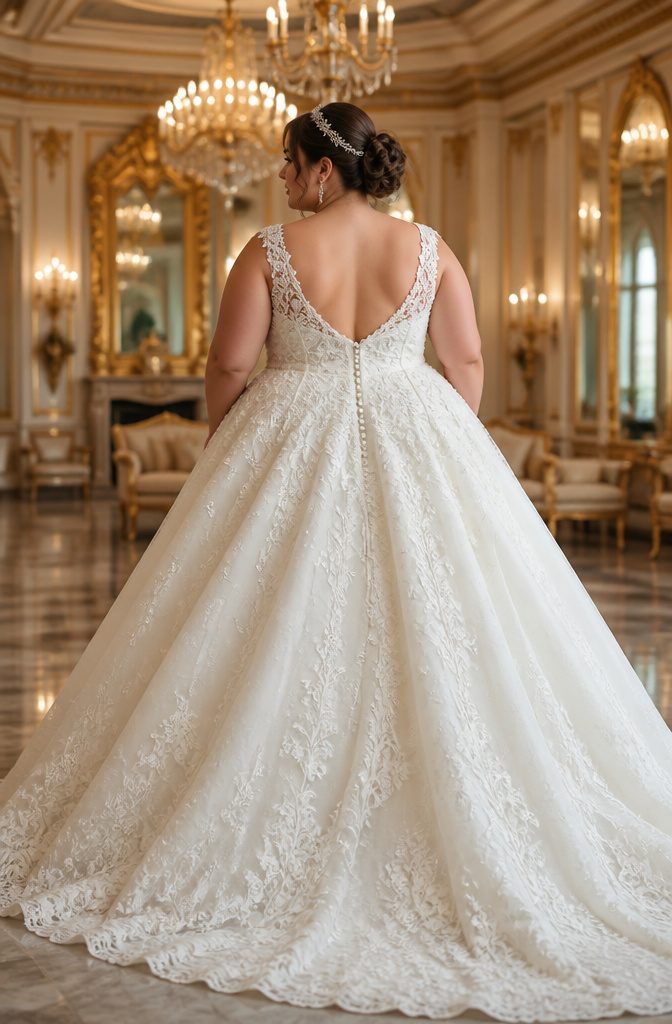
A-line, ball gown, and fit-and-flare silhouettes are the three shapes that work hardest for plus-size brides, and the difference between a gown you tolerate and one you forget you’re wearing comes down to supportive construction, not how much fabric covers you.
The empire waist sits high and lets the skirt fall without clinging, which works well when the bodice itself is holding its shape rather than relying on your body to do it. A ball gown takes that further: the full skirt needs a fitted bodice with real structure, because volume below only flatters when the waist above is clearly defined. Seven separate guides on wedding dresses body type point to this exact pairing of ball gown shape with reinforced bodice as the combination that earns the "supportive" label.
Fit-and-flare is the riskiest of the three, but the payoff is there when the flare starts low enough to balance hips rather than squeeze them. What separates a workable fit-and-flare from a mistake is the same across all three silhouettes: built-in corsetry, boning that doesn’t warp after an hour, and fabric with enough body to stand away from the body rather than collapse against it. Coverage alone, a drape of lace or tulle over a weak bodice, does none of that work.

Flattering Fit and Flare Design: Our women's wedding guest bridesmaid dress features a fit and flare short sleeves and a knee-length hem design. It is formal dress that can showcase a modest and elegant style while also having a charming cut. Every stitch has been reinforced to make that this Fancy dress, which is beloved by ladies that can maintain its shape and elegant appearance with each wear

Rich Wine Red & Vintage Square Neck Design:This midi dress features a luxurious wine red hue paired with a delicate square neckline (trimmed with lace) and a smocked back detail—blending retro elegance with modern femininity. The sleeveless straps and flared A-line skirt create a flattering silhouette that suits various body types.

Cocktail Dresses Women: Made from delicate lace fabric, the dress exudes a textured and luxurious feel; Intricate lace pattern overlay,with soft lining, giving it a sophisticated and elegant appearance.
How to Measure Yourself for the Right Category
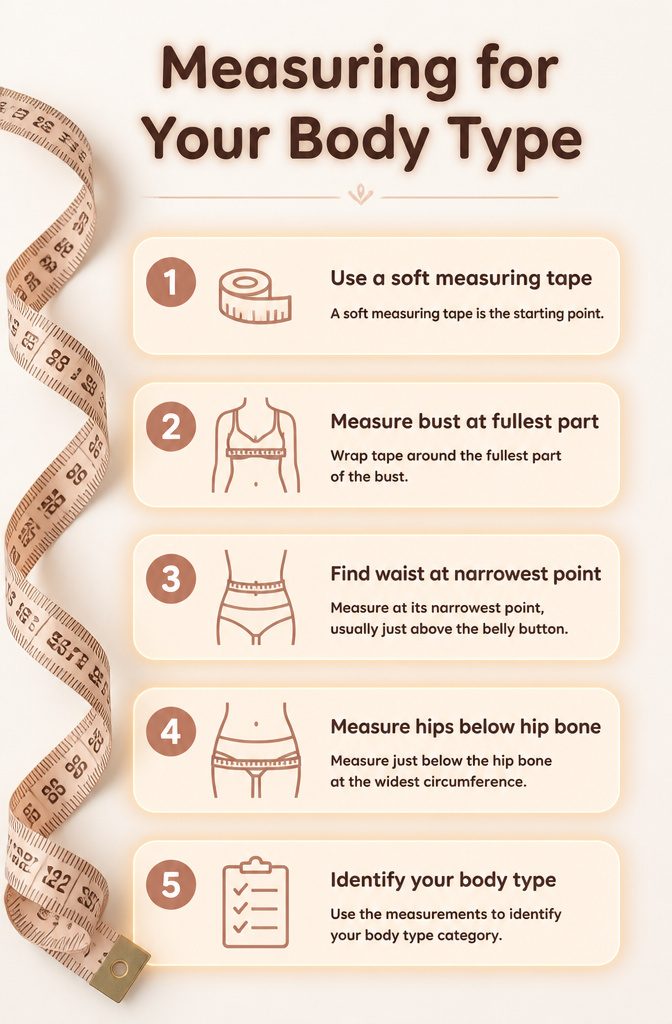
A soft measuring tape and normal-fit clothes are the starting point, though the shoulder measurement practically requires a second pair of hands to avoid parallax errors. Wrap the tape around the fullest part of the bust, keeping it taut without compressing. The waist goes at its narrowest point, usually just above the belly button. For hips, measure just below the hip bone at the widest circumference.
The ratios between these three numbers map to the categories. A waist that is significantly narrower than both bust and hips points toward an hourglass. When hips exceed the bust, the scale tilts toward pear. A wider midsection with bust and hips closer together reads as apple. Shoulders broader than hips suggest inverted triangle, while roughly equal measurements across all three read as rectangle.
Online body type calculators can handle the math if the proportions feel ambiguous, which they often are. Most people carry mixed characteristics rather than a pure type. The better approach is to note which feature stands out most dramatically and let that guide the silhouette search.

Total length is approximately 55 inches - Measurements are Bust/Chest (XS) Up to 32.5 inches (S) 32.5-35 inches (M) 35.5-37.5 inches (L) 38-40 inches (XL) 40.5-43 inches (2X) 43.5-47 inches (3X) 48-51.5 inches (4X) 52-55.5 inches
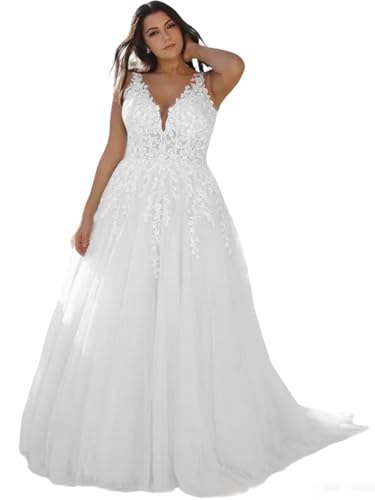
Features:Summer Plus Size Wedding Dresses for Bride,Lace Applique and Soft Tulle Material,Breathable and Skin-Friendly,This Wedding Dress is Soft and Comfortable,Adds an Elegant,Charming and Mature Aura to you,Let You to be a Most Beautiful Bride

❤Dear, please choose Kumeng and KWBCM,Kumeng and KWBCM has FBA stock,very fast,100% Polyester,Main material: Spandex+Organza. Two layers and three tiered organza with plenty of gathers to hold the dress's shape,plus one Layer of lining to prevent scratching gentle sensitive skin
Necklines and Fabrics That Help or Hurt
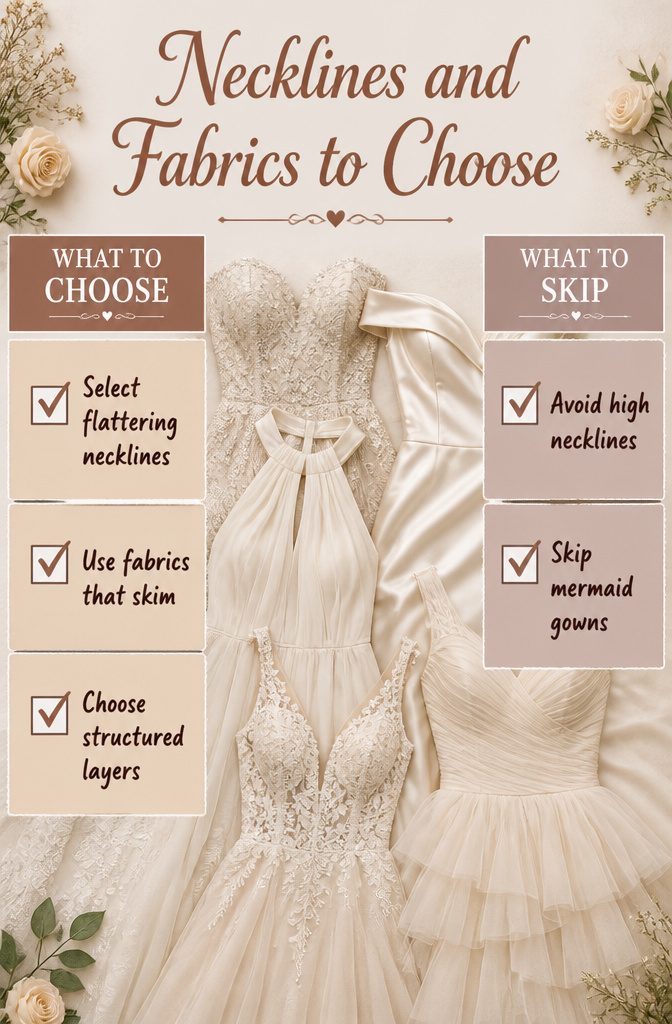
Necklines and fabrics do the quiet work of making a silhouette feel intentional. A strapless or off-the-shoulder cut draws the eye upward and balances wider hips, especially when the bodice carries beading or lace. Pear-shaped brides get the most mileage from this move; halter or scoop necklines do similar work for inverted triangles by softening the shoulder line and pulling attention inward.
Fabric choice matters as much as cut. Satin clings and announces every line below the waist, so tulle or chiffon skims instead for pear shapes. Rectangle figures need the opposite help: ruching, pleats, and structured layers on the bodice or skirt add the dimension that fabric alone won’t supply. Boxy, shapeless styles flatten what little curve exists there.
What to skip is clearer than what to choose. High necklines narrow the upper body and throw off balance for anyone with wider hips. Mermaid gowns amplify that imbalance by spotlighting the lower half. Plunging necklines, on the other hand, create a strong focal point without the structural risk.

Material: 95%Polyester and 5%Spandex

*ZIPPER on the back is hidden style so may be difficult to pull up or down. Please be patient and careful. It will help if you hold the the side clothes steady while pulling the zipper.
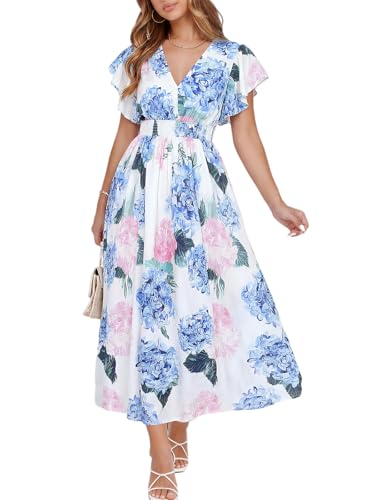
Size and Material: S=US 4-6, M=US 8-10, L=US 12-14, XL=US 16, Women summer floral maxi dresses is made of high-quality polyester fabric, friendly to skin, soft to touch, these exquisite floral print dresses will make you feel confident and beautiful all summer long.
The Mistakes I See Most Often
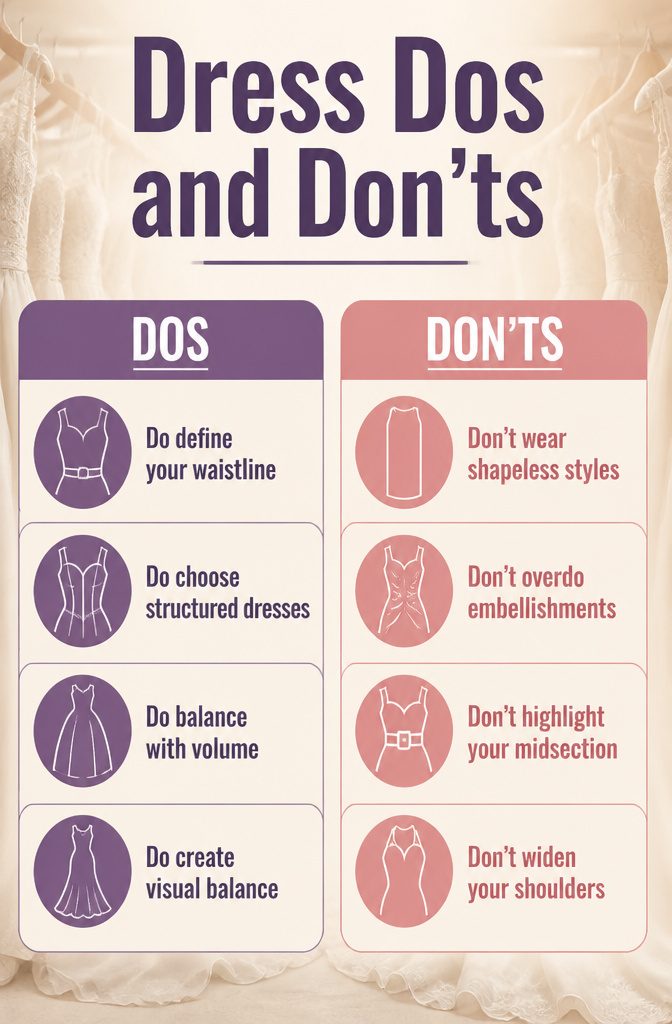
The dresses that miss the mark usually do so from too much conviction in one direction. An empire waist on an hourglass frame buries the very proportion the bride wants to show off; the waistline drifts north and the middle disappears. Pear-shaped brides sometimes reach for a sheath that grips the hip, not realizing the same cling that feels flattering in a mirror alone reads as spotlighting in photographs where the lower body sits dead center. Apple shapes face the opposite trap: ruching, beading, and belts stacked across the midsection become a bulletin board for the area they hoped to quiet.
The straight-cut, shapeless dress is the one mistake I warn every rectangle bride against. Without waist definition or structural curve, the frame reads as a line from shoulder to hem; the body underneath could be anyone’s. Some rectangles try to force volume instead, picking a ball gown so wide it wears them rather than the reverse. The better move is structure that suggests a waist: a belt, a seamed bodice, a trumpet flare that starts where curves would if they existed. Inverted triangle figures often ignore how a halter or cap sleeve widens the shoulder line further; the eye travels up and stays there. The goal for every type is balance, not correction, and most brides find it once they see what their chosen dress is actually doing.

Modern V-Neck Romance - Feel unforgettable in this soft jersey sheath dress. Featuring elegant ruching and a sleek V-neck, its comfortable stretch fabric offers a flattering, confident fit perfect for the aisle, city hall, or reception.

Features:Cap Sleeve Wedding Dresses for Bride,V Neck Tulle Lace Wedding Dresses 2026,Cap Sleeve Tulle Bridal Ball Gowns for Women,Lace Appliques Wedding Bridal Gowns 2026,V-Neck Tulle Wedding Dresses with Train,Simple Cap Sleeve Tulle Beach Wedding Dresses.A-Line,Cap Sleeve,V-Neck,Tulle Lace Appliques,built in bra.The simple wedding dress is suitable for every bride!

SATIN CORSET BODICE: Smooth satin shapes the bodice with a clean corset-inspired front, giving the wedding dress a polished bridal look while adding gentle structure for ceremonies, photos, receptions, and other special moments with family members.
When Your Style and Your Shape Disagree
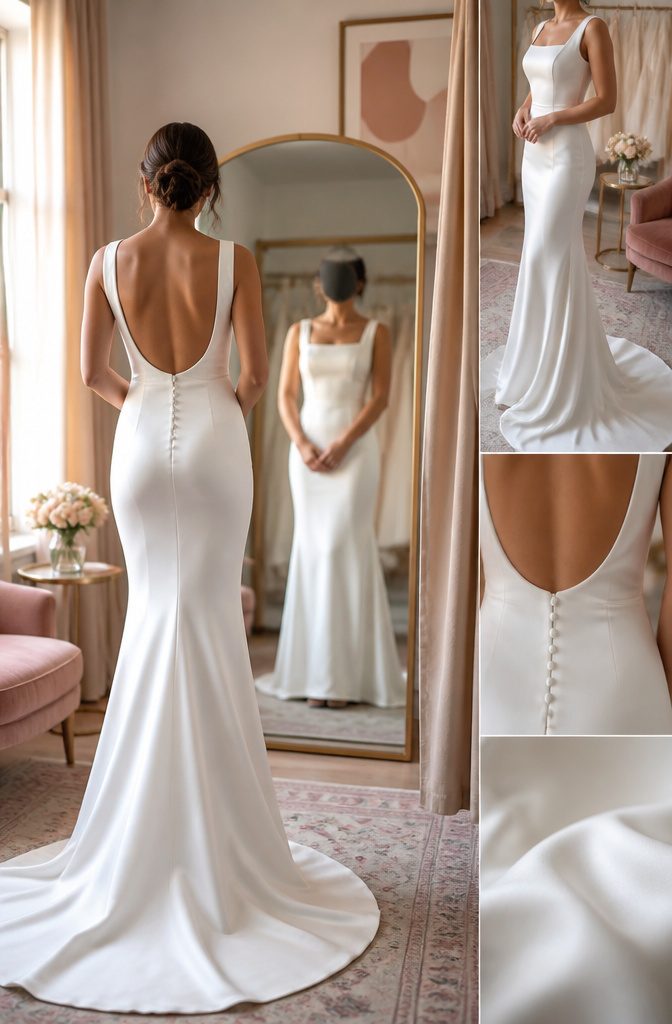
The bridal salon mirror tells two stories at once: the shape the guidebooks say you have, and the person who actually shows up to fittings after work in sneakers. One bride I watched last spring had the balanced proportions that silhouette charts love, but she kept reaching for structural, almost architectural gowns that clipped her waist like an afterthought. The consultants kept bringing ballgowns. She wanted column dresses. The compromise that saved her appointment was separating structure from silhouette: she found a sheath with internal boning that held her torso the way a corset bodice would, but read as minimal from the outside.
Personal style and body-type advice sit in tension more often than the guides admit. A bride drawn to romantic, soft shapes may measure as rectangle; the romantic impulse does not disappear because her hips and shoulders line up straight. Fabric does the bridging here. Satin with a subtle drape builds curve without seaming. A high-low hem, playful by personality, also draws the eye to the lower leg and creates break where the hip line needs interest.
The sources agree on the endpoint: the gown should feel like the wearer. They disagree on how to get there. One path says find the flattering shape first, then style it. The other says start with the style that makes you feel present in the room, then engineer the support. Both work. The mistake is pretending they are the same appointment. Bring two lists to the salon: shapes that respect your structure, and details that signal your taste. Where the lists overlap is your dress. Where they do not, the tailor is your bridge, not the consultant’s preference.
Frequently Asked Questions
What wedding dress styles are best for an hourglass figure?
Mermaid, fit-and-flare, and A-line silhouettes work best. These styles follow your natural curves rather than correcting them, letting you choose where the flare starts. The mermaid demands the most confidence and restricts movement; the A-line gives you both freedom and shape.
What should a pear-shaped bride look for in a wedding dress?
A-line, ball gown, and empire waist dresses are the reliable choices. Each draws the eye upward while letting fabric skim rather than cling to the hips. Embellished bodices and off-the-shoulder necklines help level out shoulder width against hip width.
How can I choose a wedding dress for an apple-shaped body?
Empire waist, A-line, and ball gown styles are the recommended trio. An empire waist sits just below the bust and lets the skirt flow freely, highlighting the narrowest part of your torso while creating a longer leg line. V-necklines and sweetheart cuts open the décolletage, and lightweight fabrics keep the line clean from bust to hem.
What styles should a rectangle body shape avoid?
Skip shapeless, straight-cut dresses that follow your body’s own line without adding structure. Boxy or columnar cuts flatten an already flat silhouette. Eight independent guides agree that unstructured cuts are the mistake to avoid; the goal is architecture that builds curves, not fabric that traces straight lines.
What wedding dress styles are flattering for petite brides?
Sheath, tea-length, and column dresses create the lengthening effect you want. These styles preserve an uninterrupted vertical line that reads as height. Tea-length hits mid-calf rather than sweeping the floor, keeping the skirt from swallowing your legs. Volume that breaks that vertical line, like heavy skirts or bulky trains, works against you.