Forest wedding decor runs from free pinecones collected a season ahead to rentals that rival city ballroom rates, and the right choice comes down to how much structure your site already gives you.
A moss centerpiece spread as a runner rather than sitting in clumps reads grown, not bought, while a floral arch built from found branches takes longer than aluminum but drops the material cost to pruning shears and zip ties.
1. Moss Centerpieces
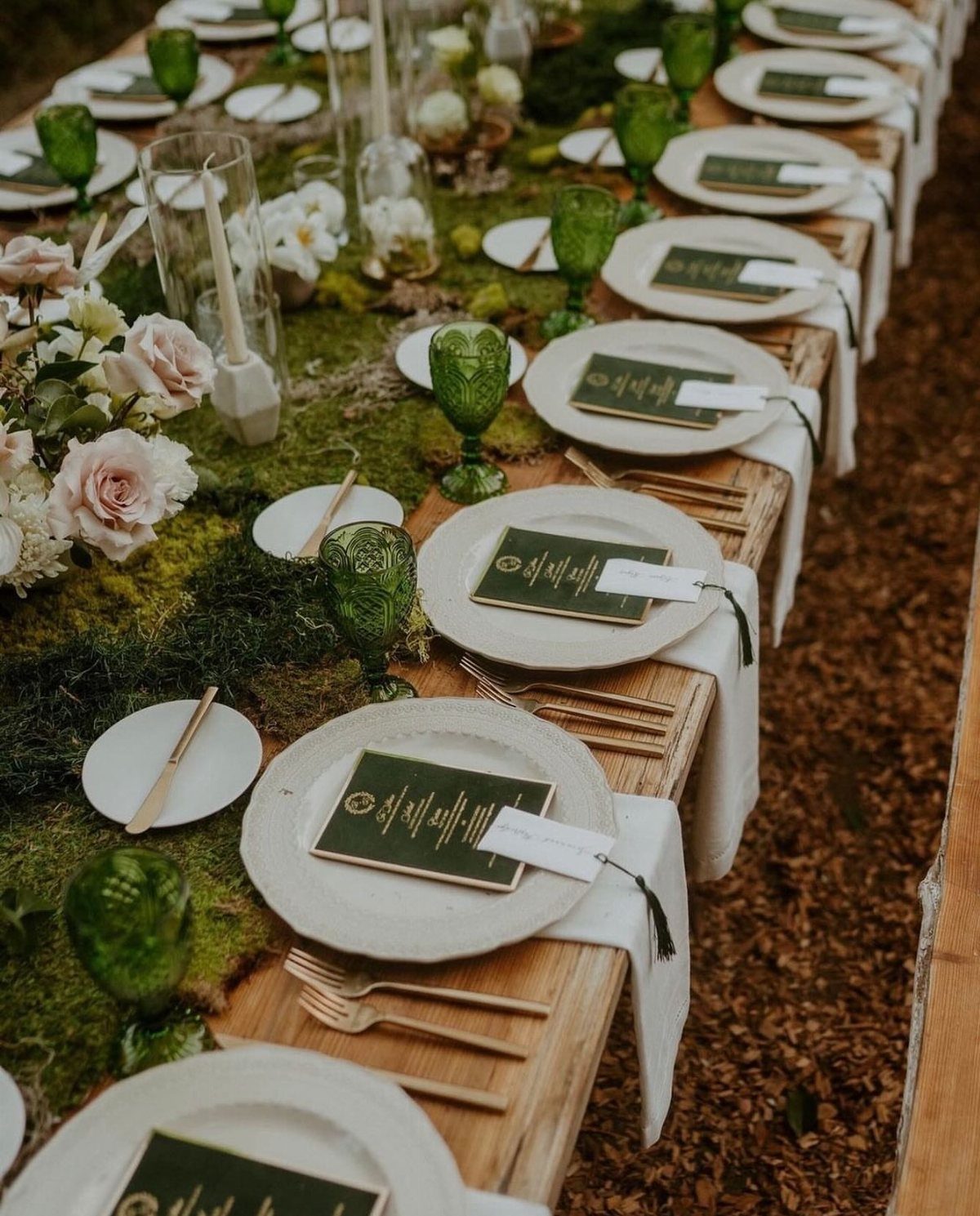
A moss centerpiece reads as something grown rather than assembled, which is why it works for couples who want decor that does not look bought.
Spread moss across the table as a runner rather than sitting it in isolated clumps, and set candles and green glassware directly into it.
To do this yourself, source sheet moss or preserved reindeer moss from a florist supply; fresh moss needs misting the morning of, preserved stays as it is.
Set it on wooden slices for height variation, or lay it flat along a runner of chicken wire shaped to your table length. Tuck in votives in glass jars, since moss is not flame-safe on its own.
Green glassware extends the palette without adding another color, which keeps a forest table from feeling busy. Printed menu cards in matching tones finish the place setting without extra florals.
2. Wooden Tables with Greenery
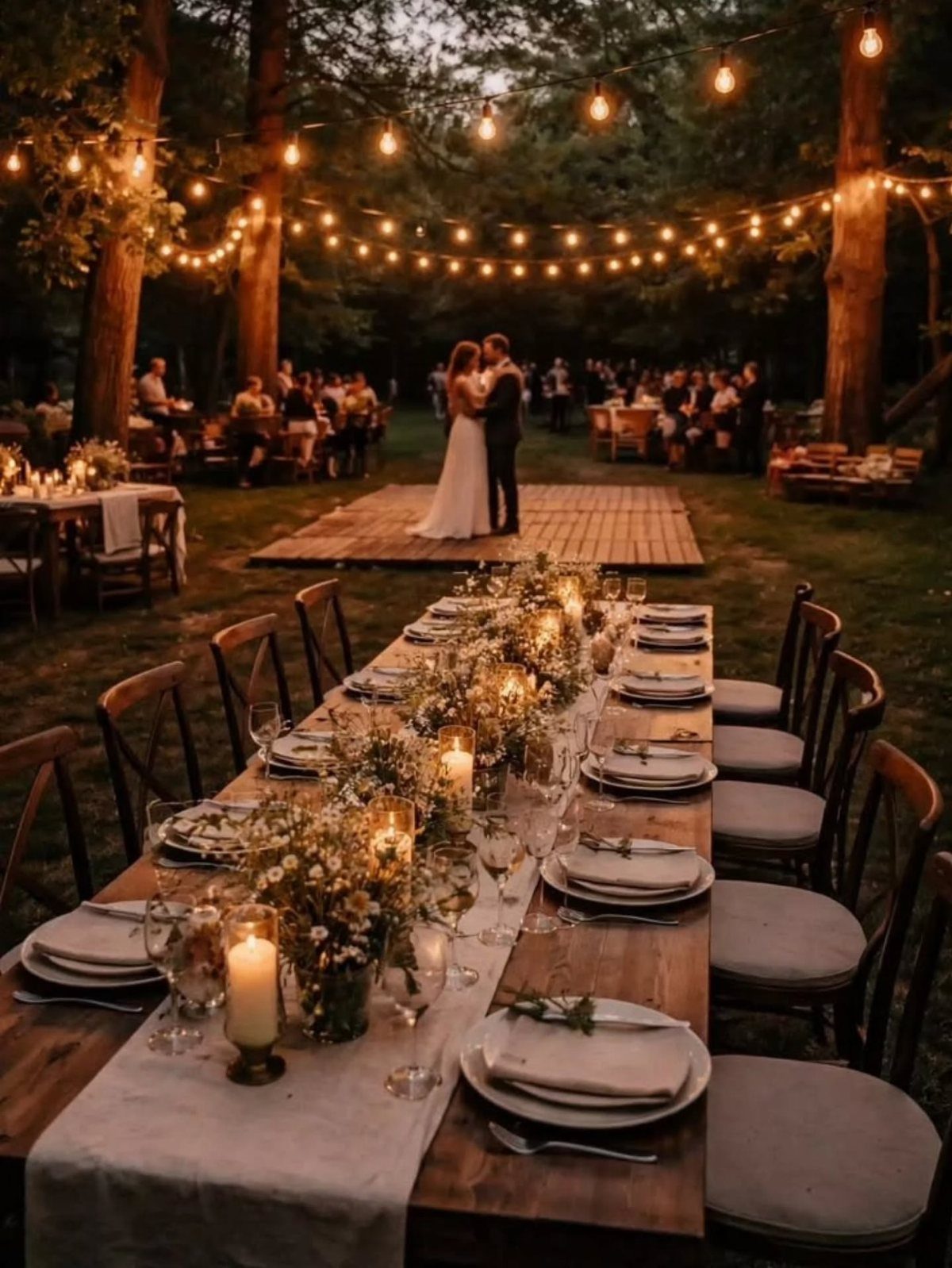
Long wooden tables carry the forest setting into the reception rather than setting up against it.
White linens on bare wood with greenery runners and taper candles keep the look clean while the grain still shows at the edges, and you save on heavy tablecloth rental.
Eucalyptus works for the garland base because it holds up out of water longer than softer greens.
Baby’s breath and white roses pair well with bare wood tables, and they read clearly from a distance in outdoor light. Taper candles in gold holders raise the light above the greenery so it does not get lost.
A gauze runner in cream or soft white, laid beneath the garland, adds depth; cheesecloth bought by the yard keeps the cost low per table.
3. Hanging Fairy Lights
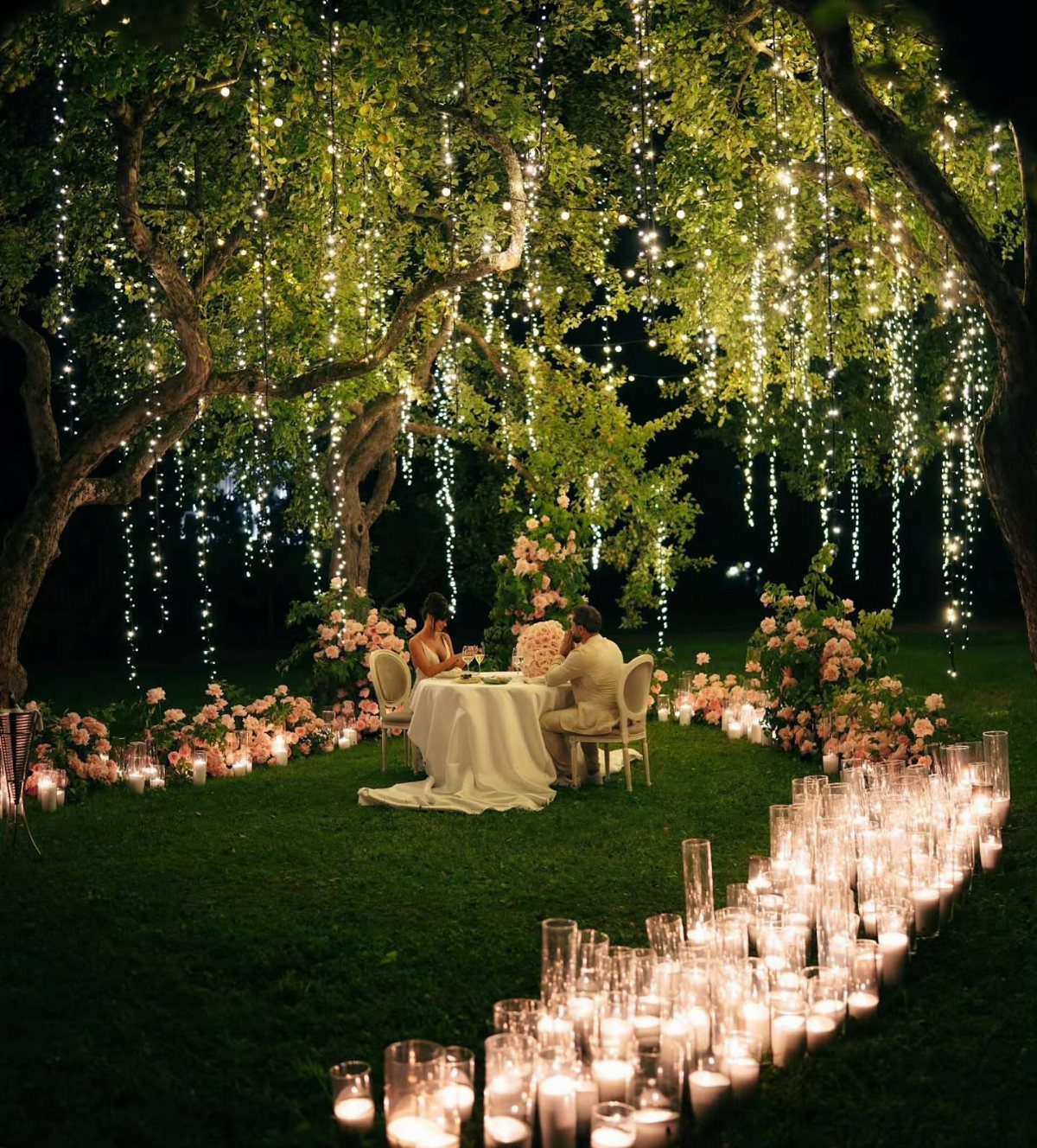
Fairy lights in a forest venue do what they cannot do anywhere else: they follow the existing vertical lines of trunks and branches so the installation looks native rather than imposed.
Warm white, specifically, photographs as candlelight rather than as a color cast on skin tones.
The practical matter is power. Battery-operated strands handle remote sites; for a seated dinner, string lights in clusters rather than single lines so the shimmer reaches the tables.
Let light strands cascade from branch height down to near head height, rigged with fishing line or thin wire that disappears after dark.
A sweetheart table beneath the densest cluster of lights gives the couple a lit focal point without lighting the whole forest equally. Extend the glow to ground level with pathway candles for guests walking in.
4. Floral Arches
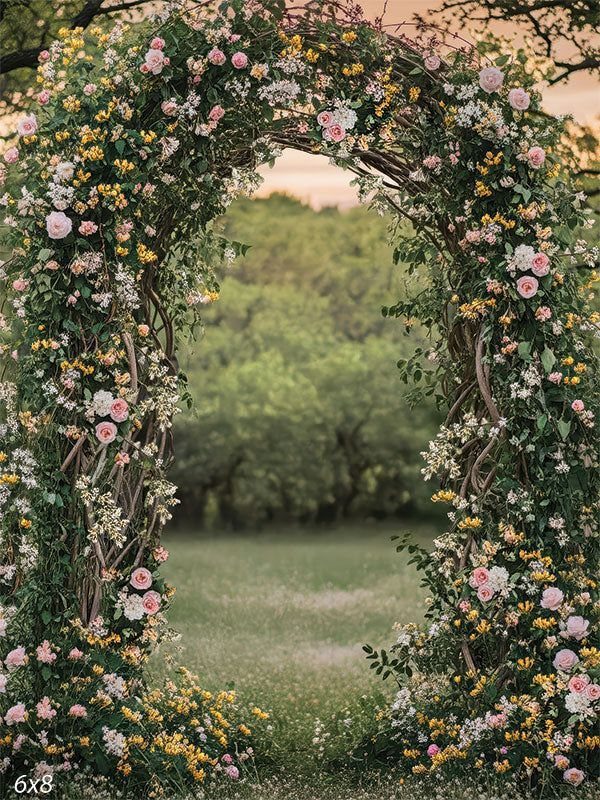
A floral arch built from branches rather than a metal frame announces itself as found and fitted to the site, not trucked in.
A branch arch uses irregular thicknesses and angles that read as accidental, which is the effect; it takes longer to build than an aluminum one, but the material cost drops to pruning shears and zip ties.
Cluster flowers at the corners and top of an arch rather than covering it evenly. That approach uses fewer stems than full coverage would, and keeps the structure visible.
White roses and hydrangeas, with wisteria-style hanging elements if the notes are followed, suit a ceremony arch because they read pale against green canopy at midday and glow under late light.
5. Candle Arrangements
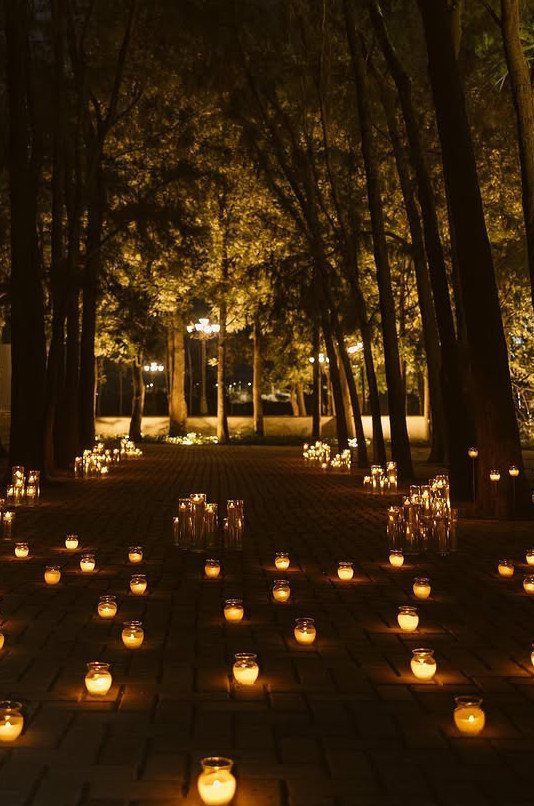
Candles on a forest path after dark do what no electric fixture can; they move with air currents and vary in brightness so the walk reads as alive.
Set dozens of candles in glass jars and cylindrical vases directly on brick with no elevation, which keeps the light low and the path itself visible only by where the glow falls.
Glass holders matter more here than in a tent or hall. A forest floor has unevenness, and a pillar candle on a wood slice, the notes’ alternative, tips where a jar does not.
Moss or flowers around the base, as the background describes, bridges the gap between holder and ground; use sheet moss for a single evening, since it browns without water.
Cylindrical vases give height variation without wind vulnerability. Cluster 3 heights together rather than spacing evenly for rhythm.
6. Greenery Garlands
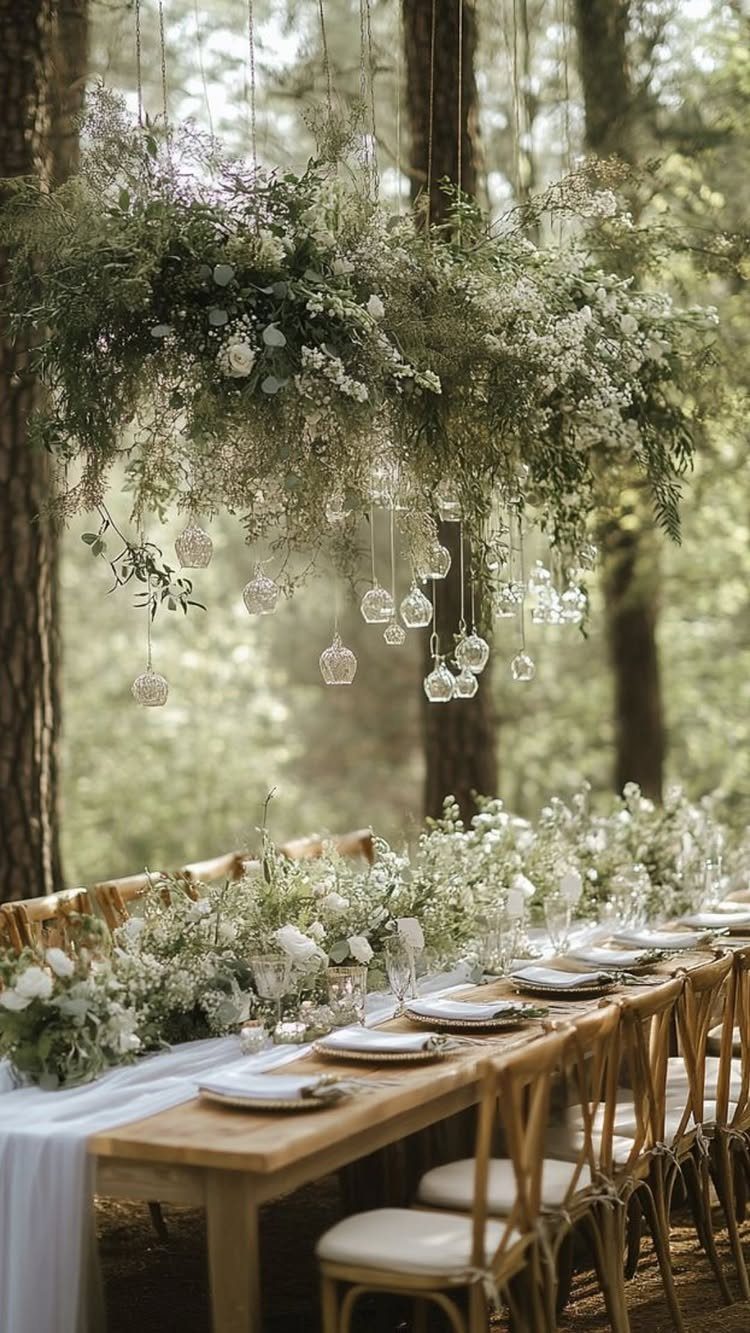
A greenery garland as table runner replaces the central floral arrangement with something that runs the full length, which suits long tables where isolated centerpieces would leave gaps.
Suspend ferns and eucalyptus with white flowers worked in above the table as well as laying them flat; a hanging installation with glass baubles echoes the runner below.
Eucalyptus garlands ship well and hold up long enough for a Friday setup and Saturday event.
Ferns wilt faster; use them the day of or choose leatherleaf, which holds longer than maidenhair. A white fabric runner beneath gives the eye a rest between the wood grain and the green.
For a suspended garland with glass baubles, check branch weight limits first, since a garland heavy with water picks up more than it looks.
7. Rustic Fabric Draping
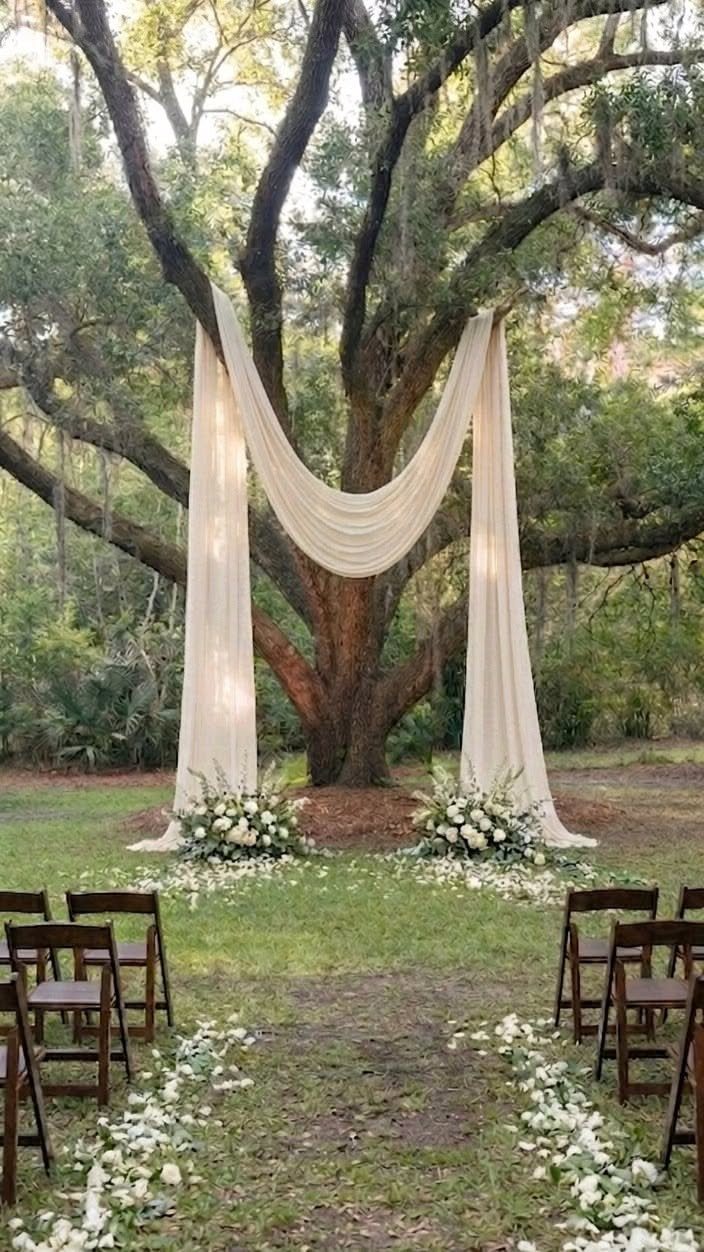
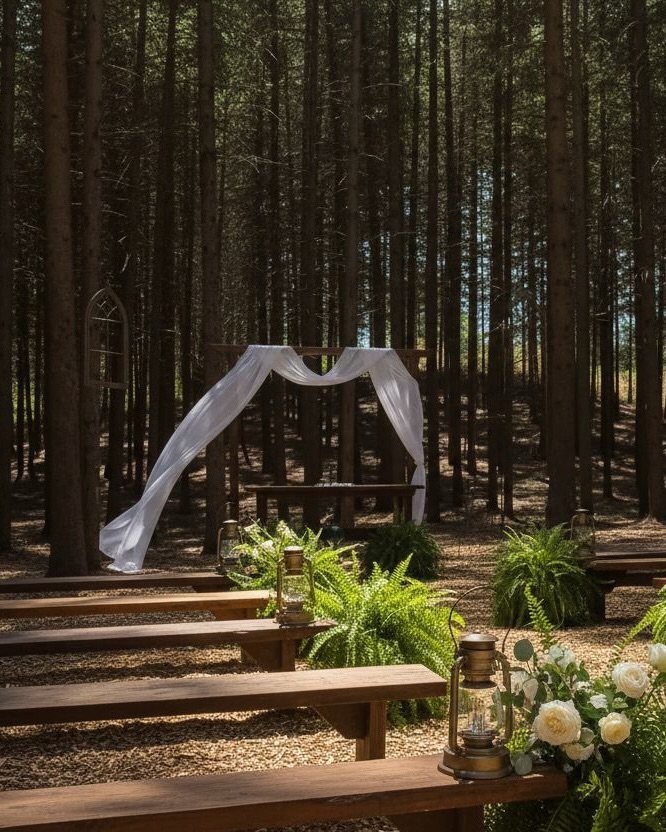
Rustic fabric draping turns whatever structure you have, a branch, a beam, or a rented arch, into a ceremony backdrop without building anything permanent. Cream chiffon or gauze reads soft against bark and green canopy where white would glare.
For an outdoor setup, weight the fabric ends with floral arrangements or sandbags hidden at the base; wind catches light cloth easily.
Burlap gives a rougher texture that suits tables and benches, though I would not use it where guests sit against it, the itch is real.
A single long swag between 2 branch points needs less fabric than full coverage and photographs as complete from the ceremony angle.
8. Pinecone Decor
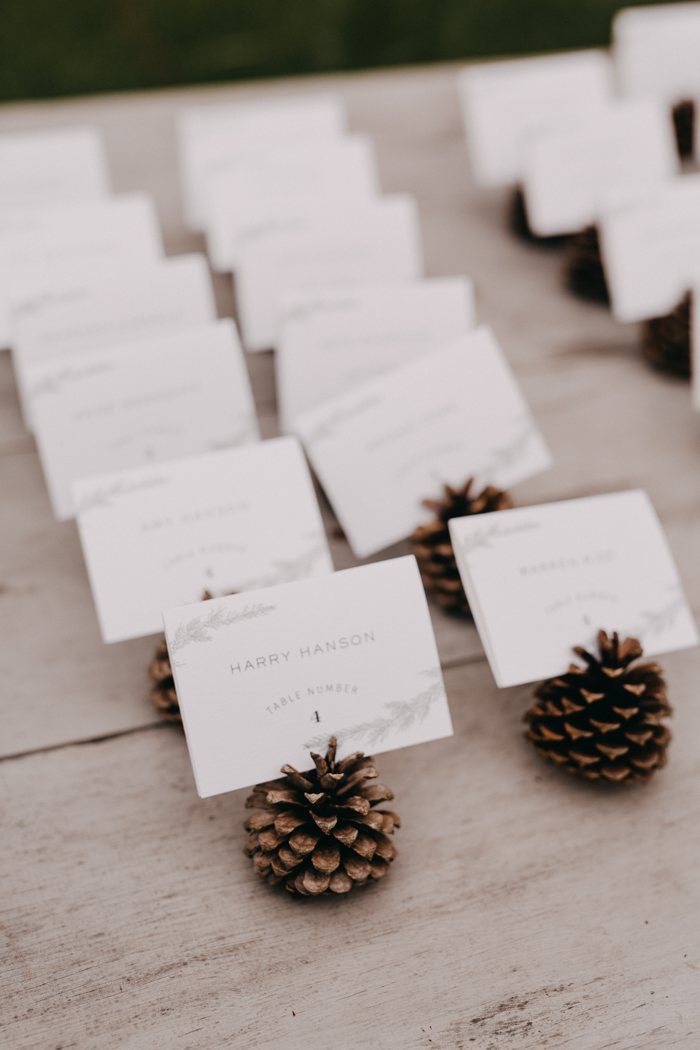
Pinecones as place card holders cost nothing if you collect them yourself, and they solve the problem of outdoor wind that blows flat cards off a table.
Small cones grip a slit card upright; larger ones take a tent-fold card wedged between scales.
Collect cones ahead and bake them low and slow to set any sap and evict insects. A light spray of matte clear coat keeps them from shedding on white linens.
For tables without assigned seats, a bowl of cones at the welcome table with a handwritten sign reads as intentional rather than leftover.
9. Glass Lanterns
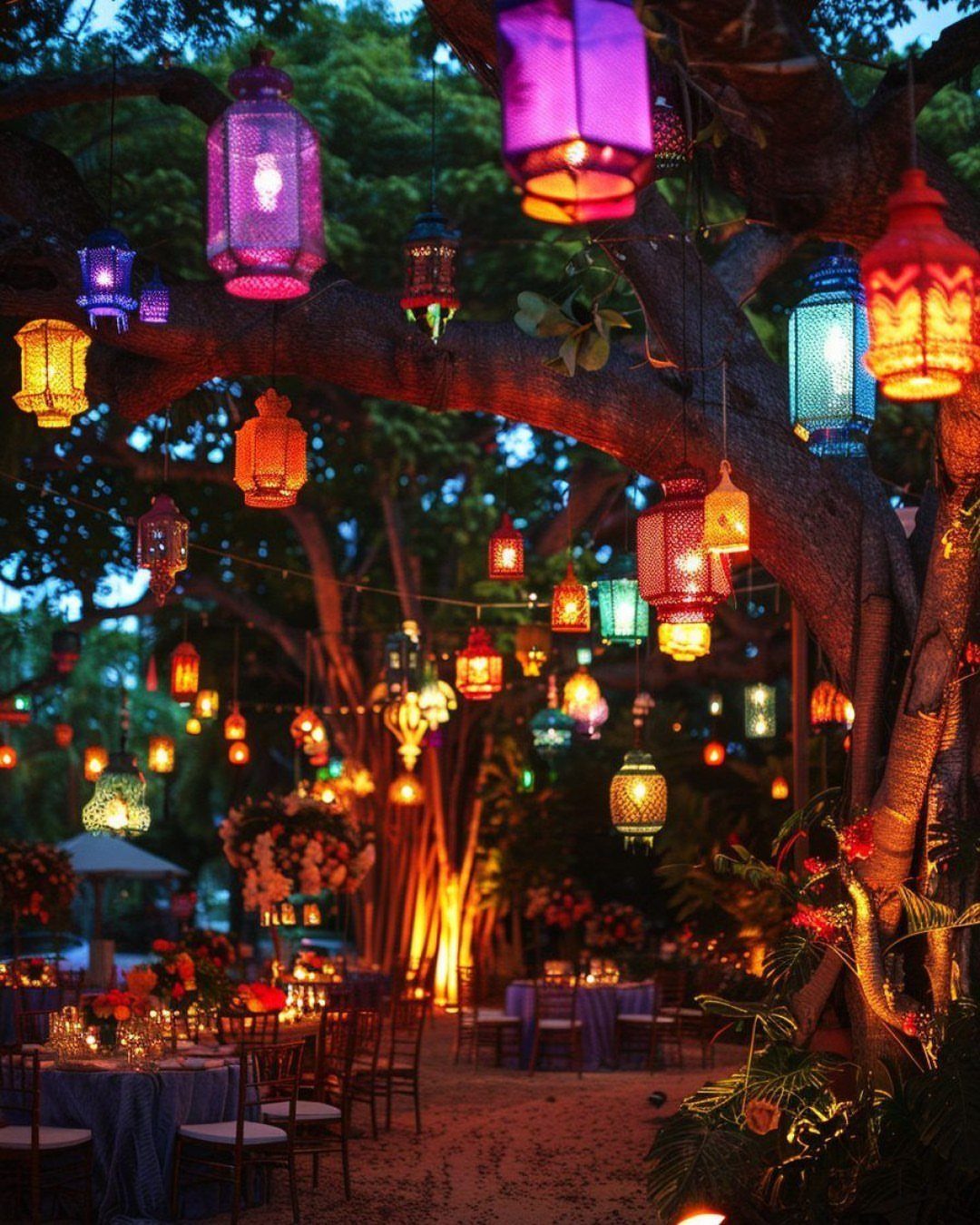
Colored glass lanterns hung from branches give a forest reception its light source after sunset without running power to every table. Moroccan-style patterned glass throws leaf-shaped shadows that extend the tree canopy down to head height.
Battery candles inside colored glass read warmer than white LEDs; real candles need monitoring under branches, and some venues forbid them outright. Check your contract before buying.
Hang lanterns at varied heights rather than a straight line; the irregularity follows how light actually falls through a forest canopy. Fishing line from above, not chain or rope, keeps the suspension invisible after dark.
10. DIY Decor Ideas
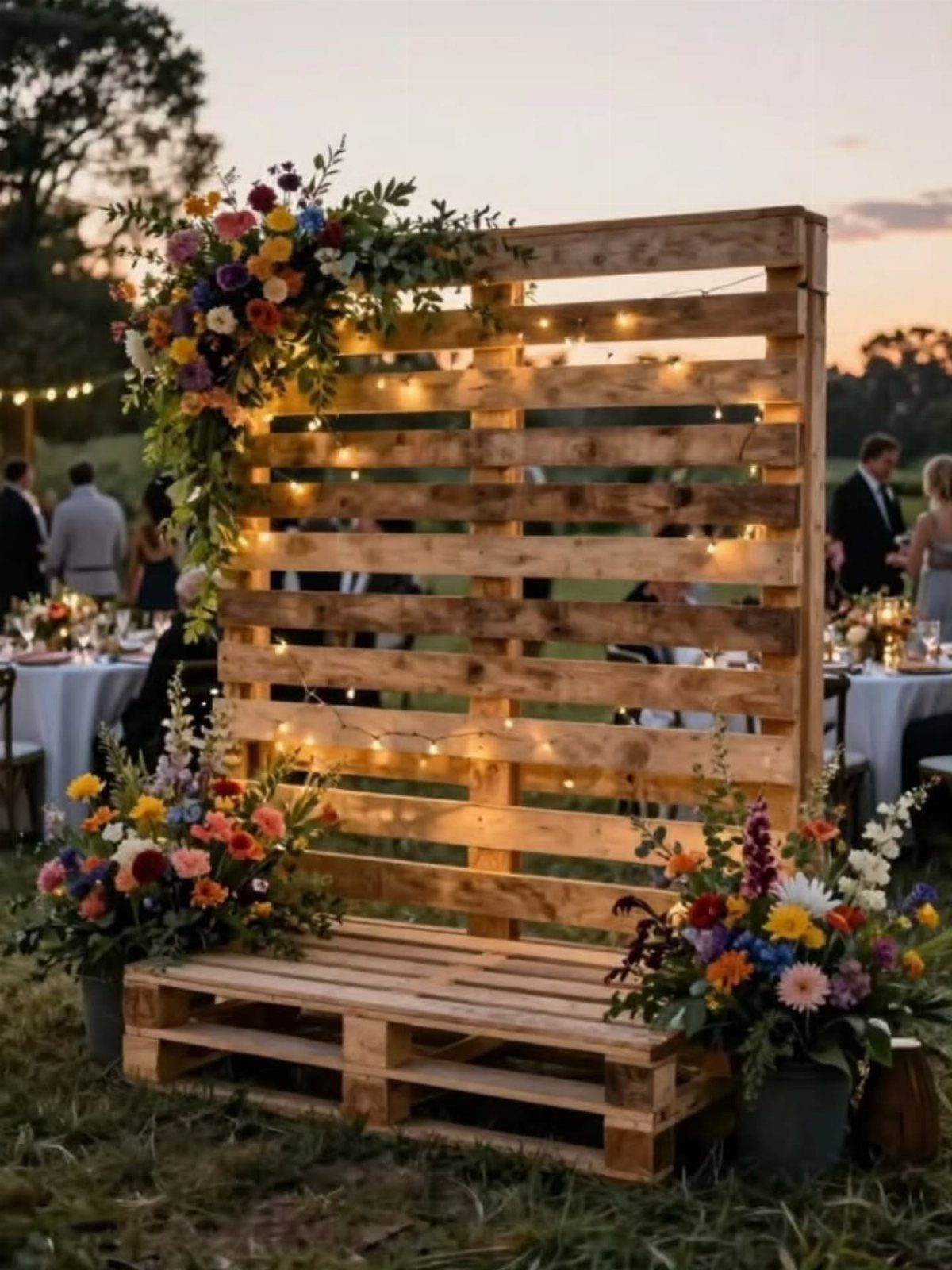
A pallet backdrop with fairy lights and floral arrangements builds from standard shipping pallets stood vertical and zip-tied together. Sand the face boards lightly; splinters and guest shoulders do not mix.
Florals attach to pallet slats with zip ties or floral wire, no foam needed, which keeps the build light enough to move.
Battery fairy lights woven through the slats before the florals go on save you from working around stems later.
Paint the pallets first if your color scheme runs pale; raw wood photographs orange under warm light. White or sage green covers in 2 coats of exterior latex.
11. Ceremony Aisle Decor
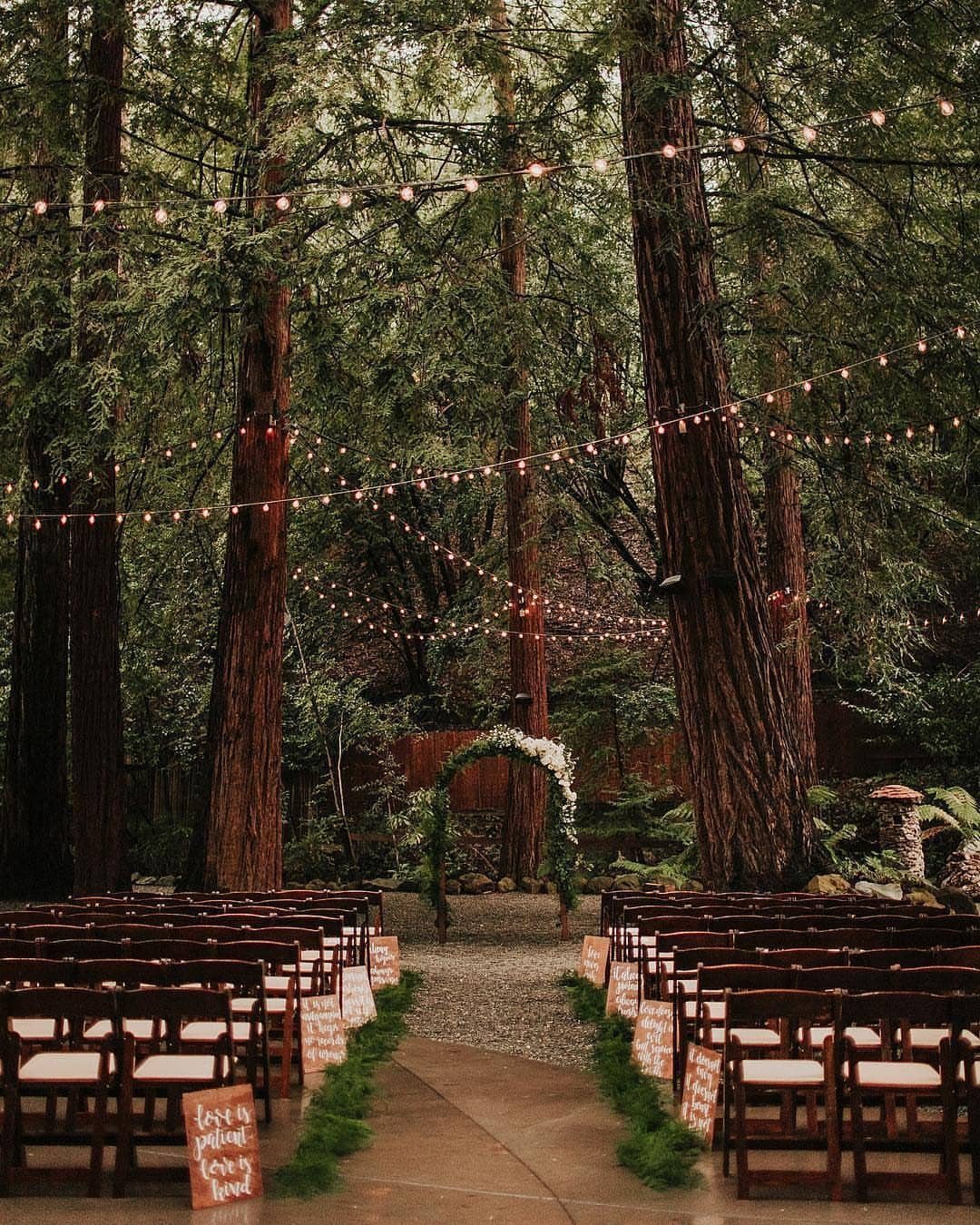
Aisle decor in a forest ceremony has a practical job first: defining where guests should walk on ground that is not flat.
Wooden signs with text, greenery bundles on chair ends, or petals in a defined line all mark the path so guests do not wander.
Gravel or packed dirt aisles take petals well; loose mulch or grass, petals sink and disappear. For those surfaces, chair-mounted greenery or shepherd’s hooks with hanging jars give the visual boundary without ground contact.
Wooden signs at the aisle entrance, the "love is patient" version, set the tone early; move them to the reception entry after the ceremony for a second use.
12. Seasonal Flowers
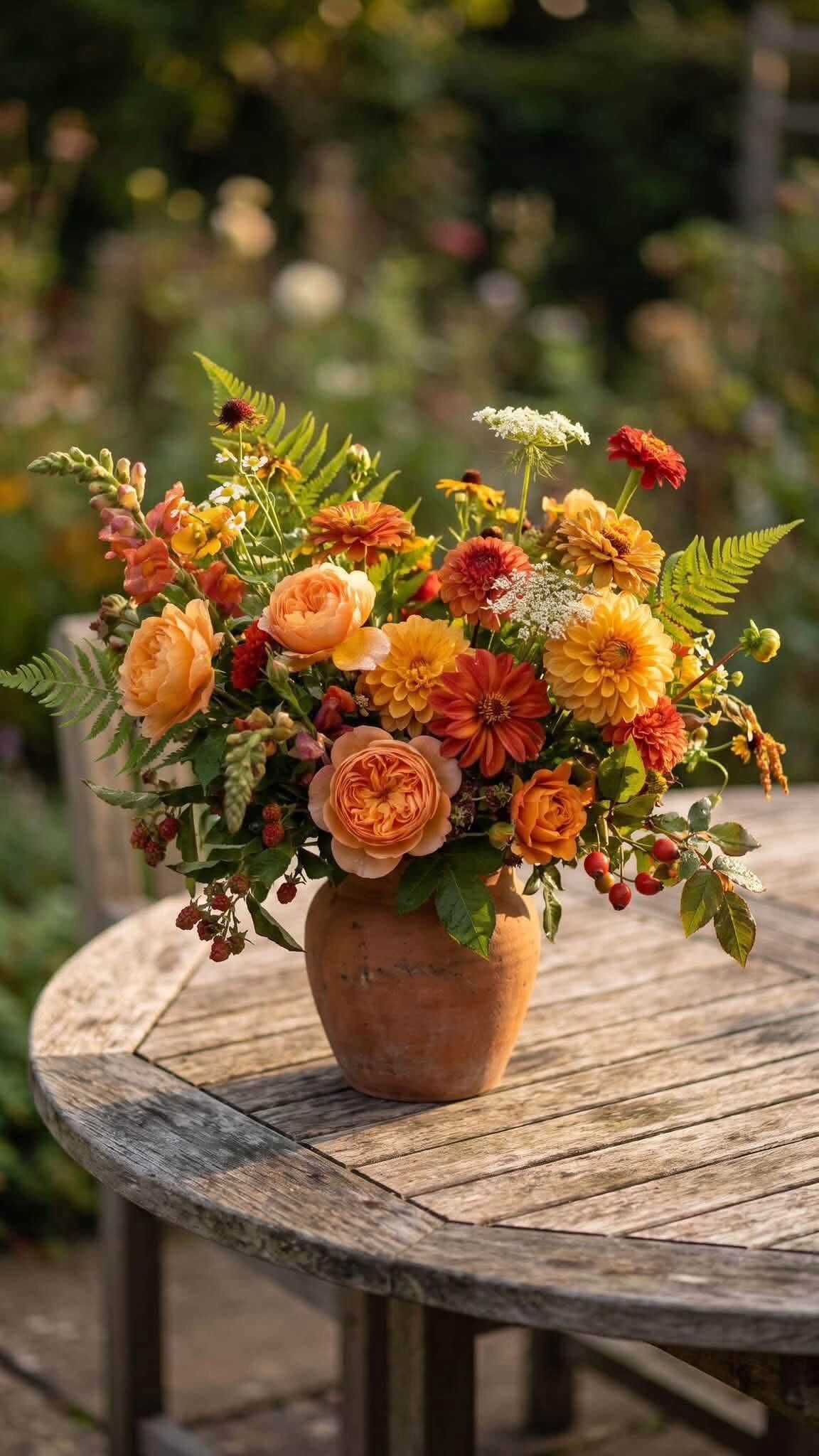
Seasonal flowers in terracotta pots suit a forest setting because they read as gathered rather than arranged. Dahlias peak in late summer through fall; forcing them out of season doubles the stem price and the blooms are smaller.
Terracotta is porous, so line pots with plastic if the table is rented or irreplaceable wood.
The patina of aged terracotta, green at the rim, fits a forest palette better than new orange clay; soak new pots in weak tea to dull them.
For spring, substitute ranunculus and hellebores; for winter, amaryllis and forced branches.
13. Vintage Mirrors
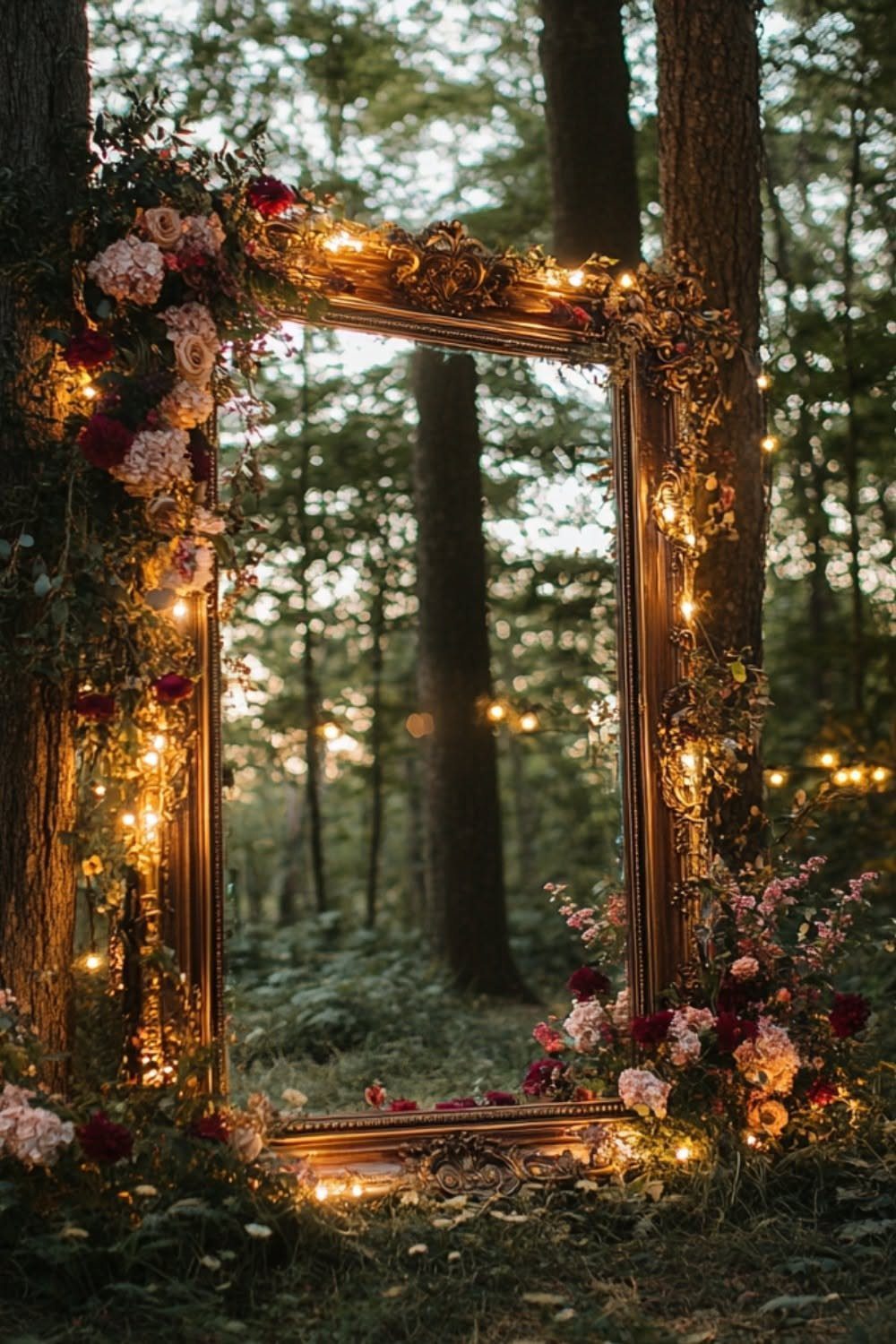
An ornate mirror leaned against a tree trunk catches the light and doubles the forest around it, which makes a single corner read as twice the space.
Gold frame against bark photographs warm; silver reads cool and can feel surgical outdoors.
For a ceremony spot or welcome table, brace the mirror bottom with a wood block or tent stake so wind does not shift it.
Floral arrangements wired to the frame top, as the visible setup shows, weigh the piece down and tie it to the surrounding green. Sheer ribbon or thin fairy lights woven through the frame detail extend the glow after dusk.
A mirror this size rents for less than a comparable floral installation, and it moves to the newlywed’s home after.
14. Glass Vases
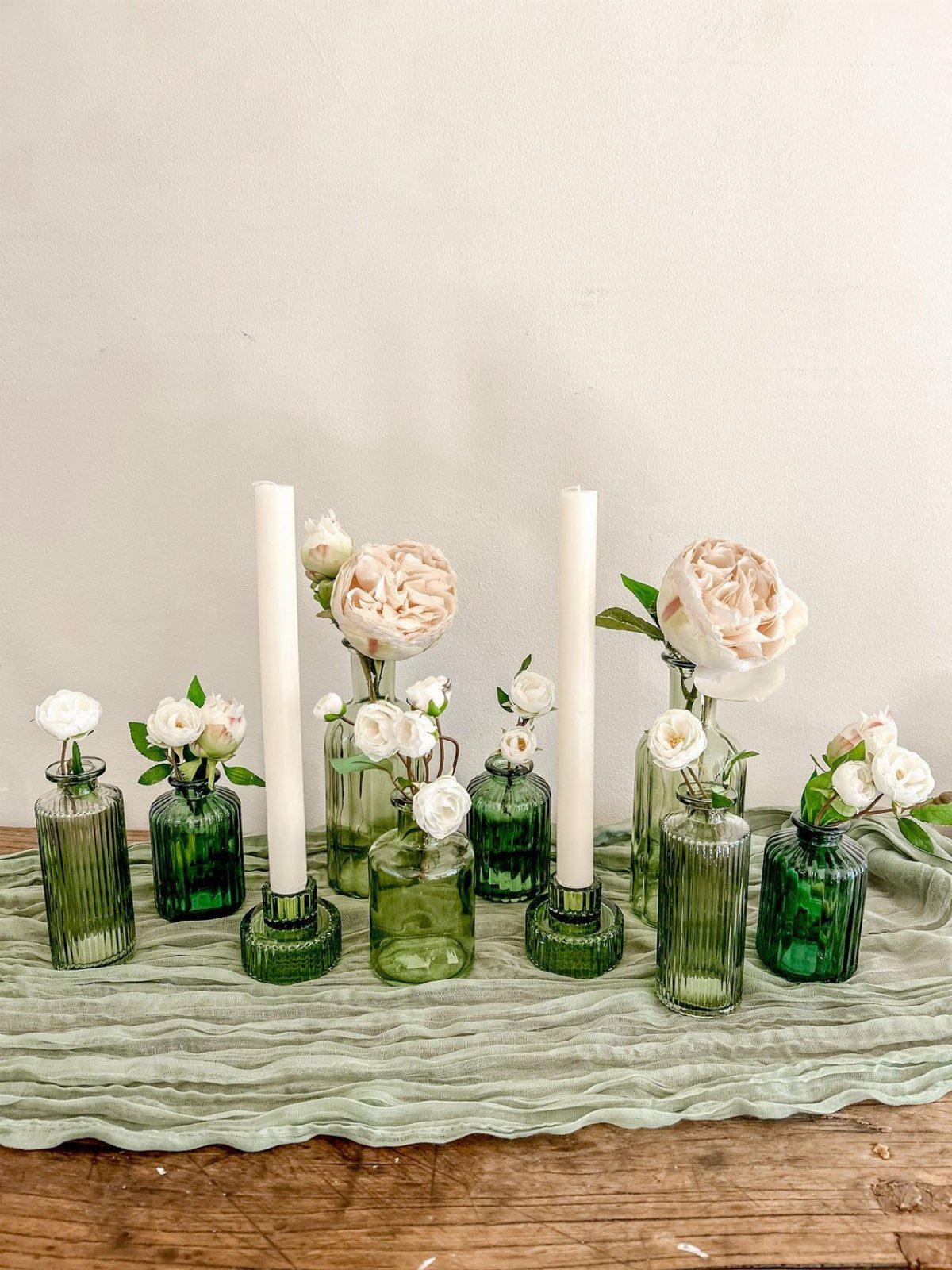
Green glass in varied heights and textures reads as collected rather than matched, which suits the accidental feel of a forest table. Ribbed bottles catch light differently than smooth cylinders, so mixing both keeps the eye moving.
Tinted glass vases hold their color against a green runner in a way clear glass never would.
Birch log bases, moss, and floating candles in cylinder vases extend the same palette through the whole table. For a lighter look, use fewer stems per vessel and let the green glass itself carry color.
Cylinder vases are stable on uneven ground where stemware would rock; that matters for outdoor reception tables.
15. Burlap Table Runners
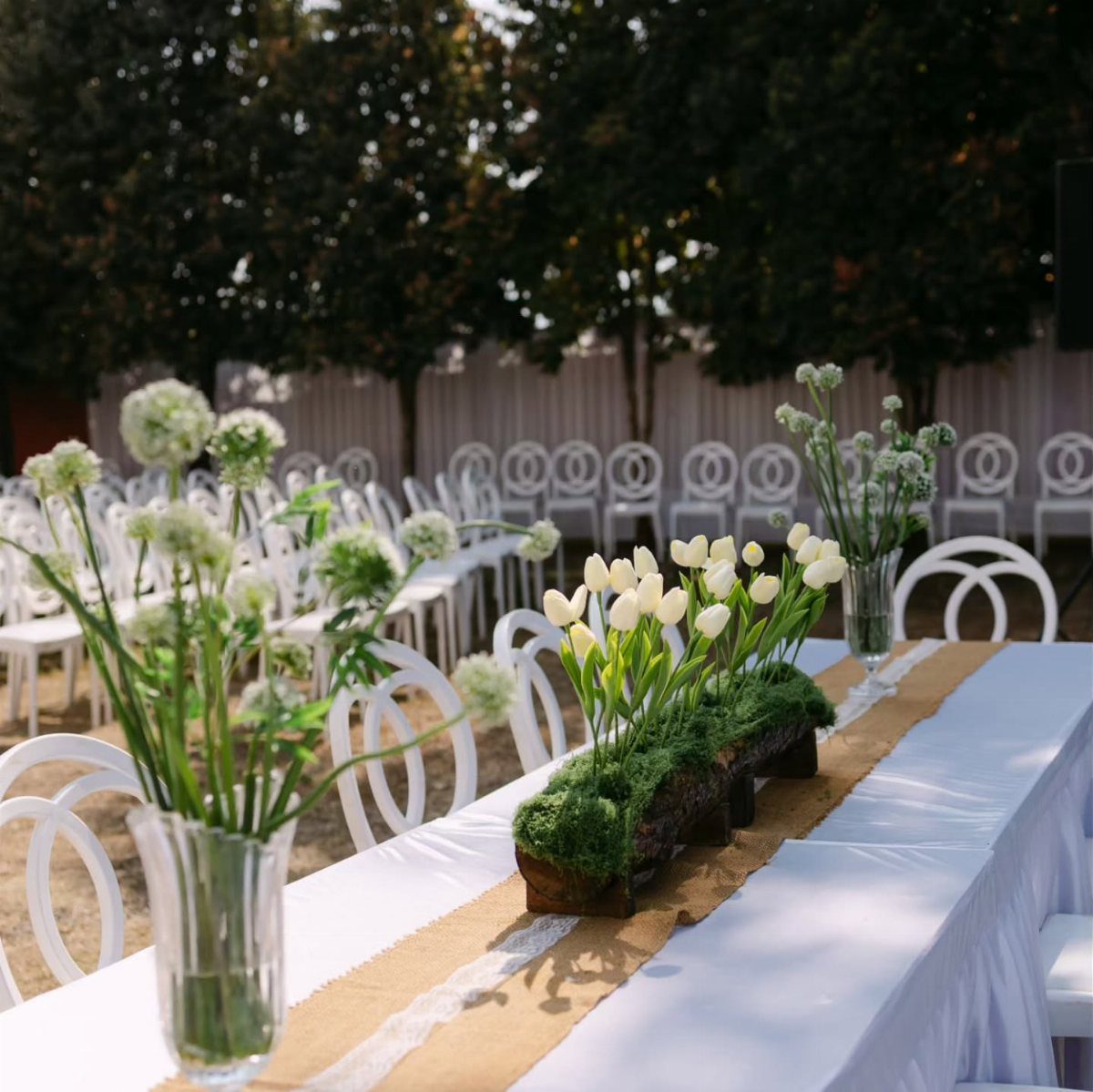
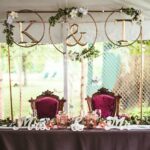
Burlap over a white cloth gives texture without weight, and it costs less per yard than printed linen. The visible setup shows it layered with lace, which keeps the rough weave from reading too plain.
For centerpieces, burlap strips wrapped around glass cylinders or tied as napkin bands repeat the material without repeating the runner exactly.
It sheds fibers; vacuum or shake it outdoors before the event, and avoid it where white lace or tulip petals sit directly on top, the lint travels.
A burlap runner on a bare wood table, no white cloth, reads more casual and needs no layering.
16. Wildflower Arrangements
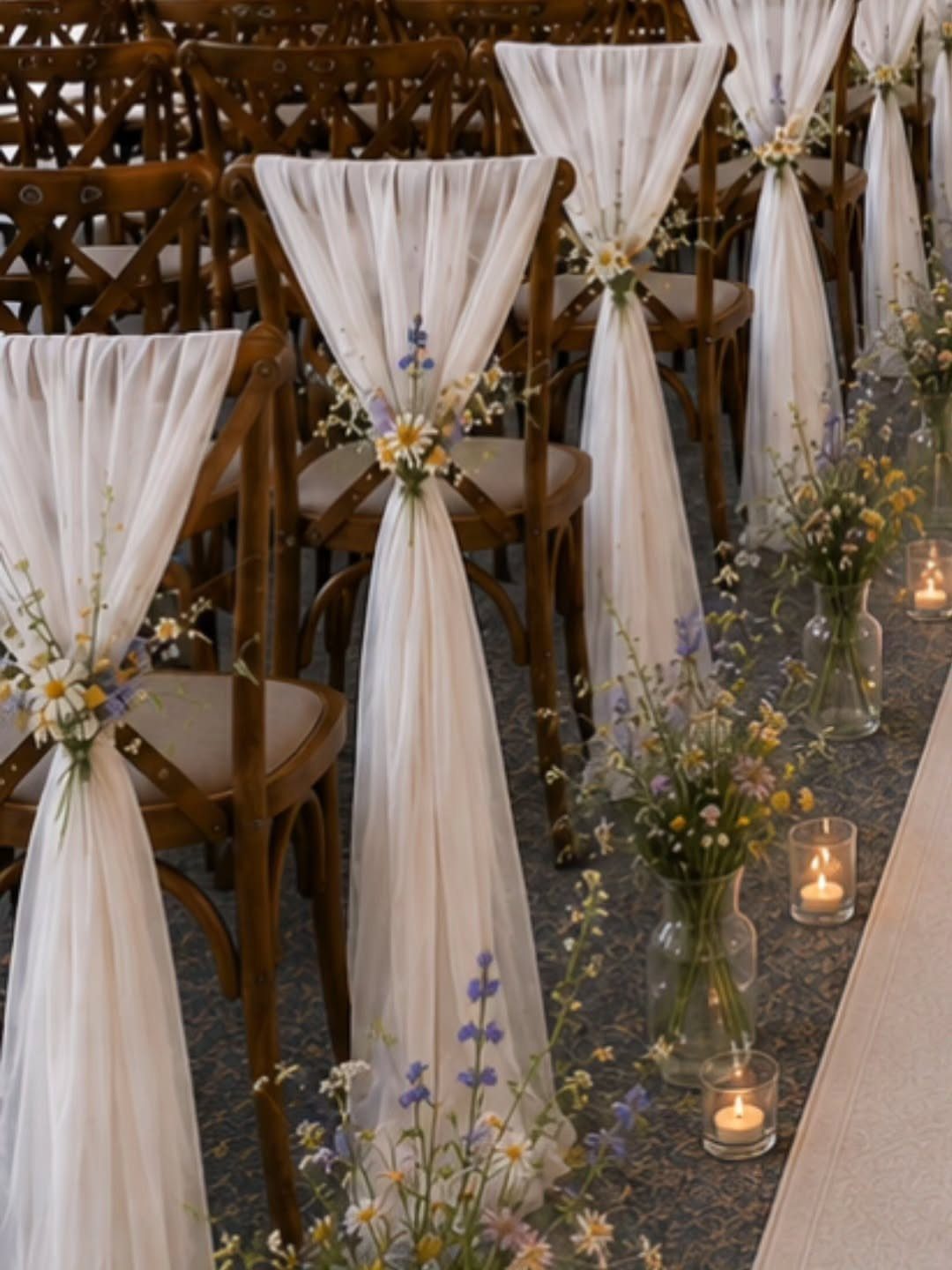
Wildflowers in small posies tied to chair backs mark the aisle with color at a height guests notice while seated. The visible setup uses white tulle as the tie, which photographs soft; twine or raw cotton ribbon read more rustic.
A mix of stems in varied heights, nothing too formal, keeps the gathered-from-the-meadow look. For chair posies, choose blooms that hold without water for the ceremony hour: daisies, cornflowers, and yarrow last; delicate poppies do not.
Glass vases sized up for aisle corners, with chair ties repeating the same blooms at a smaller scale, keep the proportions from feeling off.
For a reception table, wildflowers in low clusters keep conversation open across the surface.
17. Rustic Chairs
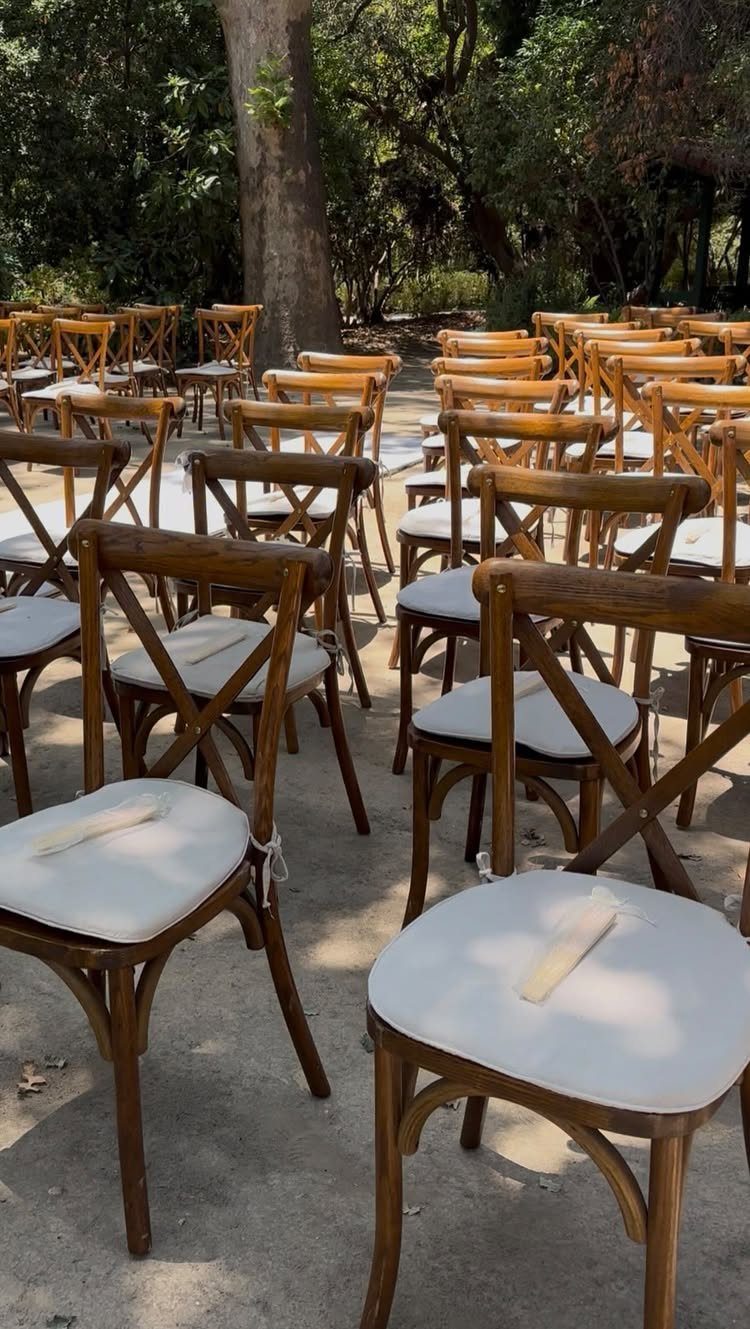
Cross-back wooden chairs carry the forest texture into the seating itself, not just the decor around it. Dark wood against green canopy photographs with contrast; painted or white-washed versions read as a different event entirely.
White cushions, as visible, keep the wood from reading too heavy and give guests a clean surface to sit on. Tie-on cushions are easier to clean or replace than built-in upholstery, and they store flat.
For a forest floor, chair feet sink slightly; check that the legs are long enough the seat stays level, or bring plywood squares to set under each corner.
Rentals in this style are widely available; buying used farm chairs costs more upfront and needs storage after.
18. Rustic Table Settings
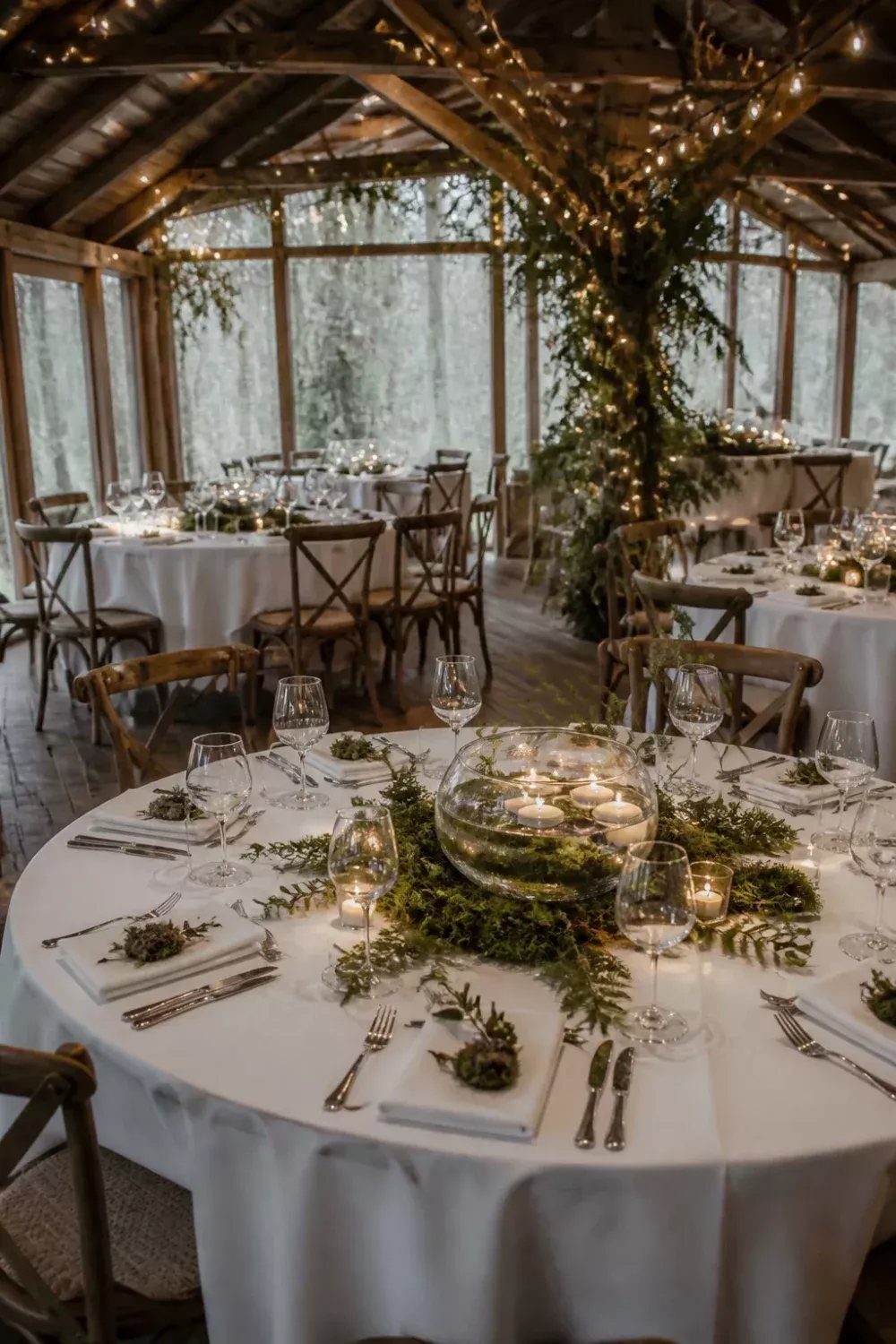
A round table with white linen and a moss-green garland runner gives guests the forest feel without individual centerpieces blocking sightlines.
Floating candles in small glass vessels, as visible, add light at a height that does not interrupt conversation across the table.
Wood charger plates or simple balsa-wood menu cards under each place setting bring in the material without the weight of full wooden dinnerware.
Greenery garlands on round tables need to curve; wire the stems to a flexible vine base rather than a straight rod so the shape follows the table.
For a reception room with windows facing woods, keep the table decor lower than the sightline to the trees outside so the view carries through.
19. Earthy Color Palette
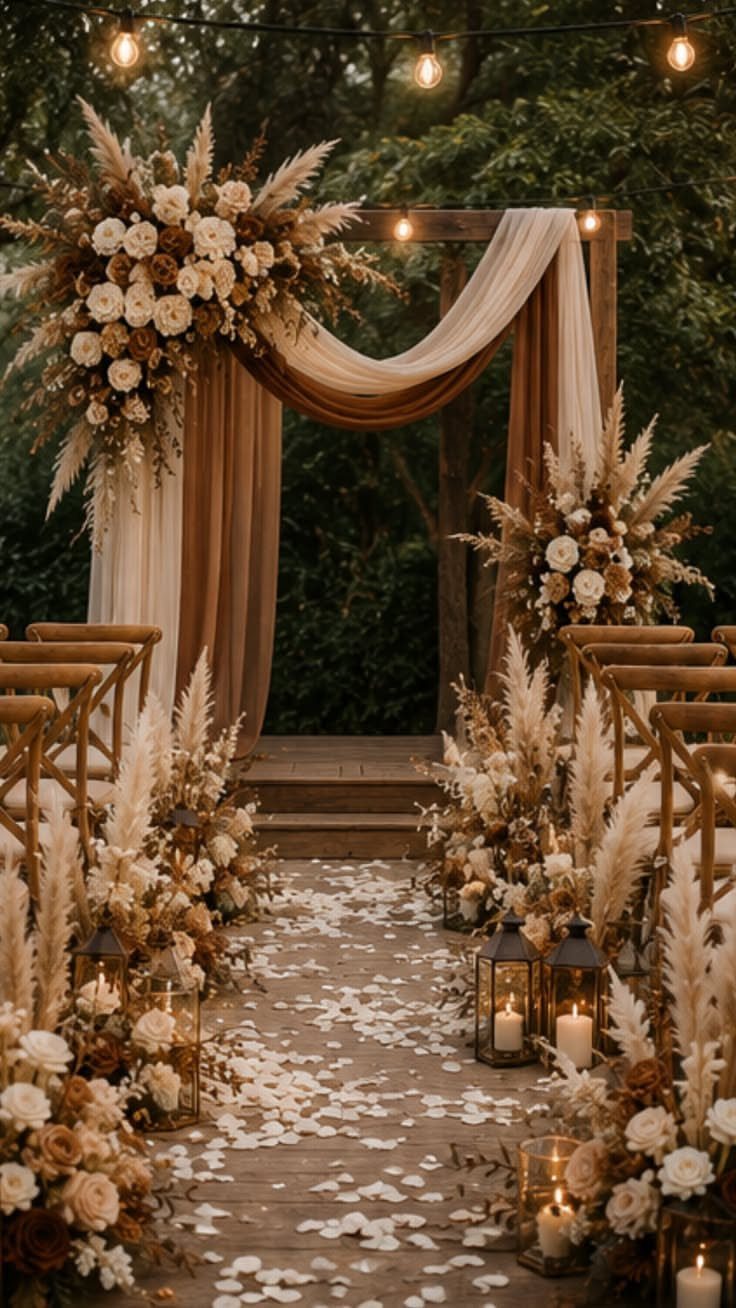
An earthy palette of moss green, raw wood brown, and undyed cream carries the forest floor onto the table without competing with the setting itself.
The visible setup shows pampas grass and dried arrangements against bare wood, which reads warmer than fresh white florals would against bark.
Keep the ratio heavy on green and brown; cream as the single light value prevents the overall look from going muddy.
Black metal lanterns add structure that pure organic tones lack, and they hold up against wind in open forest clearings better than glass hurricanes.
For linens, choose oatmeal or stone rather than bright white; the difference against skin tone in outdoor light is worth the swap.
A burlap runner over bare wood, with white petals scattered only at the aisle center, keeps the contrast where guests look and lets the edges recede.
Color Schemes for Forest Weddings
Earth tones keep a forest wedding from competing with its setting. Greens, browns, and creams read as belonging there rather than brought in.
Gold metal lanterns against green arrangements add warmth without a new color. I set each place with forest-green linen and glasses that catch the light like the rims are gilded; the wood underneath does the rest.
Gold metal lanterns against green arrangements add warmth without a new color, and read softer against bark than black.
White petals on burlap lighten the aisle where full green would read heavy.
Trends for 2026 Weddings
For 2026, expect more structure built from what is already on site.
Wooden arches draped in sheer fabric and foliage replace metal frames that look trucked in. Sage green chiffon on wooden poles, with ferns and white anemones, builds a teepee arch without hardware store runs.
The look is more native, less installed.
Organic materials continue upward. Lush greenery as the main event, with flowers supporting rather than starring, keeps costs lower per table and holds up longer out of water.
Unique Forest Wedding Ideas
A teepee arch built from wooden poles and draped fabric gives a ceremony site that reads as found, not rented. Sage green chiffon, ferns, and white anemones with dark centers suit couples who want structure without a ballroom feel.
Gold lanterns with cream candles and forest green arrangements make a centerpiece guests can assemble on site.
The same stems out of season cost double and perform worse.
DIY Wedding Decor Tips
Layer with lace where white sits on top, or use it bare on wood for a more casual table.
Start collecting a season ahead; the project is free but not fast.
Frequently Asked Questions
What colors are typically used for a forest wedding?
Earthy tones like moss green, raw wood brown, and undyed cream are the standard palette. I keep the ratio heavy on green and brown, with cream as the single light value so the overall look does not go muddy.
What are some unique forest wedding ideas?
DIY builds from found materials read as native to the site rather than trucked in.
A branch arch built with pruning shears and zip ties takes longer than aluminum but costs almost nothing and uses irregular angles that look accidental, which is the effect.