The 13 ideas below start simple, a mason jar with a string of LEDs, and build up to a balloon and floral arch that takes a weighted frame and a few extra hands.
What decides which one belongs in your weekend is whether you have more time than money, or more money than time, because each one lets you trade one for the other.
A low-temperature glue gun shows up in nearly every project here, so grab one early and run a few practice strips before the real work starts.
1. Candlelit Lantern Centerpieces
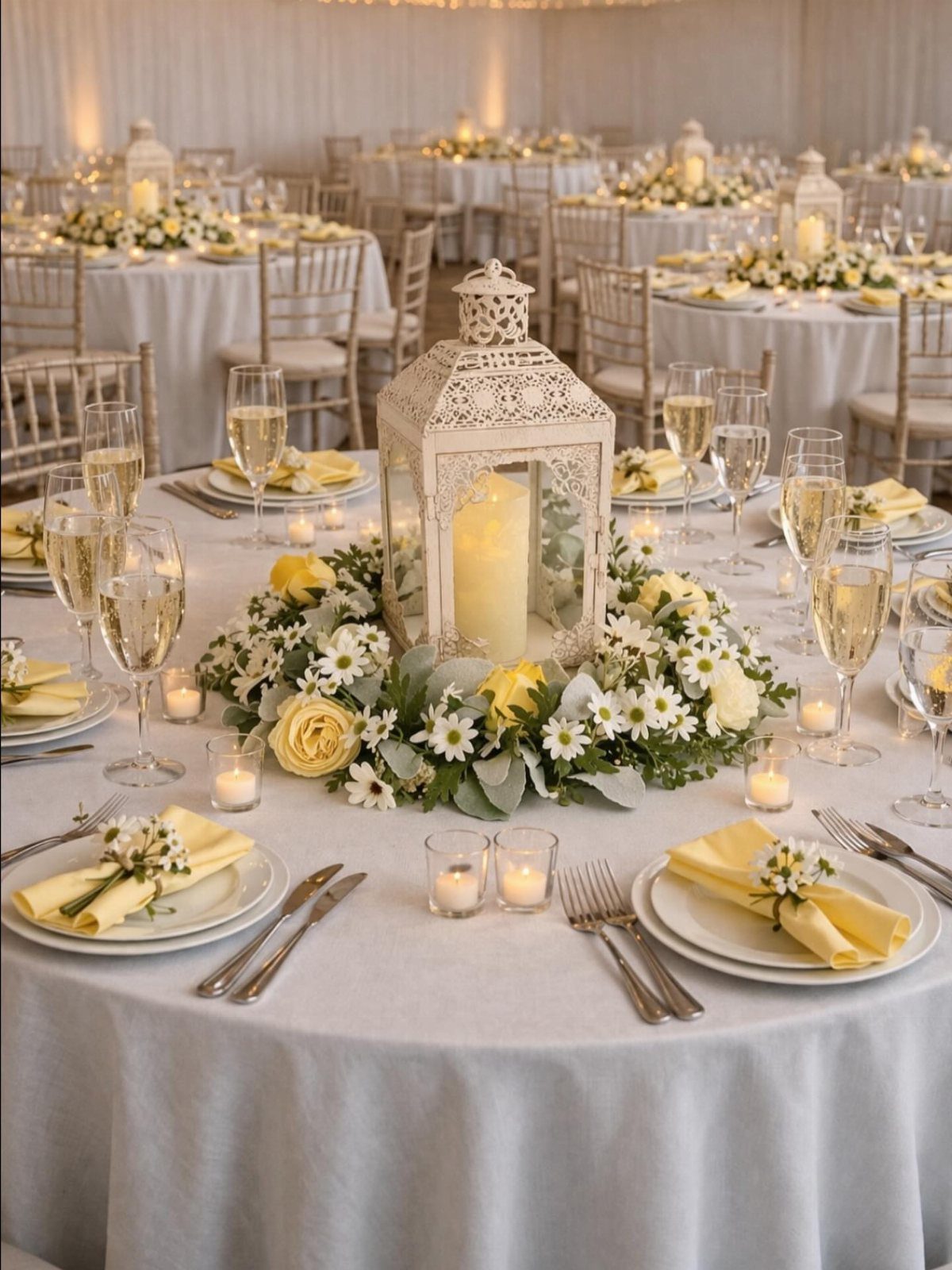
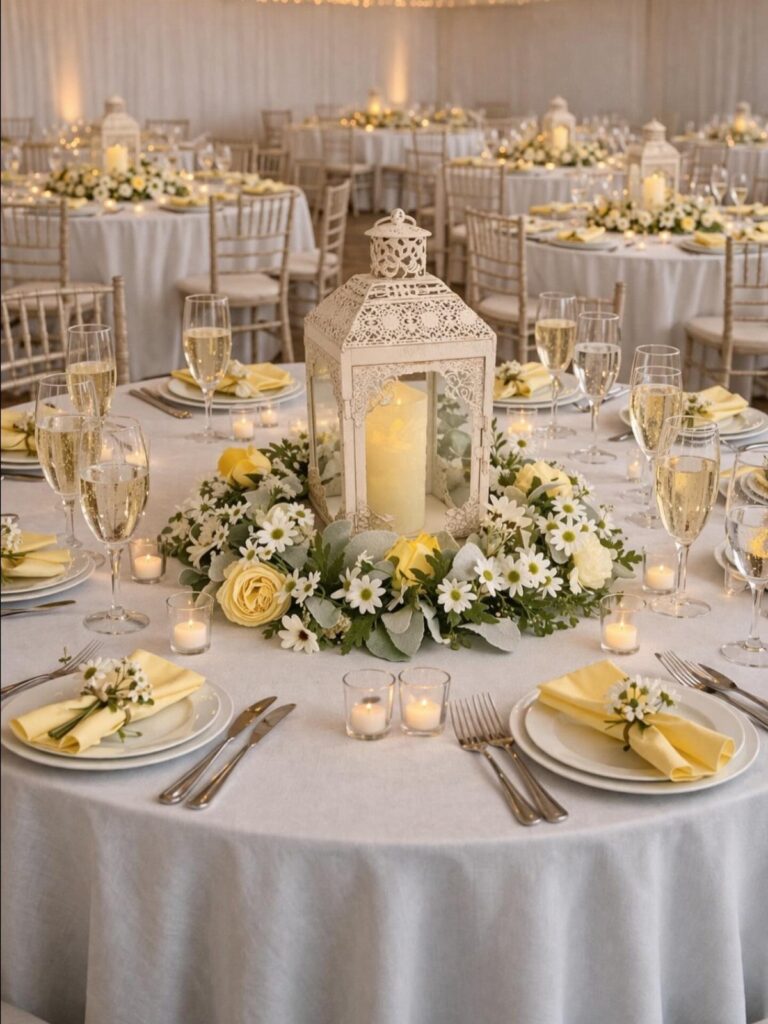
A lit lantern surrounded by fresh flowers gives a table its own small fireplace.
For venues that ban open flames, LED candles flicker almost as convincingly and never drip wax across white linens. I like mixing heights here; a tall lantern between two shorter ones keeps the eye moving without any one piece shouting.
Ribbon tied to the handle in your color, or a small tag with the table number, turns a rental-store basic into something that reads custom.
These also work dropped along an outdoor aisle path or hung from shepherd’s hooks if the ceremony space needs the same warm light carried through.
As any spouses-to-be will tell you, centerpieces can take up a big portion of your wedding budget—but only if you let them! Thanks to these easy tutorials, topping your tables with chic DIY wedding centerpiece ideas has never been simpler or more affordable.
2. LED Lights in Mason Jars
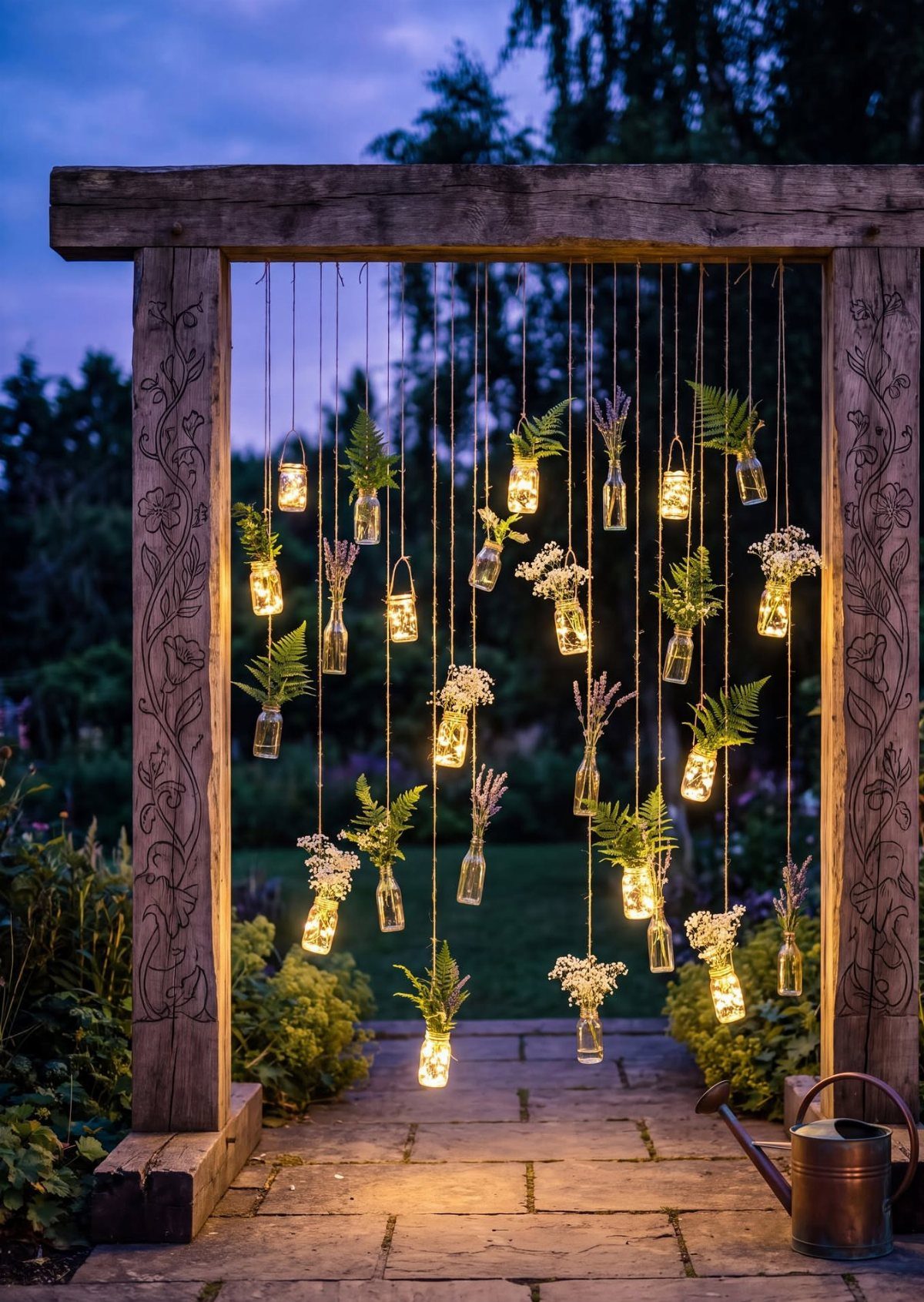
Mason jars strung with battery-powered fairy lights turn a darkening garden into something guests photograph without prompting. The lights themselves cost little; the effect depends on scattering enough of them that the glow pools rather than spotlights.
I have seen these hung from tree branches, lined along stone walls, and clustered inside the jars as table markers that also serve as the evening’s shift from dinner to dancing.
Fresh ferns or dried flowers inside the jar give each one weight and texture, though the lights alone do the work.
Paint the glass in a solid color if your palette runs more formal than rustic; leave it clear for the farmhouse look the shape already suggests.
3. Personalized Wedding Signs
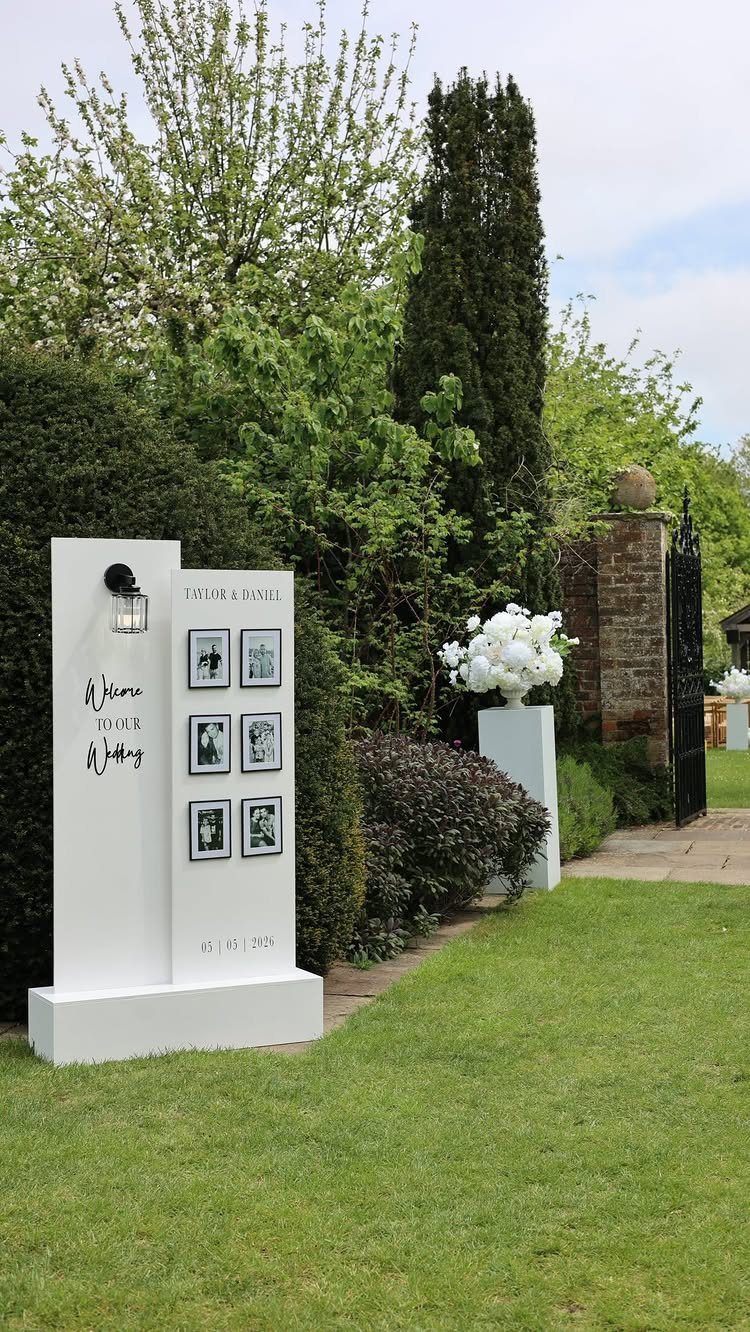
A welcome sign guests encounter first sets the tone everything else will confirm.
Wood boards, chalk-painted surfaces, or simple frames behind glass each carry a different formality; choose the one that matches your venue and let photographs or lettering make it personal without clutter.
Hand-lettering takes time and steady nerves a week before the wedding, so I would test a few words on scrap board first to see whether your natural script holds up at scale.
Printable templates or vinyl decals applied to a painted surface achieve a similar finished look with less risk of a smudge if you are working late. Seal outdoor pieces against humidity, especially for lawn ceremonies where dew settles early.
4. DIY Terrarium
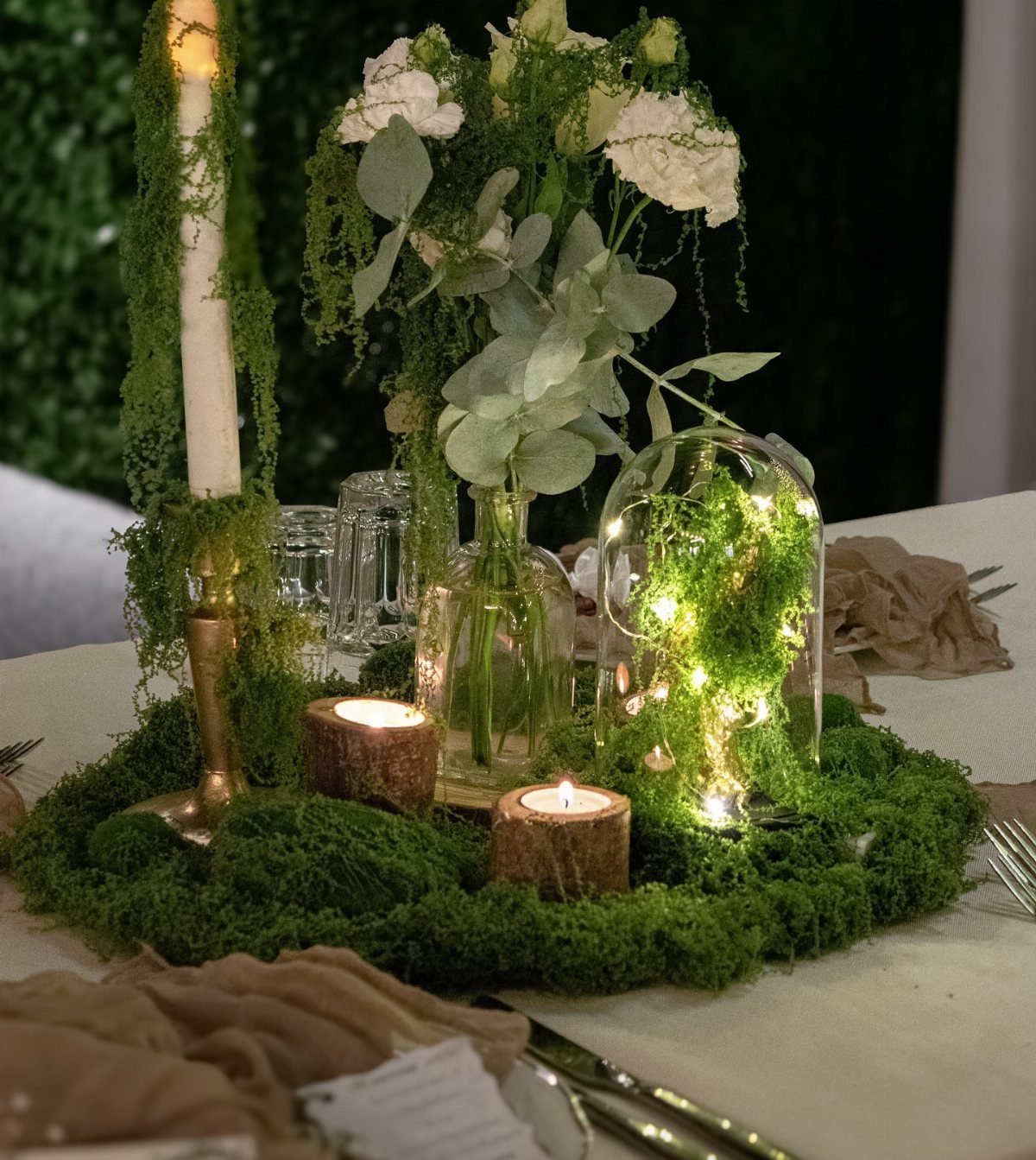
Glass cloches and open terrariums bring living green to tables without the height that blocks conversation across them.
Layer moss, fairy lights, and a low dome for a contained centerpiece; I would keep the planting simple, since guests seated nearby will see the soil line and any wilting that starts during cocktail hour.
Succulents and air plants tolerate the dry air of most reception halls better than moss alone, and a base layer of sand or pebbles gives the roots drainage that prevents the sour smell of rot by cake-cutting time.
These travel well as favors if you accept that half will be left in hotel rooms; the ones that make it home keep for months with occasional water.
5. Handwritten Calligraphy Place Cards
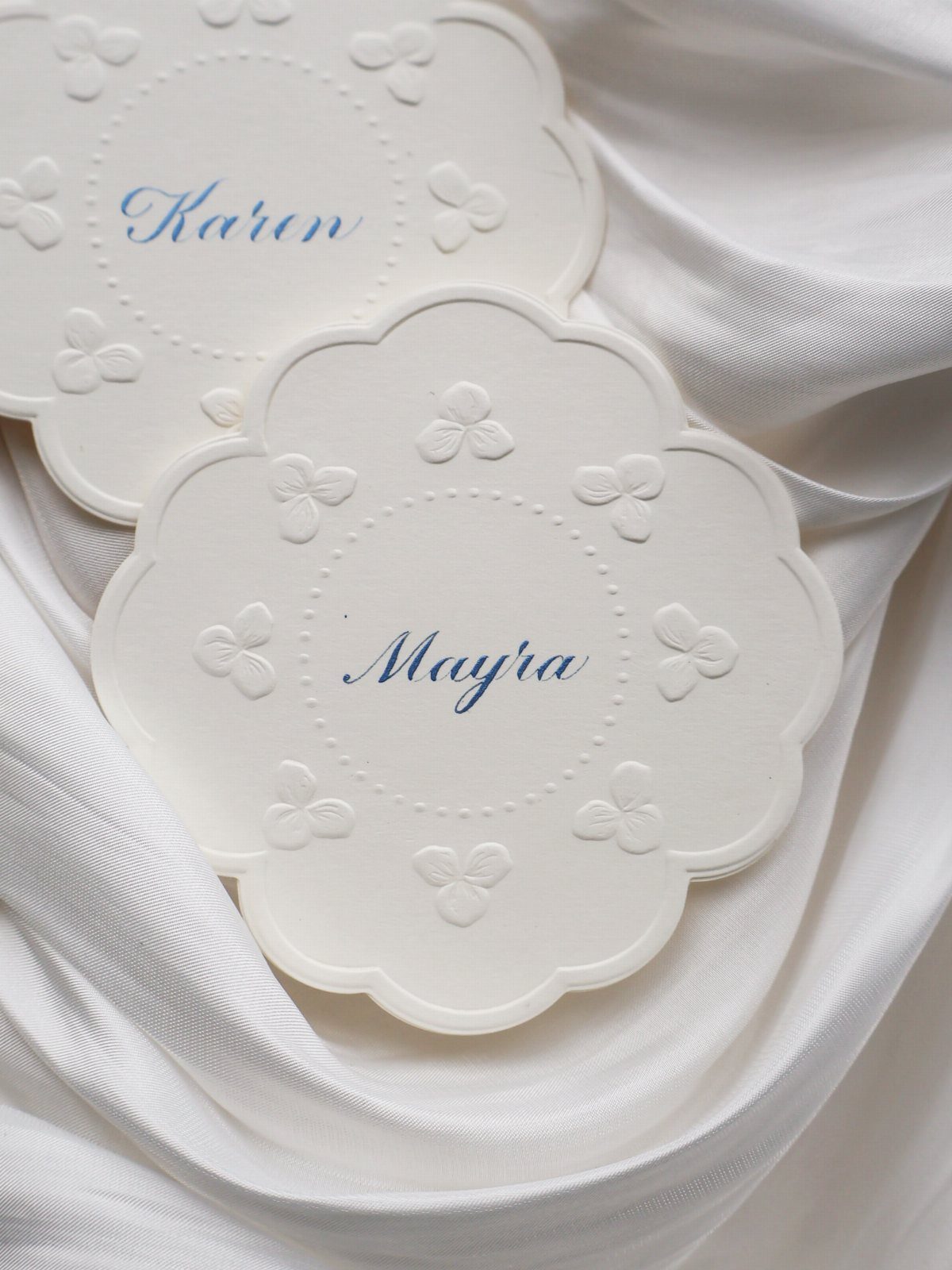
Scalloped cards in blue ink carry a formality that printed names rarely match, but the time required is the real consideration.
Each card takes steady minutes, and the repetition adds up fast; any slip of the pen shows, and fatigue sets in sooner than you expect.
I would limit hand-lettering to a head table or family tables only, where the reduced count keeps the work manageable and the recipients most likely to notice.
Thick card stock keeps the ink from feathering at the edges; test your pen on the actual paper before committing to the full batch. Professional calligraphers charge per piece, so their rates suit smaller weddings better than ballroom counts.
6. Burlap Table Runners
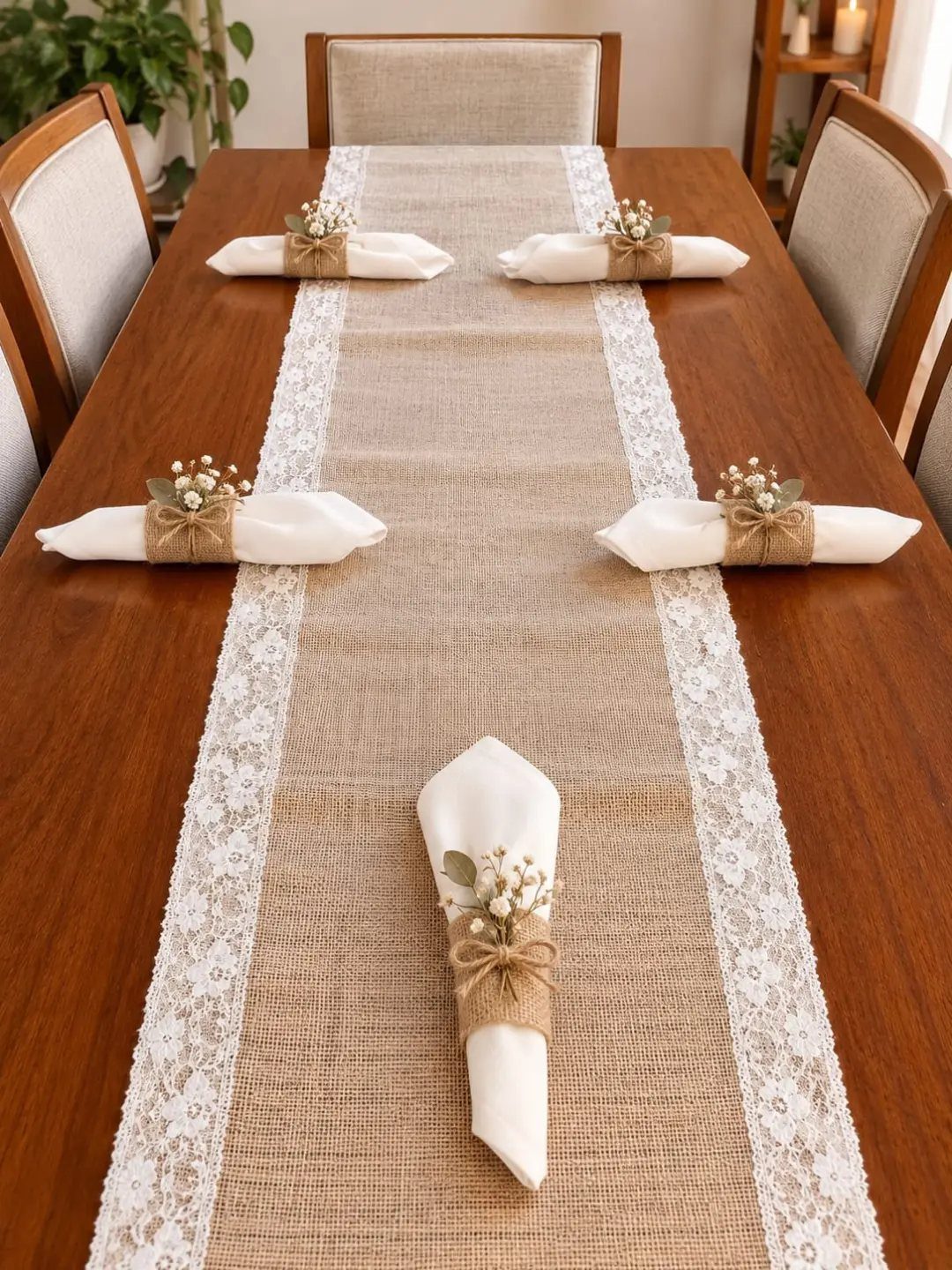
Burlap’s rough weave against polished wood gives tables the tension of dressed-up rustic; lace trim softens what would otherwise read as feed-sack plain.
The natural color pairs with almost any palette; I have seen it against deep burgundy napkins, pale sage runners, and everything between.
A light scrunch along the length, rather than pulling it taut, keeps the texture from flattening into a brown stripe. The napkin rings in the same materials keep the look intentional rather than accidental.
7. Decorated Wine Bottle Vases
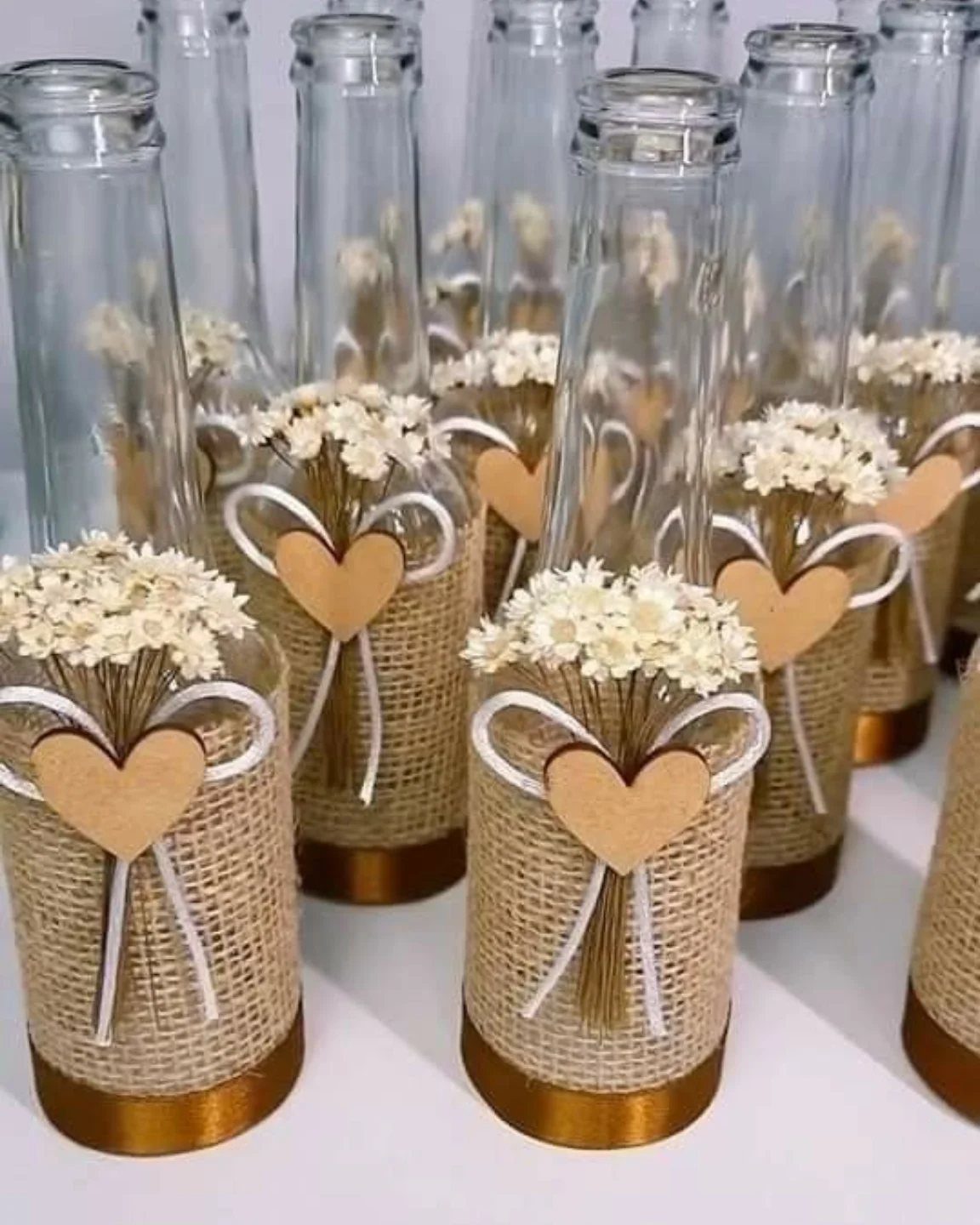
Empty wine bottles gain a second life as vases with burlap, ribbon, and whatever small accents match your palette. The burlap wrap hides labels and unifies mismatched glass; twine or rope works the same way for a rougher coastal look.
I would wash bottles thoroughly and let them dry a full day before wrapping, since any residual wine smell turns sour in warm reception air.
String lights dropped inside the bottle add evening glow, though the opening must be wide enough to fish the battery pack back out. These cluster well in threes at varied heights.
8. Submerged Flower Floating Candle Centerpieces
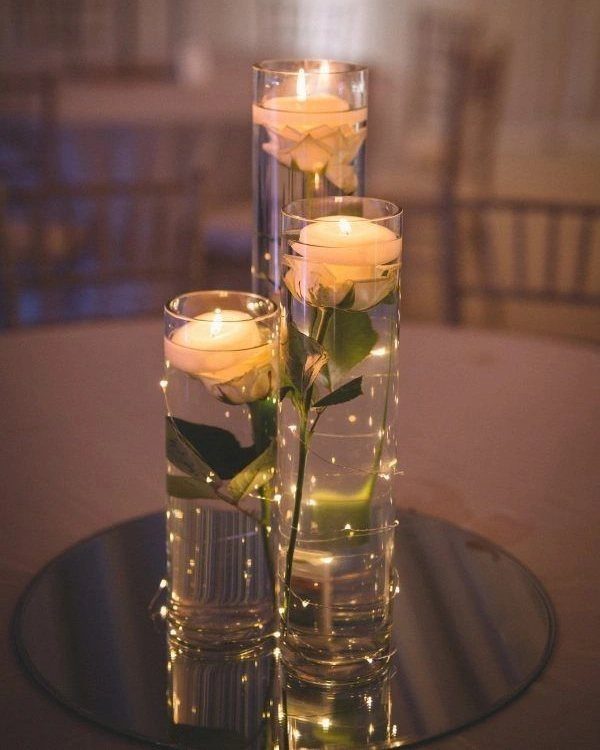
Tall cylinder vases, water, submerged roses, and a floating candle on top give height without blocking faces across the table.
The mirror base doubles the light and keeps water rings off rented linens; fairy lights around the outside add sparkle once the room dims.
I would test the candle’s burn time against your reception length, and use a second candle on standby if the first sinks before the last dance.
Submerged flowers last longer than arranged ones in open air, though white petals can go translucent and bruised after a few hours. A drop of bleach in the water slows that.
9. Draped Fabric Ceremony Backdrop
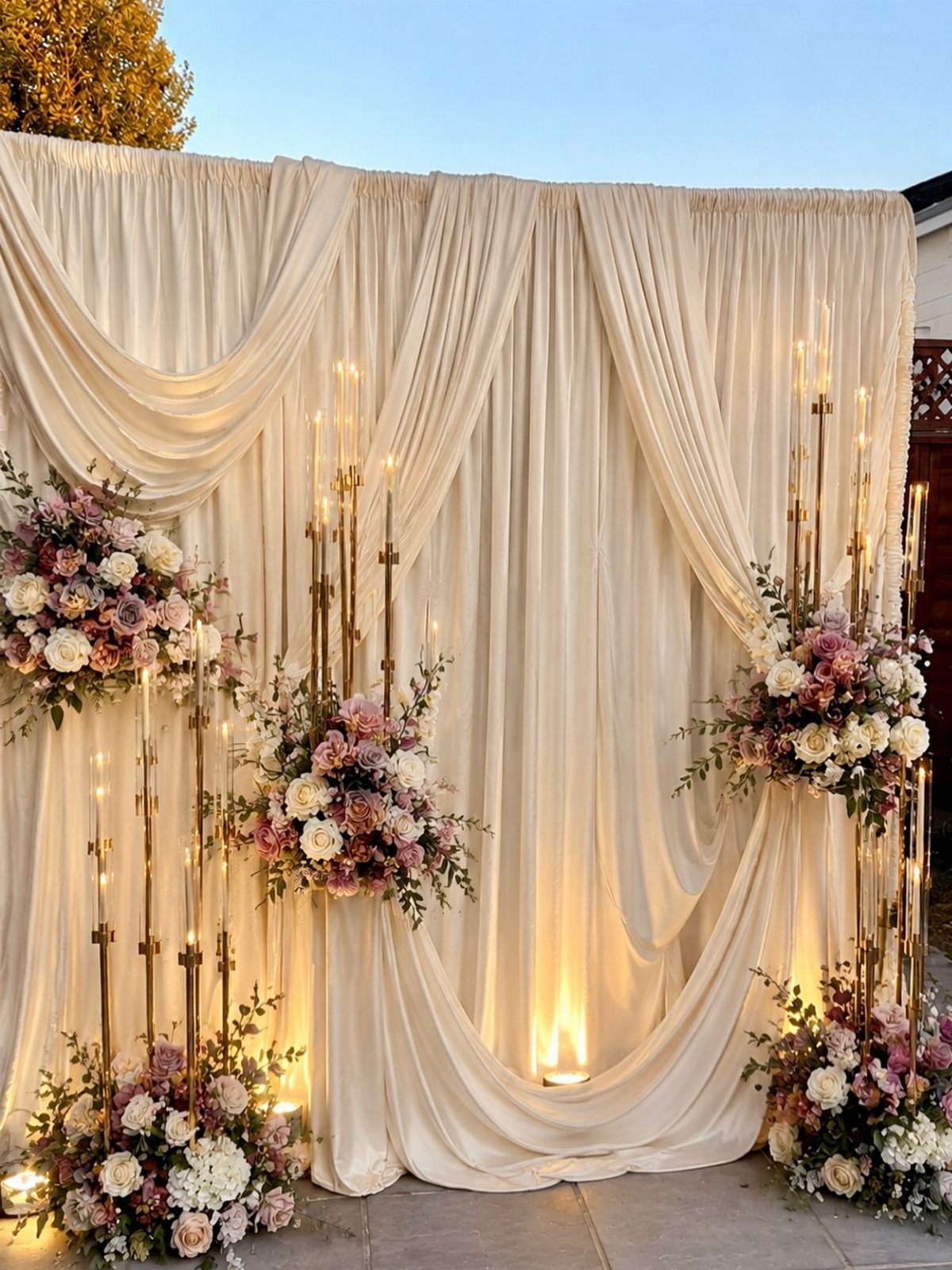
A wall of draped fabric behind the ceremony frames the moment without competing with it.
Cream or white reads formal; deeper colors swallow light and need stronger photography flash to register. The fabric itself is the easy part; securing it against wind or a flimsy frame is where outdoor setups fail.
I would test knots and tension the day before, not the morning of, and keep weights or sandbags on the base even for calm forecasts.
Flower clusters and tall candlesticks add the detail your eye lands on, though the fabric carries the structure. Move the whole backdrop to the sweetheart table after the ceremony if the venue allows.
10. Aisle Chair Ribbons and Posies
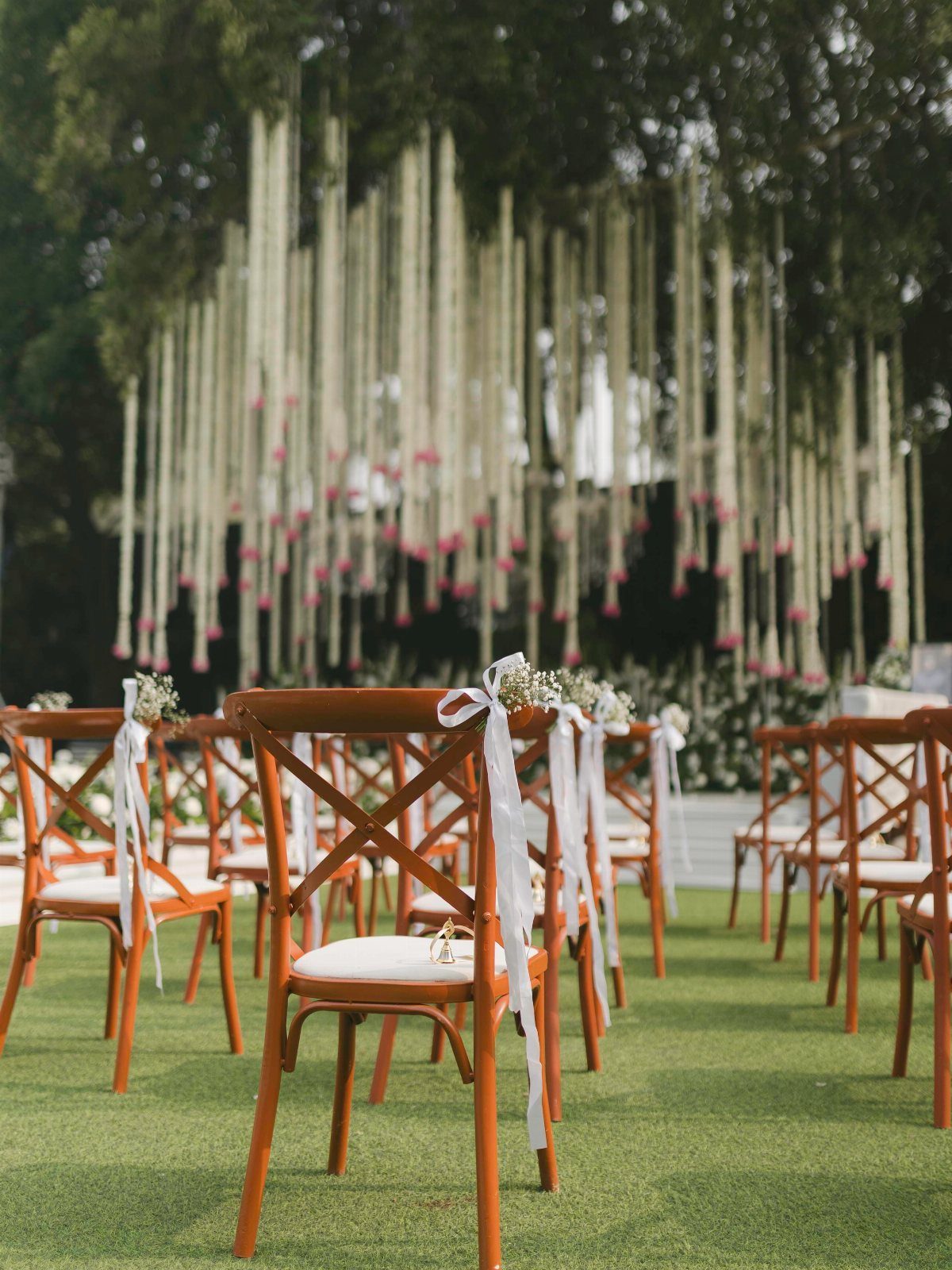
Ribbons and small flower bundles on aisle chairs mark the path without building an arch or lining the aisle with petals that scatter in wind.
The bow’s knot must hold through guests brushing past; wired ribbon keeps its shape better than satin. Baby’s breath or dried sprigs survive the hours without water, though fresh blooms wilt faster on outdoor chairs in sun.
I would tie these the morning of, not the night before, and assign someone to check them after guests are seated in case one slips.
The effect is quiet and enough; this suits couples who want the aisle defined, not decorated.
11. DIY Table Number Displays
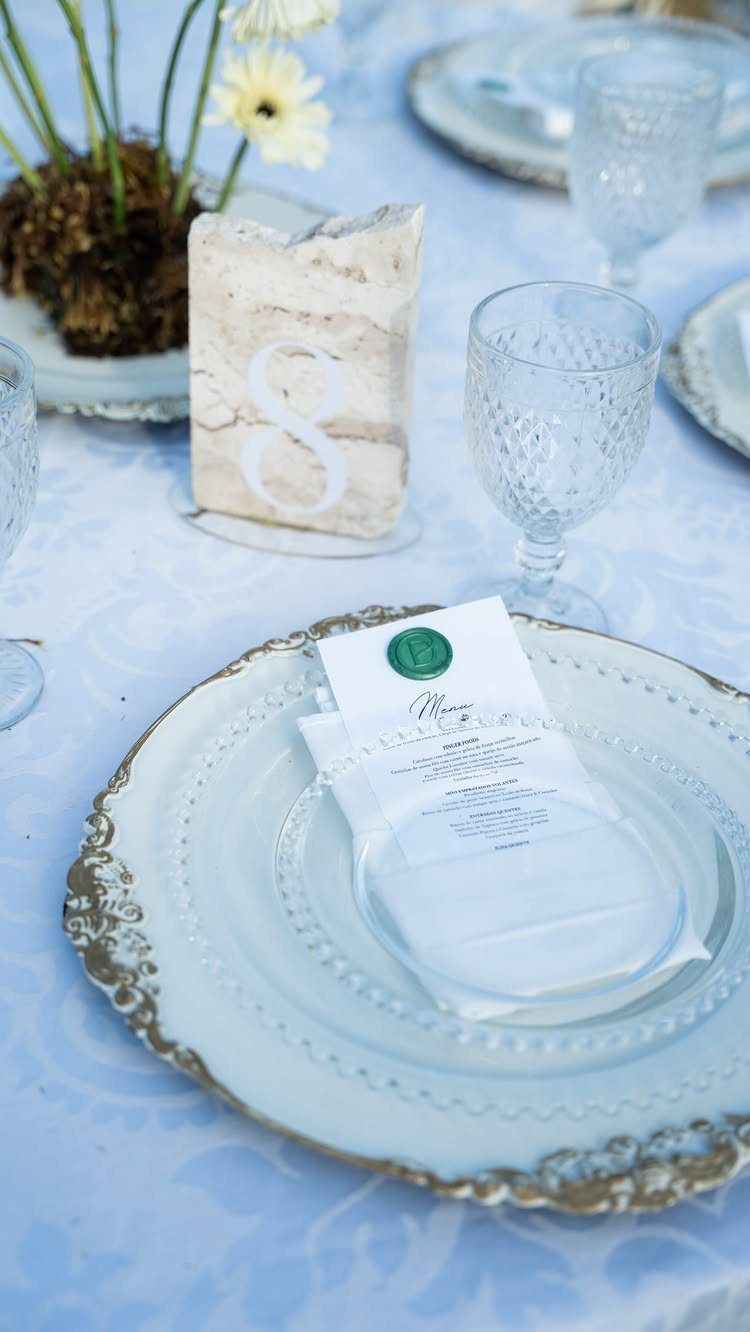
A travertine block with a painted number turns a functional marker into something guests handle and notice.
Stone, wood slices, or even stacked books each carry a different weight and formality; choose the material that belongs on your tables rather than the one that photographs best flat.
I would keep the number high-contrast and large enough to read from the room’s edges, since guests hunt for tables while holding drinks and conversations.
A printed menu card on the plate pairs with the number without crowding it. These work best at seated dinners where guests find their own places.
12. Oversized Handmade Fabric Flowers
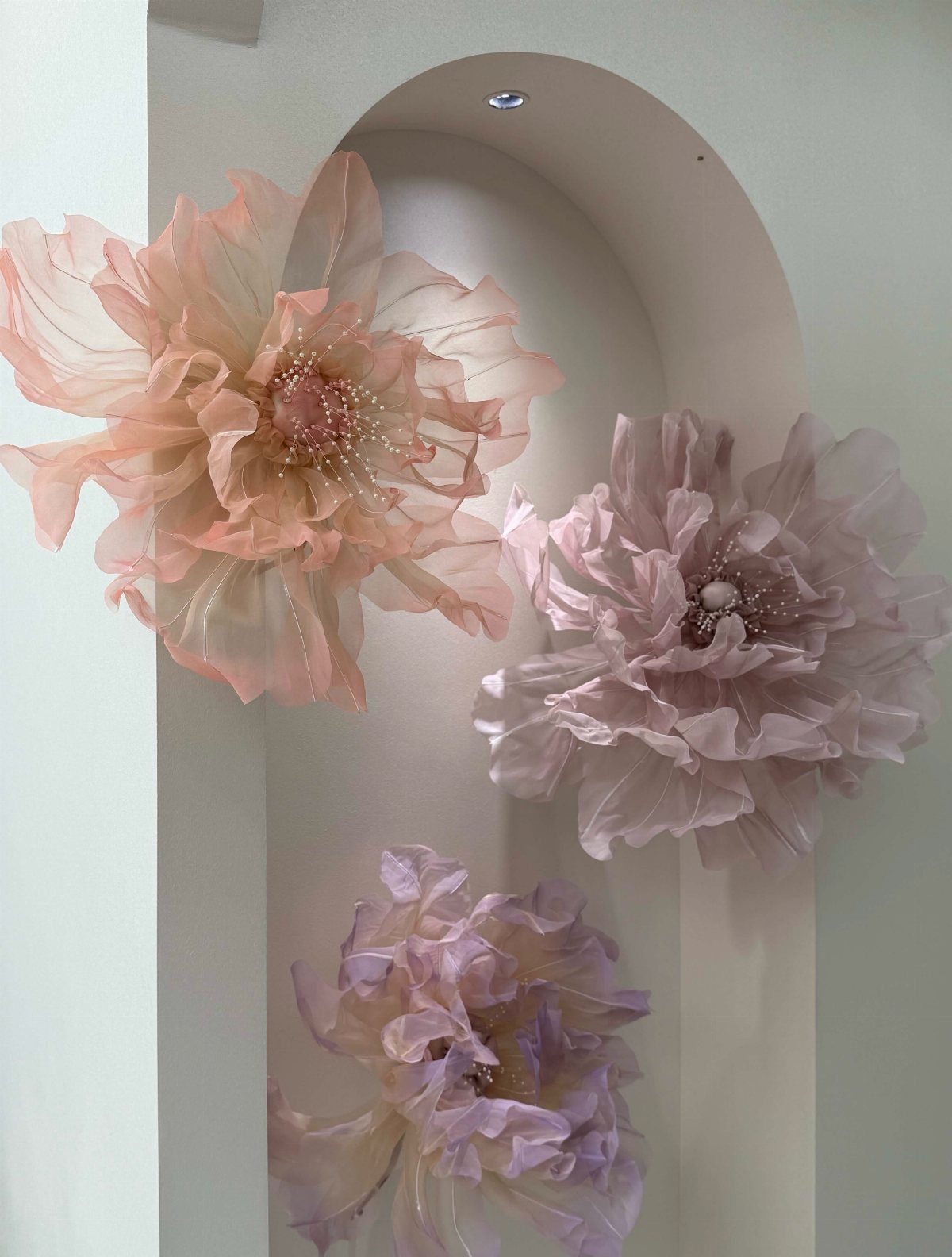
Fabric flowers scaled large enough to read from across a room solve the problem of blank walls or bare niches without the water and wilt of fresh blooms.
Ruffled, translucent layers catch light differently than paper or silk; organza or tulle held the shape with wired edges. Beaded centers add weight and a place for the eye to rest.
I would build these on a base that mounts flat, since dimensional flowers stick out and catch sleeves in narrow passages. One or two oversized pieces often matter more than a cluster of smaller ones; the scale is the statement.
13. DIY Balloon and Floral Arch
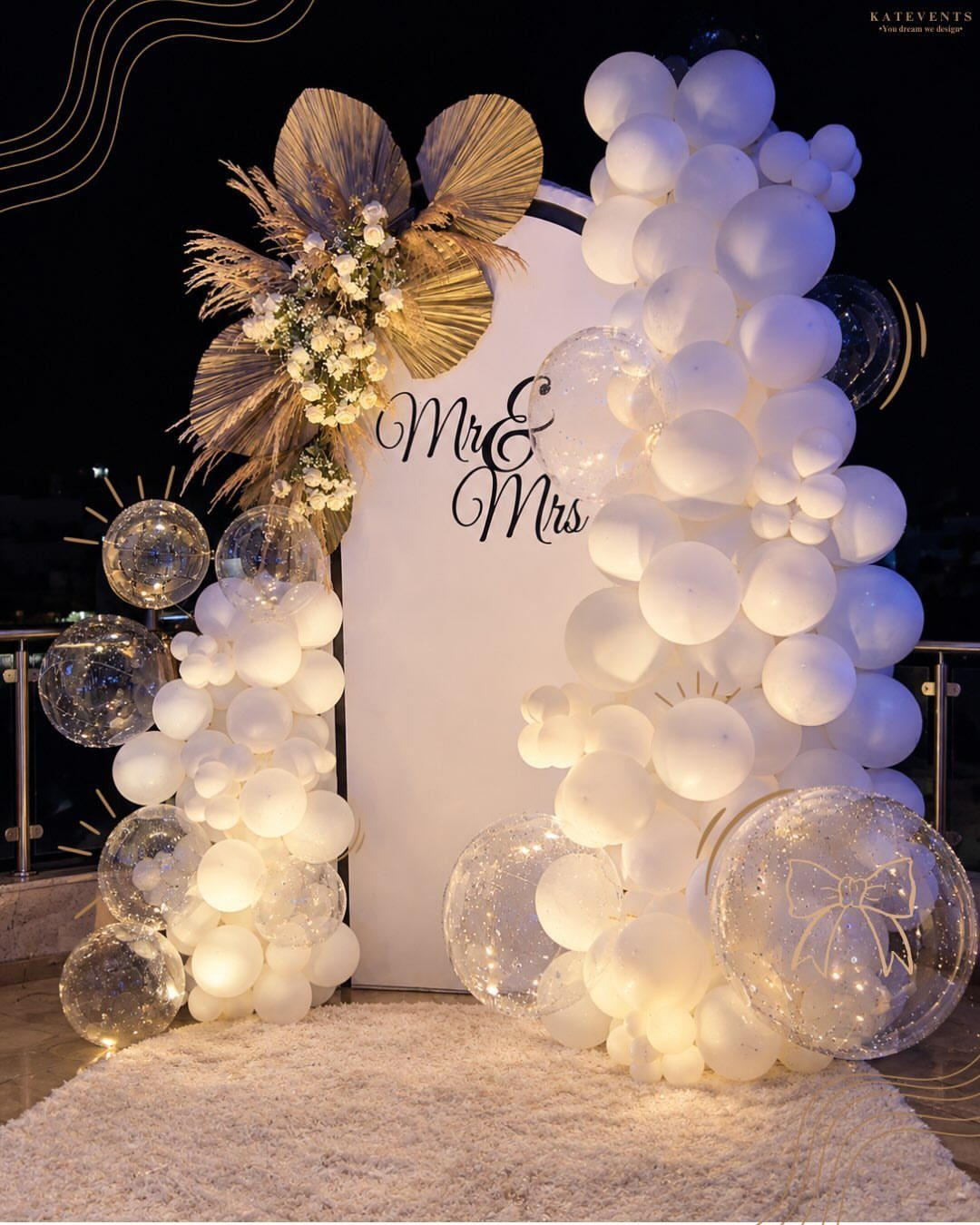
A balloon arch frames a doorway or sweetheart table with volume that fabric alone cannot match. Latex in white or cream reads wedding-appropriate; gold paint brushed on after inflation adds the glamour the shape lacks on its own.
The garland builds on fishing line or a low-temperature glue gun, with balloons sized unevenly so the cluster looks grown, not stacked.
Dried palm leaves and fresh blooms wired in break the round repetition and carry your palette through.
I would build this the morning of, not the day before, since latex clouds and softens in sun. Indoor setups last the full reception; outdoor arches need a weighted base or staked frame against any breeze above a light gust.
Move the arch to the photo booth after the ceremony if the structure allows. One arch often serves two purposes on a tight budget; just check the timeline leaves enough gap for the shift.
Pros of DIY Decorations
DIY decorations let you build something no rental catalog carries. A glue gun and ribbon are enough to start; the rest is the palette and shape you choose for your tables.
The money saved is real, though how much depends on which projects you pick and how many hands you have.
Friends and family who help build the arch or tie the ribbon bows become part of the day before the day. Their work shows in photographs alongside the professional pieces, and guests who know will notice.
Cons of DIY Decorations
The time commitment is the part couples underestimate.
Each lantern wrap, each painted table number, each hand-lettered place card carries a minutes count that multiplies fast once you count every guest. What looks simple in a tutorial photograph rarely is at two in the morning the week before.
Practice runs are not optional. The first balloon arch sags; the first calligraphy smears.
Build that failure into your calendar, or the final pieces will carry the stress of haste. Planning here means planning for mistakes and their correction, not just the finished look.
Materials for DIY Projects
Mason jars, twine, burlap, and ribbon form the backbone of most projects in this style. They are cheap enough to buy in stacks and forgiving enough to adapt when the first plan shifts.
A glue gun is the one tool that appears in almost every how-to; if you do not own one, borrow or buy early enough to test it.
Fresh flowers need water; dried ones need only storage space.
LED candles and battery-powered fairy lights run for hours on coin cells or AA packs, but test the runtime against your reception length. Paint, sand, pebbles, and glass cloches fill the gaps between the big materials and the finished piece.
Tips for Successful DIY
Practice each project once with scrap materials before touching the final batch. The first submerged flower arrangement will show you how petals bruise; the first fabric drape will teach you what wind does to a loose knot.
Recruit friends for assembly-line work, but assign one person to quality check.
Consistency matters more than speed on the pieces guests handle or study up close. Gather every material before you begin; mid-project runs to the craft store cost time and break concentration.
Build a timeline that finishes the morning of the wedding, not the day before. Something always takes longer, and the buffer is what lets you sleep.
Frequently Asked Questions
What are some DIY wedding decorations I can make?
Lantern centerpieces with fresh flowers, LED fairy lights in mason jars, hand-lettered welcome signs, and fabric-draped backdrops are all projects a glue gun and ribbon can start.
Most need practice before the final batch, since the first balloon arch sags and the first calligraphy smears.
How to make inexpensive centerpieces?
Submerged flowers in tall cylinder vases with a floating candle on top give height without blocking faces across the table. I would test the candle’s burn time against your reception length and keep a second on standby.
What are some good centerpieces for wedding tables?
Glass cloches and open terrariums bring living green to tables without the height that blocks conversation; succulents and air plants tolerate dry reception air better than moss alone.
LED lanterns surrounded by fresh flowers create their own small fireplace, and mixing heights keeps the eye moving.