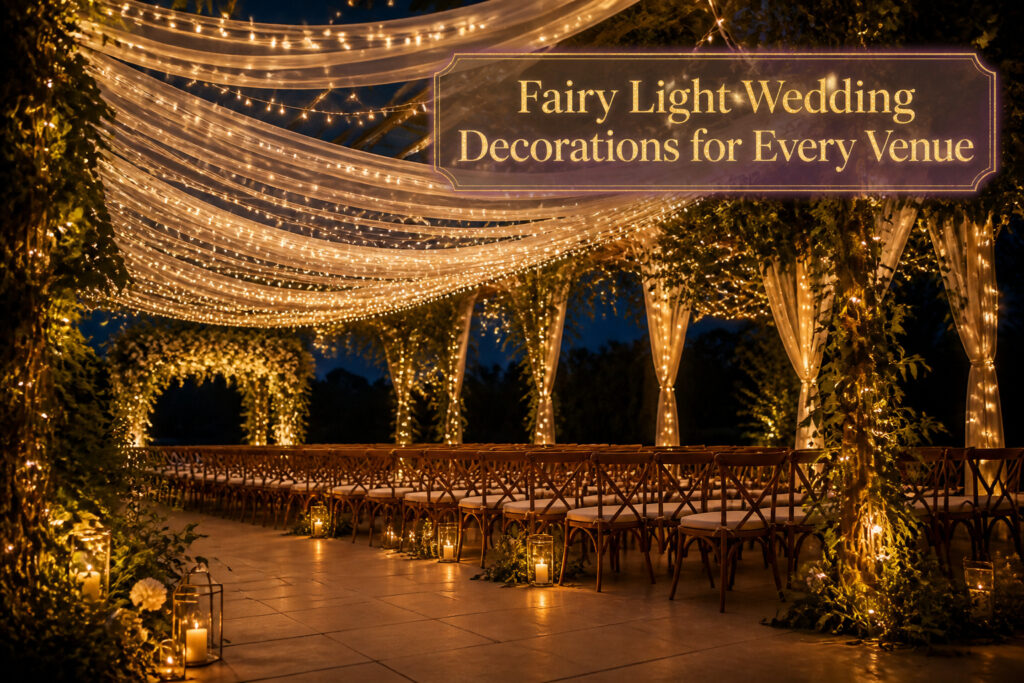
Fairy light wedding decorations run from barely-there micro wire accents to power-hungry LED walls that need dedicated circuits. What separates the installations that work from the ones that fail is not budget or taste, but load limits and outlet maps confirmed before a single strand is bought. A ceiling canopy alone needs 20% extra length just for the drape that turns rigid wiring into the starlit effect guests now expect.
1. Hanging Table Tea Lights
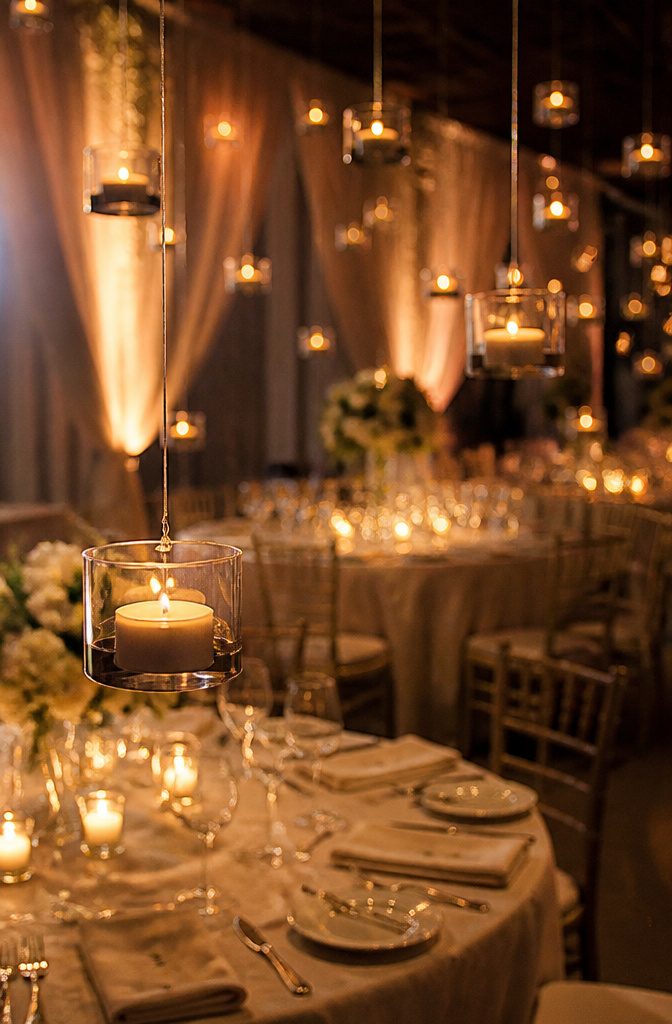
Small flames drifting overhead turn a standard reception into something guests remember without knowing why. The trick is height and spacing. Hang battery-powered tea lights on clear filament at varying lengths, roughly eighteen to thirty inches above the tabletop, and each pool of light stays intimate without anyone leaning into open flame.
Battery-powered wedding lights usually last 30–60 hours on one set of batteries, which covers setup, the full event, and breakdown without a mid-toast failure. Warm white throws the yellowish glow that reads as candlelight, the safe choice for most receptions. Cool white carries a blue undertone that only works here if the rest of the room runs modern and high-contrast; in a typical soft palette it reads clinical, like a showroom rather than a dinner. Winter weddings with slate and silver can carry it. Everything else leans warm.
The mistake I see most is uniform height. A straight grid of lights looks like an airport runway. Stagger the drops by four to six inches, cluster slightly heavier over the center of each table, and the ceiling disappears into shadow while the conversation below stays lit.

Tea Party and Spring Celebrations:Designed specifically for tea party decorations and spring party decorations, this 6 pieces set brings the soft charm of blooming peonies to your garden table, porch, or backyard; Ideal for Mother’S Day brunch, spring baby showers, or an afternoon tea with friends

🕯️ Red glitter tealight glow — Genuine glitter finish in bold red. Warm white flicker adds a passionate, festive warmth perfect for romantic dinners, holiday tablescapes, and cozy seasonal displays.

Package Contents: you will get 24 pieces decorative lanterns for home decor, battery included; The interior is in the shape of candles, flameless and bright, allowing you to enjoy the ambiance of candlelight safely
2. Outdoor Seating Area Lighting
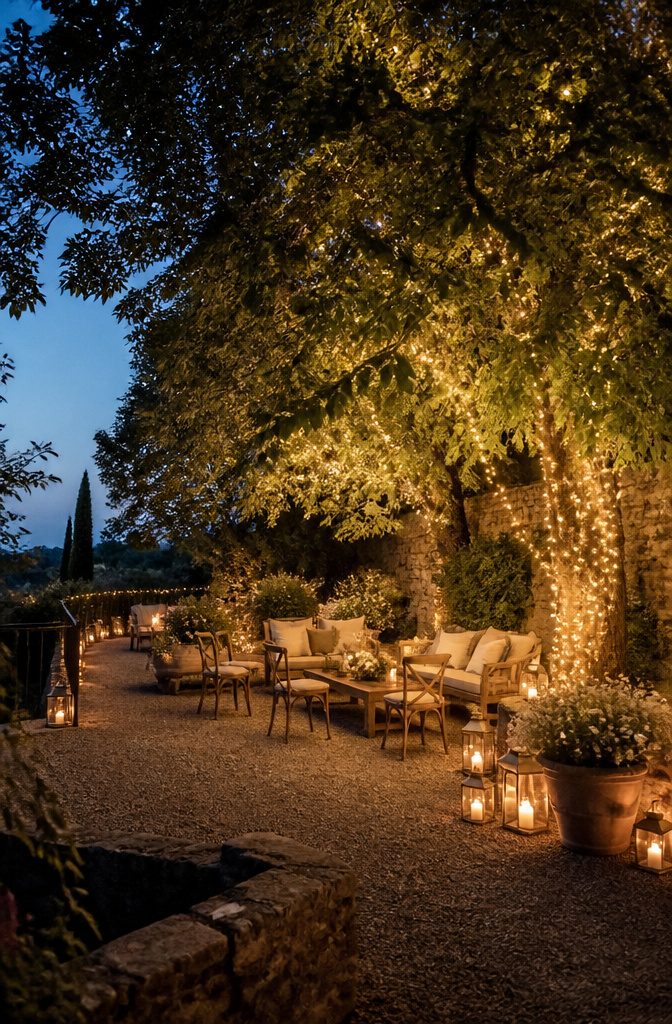
Lounge seating under open sky needs light that keeps working if a toast runs late or weather turns. IP-rated products are the baseline for any outdoor celebration, not an upgrade to consider later. Water and electricity mix badly; the rating tells you the housing has been tested against rain and dust ingress, and skipping it puts guests and the event at risk.
Battery-powered strings solve the problem of ceremony seating set far from the house or barn. They run the full evening on a single charge and disappear into greenery or wrapped around low branches without a cable trail across the lawn. Solar is the slower-building option, best for summer weddings where the panels get honest sun all afternoon and the glow deepens automatically as the sky darkens. Mains power stays brightest and steadiest, but most outdoor lounge layouts force you to choose between running long extension cords through guest space or going without the warmest zones entirely.
Cable finish matters more outdoors than in. Clear cable vanishes against pale upholstery or stone; black rubber reads industrial against raw wood and metal frames; copper wire catches what little ambient light exists and turns it decorative even when the bulbs are off.

【 12 Pack Battery Operated LED Fairy Lights 】- Powered by 2 CR2032 batteries (included), the 7 feet micro fairy light with 20 upgraded energy-efficient LEDs is perfect for both everyday decorations as well as holiday decor. The thin copper wiring and small-sized LED bulbs will add a delicate and cozy touch to your personal space

Battery Operated String Lights: Powered by 3*AA battery (batteries NOT included). The battery box is not waterproof, please keep it away from water

【Long-Lasting Battery Life】Our small battery fairy lights come with 3 pre-installed 180mAh high-capacity LR44 batteries, totaling 540mAh. Enjoy up a long time of constant lighting, perfect for decorating various items. No need to buy extra batteries like with other brands, saving you time and money. Illuminate your mason jar, vase, crafts, parties, and more with ease(Actual battery life may vary depending on usage)
3. Light Tunnel
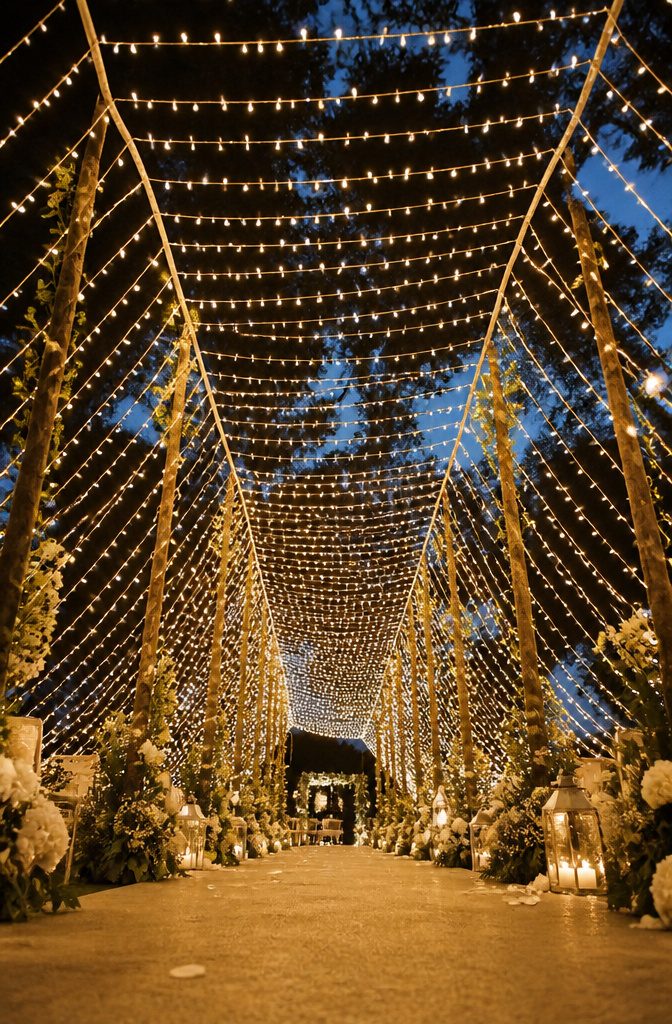
A light tunnel over the entrance or aisle usually needs more string length than any other single fairy light feature at a wedding, which is where connectable lights become the practical choice. Multiple strings join end to end and draw power from a single plug, so the line keeps going without a trail of extension cords across the floor or grass. That matters most in large venues where you are working with hundreds of feet of lights and only so many outlets along the wall.
For photographs, this setup has become nearly standard. Guests walking through the tunnel or couple walking back down the aisle after the ceremony get framed by a soft, even glow on both sides, and photographers rarely have to fight mixed color temperatures or hot spots because the same string runs the full length. The lights themselves stay the same warm white or cool white from start to finish.
Building it takes more height than most people guess. Trees, tent poles, or rented arch supports need to stand a few feet above head level or the tunnel collapses into a tent that feels low and heavy. Spacing matters too: strings too far apart read as separate arches instead of a continuous corridor. I have seen the best results when the supports are set every six to eight feet and the lights drape between them in a loose catenary rather than pulled tight. Tight lines look industrial; the slight sag catches the light and softens it.
The main limit is total wattage per run. Most connectable systems max out somewhere around a thousand bulbs or a specific wattage per plug, and exceeding it dims the whole string or trips the fuse. Plan the full length before you order, add up the bulbs, and buy to that number rather than piecing it together in stages.

GLOWING DECOR: Wreaths and garland take on a new charm when adorned with our short mini string lights, transforming a standard greenery into something truly magical.

ILLUMINATING: Brighten your living area or backyard with our vintage incandescent holiday mini strings, featuring 100 clear mini lights strung along a 34-foot black wire with 4-inch spacing between bulbs.
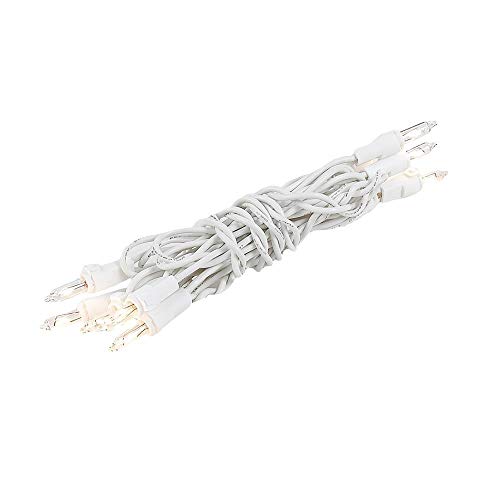
CLASSIC STYLE: Our 10 light, 5.5-foot craft light strings on white wire are built using tried-and-true incandescent mini light technology and bring the same warmth and style you remember from your childhood.
4. White Fairy Lights
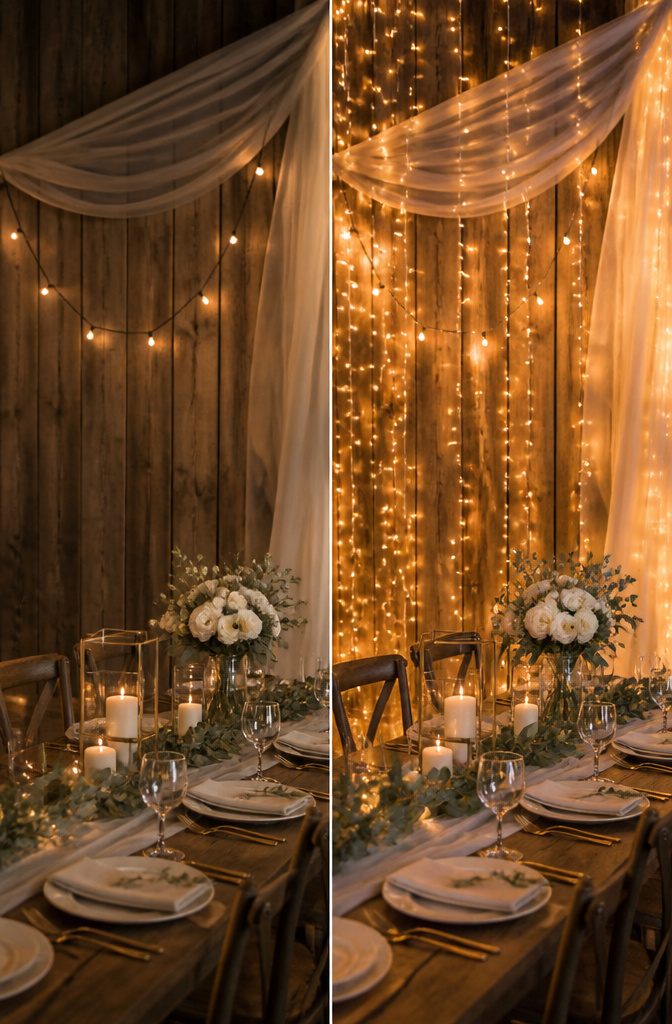
Warm white fairy lights carry a soft, yellowish glow close to candlelight, which is why they dominate most romantic wedding palettes. Cool white leans brighter with a blue tone, and that crispness reads as modern or winter-ready rather than cozy. The difference is color temperature, measured in Kelvin: lower numbers mean warmer light, higher numbers mean cooler. For weddings, the choice usually falls between roughly 2700K and 4000K, though most couples never check the packaging and simply hold two strands side by side.
Matching matters more than the exact number. An overhead wash of warm white paired with cool white accent lights along a table runner will fight each other; the room splits into two moods instead of one. If the venue already has fixed lighting, bring a sample strand to match against it before buying the full batch. The same warmth overhead and at table level keeps the space feeling intentional rather than assembled from leftover strands.

Christmas Fairy Lights Plug in 66 FT 200 LED: Upgraded brightness 200LED 66ft string lights, warm white, IP44 waterproof, UL588 approved, 8 modes, copper wire, with timer function, beautiful twinkle lights for indoor and outdoor use, perfect bedroom decorations, great ideal for party, wedding, birthday, Thanksgiving, Halloween, Christmas, etc.

Solar Powered & Auto On/Off: Powered by solar energy, these lights eliminate the need for extra electricity costs and battery replacements. The built-in light sensor automatically turns the solar fairy lights on at dusk and off during the daytime.
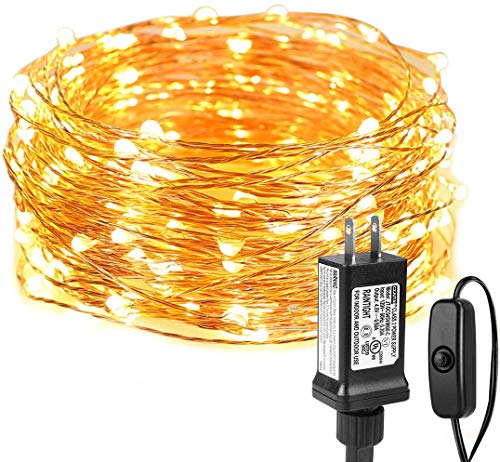
Versatile Fairy lights: String with 100 durable LEDs creates a warm, joyful, and festive ambience, ideal decorations for Christmas, holiday, party, wedding, etc.
5. Greenery Hoops and Fairy Lights
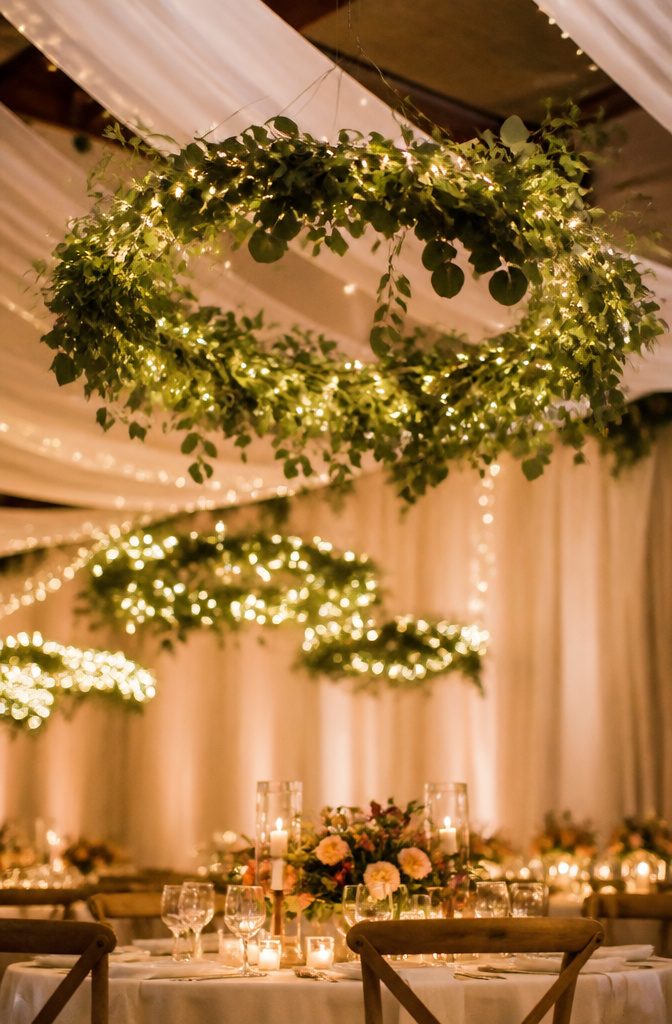
Suspended greenery hoops wrapped with fairy lights turn an ordinary ceiling into something guests actually look up for. The pairing works because the lights pick out the shape the foliage softens, giving you structure and glow at the same time.
Most venues already have rigging points in place for existing fixtures, but the weight your hoops add is the number that matters. Always confirm load limits with the coordinator before finalizing dimensions or plant choice; fresh eucalyptus runs heavier than dried, and a 36-inch grapevine base carries more than a wire form of the same span. Cable ties, gutter clips, or magnetic hooks are usually permitted for the light strands themselves, though policies on the hooks vary from one venue to the next. Checking before you buy anything keeps you from eating the cost of hardware that won’t clear the rules.
The practical draw here is overhead coverage without a tent or draped ceiling. A single row of hoops down a barn’s center beam frames the aisle. Clustered at varying heights over tables, they give each group its own pocket of light without competing with centerpieces below. What you lose is easy access for adjustments mid-reception; what you gain is a installation that photographs clean from every angle.

Solar Powered and Auto On/Off: Warm White Christmas string lights powered by solar energy with no extra electric cost or battery replacement needed. The light sensor charges the lights during the day and turns them on automatically at night
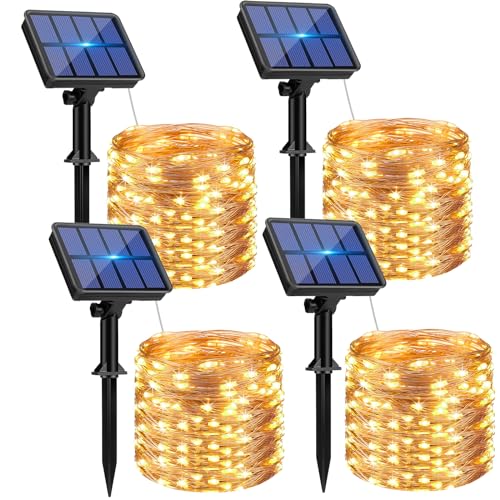
4 Packs Solar String Lights for Outside: Each Ultra-Bright twinkle lights solar with 80 LED 33 FT (26.5 ft light string +6.5 ft lead wire), total 320 LED 132 FT. Enough length and lights to easy decorative large areas like fences, trees, yards or garden, enchanting glow

Solar Powered and Auto On/Off: White Christmas string lights powered by solar energy with no extra electric cost or battery replacement needed. The light sensor charges the lights during the day and turns them on automatically at night
6. Fairy Light Curtain
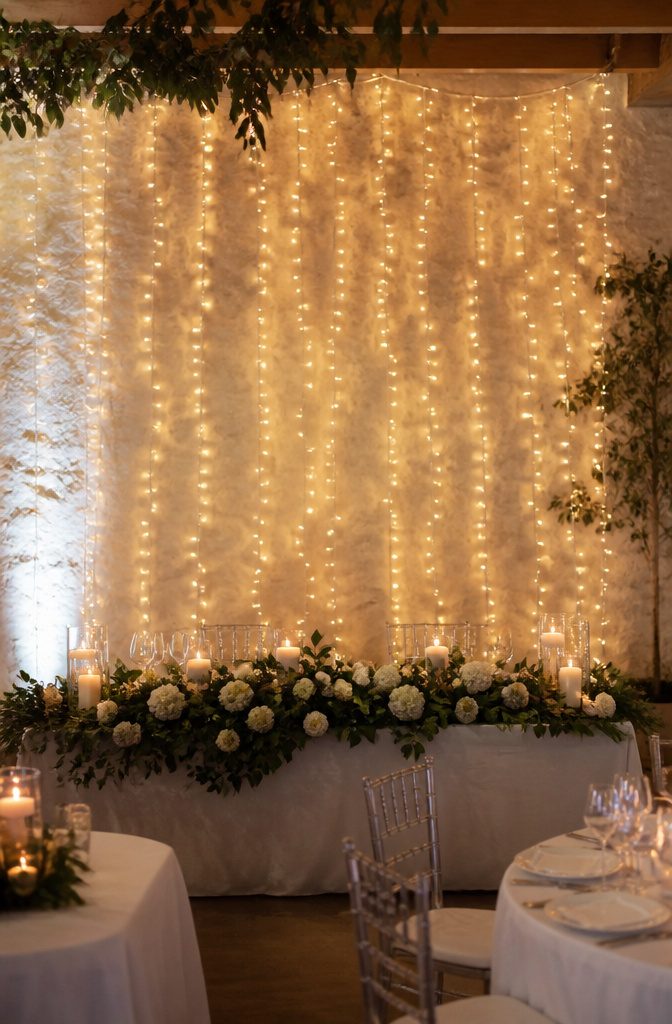
Vertical light curtains turn a plain wall into something worth standing in front of. I see them most often behind head tables, where the bride and groom eat their first meal as a married couple, and they work just as well as photo booth backdrops where guests line up with props. The strands hang straight down, usually from a rod or wire mounted at ceiling height, and the density of light depends on how close together you space them.
For perimeter-style installations, measure the total distance of the walls you want to cover before you buy anything. That number determines how many light sets you need. A draped ceiling canopy works differently. That setup needs the length of the space plus about 20% extra to get the sag and sweep right, so the math changes based on what you’re building.
I used to think more strands always looked better. After looking through enough setups, I’ve changed my mind. A curtain that is too dense blocks the texture and turns into a flat glowing rectangle. Sparse spacing, maybe six to eight inches between drops, lets the wall behind show through and gives the light somewhere to go. The effect reads as depth rather than just brightness.
The mistake I see most often is buying lights first and measuring second. The returns process for opened string lights is rarely worth the hassle.
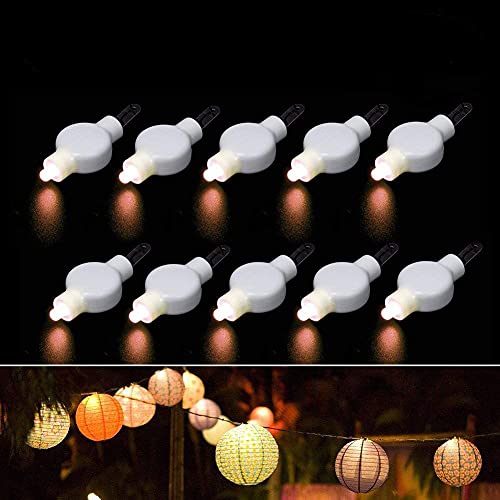
Designed for Paper Lanterns Ballons: led light with string is designed for paper lantern,compact size is suitable for most of lanterns (smaller than 2feet diameter).Just put hook through the metal wire,warm white led Lighting helps create warm ambience.

【Mini Size】:The decorative candle lanterns dimensions are designed to be 5 inches height(Note:Plus the hanging loop is 6 inches height) and 2.5 inches in diameter and mini lantern with tapered flameless candle table centerpieces are small lightweight lanterns, making them more portable and cute.

【Vintage candle lantern】Unique retro memory candle lantern with high transparent acrylic shade, special top and frame with permanent coating, sturdy, corrosion resistant, weather resistant, adds a gorgeous combination of beauty and utility to any space, this light is made of 3 pieces of LR44 Coin cell battery (included), just turn the light on or off as needed. Exquisite mini lanterns, no oil smoke, no odor, no fire hazard, no burning risk, allowing you to enjoy a sweet and safe atmosphere.
7. Fairy Light Sign
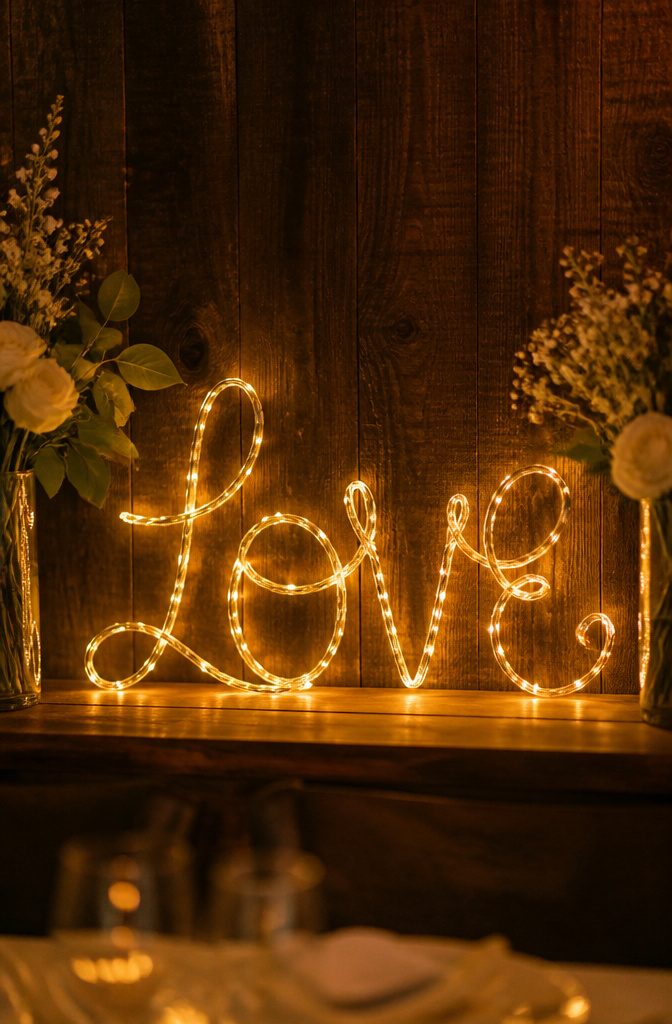
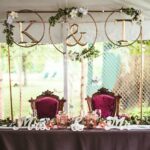
A fairy light sign works best when it is the thing guests photograph, not the thing they read by. Custom pieces built from micro wire or pea lights can spell initials, a last name, or a simple shape like a heart or ampersand. The wiring stays cool enough to cluster tight, so a script font reads clean from twenty feet back.
The mistake is hanging one behind the head table and expecting it to light the whole room. Most of these run off a single plug or battery pack, and the glow is concentrated on the letters themselves. Pair it with overhead lighting or candles on the tables so the sign does not have to do ambient work it was never built for.
Renting a pre-made sign costs less than commissioning one, but check the dimensions against your venue’s load limits. A four-foot script "Mr & Mrs" in a steel frame can weigh thirty pounds. For outdoor setups, the frame needs staking or sandbagging; a gust at cocktail hour will turn a freestanding piece into a sail.
![24 Pack Fairy Lights Battery Operated [3 Modes] 7ft 20 LED Mini Twinkle String Lights Waterproof Silver Wire Firefly Starry Lights for Wedding Party Mason Jars Christmas Decorations, Warm White](https://m.media-amazon.com/images/I/51NBqNkGaHL._SL500_.jpg)
【Large Capacity LR44 Battery】Each fairy lights is equipped with 3 pre installed 180mAh batteries, which can provide up to 72 hours of lighting without additional purchase. Very suitable for decorating mason jars, vases, handicrafts, bottles, plants, decorations, flower wreaths, flower wreaths, etc

Bright: Led christmas lights are composed of warm white micro LEDs with big chips, brighter than others' led fairy lights. Perfect decoration for weddings, parties and kids' rooms
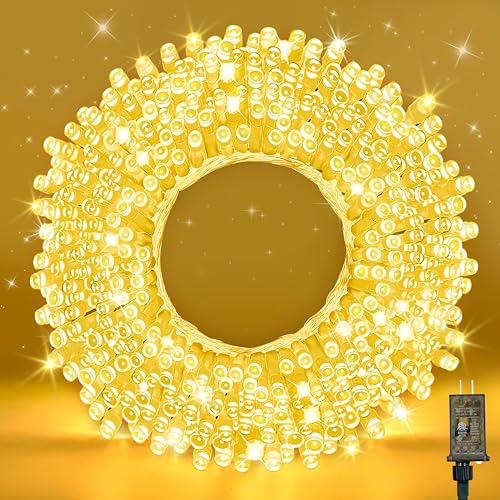
✨ Warm White Glow for Cozy Ambiance – Create a soft, romantic atmosphere with warm white LED lights, perfect for Christmas, weddings, bedrooms, patios, or any space where you want a welcoming glow.
8. Fairy Lights and Candles
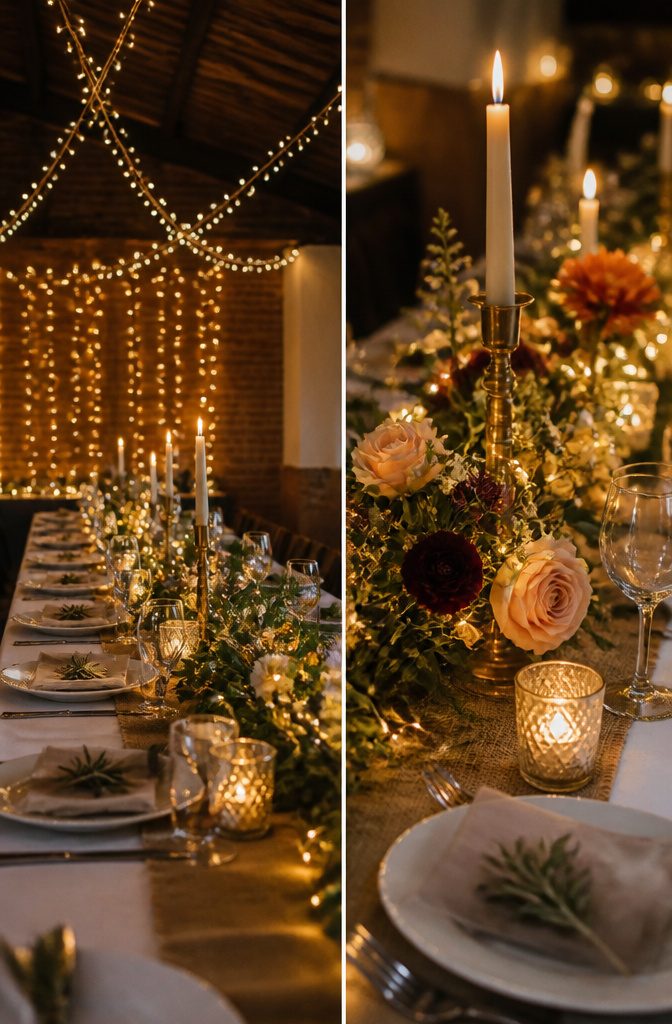
Layering electric fairy lights with real candles builds depth you cannot get from either alone. The warm points of flame against softer overhead strands give tables dimension and keep the light from feeling flat. At a barn reception last season, the couple ran micro-lights through the centerpieces and set tapers in brass holders at varying heights; the result read intimate rather than under-lit.
Some venues ban open flames entirely, and that decision changes your timeline and your shopping list. LED candles have become the workaround, and the better ones flicker convincingly enough for photographs. They also produce little to no heat, which matters when your lights sit near silk flowers, table runners, or draped fabric. You will want to confirm the flame policy before you order either element, because switching from wax to LED after rentals are booked forces compromises in color temperature and height that show in the final look.

CLASSIC STYLE: Our 10 light, 5.5-foot craft light strings on brown wire are built using tried-and-true incandescent mini light technology and bring the same warmth and style you remember from your childhood.

Bright Outdoor String Lights:DGE commercial grade waterproof gazebo lights include the fuse (+1 spare),30 hanging plastic bulbs (+3 spare), plastic case looks like clear glass

CLASSIC STYLE: Our 20 light, 8.5-foot craft light strings on green wire are built using tried-and-true incandescent mini light technology and bring the same warmth and style you remember from your childhood.
9. Ceiling Fairy Lights
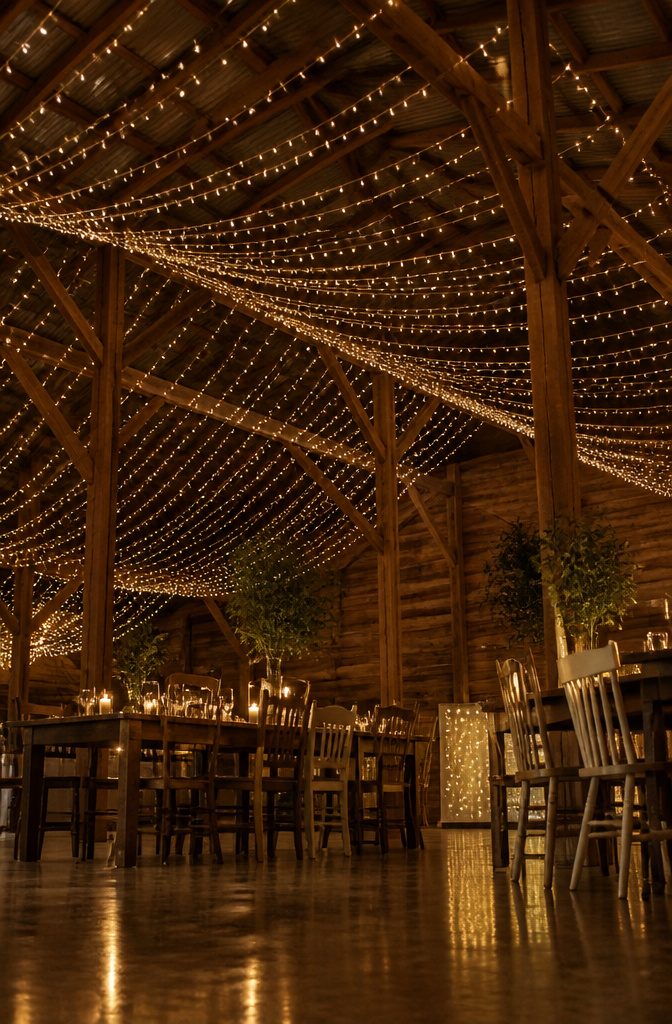
Overhead fairy light canopies have become the default backdrop for wedding photography, and that shift happened fast. Five years ago a tent or barn with strings overhead read as special; now guests expect that starlit ceiling effect the moment they walk into a reception space.
For a proper canopy, measure the length of your space and add 20% to the total to account for the drape and sag between anchor points. That extra length is what turns rigid lines into the soft, enveloping glow that photographs well. Without it the rig looks like infrastructure rather than atmosphere.
Power is where these installs quietly become demanding. A large ceiling rig in a barn or hall can pull serious amperage across multiple circuits, and venues with older wiring sometimes cannot handle the load without distribution boxes brought in. Festoon lines and curtain lights draw more than the micro-lights used on tables, so the canopy is usually the piece that forces a conversation about generator rental or a dedicated power drop. Start that conversation early, because the lights themselves are the easy part.

✅【Waterproof Versatile LED Lights for Every Occasion】 Featuring 8 lighting modes and soft, gentle illumination, these string lights are perfect for bedrooms, kids' rooms, Christmas decorations, or simply adding a cozy, magical vibe to your everyday life. Designed with fully sealed LED bulbs and anti-freeze coating, these outside lights perform reliably in rain and snow. Note: Please protect the power plug from water.

【22 Colors Changing String Lights】Enhance your celebrations with these 33ft length, 100 LED string lights that can transform into 22 vibrant colors. Choose the perfect color to complement your party theme, such as orange and purple for Halloween, red and white, red and green, or multicolor for Christmas, pastel for Easter, red for Valentine's Day, and green for St. Patrick's Day. These lights are an ideal decoration for holiday lights, bedrooms, gardens, living rooms, and parties

Remote Control: Point the remote at the receiver to control the lights. You can turn the lights on and off, change the color to one of 16 vibrant colors, set the lights to different light modes and set a timer.
10. Drapes and Fairy Light Canopy
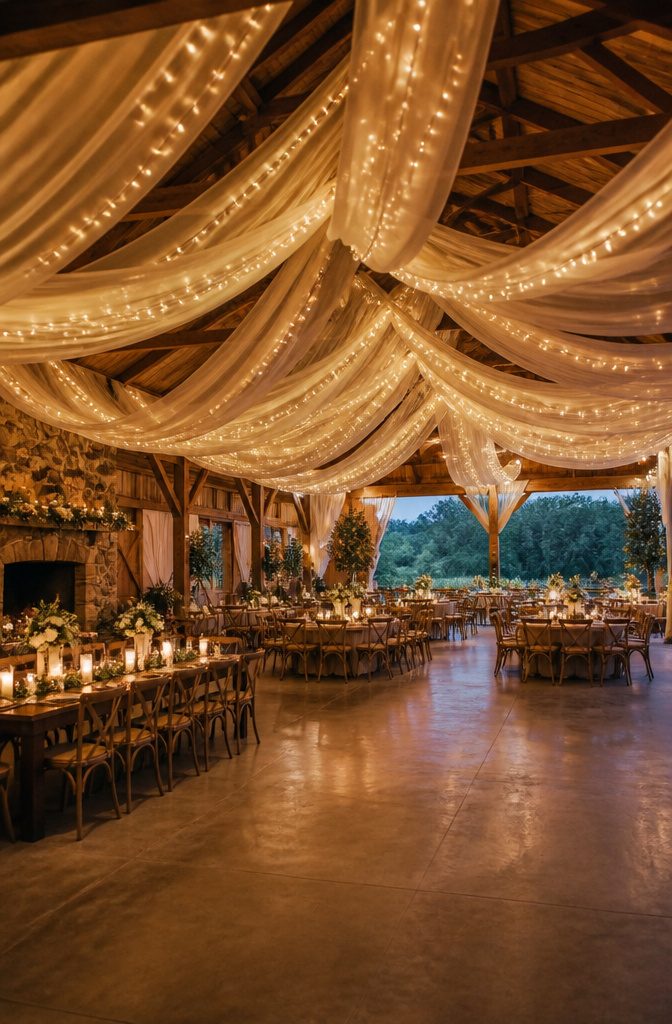
A bare bulb canopy gives you stars; fabric drapes give you weather. Layer the two and you get a sky guests can feel around them, soft where the bulbs alone would read as wiring. The choice of fabric does the work here: ivory or blush chiffon turns the same warm white bulbs into candlelight, while a heavier velvet in navy or forest absorbs enough glow to make the points of light feel earned rather than scattered.
The installation order matters more than couples expect. Drapes go in first, tensioned from wall to wall or hung off a rig, and the lights weave through after so the fabric carries the weight and the wiring stays hidden. A setup I watched at Wick Farm Bath ran sheer panels in crossing lines overhead, maybe eight feet up in a barn with lower beams, then threaded micro LEDs through the pleats so the glow came from inside the cloth rather than sitting on top of it. The result felt like a tent someone had always meant to build there.
Cost scales with ceiling height and the amount of rigging your venue already owns. A draped canopy with integrated lights will run higher than bare bulbs alone, but the difference is in the fabric rental and the extra labor to dress the lines, not in the lights themselves. The softness is worth it in a space that otherwise reads as industrial, though in a garden tent or a white-walled hall the extra layer can feel like overdressing. If your venue has dark beams or a high black ceiling, the fabric is what saves the lights from disappearing.

【Energy Efficient & Eco-Friendly】Our solar lights are equipped with a high quality solar power source that is energy efficient and can save you a significant amount of money on your energy bills. Outdoor christmas lights come with a 1200mAh rechargeable battery that absorbs solar energy during the day and automatically turns on at dusk. With a full charge, these lights can stay illuminated for 8-12 hours, ensuring maximum use of renewable energy and minimal impact on the environment

8 Lighting Modes: This solar christmas lights outdoor have 8 different lighting modes, including Combination, Waves, Sequential, Slo-glo, Chasing/Flash, Slow Fade, Twinkle/Flash and Steady-on. You can adjust different lighting modes according to different situations and mood

【Cherry Blossom Design】Experience the magic of spring all year round with these solar Christmas lights, inspired by flower - cherry blossoms. The 60 LED bulbs in each 26ft string (19.4ft lighting length, 6.6ft lead length) add a charming touch to your garden, and multiple sets can be connected for an even more enchanting effect;
11. Outdoor Festoon Lights
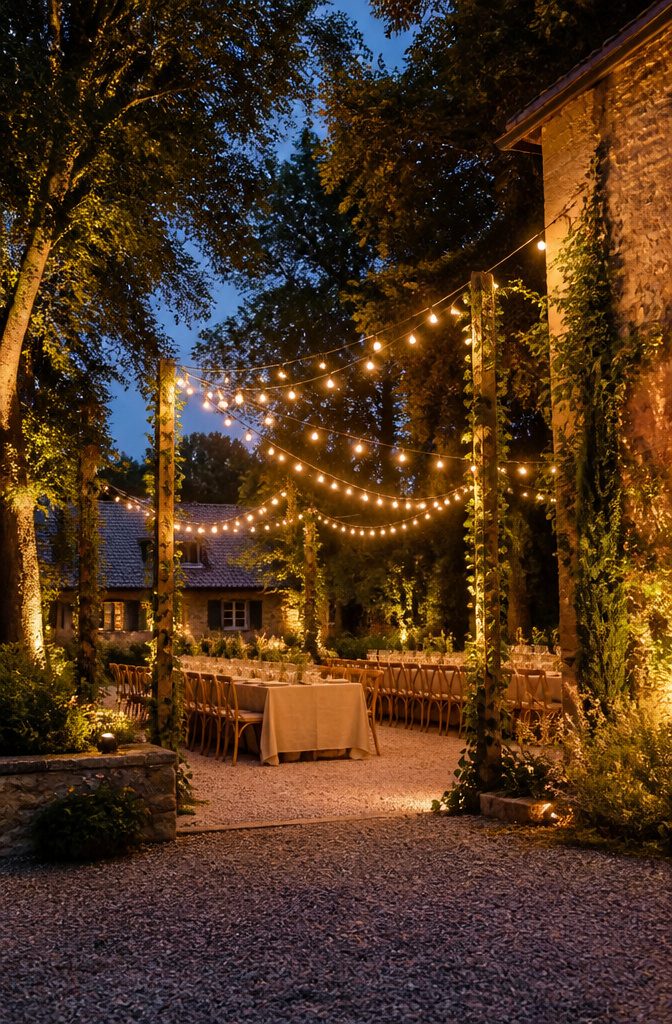
Outdoor festoon lights carry a different visual weight than the micro wire strands most people picture when they hear "fairy light wedding decorations." The bulbs are larger, usually golf-ball to Edison size, and the cable is heavier-gauge rubber or PVC built to survive weather. That durability matters because these strings must carry an IP rating that seals out moisture if they are going anywhere damp, including grass that holds morning dew. Indoor-only sets will fail or become a hazard the first night they sit under open sky.
The cable thickness and bulb spacing mean festoon strings need real structural support. Where a delicate copper-wire strand drapes over a branch and stays put, festoon cable sags under its own weight and needs tensioned guide wires or sturdy poles at shorter intervals than most couples first estimate. The hardware is manageable, but skipping it leaves you with a drooping line that pools on the ground by midnight.
12. Micro Wire Lights
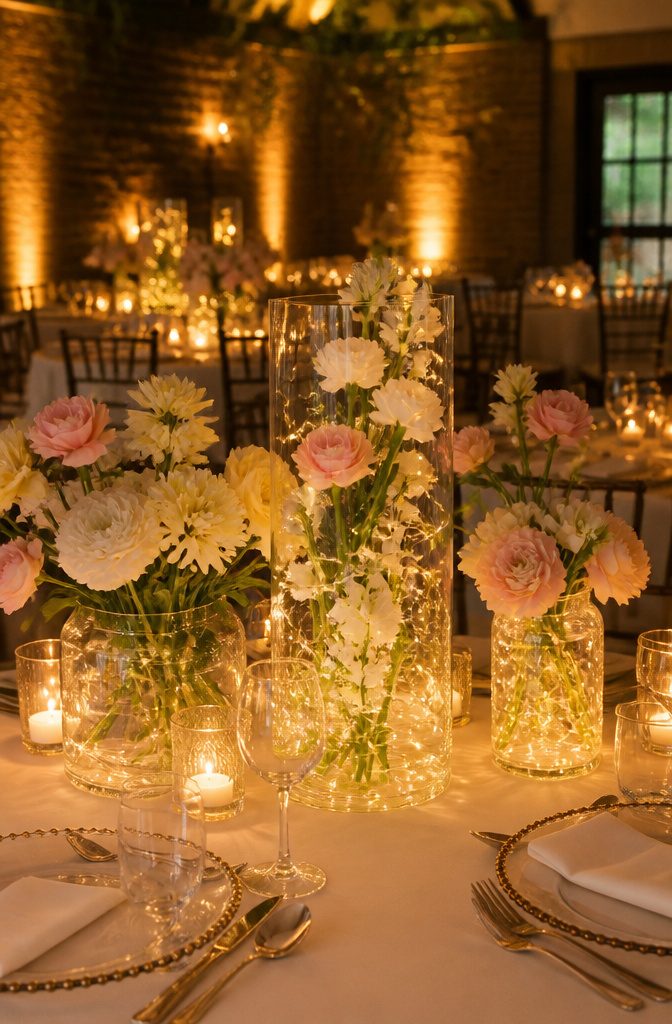
Micro wire lights run on strands so thin you can coil a dozen in your palm without trying. The copper wire disappears against most surfaces, which makes it the right choice when you want the glow without the hardware showing. I have seen these threaded through glass vessels, wound into centerpieces, and used to back light table numbers so the paper reads like a lantern. Battery power is the norm for this style, and a fresh set will usually run between 30 and 60 hours, enough to survive rehearsal dinner through last call without a change. The tradeoff is brightness. These are accents, not work lights. If your venue has any ambient glow at all, micro wire recedes into it fast. Pair it with darker materials, keep the glass clear, or plan on clustering several strands to a single vessel if you want the point to land from across the room.
13. Edison Light Bulbs
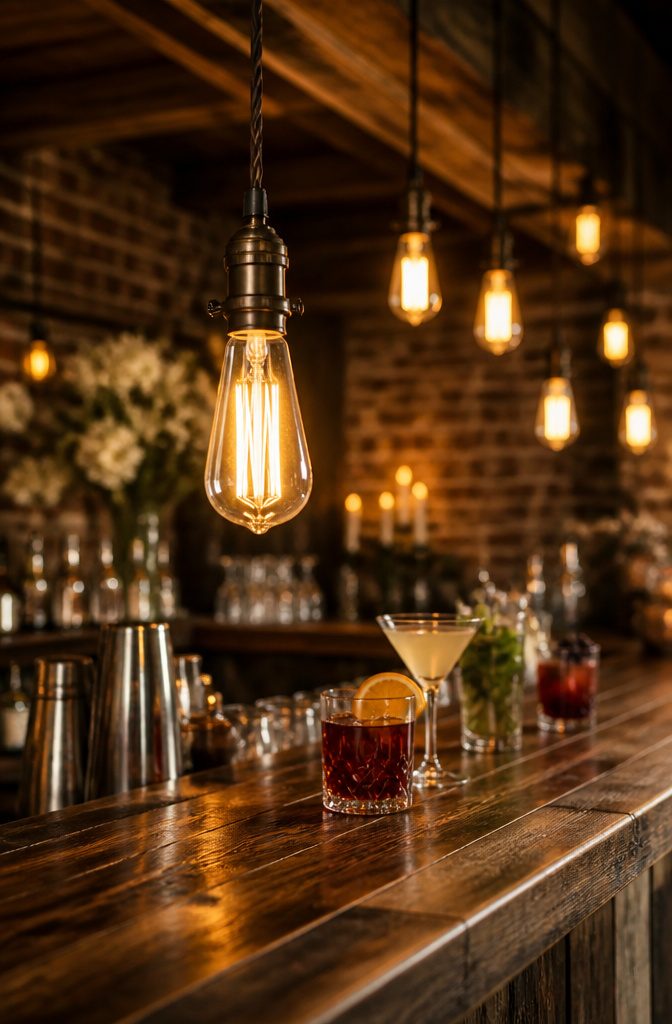
Edison light bulbs carry a visible filament that turns the light source itself into décor, which makes them a deliberate departure from the tucked-away glow of standard fairy light wedding decorations. The industrial feel suits venues that already have some grit: brick walls, steel beams, exposed ductwork, or raw timber where a soft string light would disappear.
These work best as focus lighting rather than ambient wash. A top table, the bar area, or a cake display gains a centerpiece quality from the bulb’s amber filament without needing additional ornament. The effect is warmer and more directional than hidden LEDs, which means the surrounding space stays dimmer and the lit zone reads as intentional.
The tradeoff is glare and shadow. Edison bulbs throw hard light downward and leave the ceiling dark, so they pair poorly with tent linings or anywhere you want even coverage. For industrial or rustic venues, that limitation is the point; the bulb looks like it belongs to the building rather than imported for the night. In a polished ballroom or garden marquee, the same fixture reads as a mismatch.
Cost runs higher per socket than standard fairy strings, both in hardware and in the wattage each bulb draws. Where a micro-wire strand runs on a battery pack, Edison fixtures need proper conduit and a dimmer to keep the glow from flaring too bright during dinner. The setup is more involved, but in the right room, the visual weight of the bulb itself is what sells the look.
14. Letter Lights
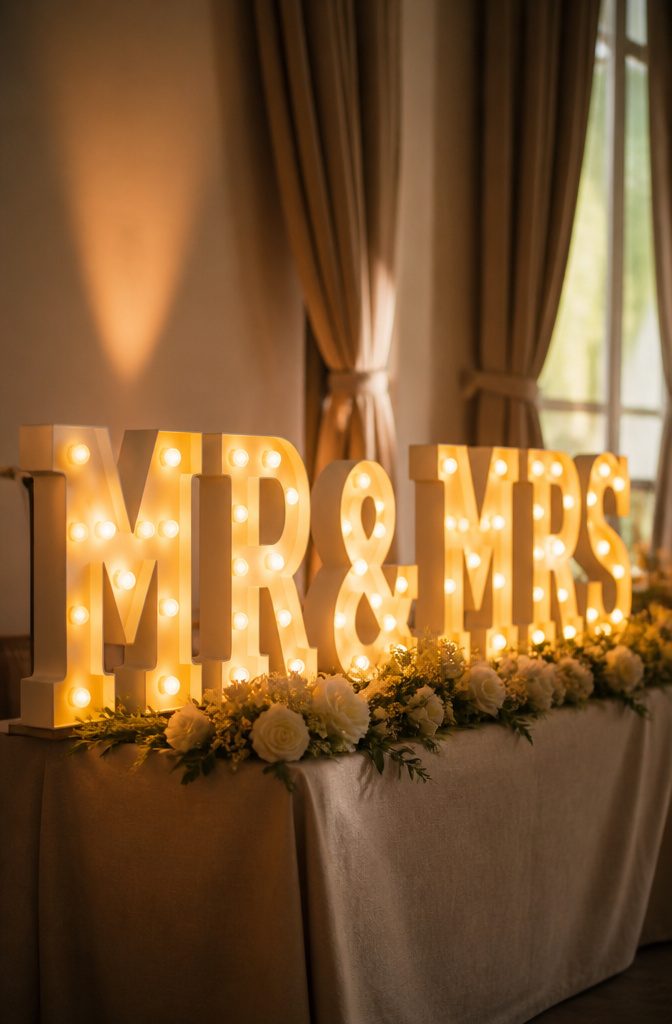
Large illuminated letters spelling out a couple’s initials, full names, or a word like LOVE have become a staple at receptions, and they sit in a different category from the ambient glow of strung fairy lights. These pieces are decor first and lighting second: they draw guests toward the photo booth or the cake table rather than washing the whole room in warmth.
Power is where the practical decisions start. Mains-powered systems suit the main reception space, especially when the letters are large enough to anchor a wall or stand at the entrance as a focal point. For smaller setups, remote tables, or outdoor spots where outlets are scarce, battery-powered units keep the look clean without trailing cords across the floor. Solar options work for summer outdoor weddings, though the glow depends on how much sun the panels collected that afternoon.
The scale matters more than couples expect. A four-foot "LOVE" in a barn reads intimate; the same piece in a hotel ballroom disappears. venue dimensions should drive the letter height, not the other way around.
15. Pea Light Wall
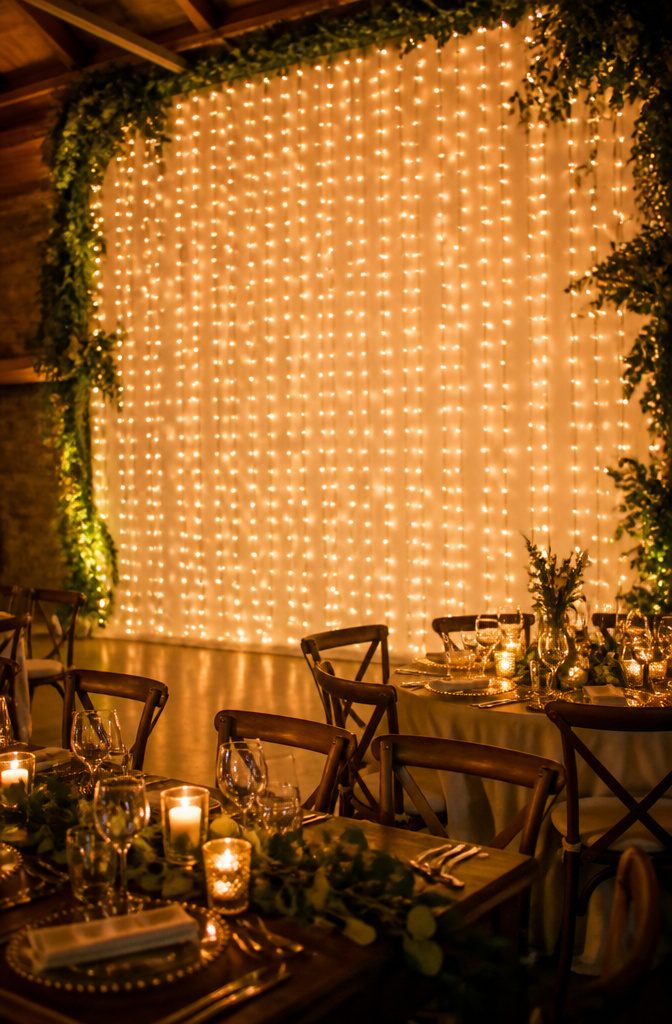
Dense walls of pea lights make the most dramatic backdrops, but they also carry the heaviest power load. A single panel can run several hundred bulbs, and mains power is the only practical option for a display that size. Battery packs drain within hours at that draw, and solar cells depend on evening sun that a tented reception rarely sees. Connectable mains series let you run a full wall from one socket, though you will need to map your venue’s outlet placement early in the layout.
What reads as soft glow in person photographs as pinpricks of harsh white unless you plan for it. The camera sees every LED as a distinct point, so the density that feels romantic to the naked eye can look like a grid of tiny stars in photos. Lowering the camera’s exposure helps, but only to a point. Cheap sets add another problem: flicker from inconsistent current that the eye misses but the sensor catches as banding or dim stripes. Steady-output LEDs cost more, but they are the difference between a backdrop that flatters the couple and one the photographer has to fight around.
16. Neon Light Backdrop
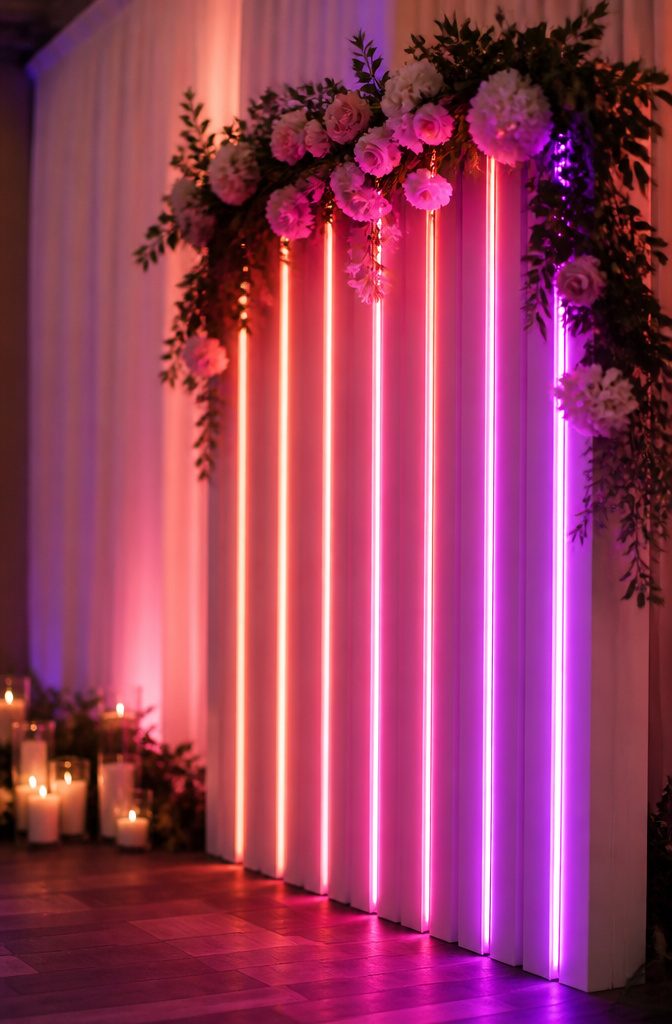
Neon-style LED strips pull a room in a completely different direction than the warm, scattered glow most couples expect from fairy light wedding decorations. The light is harder, more saturated, and reads immediately as nightclub or downtown loft rather than garden party. For a modern reception with a dance floor that needs to feel like a destination, that shift in mood is exactly the point.
The risk is the cheap-sign look. Strips mounted flat against a wall without diffusion or depth read as afterthought rather than design. What works is building them into a dimensional structure: vertical battens spaced six to eight inches apart, the strips facing inward so the light washes across wood or fabric rather than blazing directly at the camera. The color choice matters more here than with any other lighting in this list. Pink and amber feel playful; deep blue or violet push toward something closer to a music video. Most couples who land this well choose one color and stay in it all night rather than cycling through presets.
Power runs through standard outlets, but the transformers hum. Place them outside the room or behind thick draping, because that low mechanical drone photographs in memory even when the microphone misses it.
Power Sources and Safety
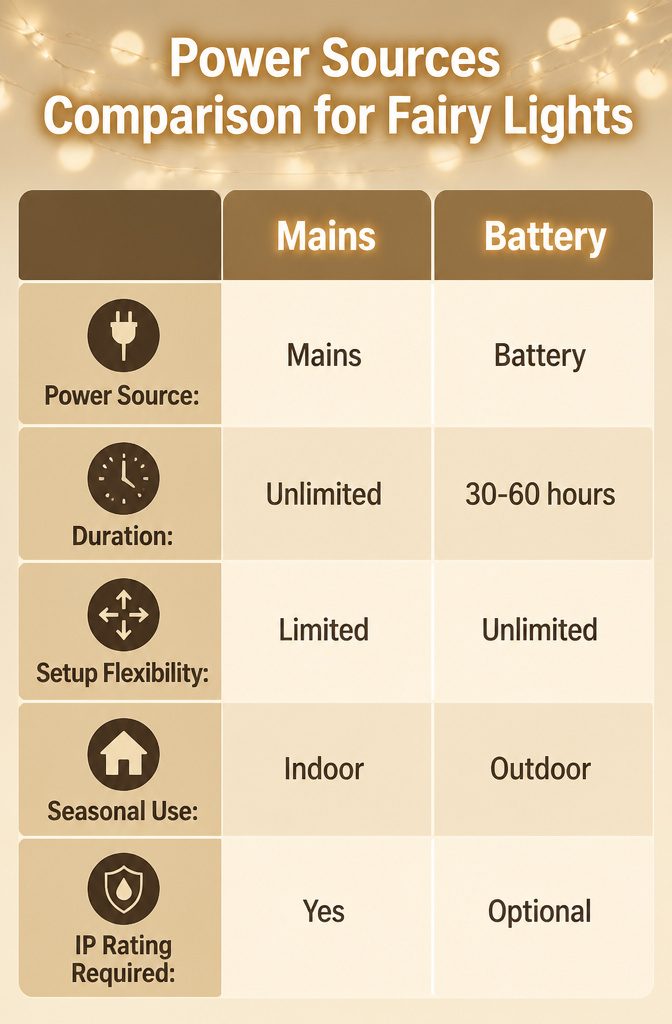
Mains-powered strings make sense for a reception hall or covered patio where outlets stay within reach and the lights need to burn for hours without dimming. Battery-powered sets run for 30 to 60 hours on one load of cells, which covers a full wedding day and evening, and they free you from hunting for outlets in garden beds or on distant ceremony arches. Solar strands charge through the afternoon and switch on automatically at dusk, a fit for summer weddings where the setup can sit in sun all day.
Outdoor events carry a rule worth following: only lights rated for exterior use go outside. The IP rating on the packaging tells you what weather the set can take, and skipping that check is how you end up with a dark aisle or a safety issue. Indoor-rated strands are not a close enough substitute, even under a tent skirt or porch overhang that looks sheltered.
Venue Restrictions to Check
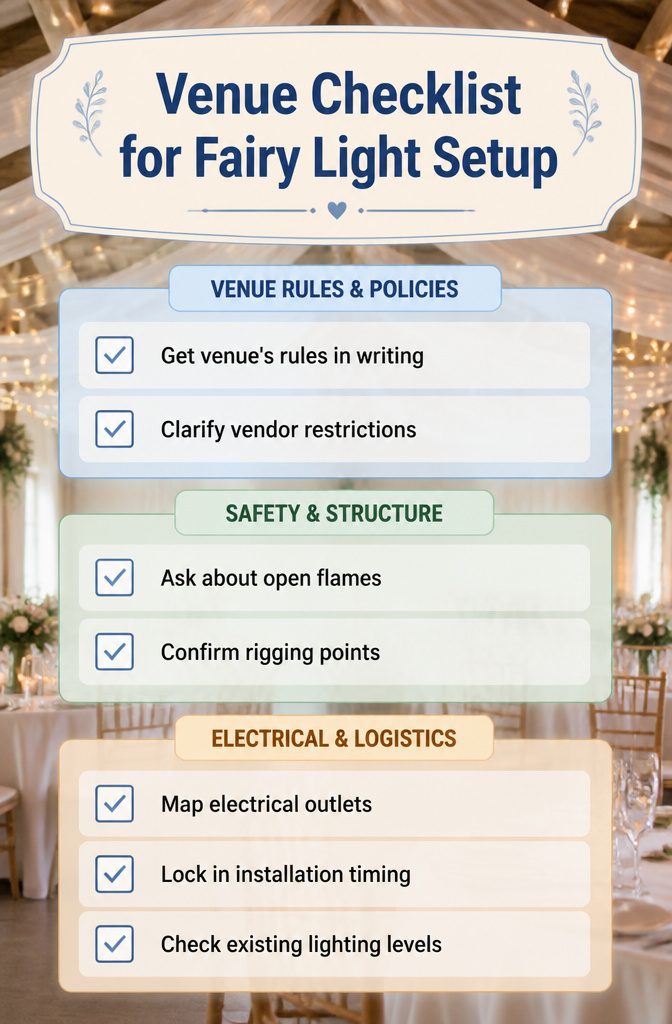
Before you order a single strand of fairy lights, get the venue’s rules in writing. Some spaces have exclusive lighting contractors who handle anything that plugs in or hangs overhead, which can void your DIY plans entirely or add a mandatory vendor fee you did not budget for.
- Check existing lighting levels in your ceremony and reception spaces at the exact time of day your event will run; a room that glows at noon can feel cavernous by 6 PM, and that gap determines how many strands you actually need.
- Ask whether open flames are permitted; some venues ban real candles outright, which pushes you toward battery-operated votives or wired accent lights instead.
- Confirm rigging points and weight limits for ceilings; barn beams and tent poles accept hardware very differently than plaster or suspended tile, and the venue coordinator should know the maximum load per point.
- Map electrical outlet locations and amperage; a single 15-amp circuit will not power a full canopy without tripping, so you need to know where additional circuits live or whether generator rental is required.
- Lock in installation timing access; some venues allow setup the day before, others charge hourly for early entry, and a few restrict ceiling work to their own staff during business hours only.
- Clarify whether outside vendors or DIY installation is allowed; the contract may name specific approved vendors for anything overhead, even if you are only stringing lightweight strands.
Warm White or Cool White
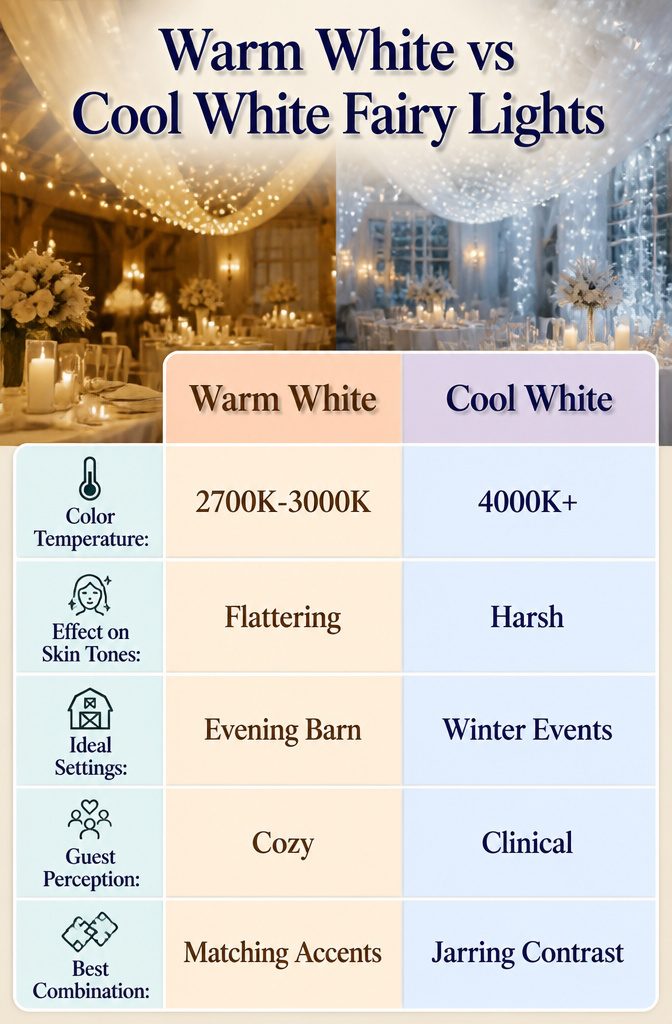
Color temperature is the first technical choice that shapes every fairy light wedding decoration in the room, and most couples do not notice it until the photos come back. Warm white, running 2700K to 3000K, sits close to candle flame and incandescent bulbs. Skin tones look healthier under it, and the amber cast reads as romantic to guests without any of them naming why. For an evening ceremony or a barn venue with wood and linen, this is the safer starting point.
Cool white at 4000K and above carries a bluish edge that can feel like moonlight or like a clinic, depending on what surrounds it. Winter weddings with snow, ice sculptures, or chrome and glass decor can carry that crispness without the room feeling sterile. Summer garden receptions at dusk usually cannot; the light fights the natural warmth still in the sky and leaves faces looking sallow.
What convinced me, reading through a dozen venue portfolios, is that the same string of lights reads as cozy or cold based entirely on what else is lit nearby. Pair overhead fairy lights with matching accent temperatures throughout the space, or the transition between a warm white canopy and cool white table lamps will jar in every photograph. If the event runs from afternoon into night, warm white handles both phases more forgivingly than cool white manages golden hour.
Frequently Asked Questions
How do I know how many lights I need for my venue?
Measure the total distance of the walls you want to cover for perimeter lighting. For a ceiling canopy, measure the length of the space and add 20% extra to account for drape and sag between anchor points. Buying before measuring is the most common mistake couples make with light curtains and canopies.
Can I use indoor wedding lights outside?
Only if they carry an IP rating that seals out moisture. Water and electricity mix badly, and indoor-only sets become a hazard under open sky or even on grass that holds morning dew. Outdoor events require lights specifically tested against rain and dust ingress.
What is the difference between warm white and cool white for weddings?
Warm white throws a soft, yellowish glow close to candlelight and dominates most romantic wedding palettes. Cool white carries a blue undertone that reads as modern or winter-ready. The choice usually falls between roughly 2700K and 4000K, though holding two strands side by side tells you more than the packaging.