

Wedding outside decorations range from hay bales with thrifted quilts to $300 rented arches, and the single factor that sorts one couple from another is not budget but weather tolerance: the same wind that makes chiffon look alive on camera will turn a helium balloon garland into ribbon dragging through grass by cocktail hour.
Air-filled designs tied to weighted bases, or birch arches doweled to flex instead of crack, are the details that separate decoration from disaster.
1. Lighting That Actually Lasts Past Sunset

String and bistro lights cast a warm, inviting glow that instantly makes any outdoor space feel like a celebration. Draped overhead or wound through branches, they create that ceiling effect guests remember without costing the wedding budget.
The lantern route does double duty, providing both light and decoration as centerpieces or path markers, and flameless pillar candles carry the same romance without the wind anxiety.
Not testing electrical access before the day has derailed more than one evening timeline I have watched unfold. An extension cord run at the last minute, taped down in a rush, is never invisible in photos.
Scout your outlets during the site visit, not the morning of, and bring a backup plan for circuits that trip under load.

Energy Saving: Upgrade your outdoor lights with the latest addlon LED outdoor string lights! These advanced LED bulbs are super energy-saving, reducing your electricity bill by up to 98% compared to traditional incandescent bulbs.

Breathtaking Italian Bistro Style Lighting : Each strand features 15 vintage-inspired hanging sockets with shatterproof E17 LED edison bulbs, spaced 3.11 feet apart for a captivating, even glow. Enjoy brighter, energy-efficient outdoor lights that enhances every outdoor moment with timeless charm and lower electricity costs.

Ideal Solar Outdoor Lights: 27 ft long durable Chistmas string lights with 12 LED lights and detachable solar panel with on/off switch located on the back. 20" between bulbs, 6' from solar panel to the first bulb. The lighted portion is 20 feet. LED bulbs last 20,000 hours and solar panel is rated at 1,000 charge lifespan (can last approximately 2.5 years). Direct sunlight is best for a full charge, though you can get some use from charging in indirect light.
2. Floral Arrangements Beyond the Bouquet

A floral arch or arbor is a classic way to create a beautiful focal point, but what happens around it matters just as much.
Flower garlands strung along fencing or draped over chair backs add color without competing for attention, and they move naturally in a breeze that static arrangements would fight.
I have photographed ceremonies where petals lined the aisle in thick carpet, and others where a light scatter did the same job for a fraction of the flower count.
Table flowers for outdoor receptions run into trouble when couples over-order roses and under-guess greenery.
At three weddings I shot last season, the final counts came back with rose orders running 40 to 60 percent higher than needed, while greenery came up short and had to be supplemented day-of with whatever the florist could source locally.
Two of those couples had budget left over; one had visible gaps in the arbor backing where eucalyptus should have been.
Repurposing helps. An arch arrangement moved to the sweetheart table, or aisle corner bouquets reset as centerpieces, stretches the spend without stretching the design.
The key is planning the move during the initial consult, not improvising when guests are already seated.

Waterproof Construction for Outdoor Use: Designed with a waterproof build, these waterproof candles are suitable for outdoor spaces like balconies, porches, gardens, and patios. They continue to function even during extended rainy seasons

IP×65 Waterproof & Won’t Melt Design: Our flameless candles are crafted from special waterproof materials, ensuring steady illumination even in wind and rain. With no risk of melting or extinguishing, they create a vibrant atmosphere for outdoor event

Stable & Reliable Outdoor Waterproof Candles - Homemade flickering flameless candles combine a 3D wick (not moving flame) with a waterproof function to make these outdoor candles more realistic without worrying about melting or rain, hot or cold weather. They are great for indoor or outdoor.
3. Ceremony Backdrops Worth the Framing
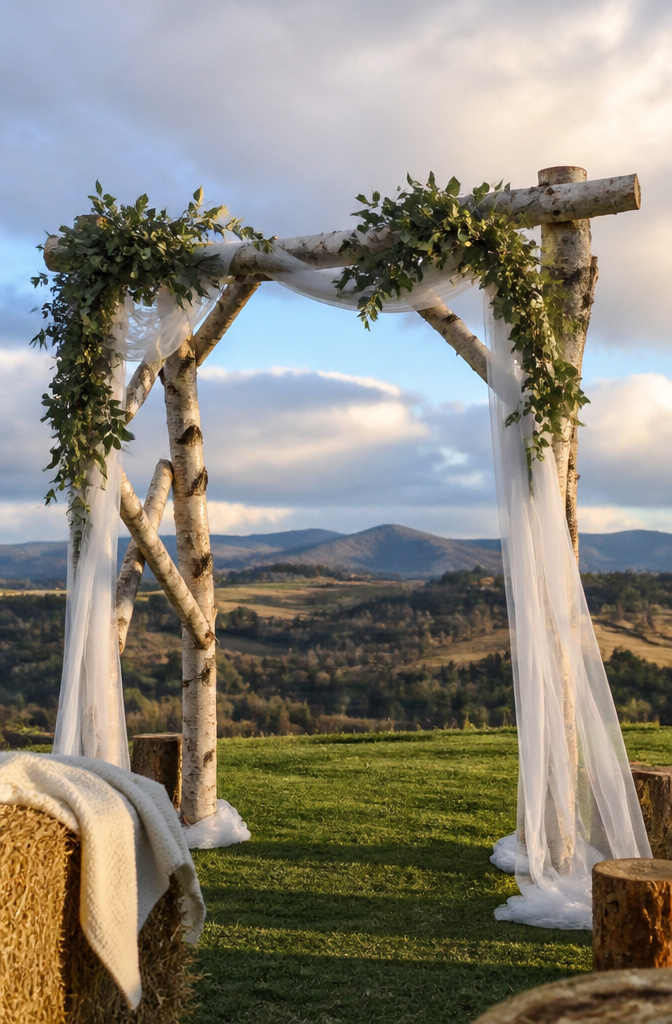
A wooden arch gives the officiant and couple a center point to stand inside, but the sky behind it decides whether the camera reads it as silhouette or detail.
Overcast days flatten everything forward, which helps the arch stay crisp; bright blue sky punches the shape back into shadow unless you expose for the couple and let the structure go dark.
Birch strips the problem entirely, pale enough to hold texture against almost any light.
Last spring a pair I photographed built their own birch arch from limbs they stripped and drilled themselves.
It stood eight feet wide at the base, ten feet tall at the peak, and the cross braces were doweled rather than screwed so the joints could flex. The flex saved it.
Gusts hit twenty-two miles per hour during the vows and the whole frame swayed like a sapling. Nothing cracked.
They told me later they would have gone narrower, maybe six feet across, to cut the sail effect and reduce the wobble that showed up on video.
They also wished they had measured the aisle width before building; ten feet of arch plus two feet of floral swag on each side swallowed the walking path and the bride’s train caught twice.
Drapes solve the sky problem by adding controlled tone behind the couple instead of leaving it to the weather. Lightweight chiffon moves, which photographs as life; heavier linen hangs still and reads as architecture.
The same couple’s swag was tulle over faux eucalyptus, cheap enough to abandon if rain hit and light enough that the wind only lifted the edges, never the whole arrangement.

Order over $39.99 eligible for FREE SHIPPING,combine with any Tablecloths-factory items

Versatile garden arch, perfect for events, weddings, and garden decoration. A must-have for your special occasions.

3PCS KIT WEDDING ARCH FLOWERS: One floral swags, decor with Roses and Lulian, beautiful and vivid, 2pcs arch draping fabric flowers same design with flower swag, a beautiful set for wedding decoration.
4. Seating That Relaxes the Room

Hay bales or sweetly decorated swings open up seating in a way folding chairs never quite manage.
The choice changes how guests behave: people arrive, pause, and actually settle in rather than perching at the edge for the ceremony’s duration.
At one barn wedding I photographed, the couple had sourced hay bales from the venue’s own farm and dressed them with mismatched quilts. I counted guests per bale to see what spacing actually worked.
Two adults per standard bale kept everyone comfortable; three pushed it, and shoulders started creeping into the aisle.
Mismatched furniture gathered from charity shops or family attics does the same work with more polish. One bride I shot had raided her grandmother’s sun porch for wicker and wrought-iron pieces that guests rearranged themselves into small clusters.
The benefit is that people move it to suit their needs, and nobody feels locked into a pre-planned arrangement.
Children especially gravitate toward bean bags or outdoor pillows if you add them, though I would keep those to the back row where shifting around does not block the aisle.
The risk with hay bales is height: shorter guests sink low enough that sightlines to the couple become a problem.
Stack a second layer of bales as a base, or reserve the front row for taller relatives who will not mind the dip.
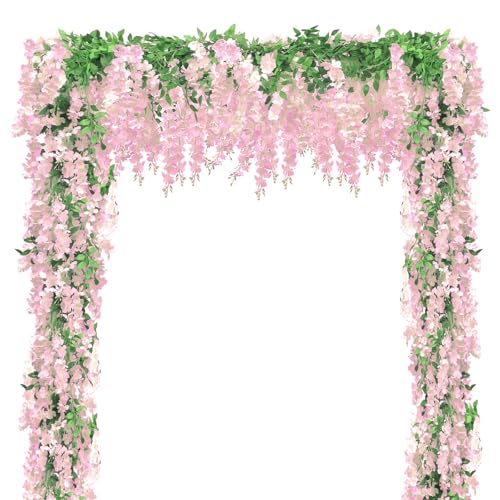
Product Size: Each package includes 5 wisteria hanging flowers, measuring 7.2ft/86.6in with 10 flower stems. Each stem is 15in long, and the total weight of the package is 21.6oz/612g.

Product Size: Each package includes 5 wisteria hanging flowers, measuring 7.2ft/86.6in with 10 flower stems. Each stem is 15in long, and the total weight of the package is 21.6oz/612g.
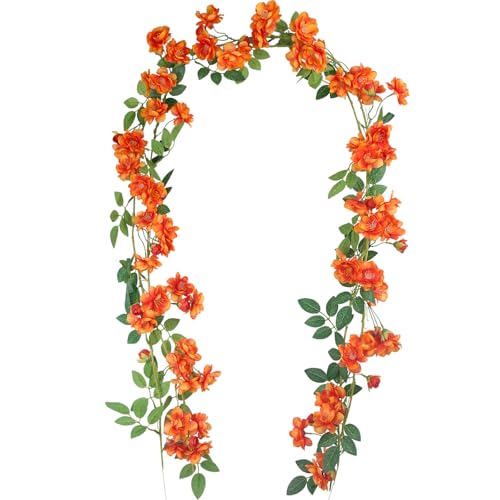
The package contains 2 pcs artificial flowers garland spring, each garland consists of 32 pcs gardenias and 16 pcs gardenia buds. The orange gardenias are full and beautiful, with layers of petals, just like real orange flowers, quietly blooming and orderly arranged on the vines. Each garland is about 7.75 feet long (about 22.7 meters).
5. Signage Guests Actually Read

A sign that looked elegant at three feet fell apart at fifteen. I learned that distance the hard way while shooting an outdoor ceremony where guests wandered past the "Ceremony This Way" chalkboard, squinting, then split into three directions guessing.
Font size for outdoor wedding signs needs to hit at least three inches tall for fifteen-foot readability, and even that assumes clean sans-serif lettering.
The script font the couple loved in their flat-lay photos dissolved into decorative squiggles once sunlight and distance entered the equation.
Material choice matters as much as typography. Foam board warps within an hour of humidity; I have watched a welcome sign curl into a tube before the processional started.
Corrugated plastic holds shape better and survives light rain, though it photographs with a slight gloss that can flare in direct sun. For anything freestanding, a weighted base is non-negotiable.
A wooden A-frame with sandbagged legs will still be upright when the gusts hit; the adorable vintage easel will not.
Personal touches work best when they do not sacrifice function. A hand-painted quote about love belongs on the program guests hold in their hands, not on the directional sign they are trying to read while walking in heels across grass.

【Suitable for Multiple occasion】- Beautiful balloons with gold color to make your party memorable. These chrome gold latex balloons are perfect for a wedding, Valentines Day decorations, bridal shower, graduation, christmas, new years,thanksgiving,anniversary,retirement casino party decorations,bachelorette party decorations,engagement party decorations and other golden birthday party decorations 2026.

【Generally applicable】- our balloon weight are suitable for various occasions, such as themed parties, school celebration, graduation ceremony, carnivals, birthday, Halloween,bachelor party wedding, Christmas party and more, vibrant colors will add a festive atmosphere to your event

Balloon Weights molded from durable, hi-quality plastic material
6. Table Decor That Survives the Wind

Mason jars earn their reputation as the ultimate chameleon of wedding decor because they handle almost any assignment without complaint. At one vineyard wedding I photographed, the couple learned the hard way what happens when weight gets ignored.
Their original centerpiece, a tall glass cylinder with a single floating candle and a loose wreath of dried grasses, caught a gust coming off the rows of pinot noir and rolled straight across the tablecloth.
The replacement that saved the evening was a cluster of three mason jars in different sizes, each filled with local wildflowers and weighted down with a layer of smooth river stone at the base.
The stones stayed invisible below the stems, but the jars did not move.
Candles inside mason jars stay lit in wind that extinguishes open tapers, and the glass diffuses the flame into something softer than a naked bulb.
Grouping the jars in odd numbers, mixing heights, keeps the eye from locking onto a single point. For an evening reception, a few jars with fairy lights inside extend the glow past sunset without fighting the darkness.
The whole setup costs less than renting polished crystal and survives the one guest who always bumps the table reaching for the bread basket.

8 Lighting Modes: This solar christmas lights outdoor have 8 different lighting modes, including Combination, Waves, Sequential, Slo-glo, Chasing/Flash, Slow Fade, Twinkle/Flash and Steady-on. You can adjust different lighting modes according to different situations and mood

【Dimmable & Energy Saving】Plug-in Powered: These G40 LED outdoor string lights include 12 shatterproof plastic bulbs plus 1 spare. Each 1.5-inch E12 base bulb adopts low heat 1W LED with soft balanced brightness and 2200K warm white glow and 20000+ hours lifespan. Fully dimmable for mood adjustment and high energy efficiency, plug-in design provides steady illumination without solar charging delays
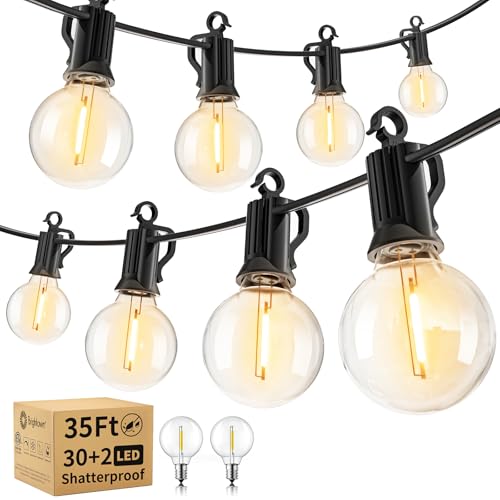
Super Bright Outdoor String Lights: 35.5 feet long lights for backyard come with 30 G40 shatterproof LED globe bulbs. End to end connect up to 24 strands. Great for outdoor and indoor decorations.
7. Balloons With Staying Power

Balloon arches and clusters read festive from fifty feet away, which is why couples keep ordering them for lawn ceremonies and cocktail lawns. The question is what fills them.
Helium gives the height that makes an arch feel architectural rather than piled, but the international shortage has tightened supply and pushed prices up for the volume an outdoor arch demands.
Air-filled designs cost less and stand up to wind better, though they need a frame or a anchored garland structure to stay upright without the lift.
I photographed a wedding in late June where the couple paid for a full helium garland to sweep across the entrance to the tent.
By the time I arrived for cocktail hour, the sun had softened the latex enough that the whole line had wilted to shoulder height, ribbons dragging in the grass.
The vendor had charged for premium treatment and organic shapes; what lasted was the half-dozen air-filled clusters tied to weights at the corners, which looked identical at 6:00 PM and at 10:00 PM.
Air-fill wins for anything the sun touches for more than an hour.
Helium still makes sense for a single photo moment or an indoor handoff, but for wedding outside decorations that have to survive the afternoon, the math favors air, frame, and a stable base.

Set: One Piece 3x8 inch Flameless Candle. Appearance Colour: Ivory. Each candle requires 2 AA batteries(Not Included).

【Waterproof Outdoor Candle】: Made of thickened waterproof plastic, with IP55 waterproof effect. Waterproof flameless candles are suitable for outside use as they are resistant to the sun and rain, won't melt, and also work great in cold environments.

Outdoor waterproof candles: Biyanuo outdoor waterproof flameless candle, made of high-quality waterproof plastic material, with a waterproof rubber ring at the bottom, which can effectively prevent water ingress. Don't worry about melting due to the hot weather, it can withstand rain and cold winters
8. DIY Elements That Do Not Look It

Hand-painted table numbers on raw wood slices read as intentional, not homemade, when the lettering stays spare and the finish is matte.
I have watched couples spend three evenings on this and come away with something that photographs like a rental prop. Pressed-flower place cards work the same way: heavy cardstock, one bloom per card, nothing crowded.
The guests take them home, which saves on cleanup.
Greenery runners built from supermarket eucalyptus and floral wire look full at half the florist’s price, but assembly takes longer than the tutorials suggest.
One bride told me she was still wiring stems at 3 a.m. two nights before the wedding, sap on her sleeves, wishing she had paid for garlands and slept.
Buy the base greenery in bulk and add only the few handmade touches you have time to finish well; half-DIY reads as thoughtful, half-finished reads as rushed.

【Exquisite Design and Craftsmanship】Every plank of the arch is carefully crafted from high-quality wood, and the captivating heptagonal shape will never cease to captivate you. The heptagon arch is more unique than a circular arch, and more elegant than a square or hexagonal one. It's a perfect ambiance enhancer, which creates a uniquely romantic atmosphere for your special day.

Each set includes a combination of heights to create a unique visual presentation perfect for weddings or other special events, or used as home décor

【Elegant Wooden Backdrop Stand】The unique square outlook of wooden wedding arch can greatly add beauty to your events as an atmosphere builder, appearing more elegant and romantic than traditional metal wedding arches for ceremony. Invite families and friends to take photos in front of wood wedding arch, share joy and keep unforgettable memories.
Fruit and Floral Pairings

Most outdoor florals stick to blooms alone, which is a missed chance. Adding fruit to arrangements brings color that petals cannot match, and the weight of a lemon or fig anchors greenery against wind better than foam alone.
The combination that photographs sharpest is citrus with eucalyptus. The waxy leaves hold moisture for hours, and the oils from sliced oranges or whole kumquats intensify in afternoon heat rather than wilting.
At a September reception in Sonoma, the centerpieces stayed vivid through four hours of direct sun; the rinds dried slightly but never browned, and the eucalyptus stayed upright where standard baby’s breath had collapsed at a wedding the week before.
Figs with dahlias work best in late summer when both peak together. The fruit’s dark skin reads almost black in shade and warms to plum in golden-hour light, giving photographers two palettes from the same table.
The catch is timing: figs soften fast once picked, so they need to go out no more than two hours before guests arrive. I have seen brides set them the night before and find split skins by cocktail hour.
Grapes on the vine and pomegranates are the hardiest options for long receptions. They do not bruise from handling, and guests rarely expect them, which makes the tables memorable without adding cost beyond the produce itself.

[Size And Package] Includes 2 rose garland (6-feet/180cm), each with 21 large flowers(3.5-inch) and lush leaves, Includes zip ties for instant home decor transformations

This silk wisteria is 6.6ft/2m in length,10 shorter strings each 0.7',pack of 4,suitable for outdoor wedding ceremony decor,wedding hanging flowers decoration,spaces enough for decorating items you want to adorn life.
What Outdoor Decor Needs That Indoor Does Not

Outdoor wedding decorations have to survive what indoor ones never meet.
Weight matters first; anything under five pounds needs staking or it becomes a projectile in a gust that arrived from nowhere during a May ceremony I watched from the parking lot.
Drainage comes next, because water pools on flat surfaces and soaks into porous bases that looked fine at ten in the morning.
Sun fades fabric faster than couples expect, so polyester holds color where cotton bleaches to gray in a single afternoon. Bugs cluster near anything sweet or fragrant, which changes where you place certain florals after dark.
Setup access is the last variable; that stone walkway and seasonal foliage the venue advertises can block a cart wheel or a crew carrying an eight-foot panel.
Two ways to handle shade if the heat spikes: stretch a temporary awning or cabana tent over food and seating, or angle giant umbrellas for drama and cover together.
The tent wins if rain is possible, because umbrellas channel water to the edges and create new problems.
Materials are the bridge between your style and the open air, so choose ones that do more than look pretty for the first hour.

Complete Decorating Set: Get 6 black balloon weights and 6 rolls of ribbon for holding balloons and creating organized party displays

You Don’t Want To Party Without It! What is a party without a bouquet of balloons? You need birthday decoration weights to hold those balloons down, but don’t settle for something unsightly. Choose Srenta and your decor will look amazing with its sparkling color & festive design!

You Don’t Want To Party Without It! What is a party without a bouquet of balloons? You need birthday decoration weights to hold those balloons down, but don’t settle for something unsightly. Choose Srenta’s and your decor will look amazing with its sparkling color & festive design!
How I Photograph These Choices

String lights read warmer on camera than they look to the eye, usually landing near 2700K while open shade outside still holds a blue cast around 6000K.
That gap means skin tones split orange and cyan in the same frame unless you commit to one source.
I meter for the ambient sky while the couple is still close to it, then switch to tungsten white balance once they move under the canopy.
For the bulb shots I want sharp, I have settled on 1/125s at f/2.8 with the ISO pushed to wherever the meter lands, often 3200 on a full-frame body. Any slower and the swaying cable turns each bulb into a comet.
A solid backdrop beats a busy one even when the busy option costs more. Last summer I shot against a hedge wall that the florist had layered with $800 of trailing amaranthus, and the texture swallowed the couple whole.
Forty feet away a plain plastered wall caught the same light and gave me clean edges every time. If you are choosing between detail density and negative space, the wall wins for photographs.
The exception is deliberate framing: an arbor with real depth lets me shoot through foreground blossoms and compress them into color blobs at f/1.4, which flatters because it is intentional.
Color temperature mixing is hardest during that twenty-minute window after sunset when the sky still holds exposure but the lights have taken over.
Most decorators trigger everything at once and the couple stands in a pool of tungsten while the world behind them goes cobalt.
I ask coordinators to hold the first dance until the sky has dropped another stop, or to add a single daylight-balanced uplight on the couple’s backs so the camera sees a bridge between the two sources.
Without that bridge, the raw file forces a choice that wastes half the scene.
When to Rent Versus Build
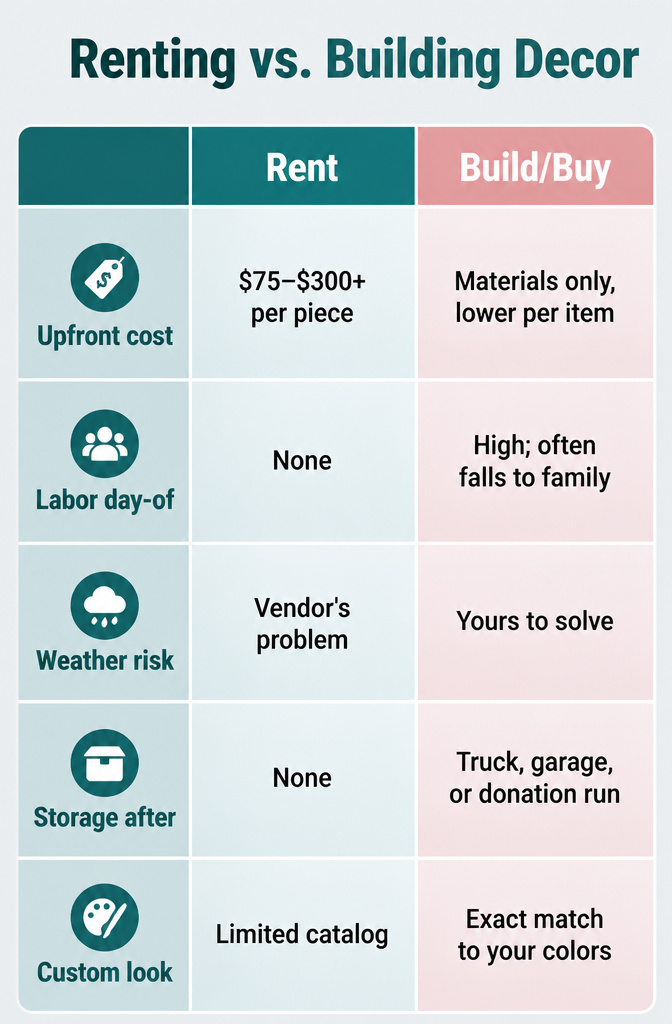
The first thing couples usually ask after falling for an oversized floral arch is who owns it the morning after. Renting starts around $75 for basic lanterns and climbs past $300 for structural pieces like arches in the quotes I have heard.
That buys you delivery, teardown, and the storage problem solved.
DIY paper pom poms or origami cranes run cheaper on materials, but the labor lands on someone the night before, and humidity turns crisp folds into sagging shapes faster than you would think.
Potted plants guests take home split the difference: you buy once, but you are still hauling soil and terracotta.
| Rent | Build/Buy | |
|---|---|---|
| Upfront cost | $75–$300+ per piece | Materials only, lower per item |
| Labor day-of | None | High; often falls to family |
| Weather risk | Vendor’s problem | Yours to solve |
| Storage after | None | Truck, garage, or donation run |
| Custom look | Limited catalog | Exact match to your colors |
Buying makes sense for the one signature piece you will resell. Renting wins for anything that has to survive wind, dew, and a forecast you checked twelve times.
Frequently Asked Questions
What are the best outdoor wedding ceremony decoration ideas?
The best wedding outside decorations pair practical durability with the natural setting.
String and bistro lights create a warm ceiling effect that guests remember, floral arches or arbors give the ceremony a clear focal point, and mason jar centerpieces weighted with river stones survive wind that topples taller glass pieces.
Birch arches hold up against bright sky backdrops and flex in gusts rather than cracking, while drapes behind the couple add controlled tone instead of leaving the background to unpredictable weather.
How can I decorate a wedding ceremony outdoors on a budget?
greenery stretches farther than dense blooms, and repurposing the arch arrangement to the sweetheart table or resetting aisle corner bouquets as centerpieces saves money without thinning the design.
Pressed-flower place cards on heavy cardstock and hand-painted table numbers on raw wood slices read as intentional rentals rather than homemade projects.
Buying supermarket eucalyptus in bulk and wiring your own greenery runners costs half the florist’s price, though assembly takes longer than tutorials suggest so plan the workload realistically.
What outdoor wedding décor works best for a rustic theme?
Rustic wedding outside decorations rely on natural materials that already belong outdoors.
Hay bales dressed with mismatched quilts create relaxed seating that changes how guests settle in, and mismatched wicker or wrought-iron furniture gathered from family attics lets people rearrange into small clusters themselves.
Wooden arches draped with greenery or fabric, tree stumps as aisle markers, and lantern-lit paths all complement a barn or farm venue without fighting the setting.
Raw wood slices with spare matte lettering and single pressed flowers keep DIY details from looking rushed.