European wedding outfits run from a satin sample-sale find to pure Italian lace sold by the yard, and the right choice depends on whether you are standing on cobblestones, cathedral steps, or both in the same day.
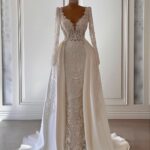
A detachable overskirt with hidden hooks can handle that transition, turning one dress into two without a second price tag.
1. Satin Gowns
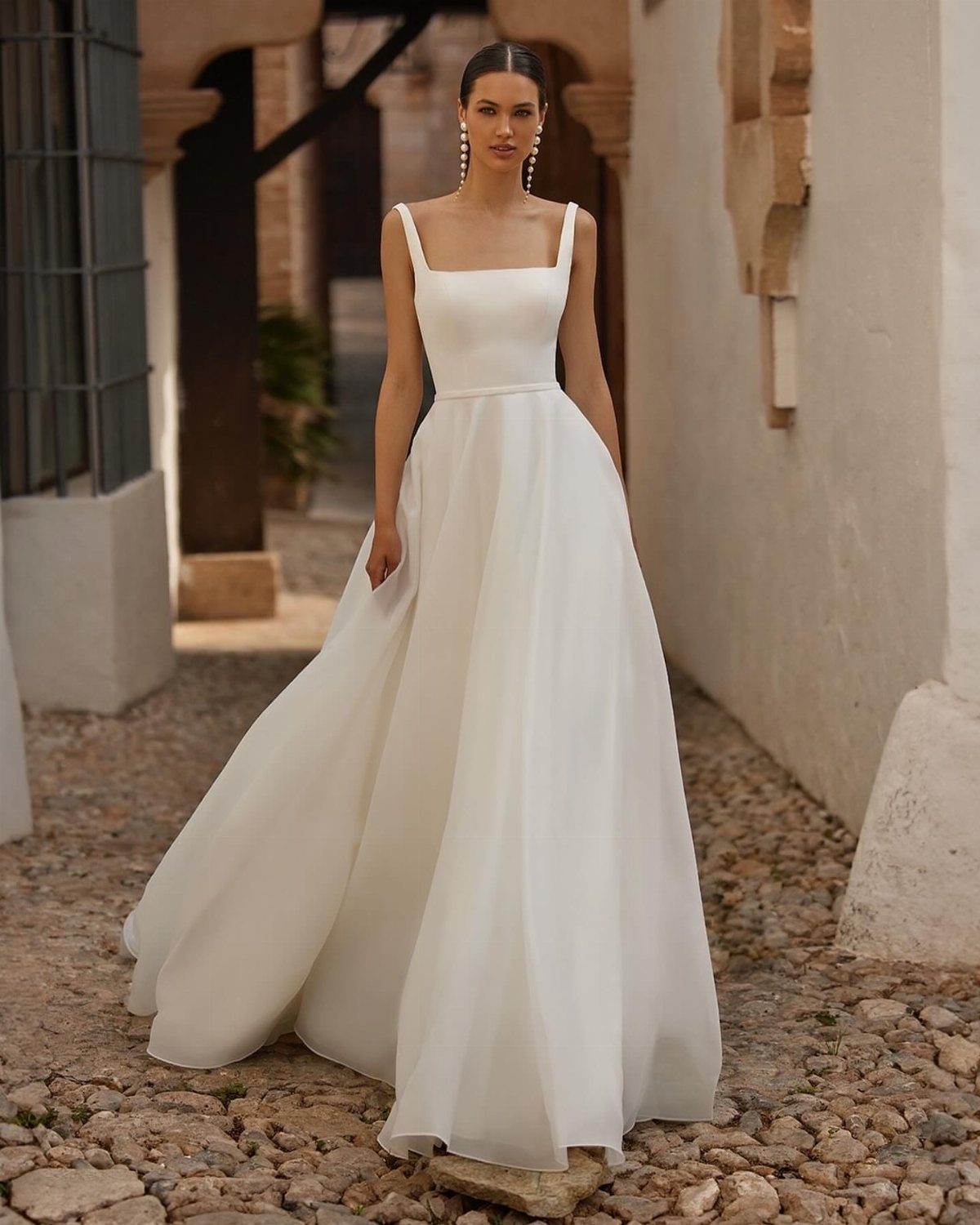
A satin gown carries light differently than matte fabrics, catching the late afternoon sun in a way that photographs well against stone and water, which is why I see it so often at European vineyard and coastal weddings.
The weight of quality satin also means it drapes rather than clings, forgiving in humid July heat when polyester would stick.
I would look for a square or V-neckline over strapless; the fabric’s sheen draws enough attention without bare shoulders competing.
For guests, a champagne satin midi in slip-cut reads formal without upstaging. Budget-minded brides can find satin at sample sales, though the heavier silk duchesse satins handle alterations better and cost noticeably more.
2. Lace Designs
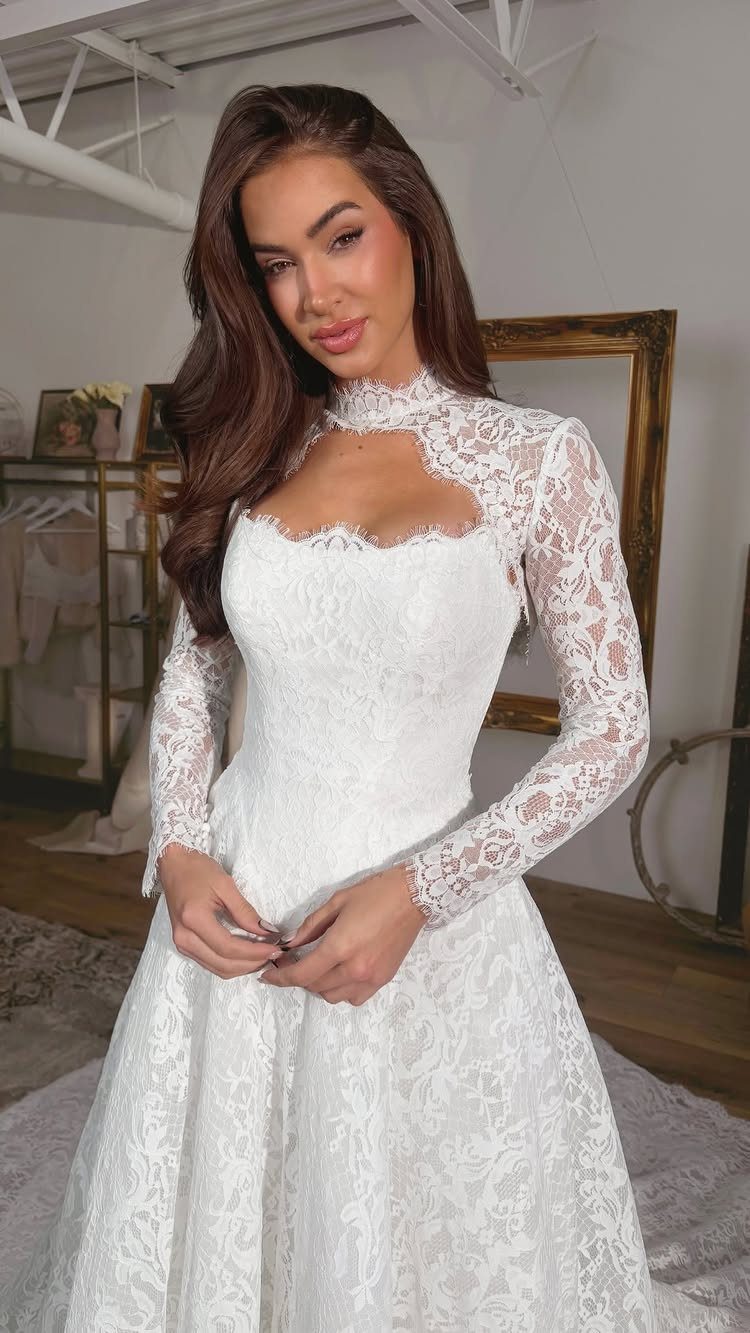
Botanical lace patterns, especially the Italian and Spanish ones with raised florals, give a gown texture that reads as intentional craft rather than decoration slapped on.
Placement density matters more than pattern size. Too all-over and lace can look costume; I prefer it where it does work: sleeves, a high collar with a keyhole back, or a panel that runs down a train.
Geometric motifs, the newer trend, read more modern and suit city hall or gallery venues in Berlin or Barcelona.
Budget watch: hand-cut Alençon lace adds hundreds per yard. Machine-made Chantilly or guipure keeps the look manageable if you shop sample or pre-loved.
3. Dresses with Detachable Skirts
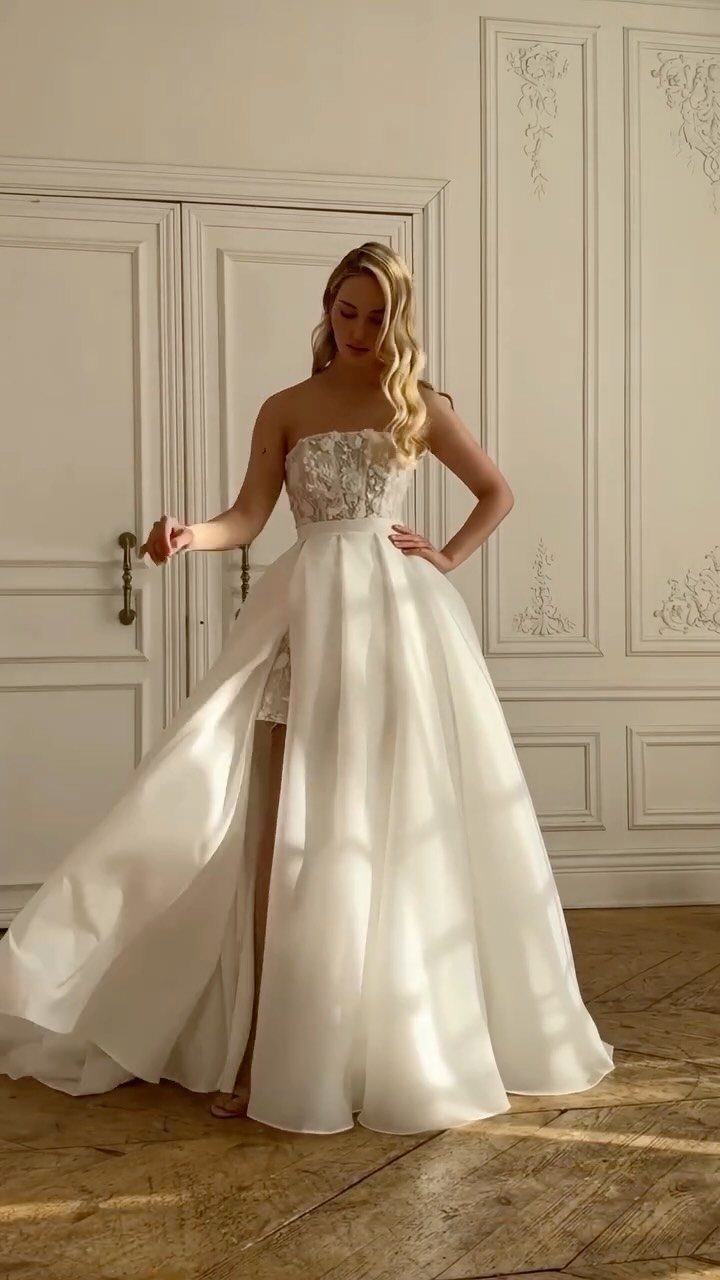
One dress that becomes two is practical math for a European wedding where you might walk cobblestones to a church, then dance until 2 AM in the same venue’s cellar.
A fitted bodice and mini skirt underneath, with a voluminous overskirt that detaches after the ceremony, gives you 2 looks without a second dress.
I have seen brides add a cape instead of a skirt, which removes more cleanly and packs smaller for a flight home.
Not all detachables are equal.
Hidden hooks hold better than buttons; ask your seamstress to reinforce before the day. The overskirt should be lighter than it looks, tulle or organza, so it does not drag the underdress out of shape.
4. A-Line Wedding Dress
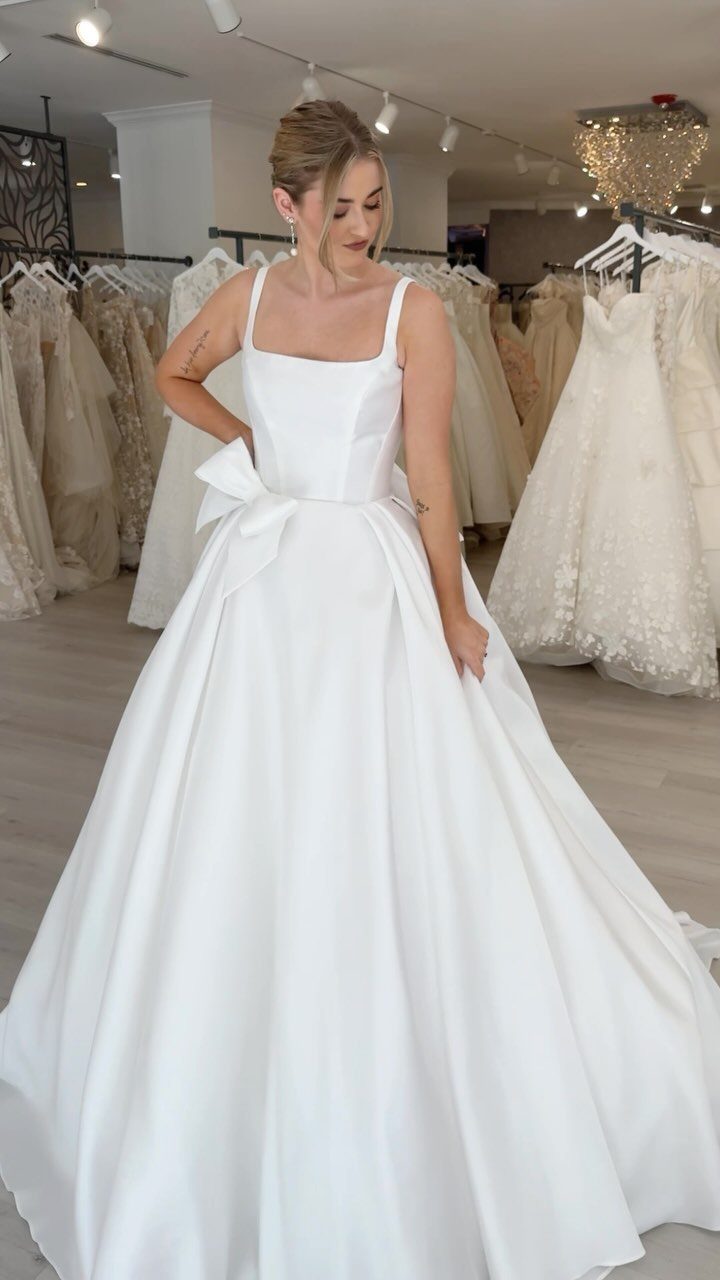
The A-line is the cut I recommend when a bride tells me she wants to look like herself, only elevated.
It nips at the natural waist and falls away in a soft triangle, which flatters without requiring the gym months a mermaid demands.
What makes it work in Europe specifically: the shape moves well in processional settings, up cathedral steps or down gravel paths, and it photographs cleanly against varied backdrops.
The bow detail visible here adds a focal point if the fabric itself is plain; with lace or beadwork already happening, I would skip it.
Sample sales and outlets run this shape heavily because it is perennial.
5. Matching Couple Outfits
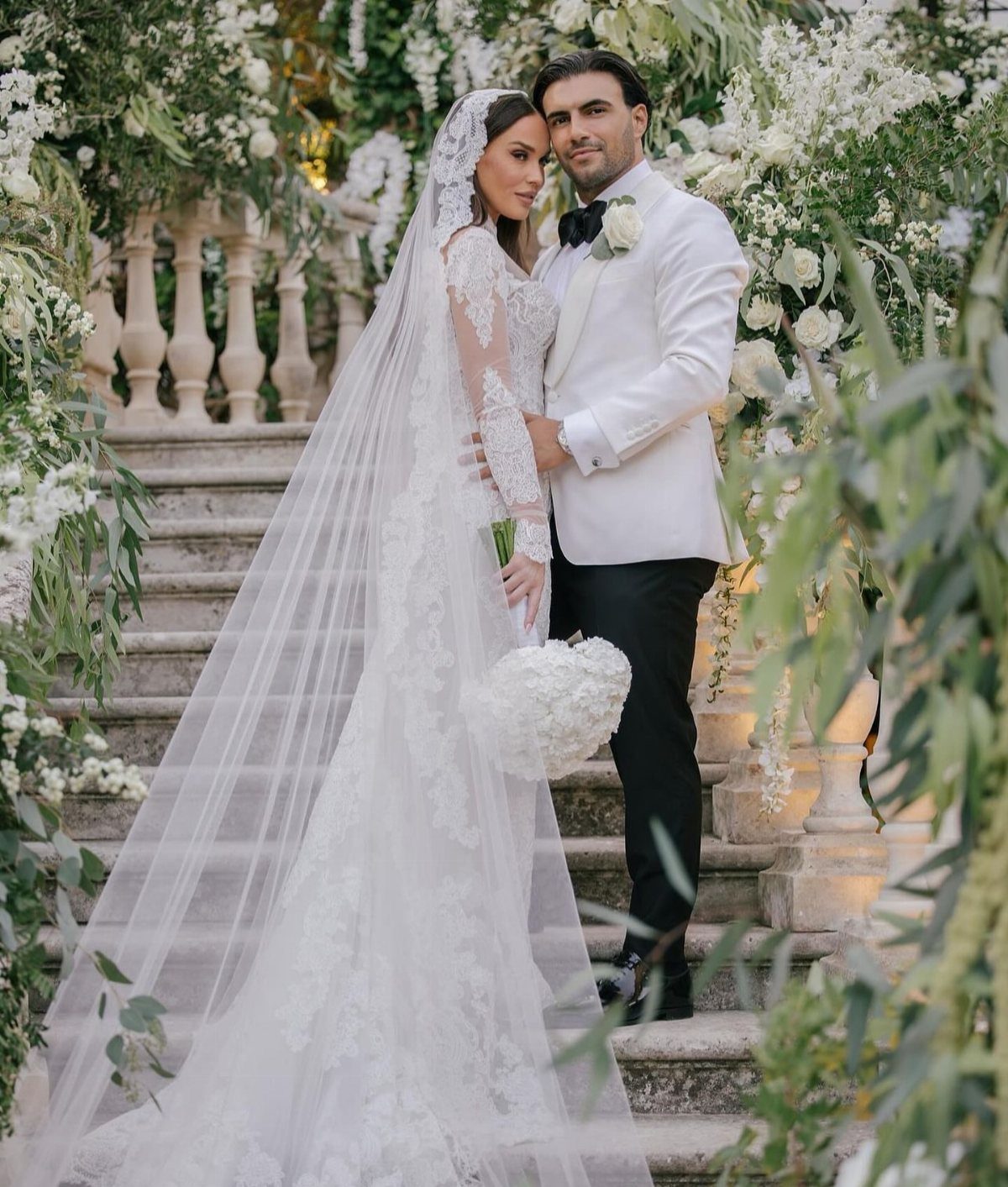
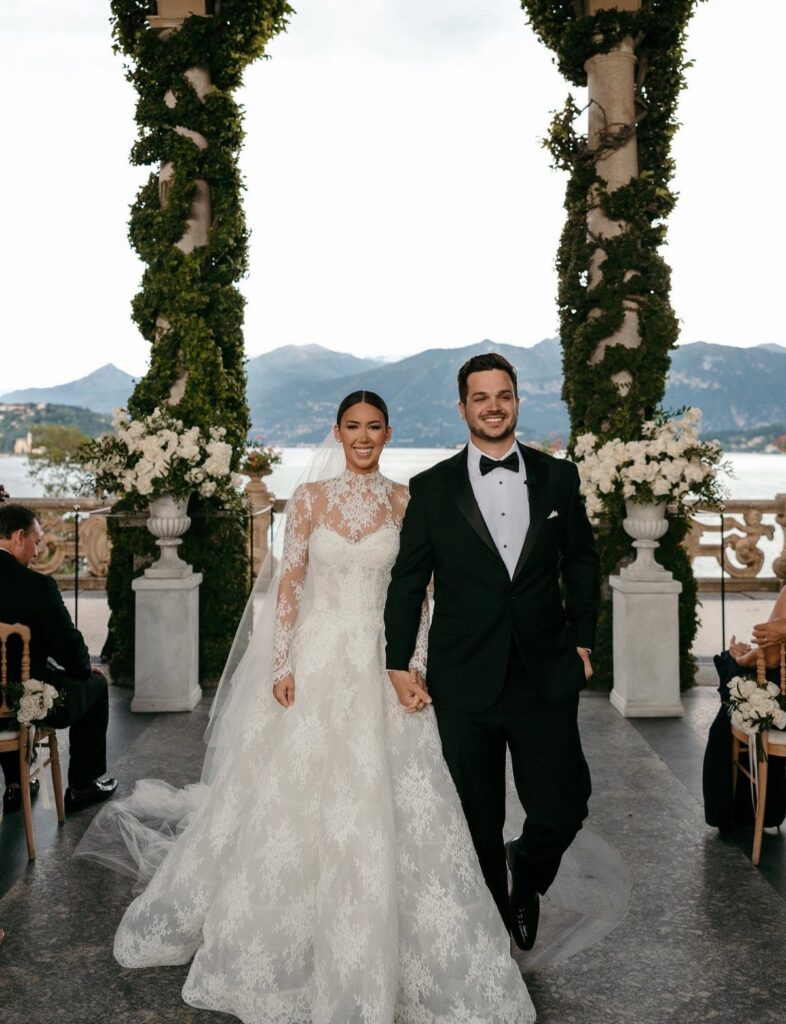
Coordinated does not mean identical. Her lace gown and his white jacket share a tone and a formality level without matching fabric or exact shade.
I think of it as two parts of one composition.
If she wears ivory satin, he might wear a cream tie or pocket square. If she goes with olive or sage, he can echo it in a tie or boutonniere while keeping his suit neutral.
An olive satin dress with a dark brown suit works because the tones are warm together, not because they match.
One rule I follow: one person gets texture, the other stays smooth. Both in lace or both in pattern competes.
6. Men’s Linen Suits
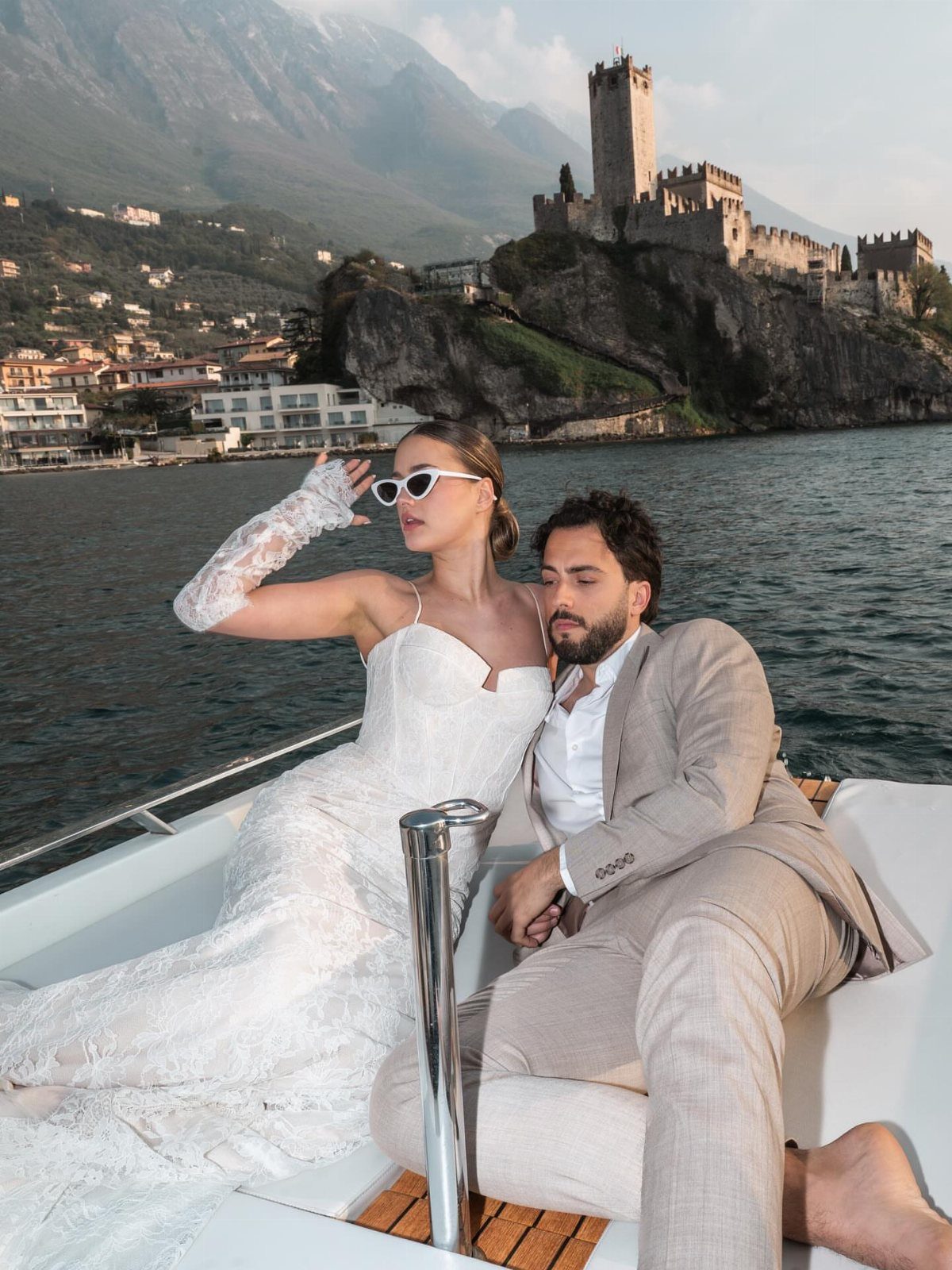
Linen wrinkles. That is not a flaw; that is the fabric, and in European summer heat I would rather look relaxed than sweat through synthetic "performance" weave pretending to be wool.
Sage green, olive, and beige are the colors I see working, especially against the limestone and sea that dominate Mediterranean backdrops.
The lavender option exists if you want to stand out at a less traditional wedding; I would keep the shirt white and let the suit carry the color.
A cheap linen suit will likely be a linen blend, which wrinkles less but breathes less too.
Pure linen costs more and needs pressing the morning of. Pack a travel steamer if you are flying in; hotel irons and linen are not friends.
Frequently Asked Questions
What wedding dress styles are trending in Europe for 2026?
Minimalist silhouettes, romantic lace, statement sleeves, and convertible gowns with detachable skirts or capes are what I see most often at European weddings.
A fitted bodice with a removable overskirt gives you two looks without a second dress, which is practical math when you are walking cobblestones to a church then dancing until 2 AM.
Are sustainable fabrics popular in European bridal fashion?
European brides I follow are asking more questions about where fabric comes from and who made it, not just how it photographs.
Quality silk duchesse satin handles alterations better than synthetic alternatives and lasts longer, which matters when sample sale budgets still run into hundreds per yard for hand-cut Alençon lace.
Pure linen for men’s suits breathes in Mediterranean summer heat rather than trapping sweat in performance blends.
What do guests wear to weddings in Italy?
A champagne satin midi in slip-cut reads formal without upstaging the bride, and the fabric catches late afternoon sun well against stone and water.
For men, a sage green, olive, or beige linen suit works against limestone and sea backdrops; the wrinkles are the fabric, not a flaw, and read as relaxed in summer heat.
What do French people wear to weddings?
French wedding style tends toward the understated: an A-line or slip-cut dress in quality fabric, with detail that shows in cut rather than embellishment.
For men, a neutral suit with one element carrying color, a cream tie against ivory or a boutonniere that echoes her olive or sage dress, keeps the look coordinated without matching.
What is the best dress to wear when traveling in Europe?
A detachable skirt or cape gives you ceremony presence without a second dress to pack, and the underdress should be light enough to wear again at a rehearsal dinner.
I would pack a travel steamer; hotel irons and wrinkle-prone fabrics are not friends.
What are people wearing to weddings in 2026?
Satin gowns in square or V-necklines rather than strapless, since the fabric’s sheen draws enough attention without bare shoulders competing. Lace with raised botanical florals on sleeves or high collars rather than all-over placement.
Convertible gowns with detachable skirts or capes for 2 looks, and men’s linen suits in sage, olive, or beige that wrinkle intentionally in summer heat rather than fighting it with synthetic weaves.