The 10 ideas below range from a single champagne shimmer to full silver glitter with pressed application, which means the deciding factor is not how dramatic you want to look in photos but how much time you have to build and check the eye before the ceremony starts.
A soft mauve blend or a matte warm brown lid takes minutes; gold glitter with its fallout risk and daylight color-check takes longer than most brides budget for hair and makeup combined.
The primer that holds your shadow in place matters more than the shade choice itself if your reception runs past sunset.
1. Shimmery Champagne Eyeshadow
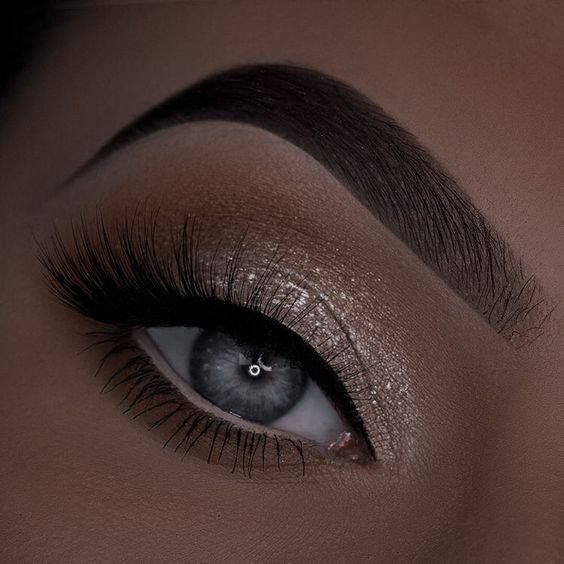
Champagne shimmer catches light without stealing it, which is why this tone has held steady as a bridal choice through years of trend cycles.
The lid stays bright and dimensional while a warm matte brown worked through the crease adds the structure that keeps the look from washing out under venue lighting.
Black mascara finishes it, and a thin winged liner keeps the shape clean without adding weight.
A soft glam route that forgives late-night smudging.
2. Rose Gold Shimmer
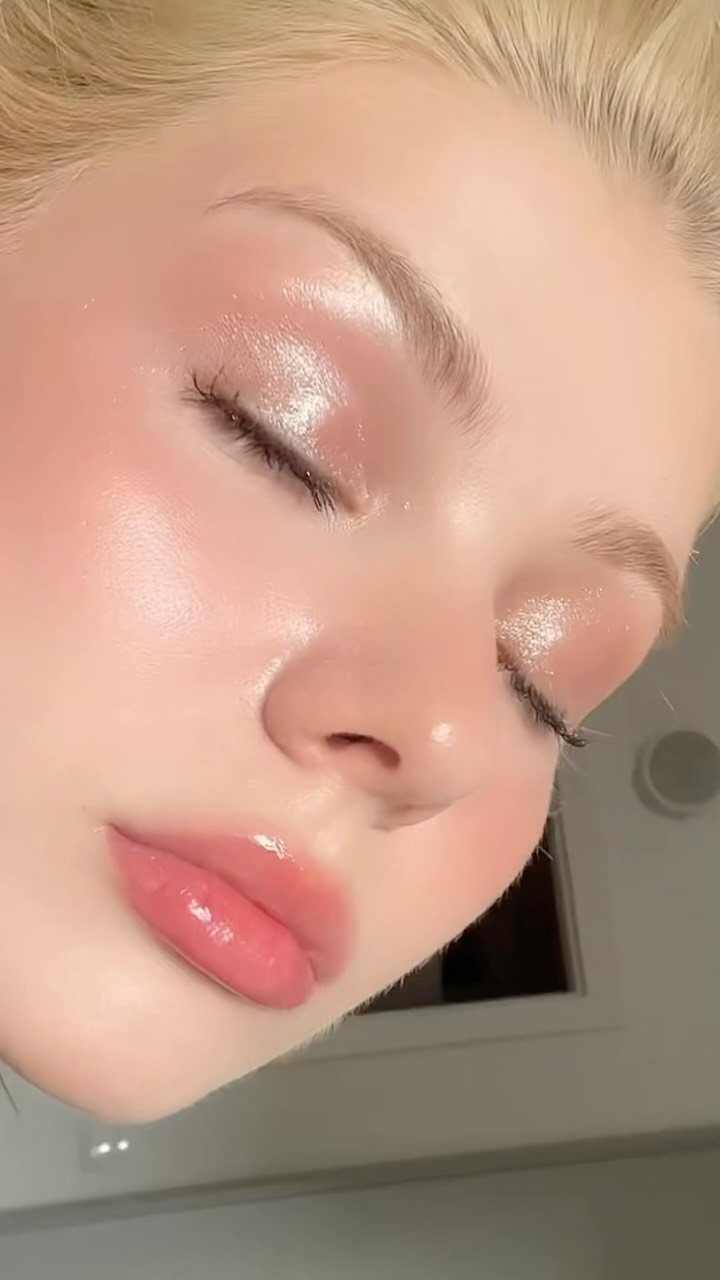
Rose gold sits in that narrow space between warm and cool that flatters most undertones without the bride having to think too hard about which she has.
The shimmer goes across the lid, a soft brown in the crease keeps it from floating, and a dark brown shadow along the outer corner anchors the shape.
Dewy blush and a glossy pink lip carry the same warmth through the rest of the face so nothing competes.
This one photographs a little pinker than it reads in mirror light; check it in daylight before finalizing.
3. Gold Glitter Eyeshadow
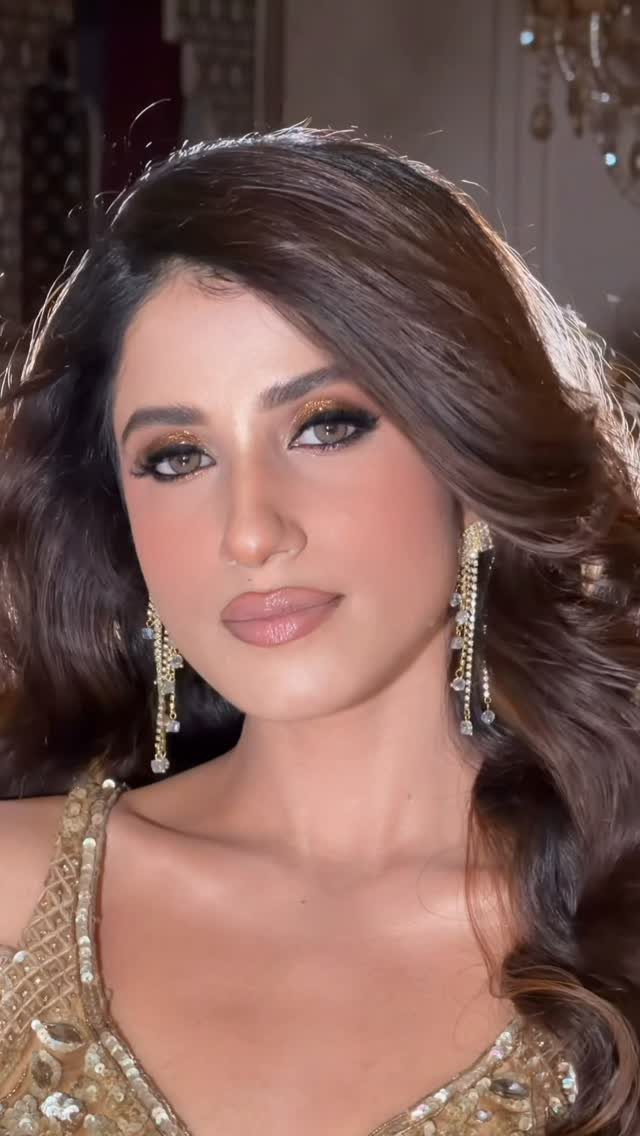
Gold glitter reads celebratory the way few other finishes do, though it demands more commitment than shimmer: the particles are larger, the fallout real, and the lid needs a sticky base or you will find sparkles on your cheekbones by the first dance.
Work a dark brown matte through the crease first so the glitter has a shape to sit inside, then press it on rather than sweeping. A sharp black wing gives the eye its architecture; without it, the glitter pools.
Save this for evening receptions where the lights will catch it.
4. Matte Warm Brown Eyeshadow
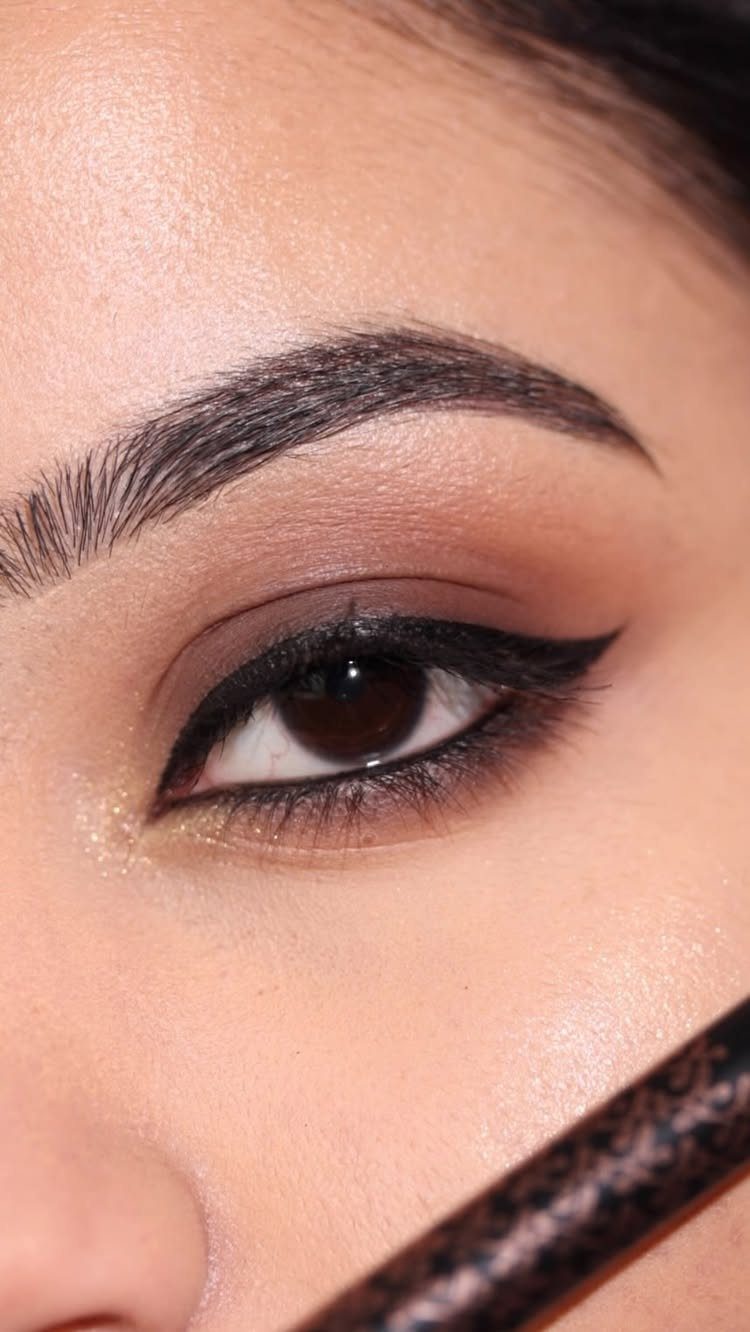
Matte warm brown in the crease builds the skeleton that most bridal eye looks need, even the ones that end up shimmery on the lid.
It recedes visually, which means it defines without announcing itself, and it pairs with nearly every lid color a bride might want above it.
Blend it to a soft gradient with a darker wing, but keep the brown as the main event. I would try pressing a whisper of rose gold at the center for light.
A safe base to build from if you are doing your own makeup and want room to adjust.
5. Dark Brown Outer Corner Shadow
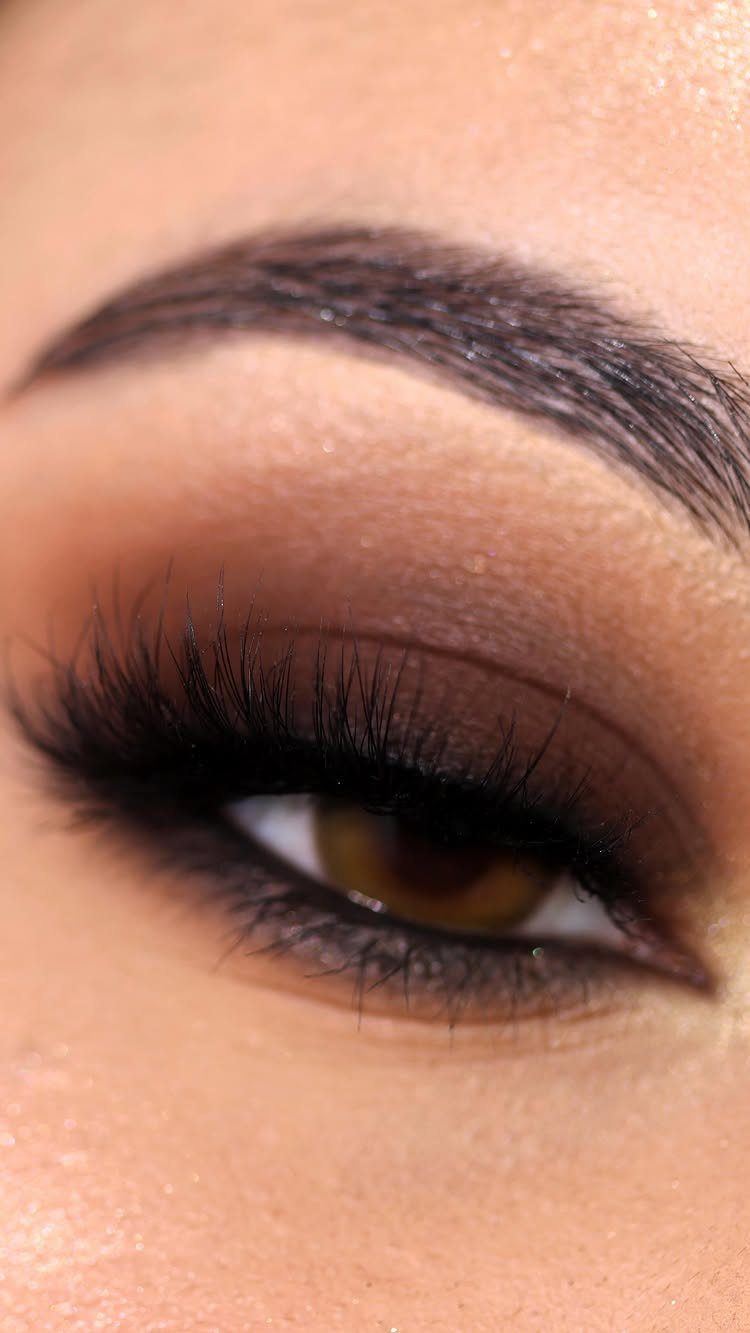
Dark brown packed onto the outer third of the lid deepens the eye shape without the harshness that black can bring to a daytime ceremony.
It blends inward toward a lighter lid, creates the illusion of more socket depth, and plays well with whatever tone sits at the center: silver, rose gold, champagne, or bare skin.
Keep the edge soft; a diffused boundary reads bridal, a hard one reads evening.
Winged liner and false lashes complete the lift. Do the shadow first, then decide how much liner you actually need.
6. Soft Mauve Eyeshadow
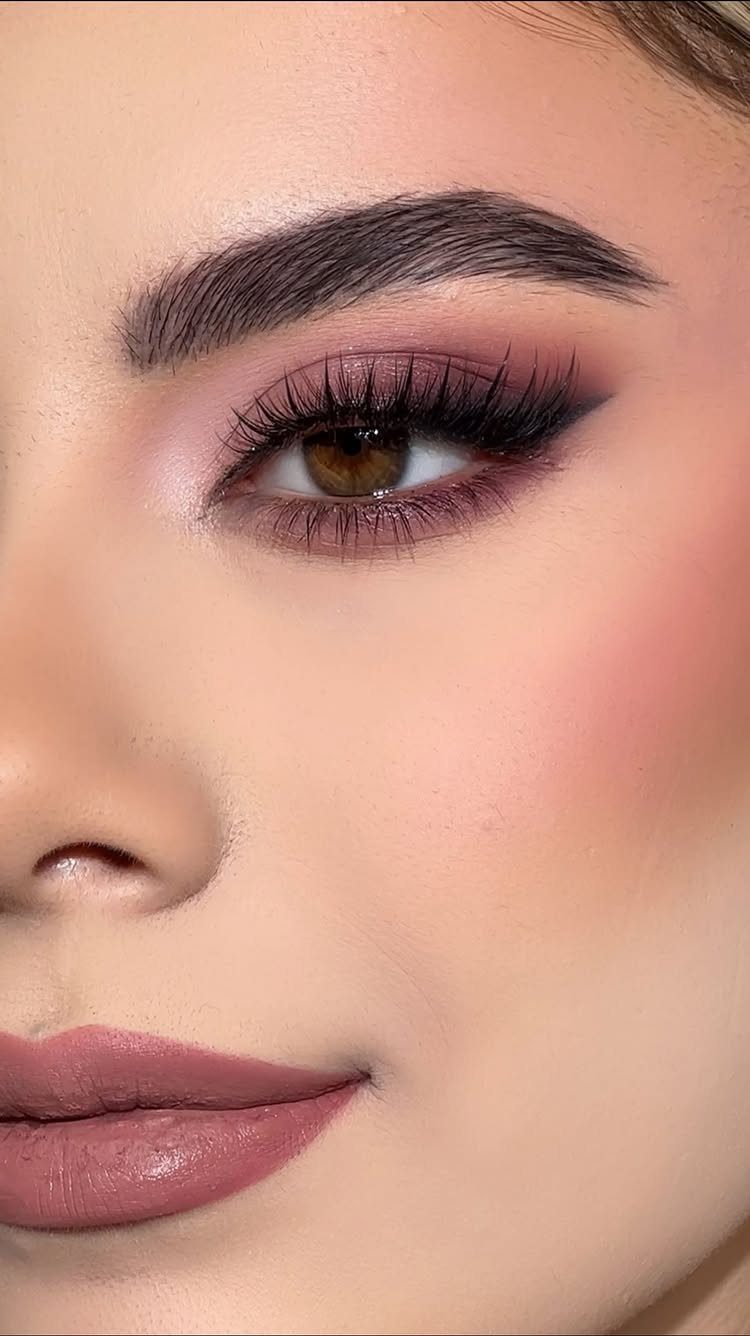
Mauve carries enough gray to feel sophisticated and enough pink to read feminine, which makes it one of the more interesting neutrals in the bridal palette.
A soft smoky blend of matte mauve meeting rose gold works because neither color fights; dark brown liner keeps it from going muddy.
Matching the lip to the eye, as this bride did, is a choice that ties the face together or feels like too much of one thing, depending on the rest of the look.
This one suits cooler complexions especially well, though the rose gold warmth keeps it from turning ashy on most skin tones.
7. Silver Glitter Eyeshadow
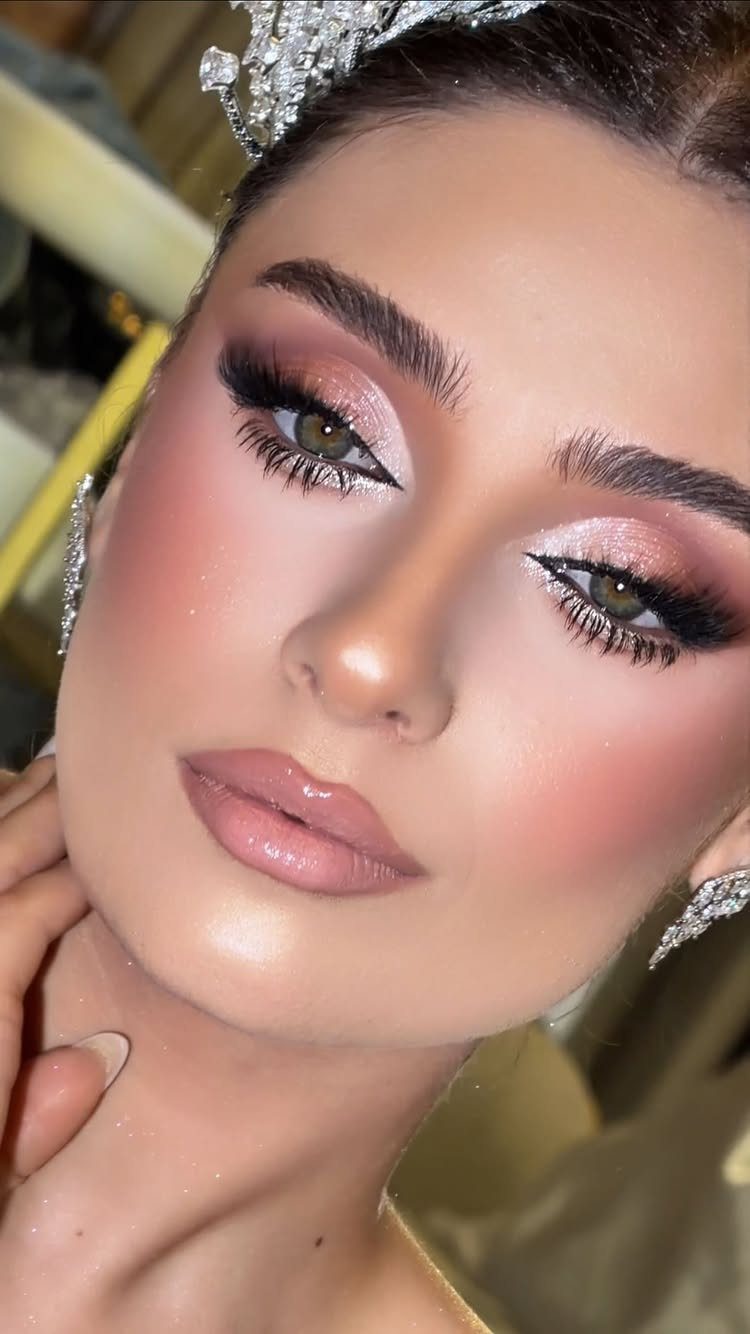
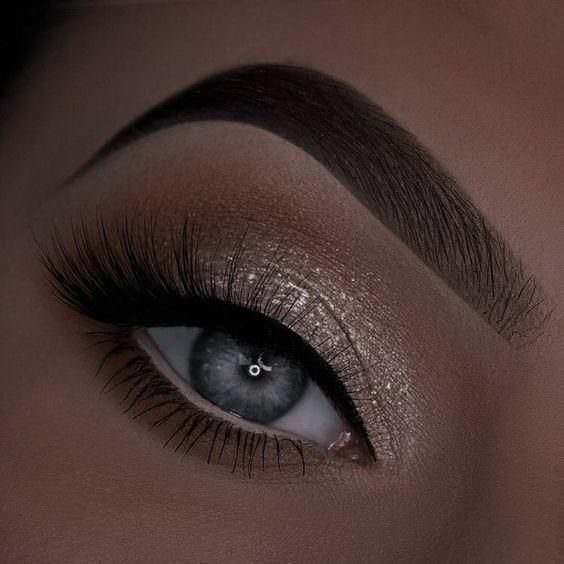
Silver glitter carries the same celebratory weight as gold but reads cooler, more evening, less expected at a wedding.
The particles need that same sticky base to stay put, and the same press-on application; dark brown matte in the crease gives the metallic something to lean against, while a sharp black wing keeps the shape from dissolving into sparkle.
A grey liner variation softens the edge if the black feels too harsh for daylight. Check this one with your dress’s undertone; silver can turn steely against ivory.
8. Shimmering Bronze Eyeshadow
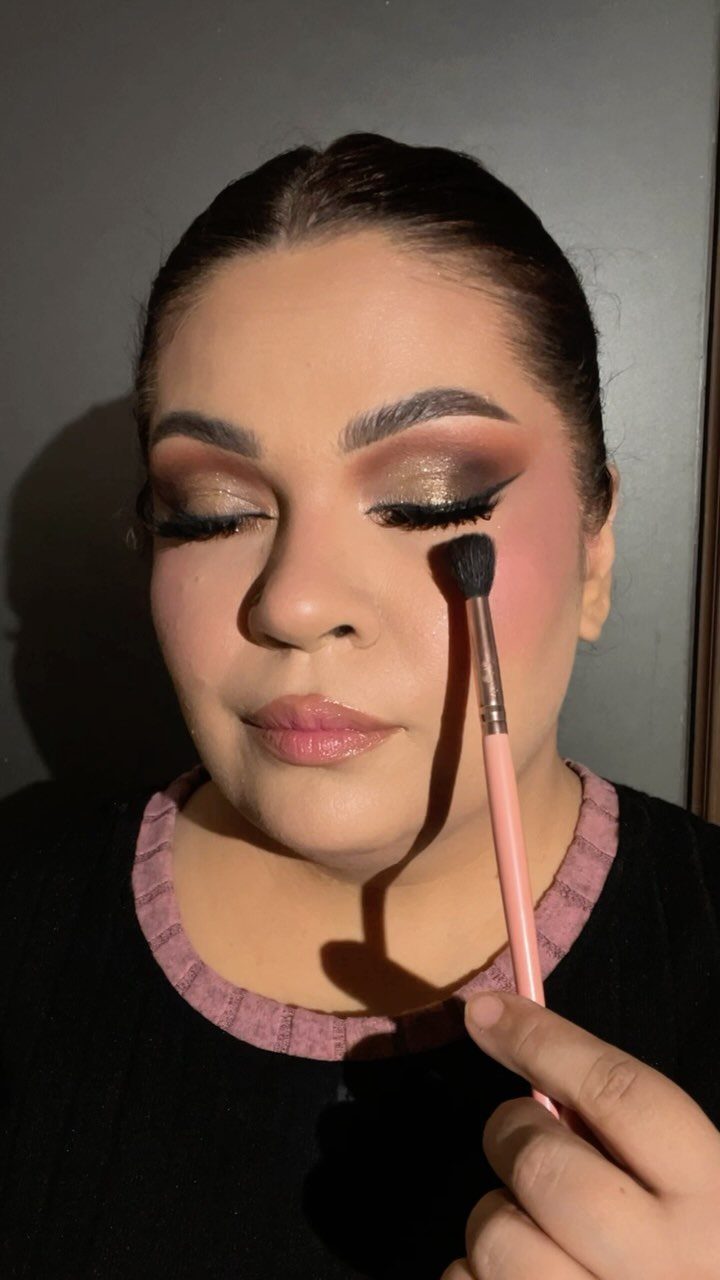
Bronze shimmer on the lid warms the whole face without demanding the high-contrast architecture that cooler metallics need.
The cut crease visible here adds definition that hooded lids especially benefit from; a winged black liner and full lashes complete the lift. Soft peach blush carried through the cheeks keeps the warmth from pooling only at the eyes.
I would keep the lip glossy and nude rather than competing with the lid. This one flatters brown eyes particularly, though the warmth works across most undertones.
9. Dark Charcoal Eyeshadow
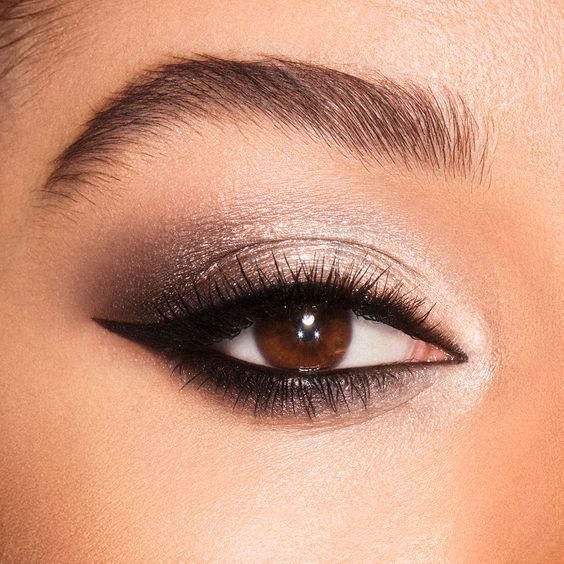
Charcoal blended outward from the lash line gives the intensity of a smoky eye while keeping the darkness close to the root, where it thickens the lash line instead of swallowing the lid.
A dense blending brush is the tool that matters here; the diffused edge is the whole point, and a hard stop reads costume, not bridal. A touch of shimmer at the inner corner keeps the eye from closing in.
Save this for evening or for brides who want the makeup to carry the drama so the dress does not have to. False lashes help; the shadow competes with natural ones.
10. Shimmering Peach Eyeshadow
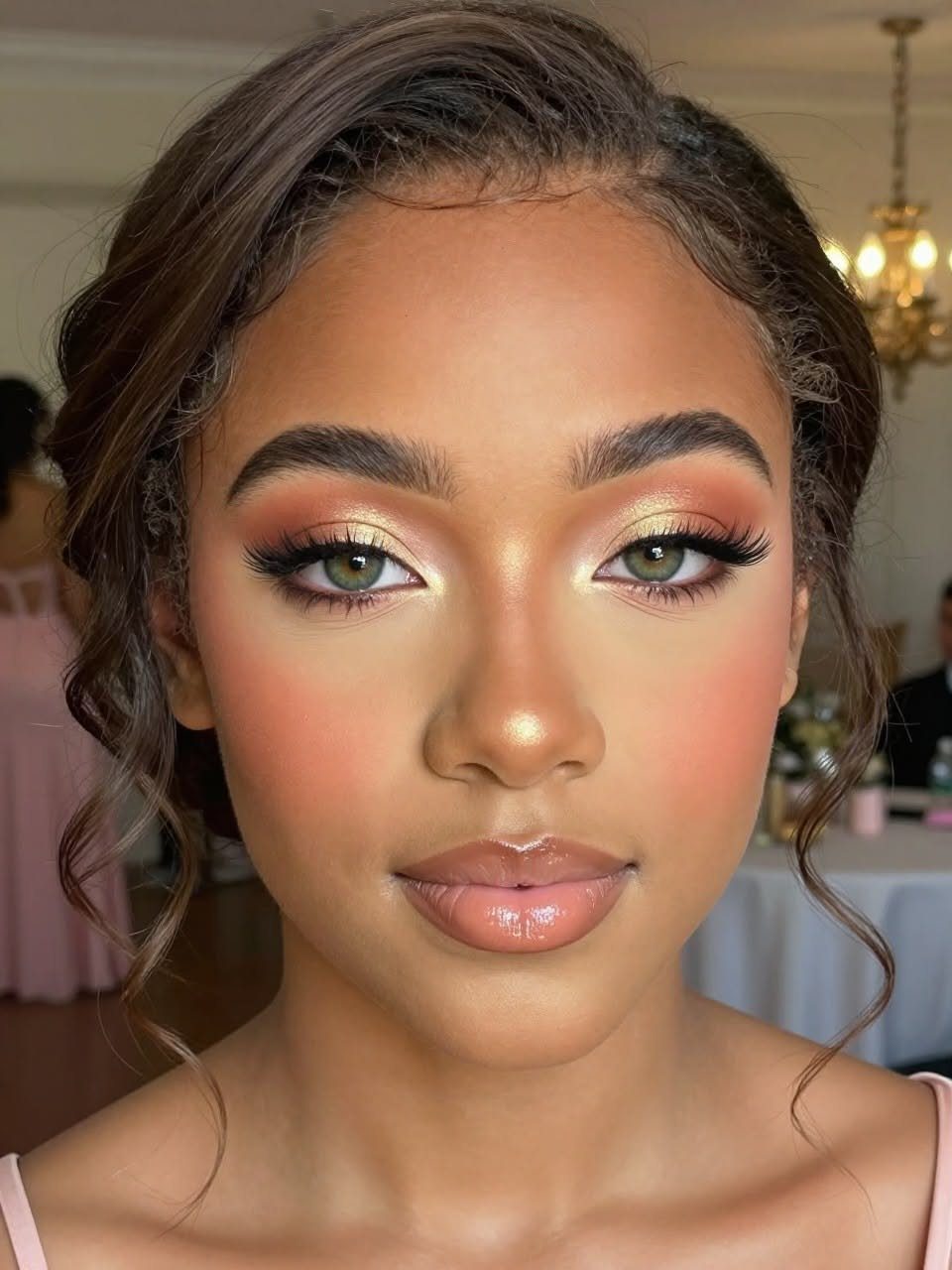
Peach shimmer across the lid with terracotta matte worked through the crease is the warm sister to the champagne and rose gold entries above, though this one carries more color and reads less neutral in photographs.
The terracotta adds depth that peach alone can lack, and the combination suits the bride who wants her makeup to feel like a choice, not a default.
Voluminous black mascara finishes it; liner is optional depending on how much definition the crease color already supplies. Check this in natural light, as peach can read orange on some complexions.
Best Eyeshadow Palettes
A palette that covers the wedding day needs both finishes: shimmers for the lid and mattes for the crease and outer corner.
A palette with rose gold, champagne, mauve, bronze, and warm brown in one place covers most bridal looks without buying extra.
Burgundy and deep brown mattes appear in the darker entries, so those tones matter too if you want the option of a more dramatic eye for the reception.
Skip palettes that are all shimmer or all matte. You will end up buying the missing half separately and paying more.
Application Techniques
A fluffy blending brush is what moves shadow outward from the lid into the crease without leaving a stripe.
Press glitter on with a finger or flat brush rather than sweeping.
The sticky base holds it, but sweeping drags the particles out of place. The press sets them where they belong before they have a chance to migrate.
Color Combinations
Warm and cool together build depth in a way that single-temperature looks rarely manage. Rose gold works the same way, with soft brown or dark brown keeping it from floating.
Eye color matters less than undertone, but it is not nothing.
The champagne entry reads more neutral and suits more brides with less thinking, while peach carries more color and reads less neutral in photographs.
If you are unsure where you fall, start there and build contrast only where you want it.
Long-lasting Makeup Tips
A primer is what keeps shadow from migrating by the last speech.
Concealer on the lid before shadow gives the pigment something to grip and evens the tone so the shadow reads true.
The step-by-step that builds from concealer through transition shade to lid color and outer corner follows this logic: each layer needs the one below it to hold.
Check the finished eye in daylight before you commit.
Rose gold reads pinker, peach can turn orange, silver can go steely against ivory. What looks correct in bathroom mirror light may not hold up at the altar.