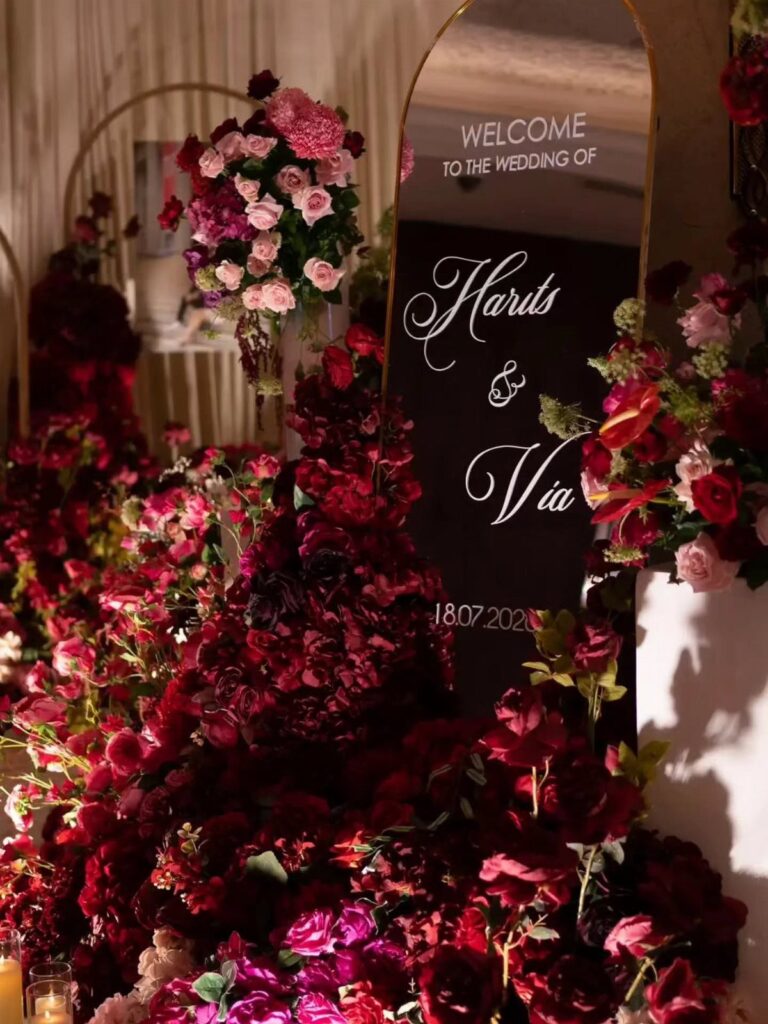
These ideas run from a few votives to full ceiling draping, custom dance floors, and rigged chandeliers, so the line between your wedding and your budget is the one that matters most.
What separates a candlelight table from a crystal installation is not taste but which trade-offs you can live with: setup time versus rental cost, DIY hours versus florist labor, a single statement piece versus repetition across the whole room.
Hurricane holders from resale sites and pleated cordless lamps both prove the point; one costs pocket change and resells after, the other rents for more but stays lit in wind.
1. Candlelight and Soft Glow
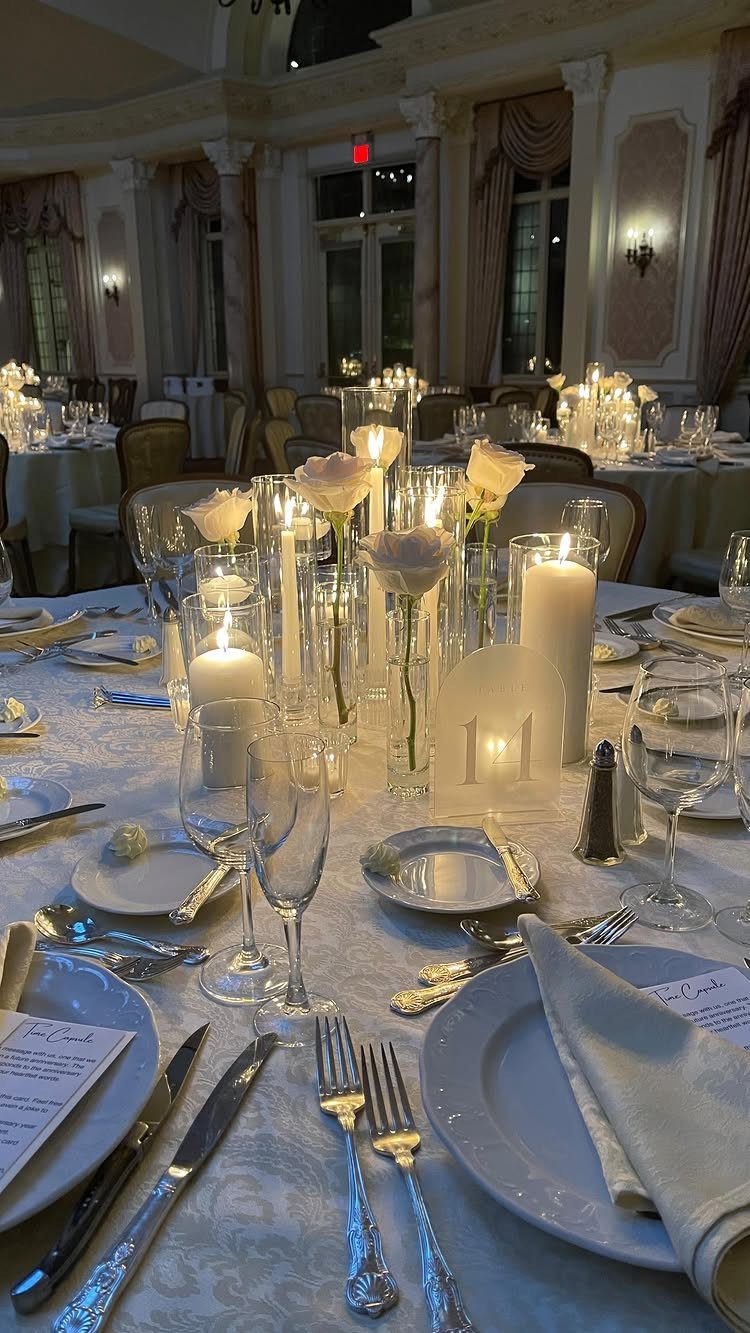
Candlelight turns a dark reception room into something guests actually want to linger in.
The warm, moving light flatters faces and makes conversation easier, which is why I keep votives and pillar candles on my gear list even when the florist has everything else covered.
Tall candlesticks in mixed heights give a table presence without blocking sightlines across it.
Votives tucked between place settings cost little and travel well from ceremony to reception. Hurricane holders or apothecary jars from resale sites run cheaper than rental glassware and resell afterward, so the budget stretches further than you would expect.
I have shot receptions where candles alone carried the center of each table, no florals at all, and the room felt complete.
Glass cylinders with white roses pair two classic elements without either one fighting for attention. The roses reflect in the glass and the candlelight catches the petals from below.
2. Elegant Ceremony Backdrop
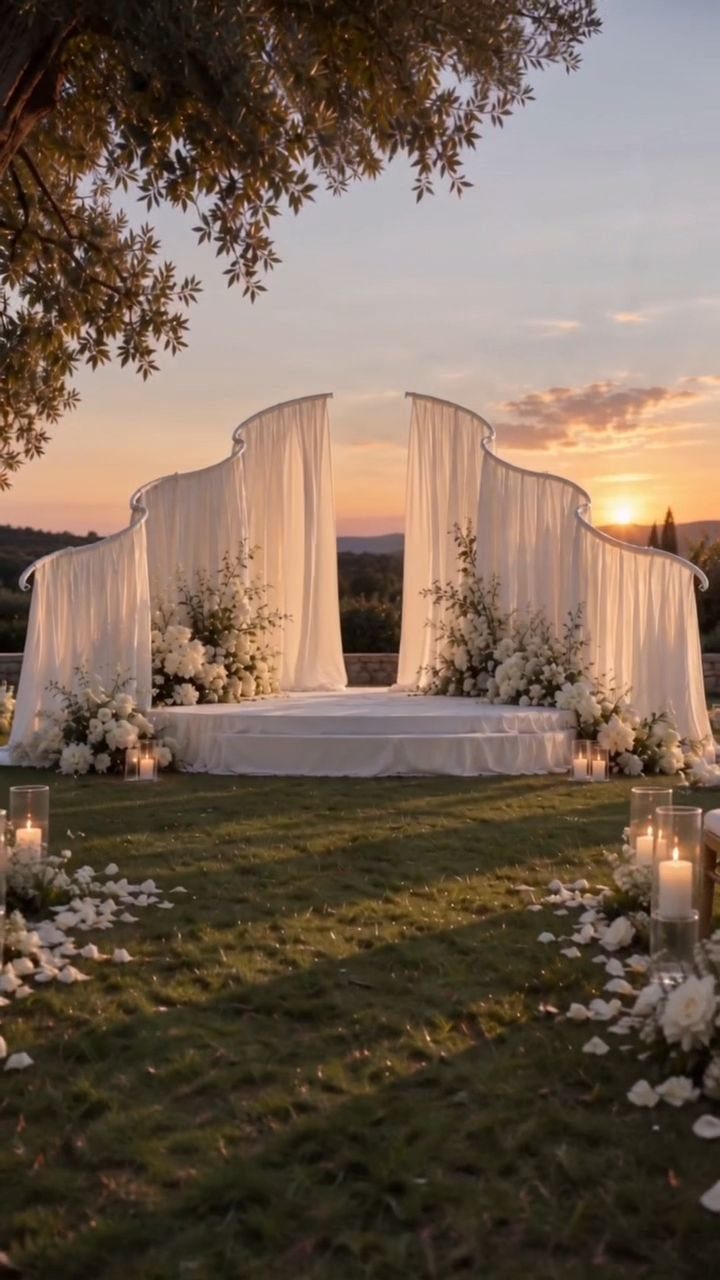
A backdrop does the same work a frame does for a photograph: it holds the eye where you want it.
During the ceremony, that means keeping attention on the couple and giving the photographer something clean to work with when the light is changing fast.
Draped white fabric and lush flowers are one route to a ceremony backdrop. For a tighter budget, a simple arch with greenery costs less in both materials and labor, and the couple still gets that framed, finished look.
Clean lines and subtle textures hold up better in mixed weather than heavy fabric outdoors, so the venue matters when you choose between them.
Inside, fabric reads softer and more formal; outside, greenery tends to photograph more consistently in changing light.
The backdrop sits behind you only for the ceremony itself, so choose what photographs cleanly rather than what fills the most space.
It appears in every ceremony photo and most of the video. That ratio of time-in-place to visibility is hard to beat.
3. Chic Table Settings
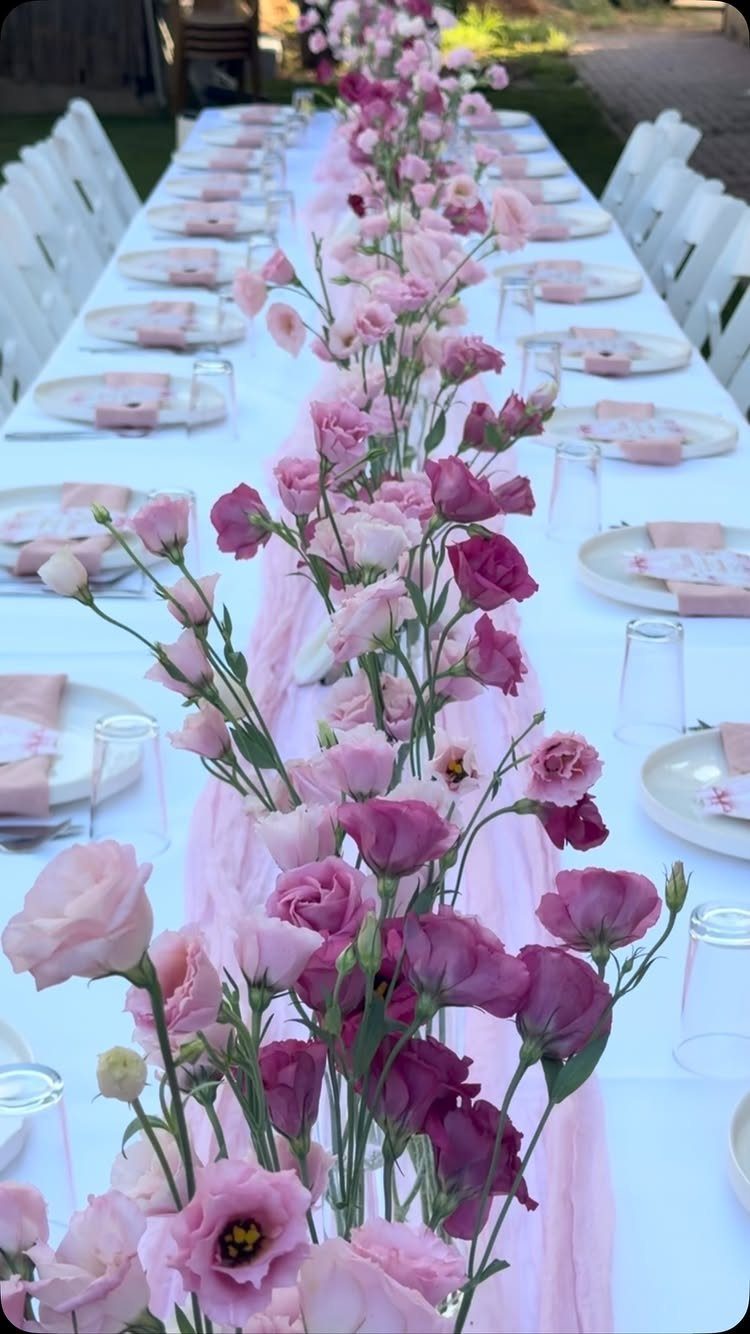
Pulling a reception together comes down to repetition. One beautiful table is luck; a whole room of identical ones is design.
Elegant dinnerware does not have to mean rented china. Simple white plates with gold flatware read formal because the materials contrast, not because either one is expensive.
Neutral napkins folded simply keep the eye moving toward the center of the table, where the floral runner or a few stems of lisianthus do the actual talking.
I have seen brides skip the charger plate and let the linen show instead, which saves both money and cleanup time.
Lisianthus threads pink through a setting without overloading it. That restraint is what makes the table feel classy rather than decorated.
4. Elegant Centerpieces
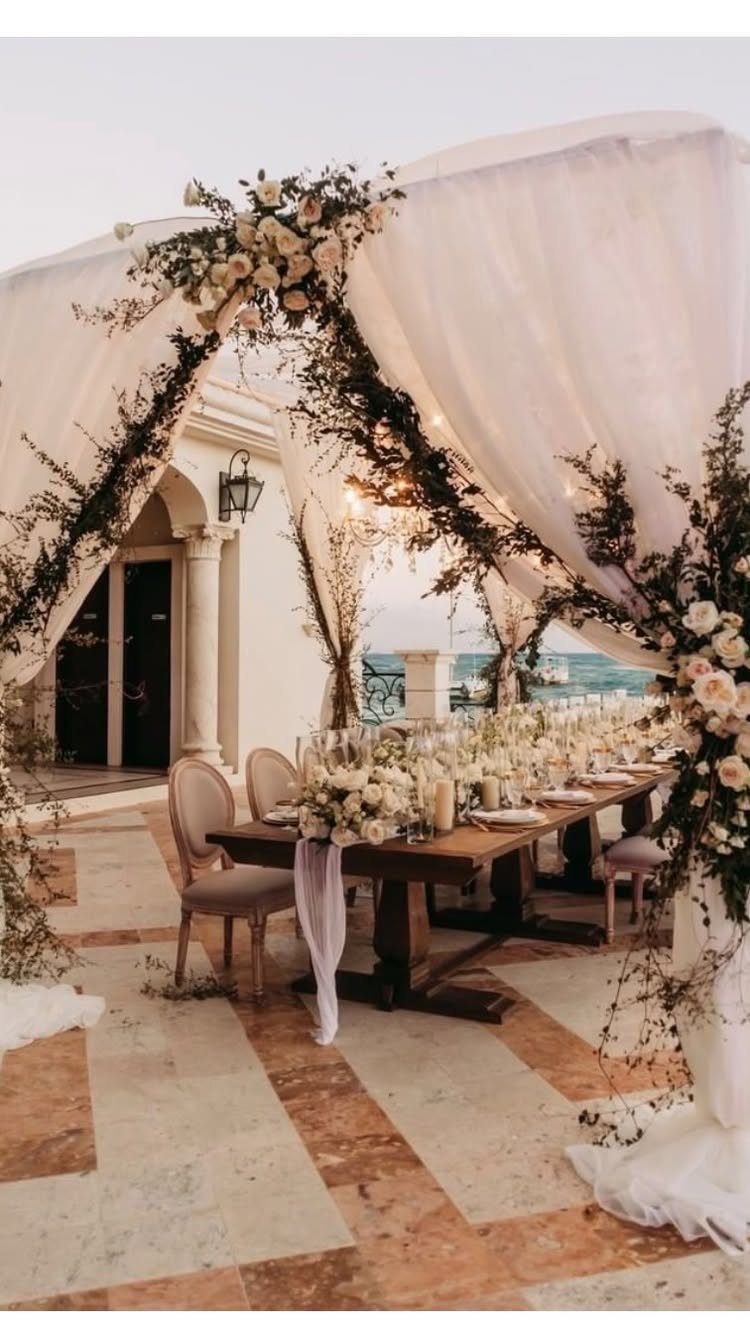
A centerpiece has to work from 2 distances: across the room, where it shapes the overall impression, and up close, where guests actually live with it.
A long wooden table with white florals and candles under a draped canopy solves both problems at once. The flowers read clearly from the entrance; the candles give guests something warm and low to look at over dinner.
Coordinated arrangements keep the room from feeling cluttered. I prefer one type of bloom massed over mixed bouquets for formal settings; the repetition reads more intentional.
Candles at varied heights break up the horizontal line of the table and give the photographer light sources to work with once the sun drops.
The canopy overhead frames the whole scene and turns what could be a generic outdoor table into a defined space.
Single long-stemmed florals in individual vases are another route if the budget runs tight, though they take more setup time.
5. Statement Dessert Display
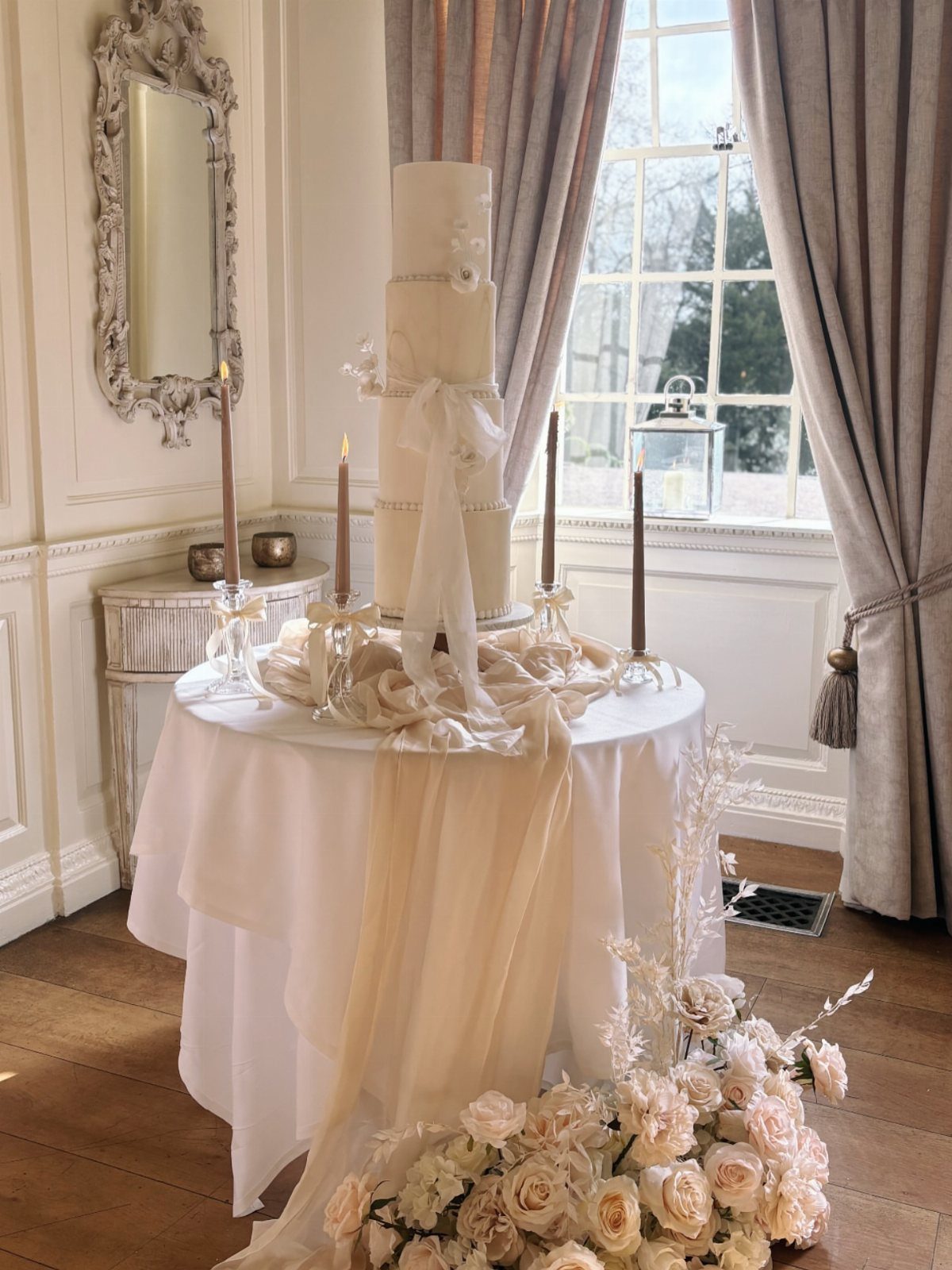
The cake table draws guests the same way the ceremony backdrop draws cameras: it is where people gather and where they pause.
Treating it as part of the decor rather than an afterthought means the cake does not have to carry the whole visual load alone.
Fresh flowers and candles around the base extend the cake upward and outward, turning a single dessert into a composed scene. A draped cloth matching the reception linens keeps the table from reading as an orphan in the corner.
Taper candles in holders at staggered heights repeat the ceremony lighting and tie the room together. A simpler cake with scattered blooms costs less than heavy fondwork and photographs just as well, especially in candlelight.
I have seen couples skip the traditional cake entirely and build a dessert table with the same principles, but the single tall cake still wins for formal portraits.
6. Glamorous Dance Floor
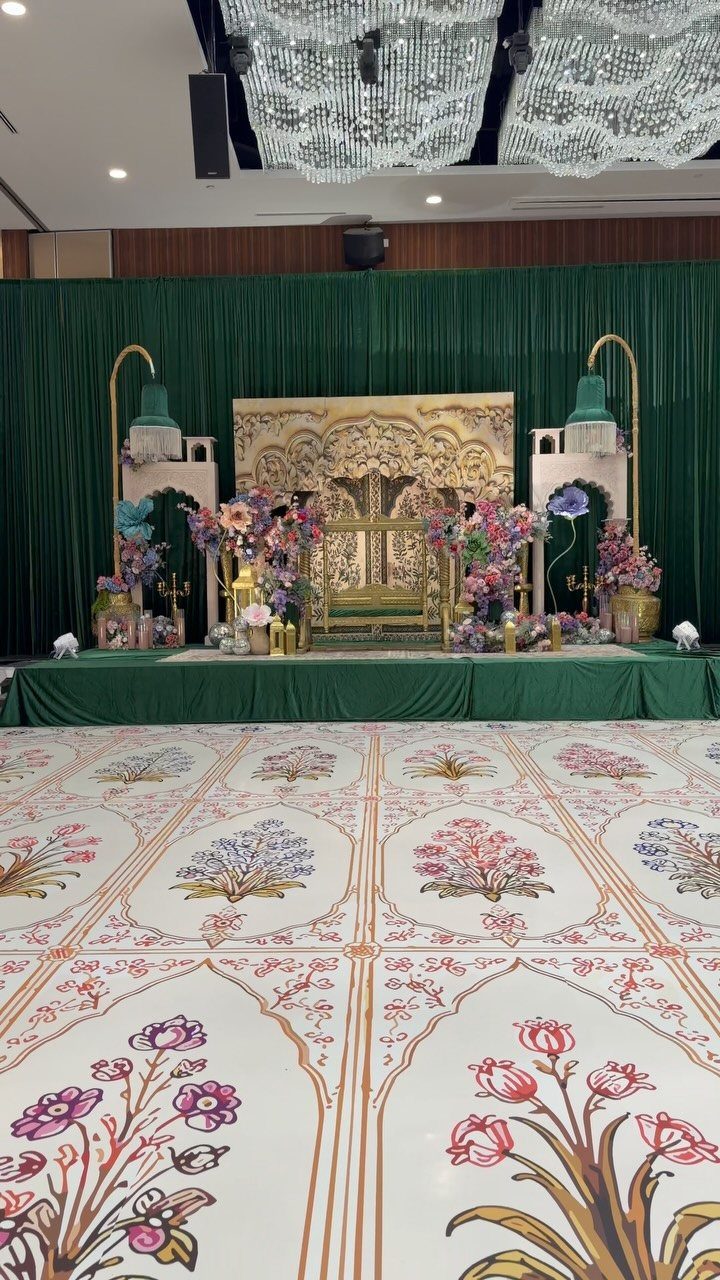
A custom floor pattern turns an empty ballroom into a designed space before a single guest arrives.
A floral motif matching lace from the bride’s veil and the invitation vellum is the kind of detail guests notice without being able to name it. The connection reads as coherence, not theme-park excess.
This level of customization requires planning with the venue and the rental company well ahead. The floor has to be measured, printed, installed, and protected from the rest of setup.
Not every ballroom allows it, and the cost runs higher than standard black or white vinyl. Green draping and a single crystal chandelier overhead complete the frame, so the floor does not sit in an undecorated void.
For a smaller budget, a simple monogram or border pattern gives some of the same effect without the full custom print. Check whether your venue includes a standard floor in the rental before you commit to upgrading it.
7. Fabric Draping
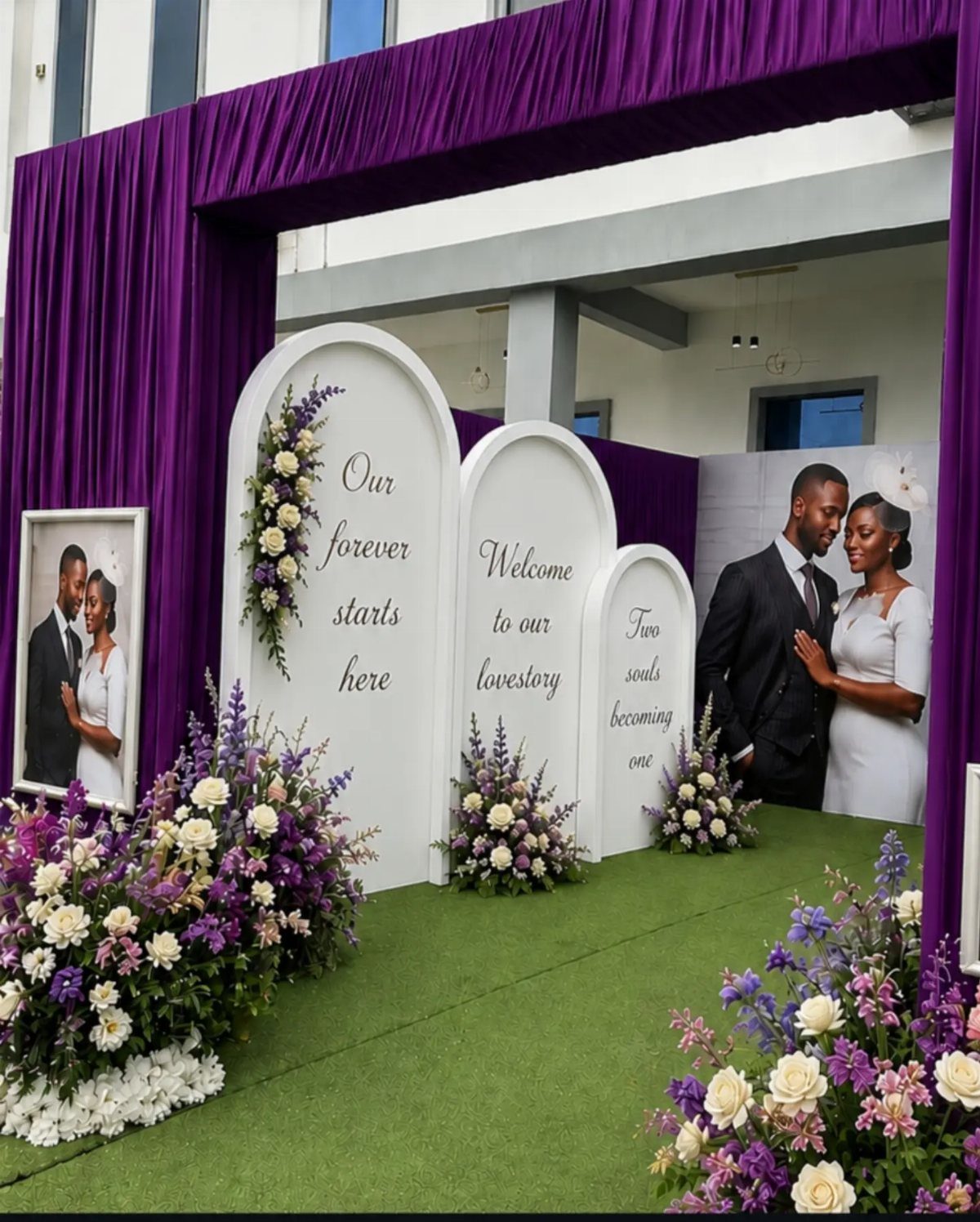
Heavy fabric changes a space the way curtains turn a bare window into a finished room. Purple draping at an entrance frames the threshold and tells guests they have arrived somewhere intentional, not just a rented lawn.
Ceilings are where draping pays off most dramatically in large venues: a barn or ballroom with exposed beams feels cavernous until fabric gathers the overhead space down to human scale.
Walls need less yardage than ceilings and install faster, so the budget stretches further there. Sheer layers over solid color add depth without extra hardware, since both hang from the same line.
8. Stylish Lounge Area
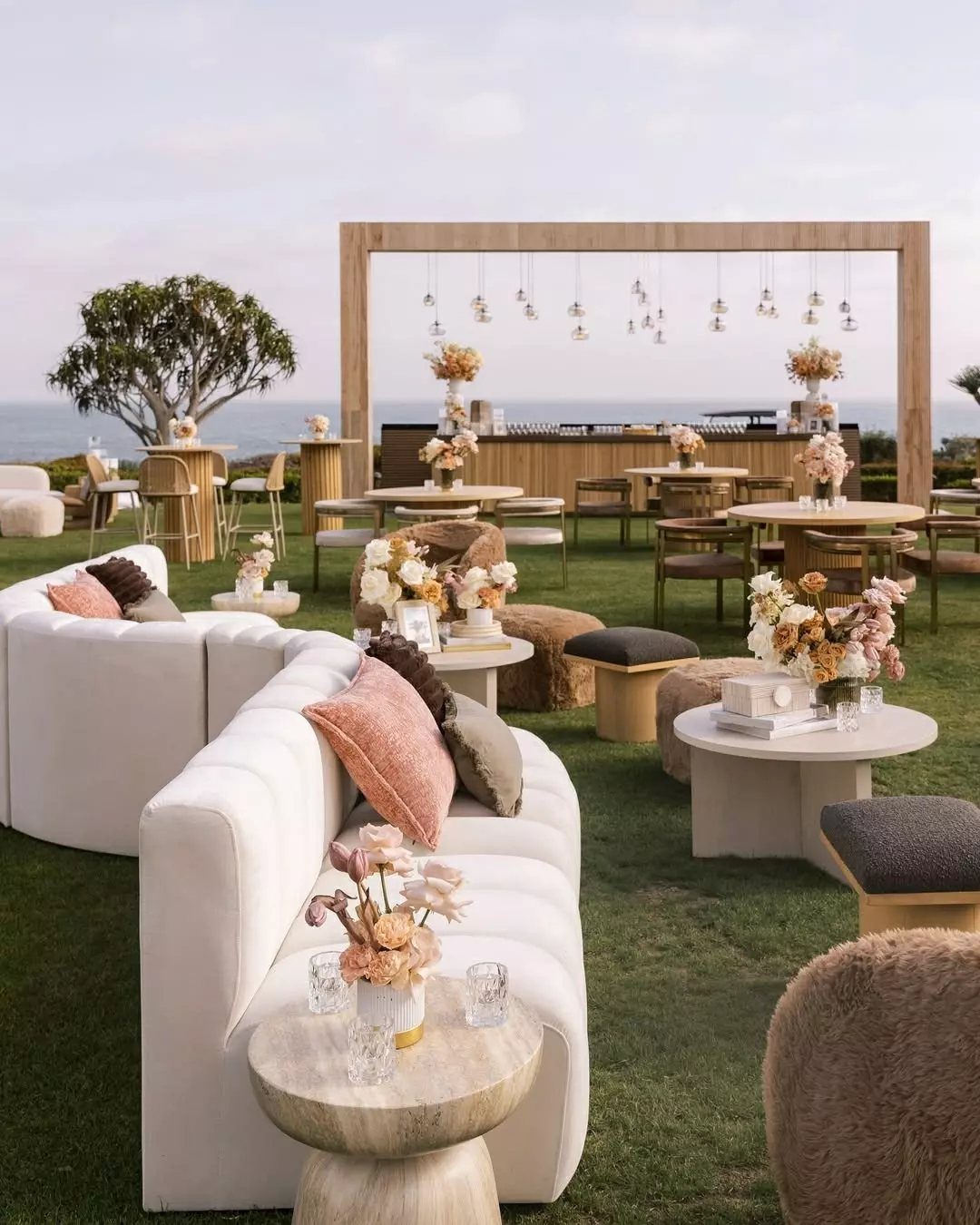
Guests standing in heels for an hour of cocktail hour remember the ache more than the decor. A lounge area gives them somewhere to land, and the gesture reads as hospitality rather than decoration.
Curved white sofas repeat the ceremony seating shape and keep sightlines open across the lawn, which matters when the ocean is the backdrop.
Low wooden tables hold drinks without blocking conversation the way tall cocktail tables do. Accent pillows in two textures, not five, keep the look unified; too many patterns and the area reads as furniture showroom rather than wedding.
Rentals for outdoor lounges run higher than standard ceremony chairs and need delivery a day early for setup. Check whether your venue allows furniture on grass after rain.
9. Create a Dramatic Entrance
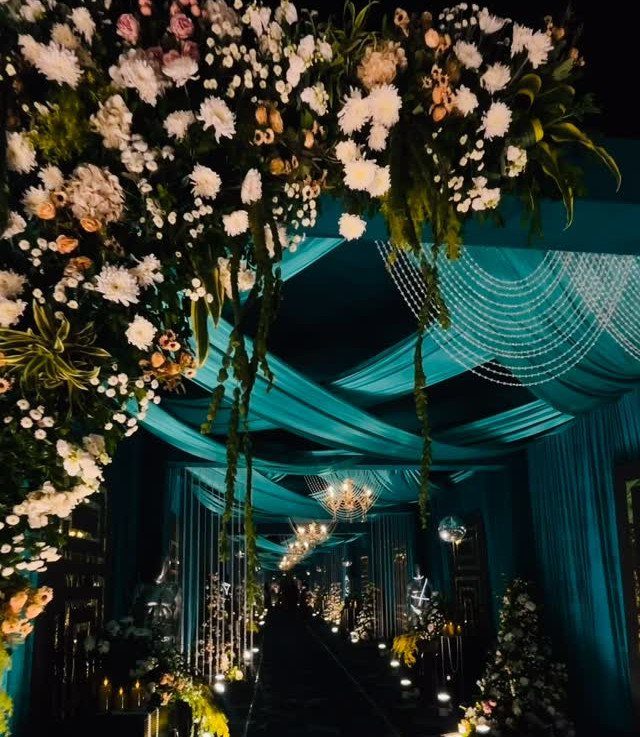
The first thing guests see sets the temperature for everything after.
A long tunnel of teal draping with crystal strands and suspended florals does not leave the tone ambiguous; guests know they are entering an event that spent money on atmosphere.
This scale requires a covered walkway or tent frame to hang from, which not every venue provides. Electric chandeliers need power access, which matters more than it does for candlelit entrances.
A floral arch overhead needs water sources or foam bases to last through greeting lines and late arrivals; without them, the blooms drop petals on guests below.
For a tighter budget, one dramatic element carries the idea: either the draping or the chandelier line, not both.
10. Fairy Light Canopy
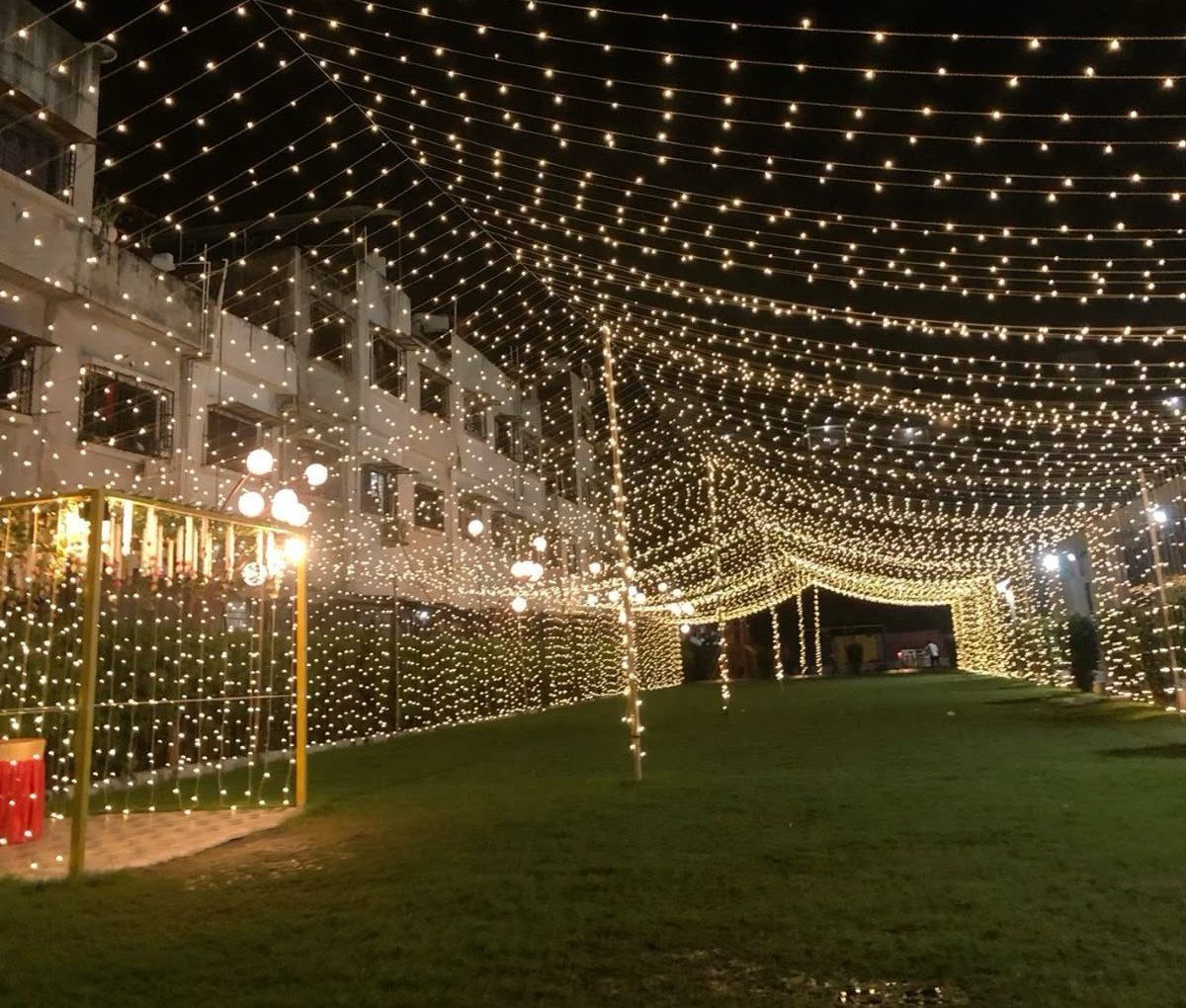
Fairy lights work because they are dim enough to need darkness and bright enough to make darkness bearable. Strung across an open lawn, they turn an undefined space into a room with a ceiling.
Warm white flatters skin; the blue-white of office LEDs does not.
Installation needs anchor points at both ends: trees, poles, or a building wall. Leave enough space between strands for coverage without the tangle look of too many lines; too close and the canopy reads as net, not sky.
Battery or solar strands avoid the trip hazard of extension cords across grass, though they dim faster as the night goes on. Plugged lights stay steady through the whole reception.
11. Crystal Chandeliers
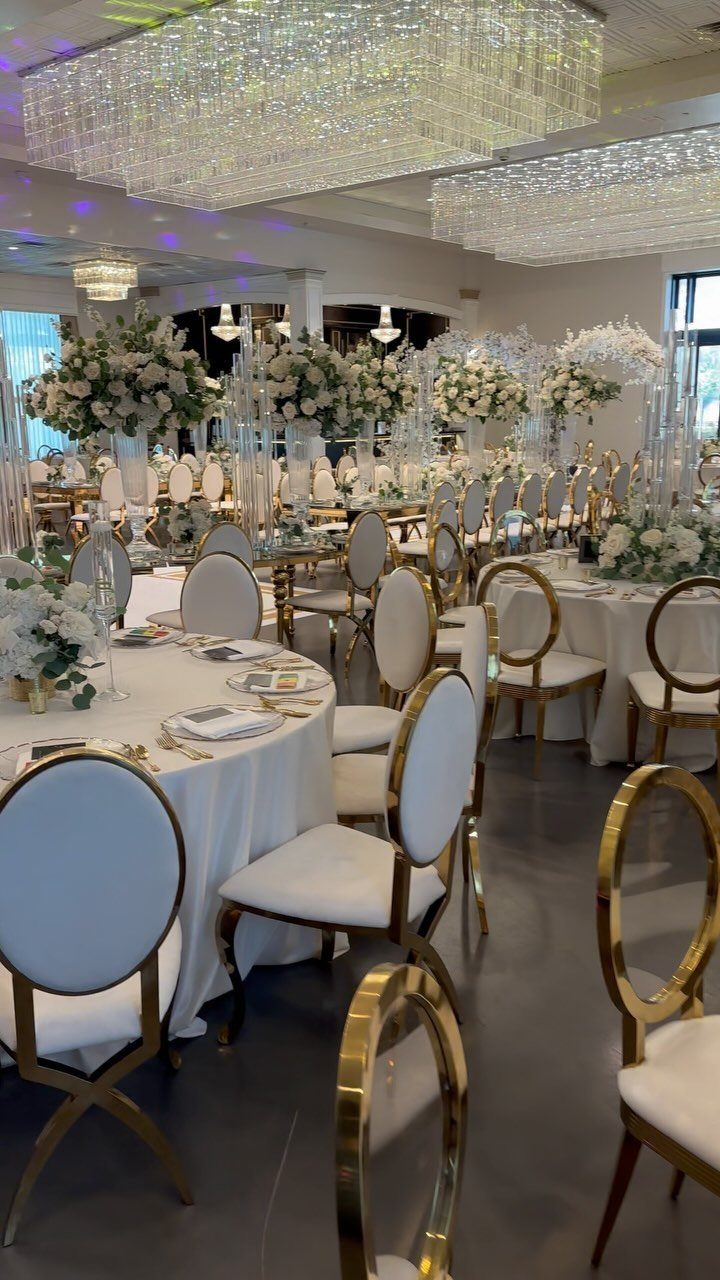
A chandelier over a dining table does what a hat does for an outfit: it finishes the space and signals that someone thought about the whole picture.
Crystal multiplies the light it receives, so a single fixture with candles or low bulbs illuminates more table area than a solid shade of the same wattage.
Tiered pieces large enough to hold their own against tall centerpieces make sense; smaller fixtures disappear visually and waste the rental cost.
Gold chair frames repeat the warm tone of the crystal mounts, which is the kind of coordination that reads as elegant rather than matched.
Rental delivery and rigging need ceiling height confirmation and venue approval; some historic spaces prohibit hanging hardware. Check load limits before you commit to a piece the room cannot support.
12. Marigold Mandap Setup
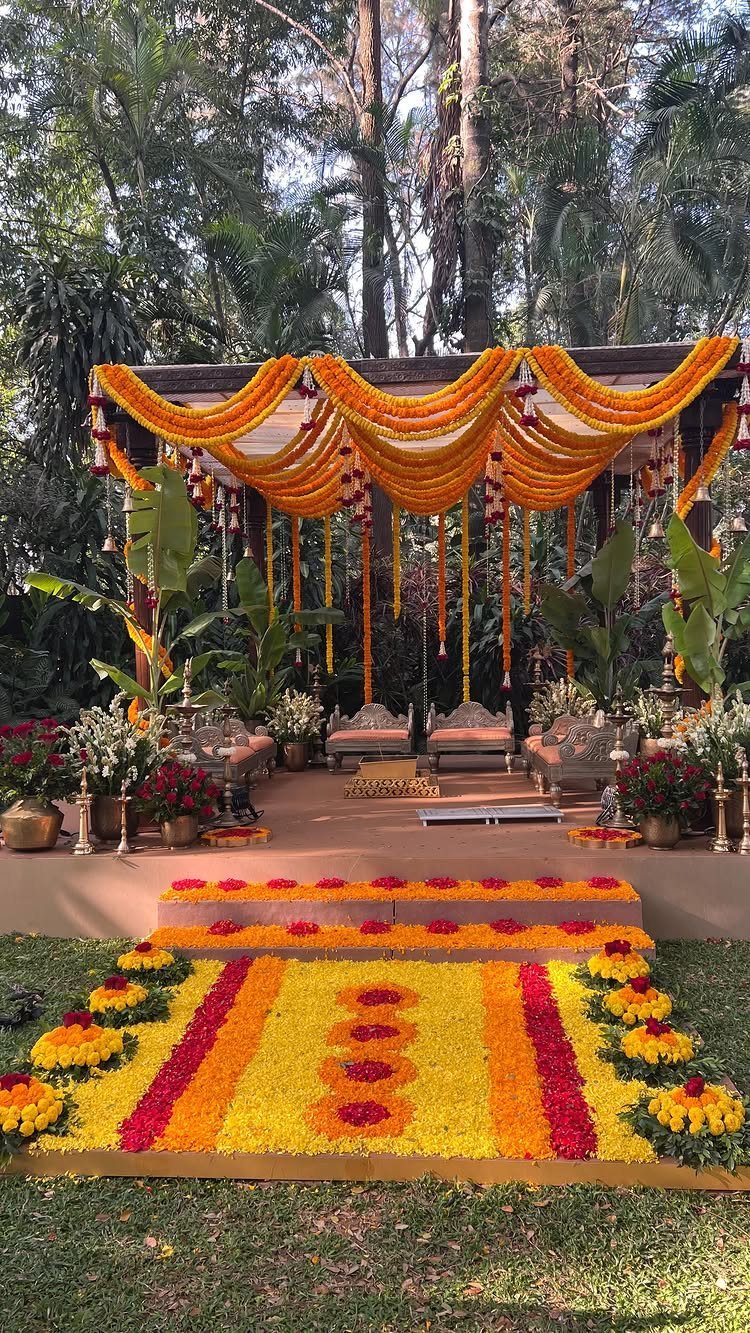
Marigold garlands carry color and scent together, which is rare in wedding flowers. Natural bloom colors stay vivid in outdoor heat that wilts softer petals.
A mandap is traditionally four-posted; the garlands here wrap the uprights and drape the crossbeams rather than forming a solid wall, which keeps air moving for an outdoor ceremony.
The rangoli of scattered petals on the ground path is ephemeral by design: guests walk through it, and the pattern changes, which is part of the tradition rather than a mistake to prevent.
Low seating on the mandap platform requires guests to remove shoes and the couple to plan movement in restricted clothing. For a mixed-culture wedding, consider raised seating or a smaller mandap for ritual only, with chairs for guests.
13. Mini Table Lamps
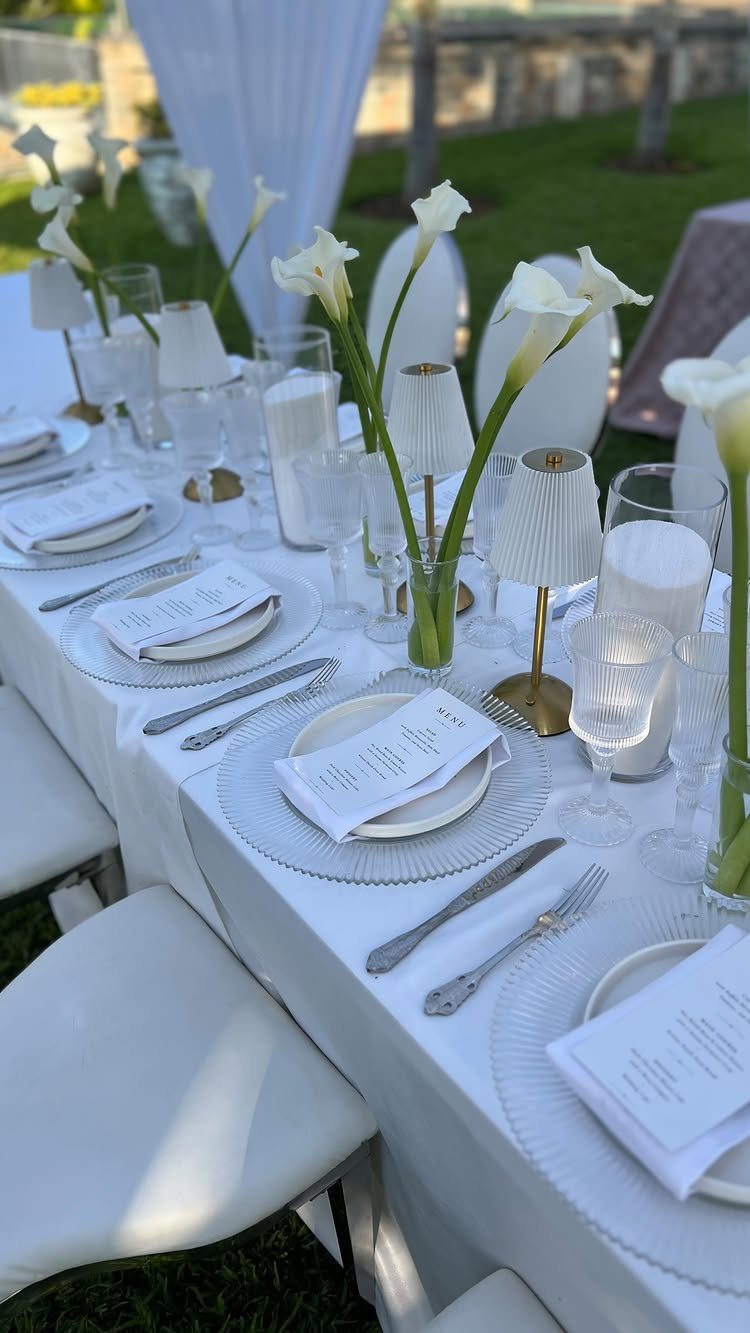
Gold pleated cordless lamps on a reception table do what candles cannot: they stay lit in wind, give actual task light for reading menus, and read as furniture someone chose rather than rental default.
The cordless part matters for outdoor tables where outlets are scarce; battery-powered versions last a full evening on a charge if you test them first.
Pleated shades throw a softer beam than drum shapes, which flatter faces and keep the table from reading as office.
Pair them with a single stem variety like calla lilies rather than mixed bouquets; the lamp becomes the visual anchor and the flower supports it, not the other way around.
Check that your rental company stocks matching sets; mismatched finishes across a long table break the repetition that makes this look work.
14. Outdoor Tree Lighting
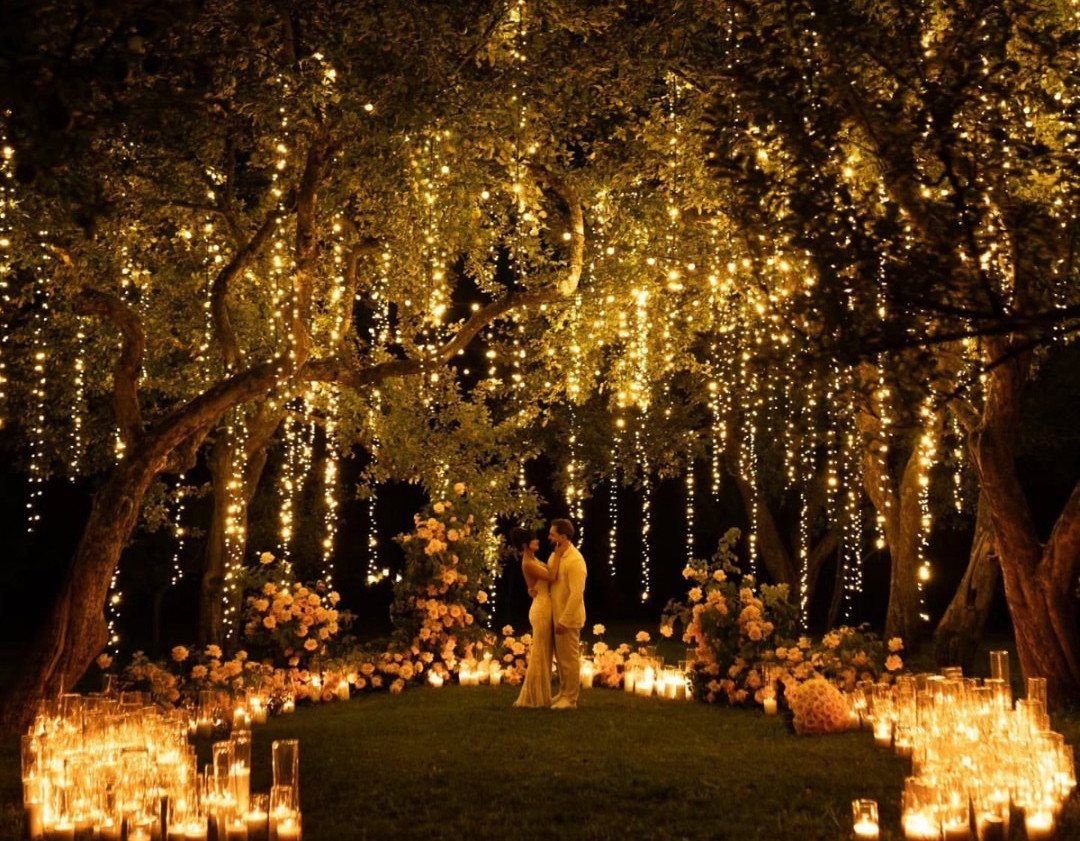
Vertical light strands turn trees into architecture. Hung from branches to the ground, they define a space without building walls and give guests a destination to move toward after dark.
Warm white bulbs match candlelight rather than competing with it; pair them with glass cylinder candles and peach flowers at ground level. Installation needs sturdy branches high enough to clear guests and weatherproof LED strands rated for outdoor use.
Battery or solar options avoid trenching for power, though you will need enough strands that the battery checks do not become a pre-ceremony task.
The vertical line flatters more than horizontal wrapping, which can read as holiday decoration.
Check your venue’s tree species before you commit: live oaks handle hardware well, birches and maples scar easily, and some venues prohibit any attachment to trunks or limbs.
15. Lush Flowers and Foliage
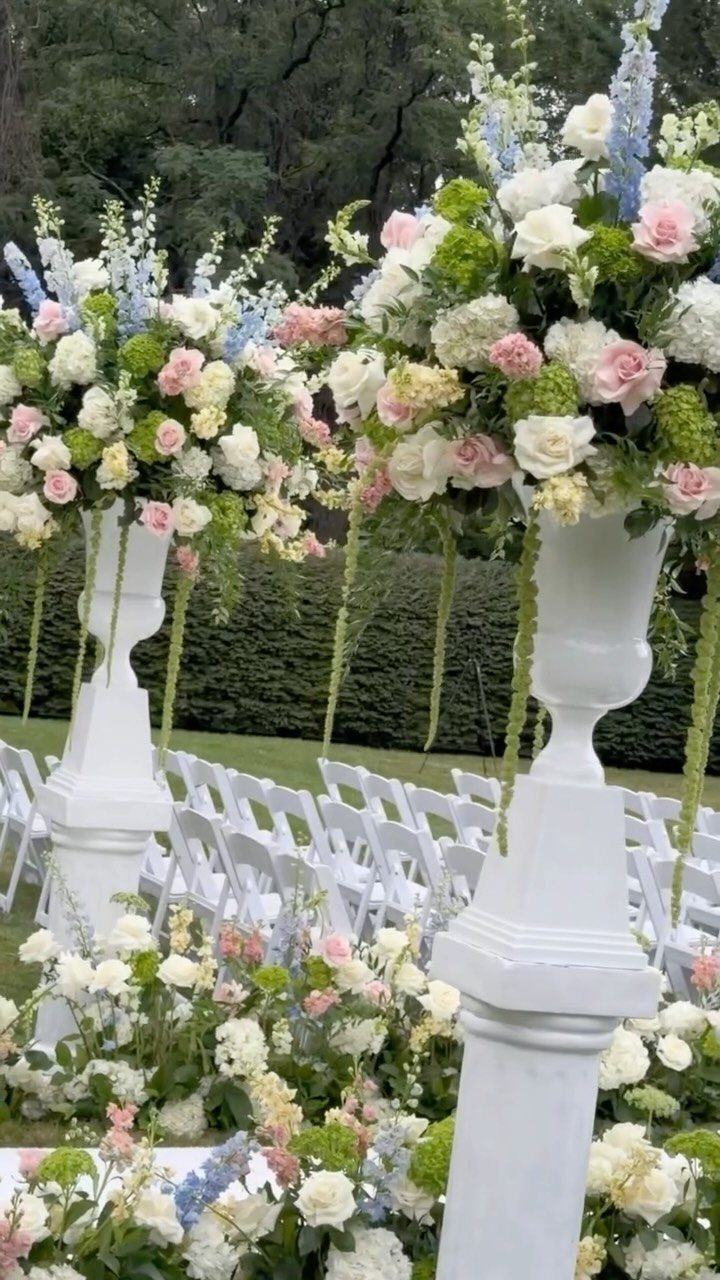
Scale is what separates ceremony florals from table centerpieces.
Tall white vessels keep the eye on the flowers rather than the container.
Pink and white roses with blue accents give a palette that reads formal without the cost of out-of-season imports; local sourcing from upstate growers or regional wholesalers keeps stems fresher and budgets lower.
Moss-based arrangements rather than foam give an organic base that photographs as texture rather than hardware.
Large urns with saturated foam run heavy, so pedestals need stable footing on grass or leveling on uneven ground. Check your setup surface before you order vessels.
16. Use Unique Vases
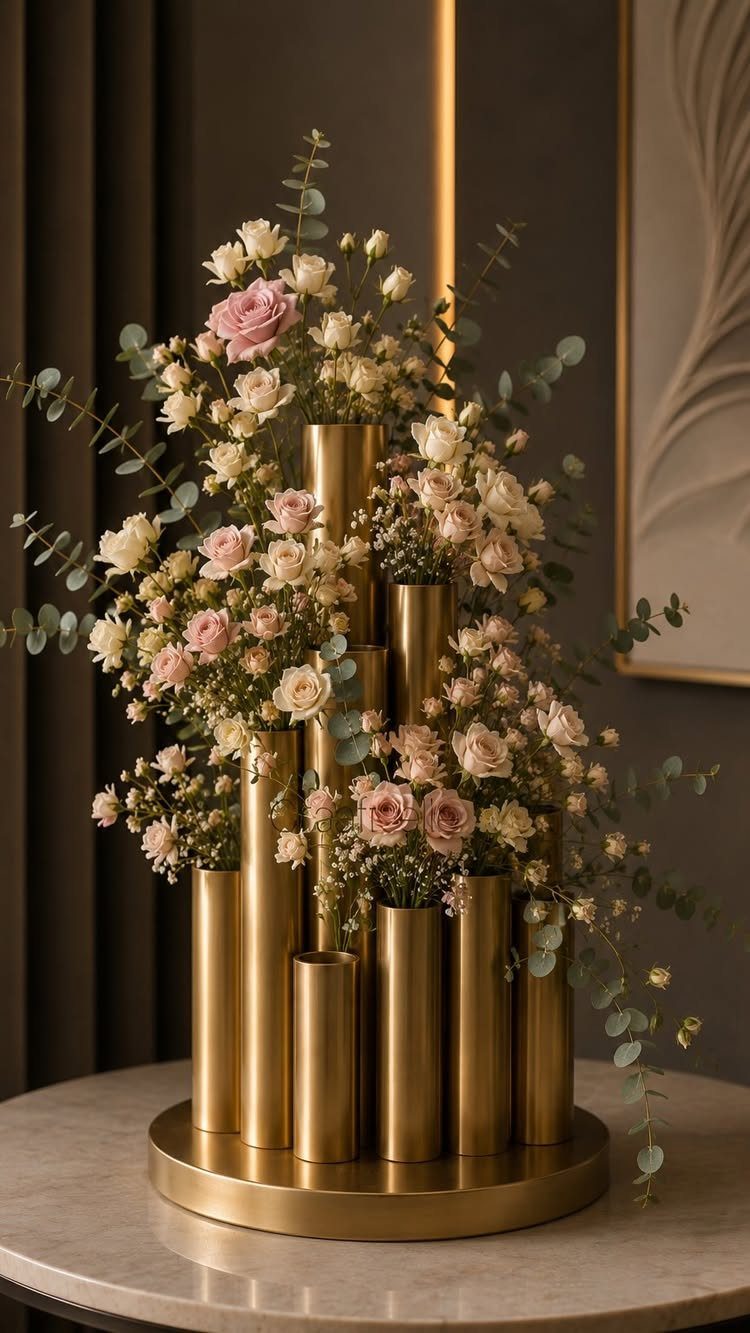
Gold cylindrical tubes in graduated heights turn a few stems into a composed still life.
Contemporary metal finishes suit modern venues where cut crystal would read as inherited mismatch. Vintage glass or ceramic works better in historic spaces where the architecture already supplies ornament.
Choose one distinctive shape and repeat it rather than mixing styles; three identical tubes at different heights read as intentional, not a collection of odd pieces.
Marble or stone surfaces under the arrangement ground the metal and keep it from floating visually. For budget stretch, rent the statement vessels for the couple’s table or ceremony only, and use simple glass for guest tables.
17. Melange of Wildflowers
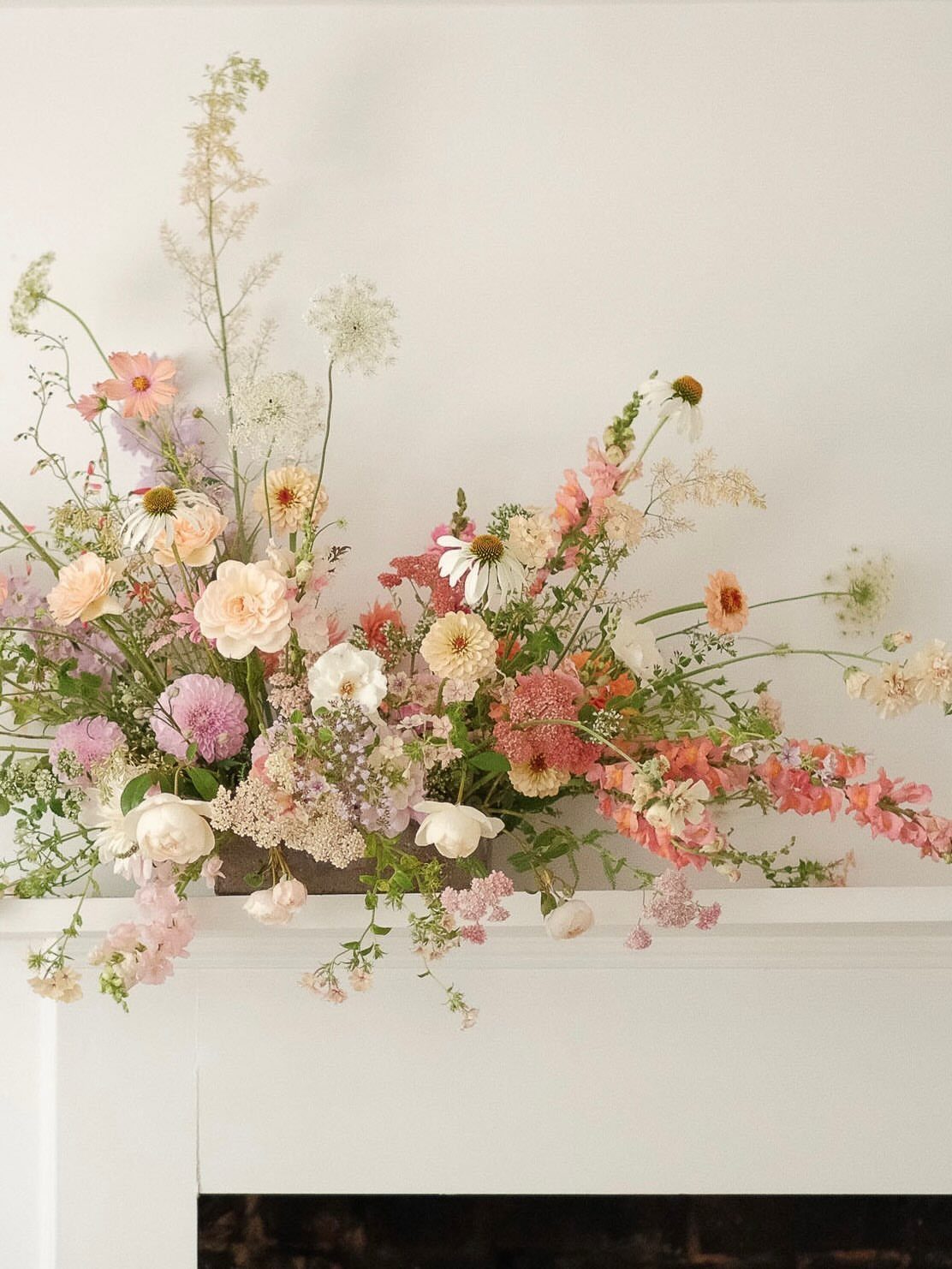
A loose mix of varietals in dusty terra-cotta and sage reads as gathered rather than arranged, which suits couples who want elegance without formality.
Feathery textures like dahlias and coneflowers among softer blooms need a simple container so the flowers stay the subject; a white mantel or plain surface does this without competing.
This palette is seasonal to late summer and early fall; spring wildflowers run brighter and need different supporting colors.
The effect depends on volume more than precision, so work with a florist who sources locally and builds from what is fresh that week rather than demanding specific blooms.
Dried elements extend the season and add the rust tones that make the arrangement feel intentional rather than accidental. Check that your venue allows loose petals or dropped blooms if the arrangement will sit where guests brush past.
18. Seasonal Bouquets
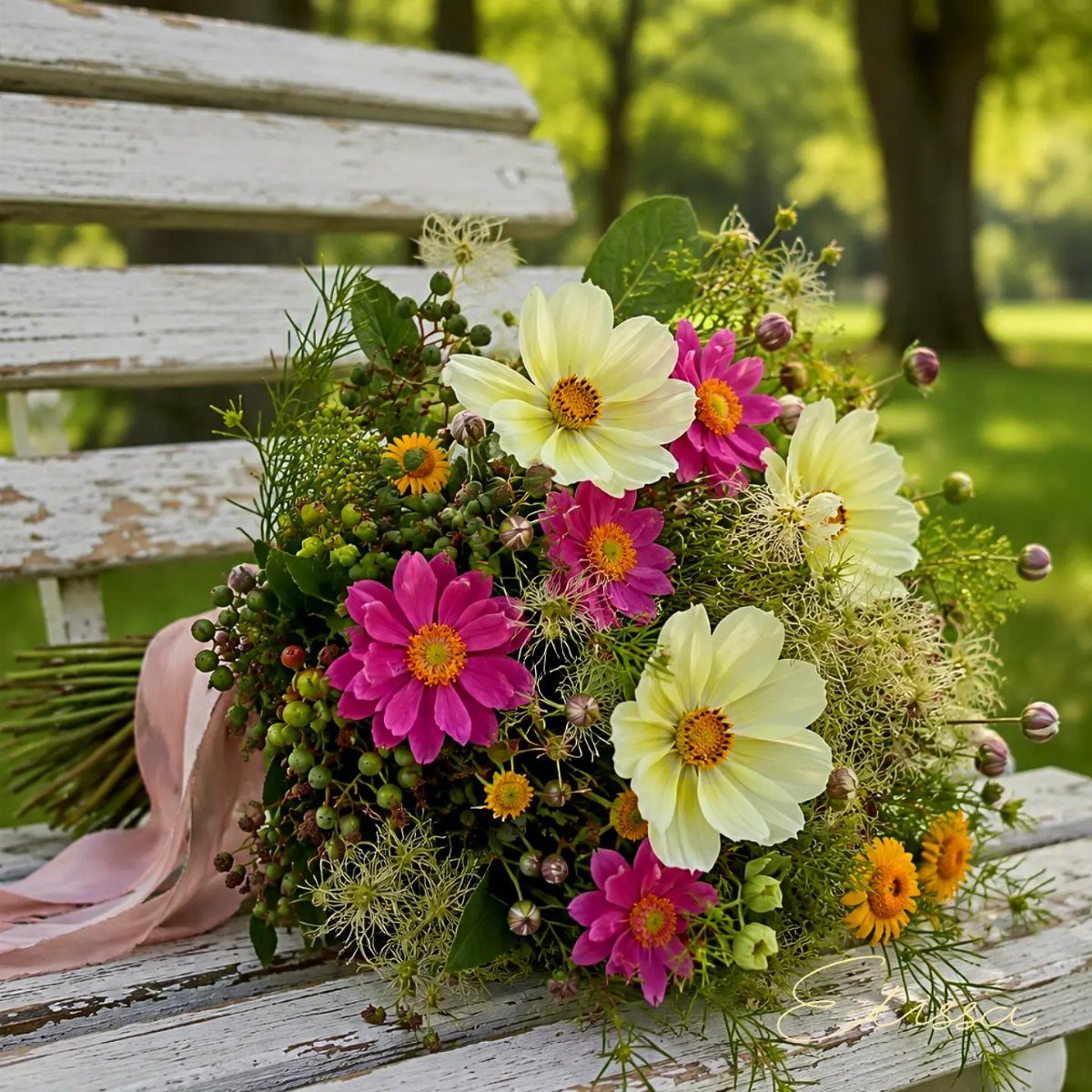
Small seasonal bunches cost less because the flowers are abundant, not because they look cheap.
Cosmos, zinnias, and daisies in summer carry color without the import markup of out-of-season roses or peonies; a pink ribbon ties the palette together without adding another flower variety.
A compact bouquet photographs better than a cascading one for outdoor ceremonies where wind is a factor.
Colors read differently against neutral surfaces; your bridesmaid dresses and venue walls matter as much as the blooms themselves when you choose a palette.
Gypsophila and simple greenery extend volume without adding cost. Order from your florist close to the date, not months ahead; seasonal availability shifts with weather and the exact week matters more than the month.
19. Mixing Textures
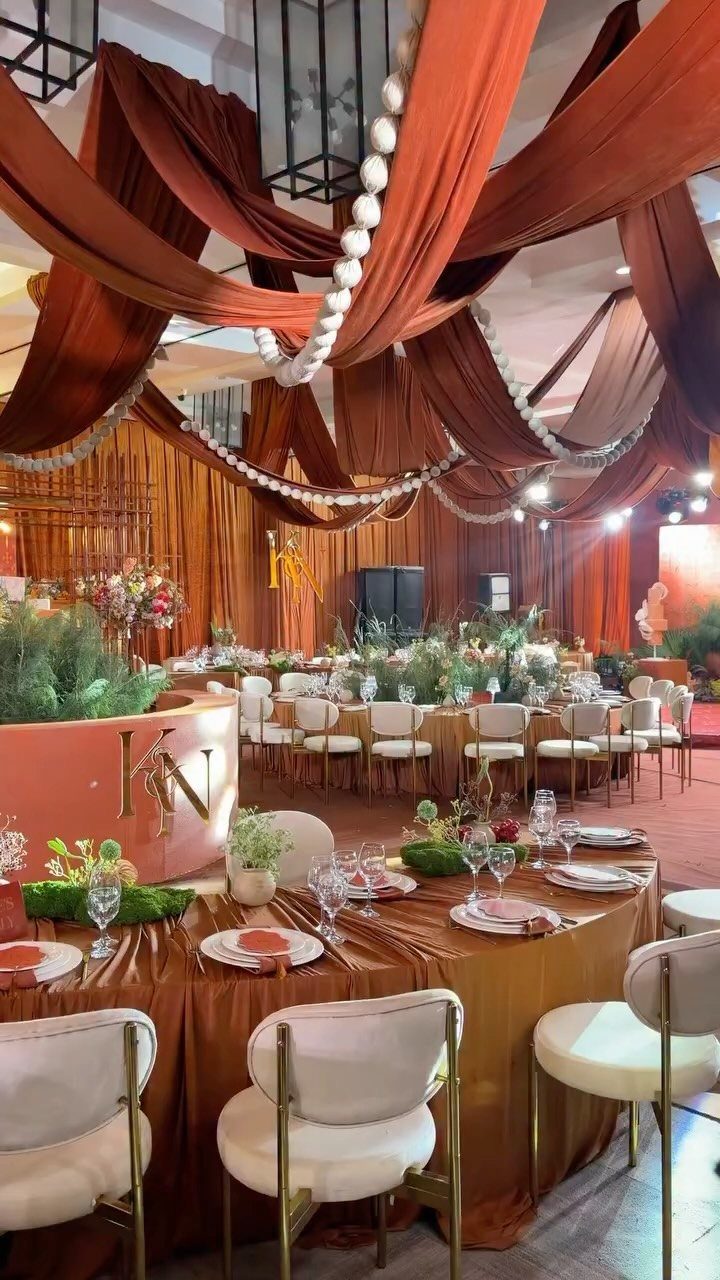
Rust velvet, pearl strands, and moss each do different work under the same light. Layering them keeps the eye moving so no single surface dominates; the ceiling reads as depth rather than color block.
Glass and metal catch light, fabric absorbs it, and living materials change as the evening goes on.
3 textures is usually enough; more than that starts to look like storage, not design. Keeping the palette to warm neutrals lets the materials compete on feel rather than hue.
For a budget version, swap the bead garlands for rented string lights and keep the draped fabric in one color family. The moss centerpiece scales down to a single table runner of dried materials.
Check that your venue allows ceiling attachments before you order draping hardware; some historic spaces restrict anything that touches plaster or molding.
Importance of Wedding Decor
Wedding decor does the same work a good portrait lens does: it shapes what people notice without them realizing it. The visual identity of the day starts the moment guests arrive and carries through every photograph they take home.
I think of atmosphere as the part guests feel before they name it. Warm light, unified textures, and intentional spacing make a room feel considered rather than filled.
Guests linger longer in spaces that invite them in, and the photographs from those evenings show it: relaxed shoulders, actual conversation, bodies angled toward each other rather than the exits.
The best work I have seen does not mean the most objects. It means the details that belong together, chosen once and repeated until the room holds a single idea rather than a collection of them.
Wedding centerpieces have the potential to be the true aesthetic highlight of a celebration.
— Vogue
Budgeting for Decor
Prioritize what guests see first and remember last. Two striking displays at the ceremony entrance cost the same as scattering minor details across twenty tables, and the photographs will prove which choice mattered.
Items that move from ceremony to reception earn their cost twice.
Aisle florals become table centerpieces; altar candles reappear at the cake table. The budget stretches further when each piece works 2 shifts.
DIY materials can run higher than shop-bought equivalents and still read homemade under reception light, which is why I now ask couples to price out both before they commit.
A few well-chosen purchased pieces often look more elegant than many crafted ones that consumed weekends and still did not match.
Before buying supplies for a project, price the finished version: the gap is often smaller than the time is worth.
Small items go unnoticed.
Guests remember the entrance, the meal, and the send-off. Spend there.
Utilizing Venue Features
Your venue already made choices about architecture, color, and light. Treat them as assets rather than obstacles to cover.
Ceiling height matters more than most couples expect. Covering a feature and then adding decoration to replace it is paying twice for one result.
Existing furniture, built-in bars, and natural sightlines toward windows or gardens give guests a sense of place that rented props cannot replicate.
I have shot weddings where the couple spent nothing on wall decor because the venue’s stone did the work, and the photographs carried a weight that fabric never achieves.
Look at what the space offers before you plan what to add. The best decor amplifies what is already there.
Frequently Asked Questions
How to look elegant and classy in a wedding?
Elegance comes from restraint and repetition, not excess.
Focus your budget on areas guests actually notice: the ceremony backdrop, entrance, head table, cake display, and dance floor. Repeat the same colors, materials, or floral elements across those spaces rather than decorating every surface differently.
A single variety of flower grouped together looks more deliberate than an arrangement of mixed stems; plain white plates beside gold utensils read as formal from the contrast between the two, not from the price of either piece.
What are the wedding decor trends for 2026?
The direction points toward sustainable choices, personalized details, and lighting that shapes atmosphere.
Fabric draping gathers cavernous spaces to human scale, fairy light canopies turn open lawns into defined rooms, and custom dance floor patterns connect to lace or invitation design in ways guests sense without naming.
Local sourcing for florals and resale glassware that resells after the wedding stretch budgets while cutting waste.