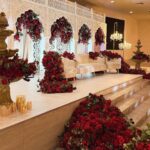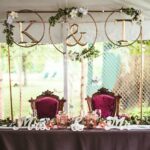
A backyard wedding runs from a careful budget under $10,000 to the same spend as a ballroom with twice the coordination, and the right idea depends on whether your yard is flat enough to stake a tent or sloped enough to need a platform.
The wooden frame arch that photographs beautifully will lean on soft turf, which is why the rental company sends someone to walk the slope before you sign anything.
1. Food Trucks
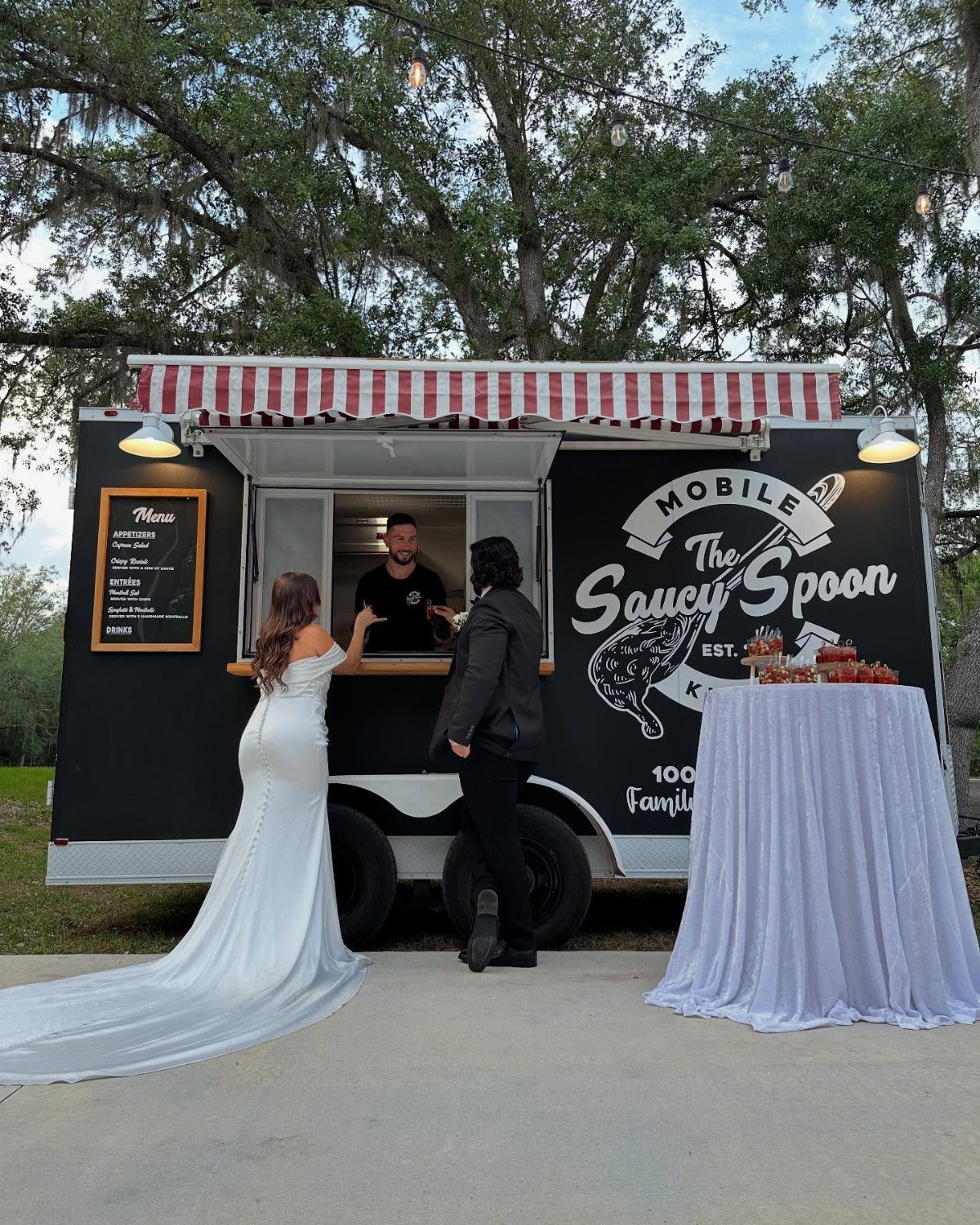
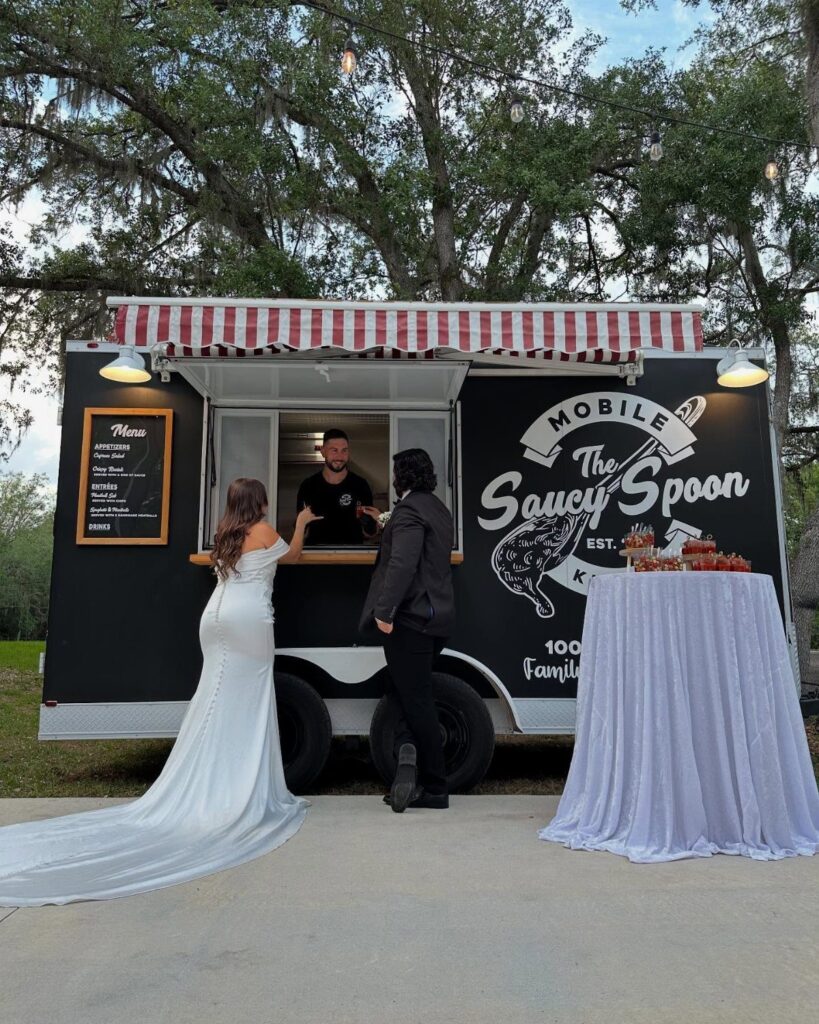
A food truck parked at the edge of your yard turns dinner into something guests remember without you touching a warming tray.
I like this option because the truck brings its own kitchen, its own staff, and its own cleanup; you skip the rental quote for buffet tables and serving pieces entirely.
Ask local trucks early. Most book festivals and corporate lunches months out, and a wedding is a longer shift than their usual circuit.
Confirm they will serve from the truck itself rather than setting up a separate buffet line, which defeats the purpose. One truck typically feeds guests at a reasonable pace; for larger counts, book two.
2. Tables, Chairs, and Tents
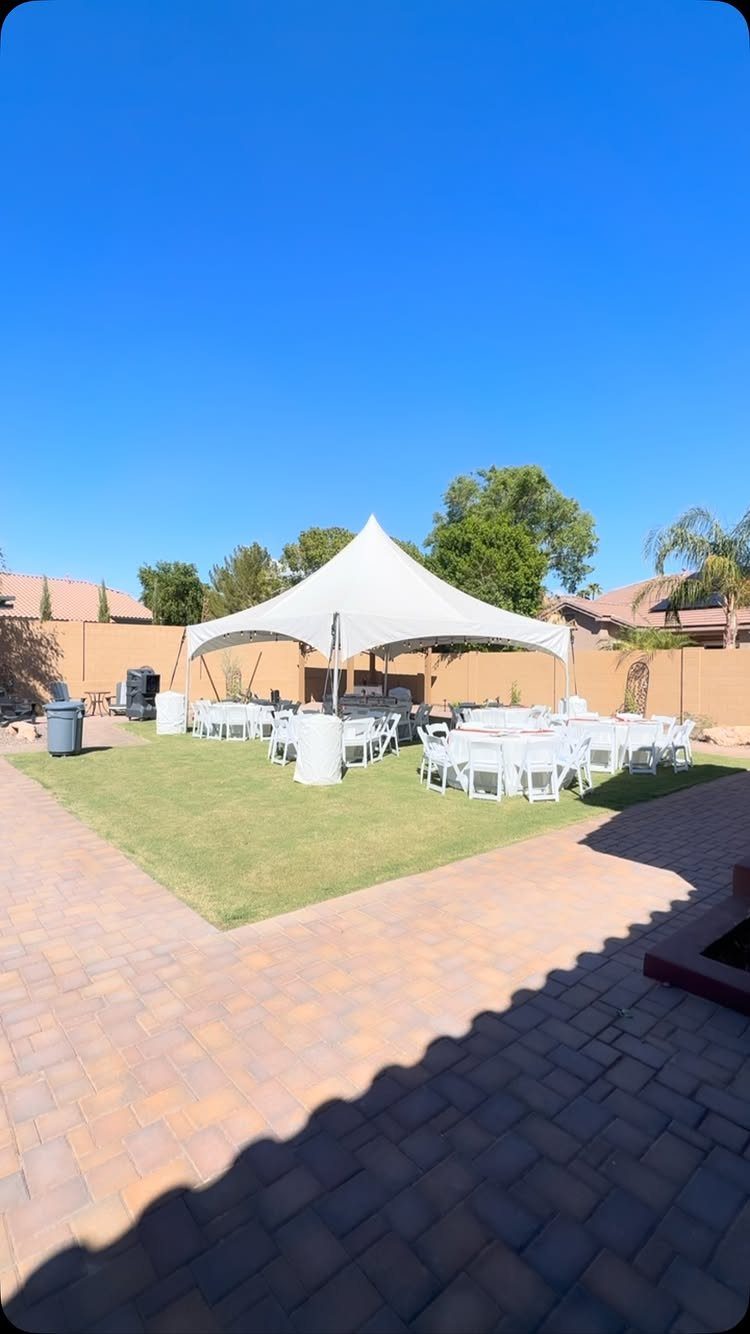
Rentals are where a backyard wedding stops looking like a bargain. A tent alone runs $1,500 to $5,000 depending on size and whether you need sidewalls or flooring, and that is before chairs, tables, and the plates guests eat from.
A good rental company sends someone to walk your yard before you sign anything. They measure slope, check where stakes can go, and spot the tree branch that will tear a tent roof in a storm.
That site visit is free and it saves you from being the person who guessed wrong on tent size. Bring your caterer or planner along if you have one; they know questions you do not.
3. Appetizer Buffet Table
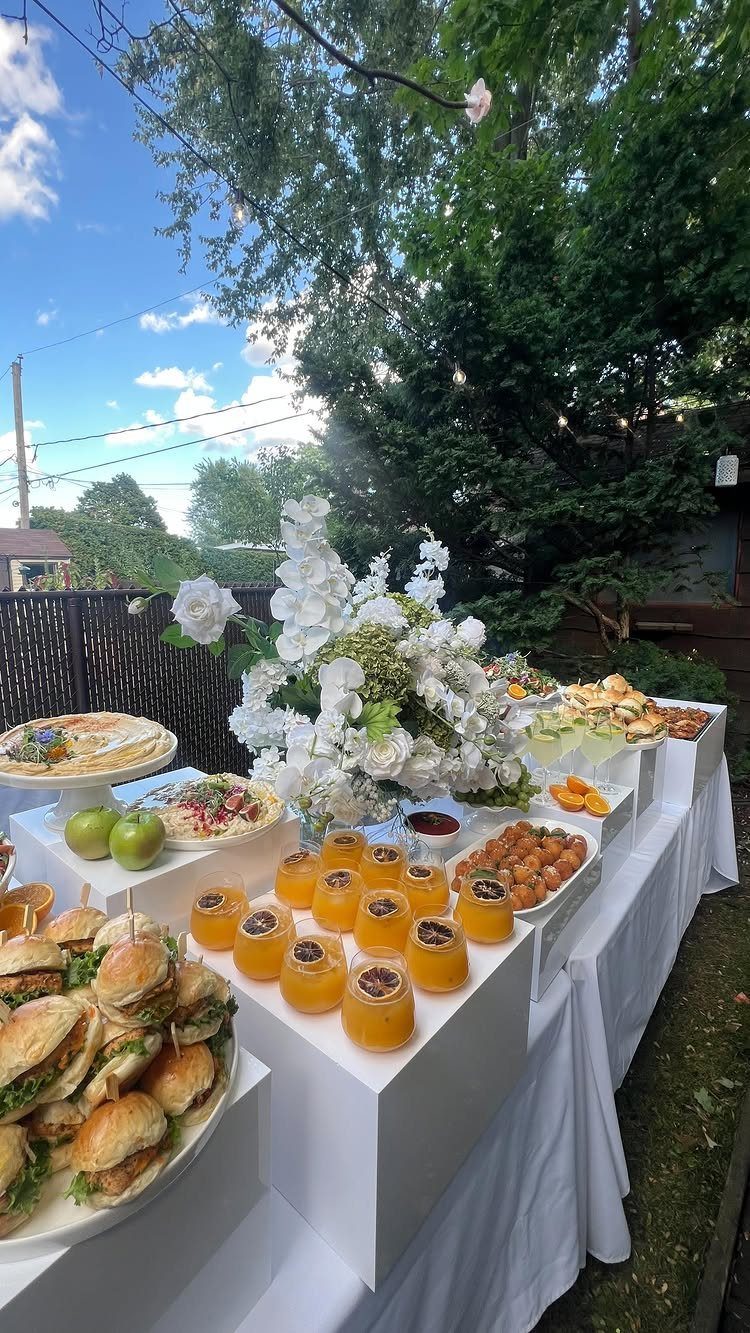
Pedestals of varying heights keep a buffet table from looking like a cafeteria line.
You stack mini sliders and fruit skewers at one level, pour drinks from a slightly lower shelf, and let a single large arrangement do the visual work instead of spreading small decorations everywhere.
For a backyard setup, I would choose acrylic or metal pedestals over anything ceramic. Grass is softer than it looks, and a wobbly table under a white pedestal is a fast way to lose the flower arrangement.
If you are doing this yourself, gather the stands a week ahead and test the layout on your actual table; spacing that looks right in your head often needs more room between plates.
4. Live Outdoor Grilling Station
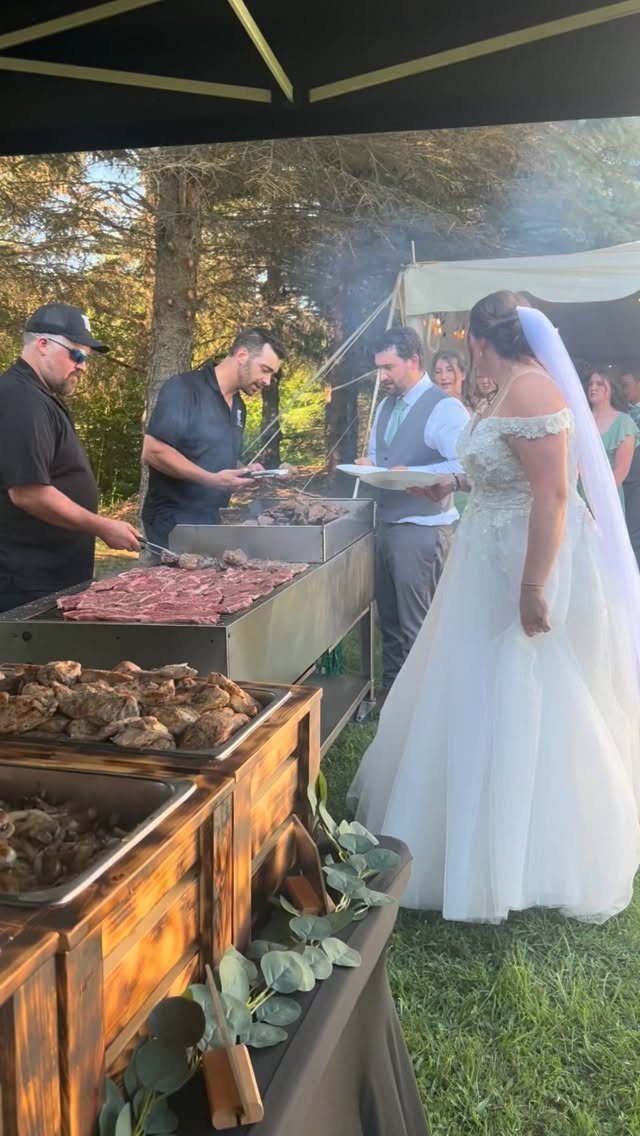
An open grill lets guests smell dinner before they taste it, which is something no plated salad course can replicate.
The setup needs more than the grill itself: a canopy overhead for the cooks, a cleared path from grill to table, and enough square footage that smoke drifts away from seated guests rather than toward them.
Your home kitchen is not built for this volume. Even a generous backyard grill fits only so many steaks at a time; for a full guest list, you need multiple cooking surfaces or a caterer who brings them.
I have seen hosts try to supplement with their own Weber and spend the whole reception hovering over coals instead of talking to anyone. Rent the equipment or hire the hands.
5. Backyard Ceremony Arch
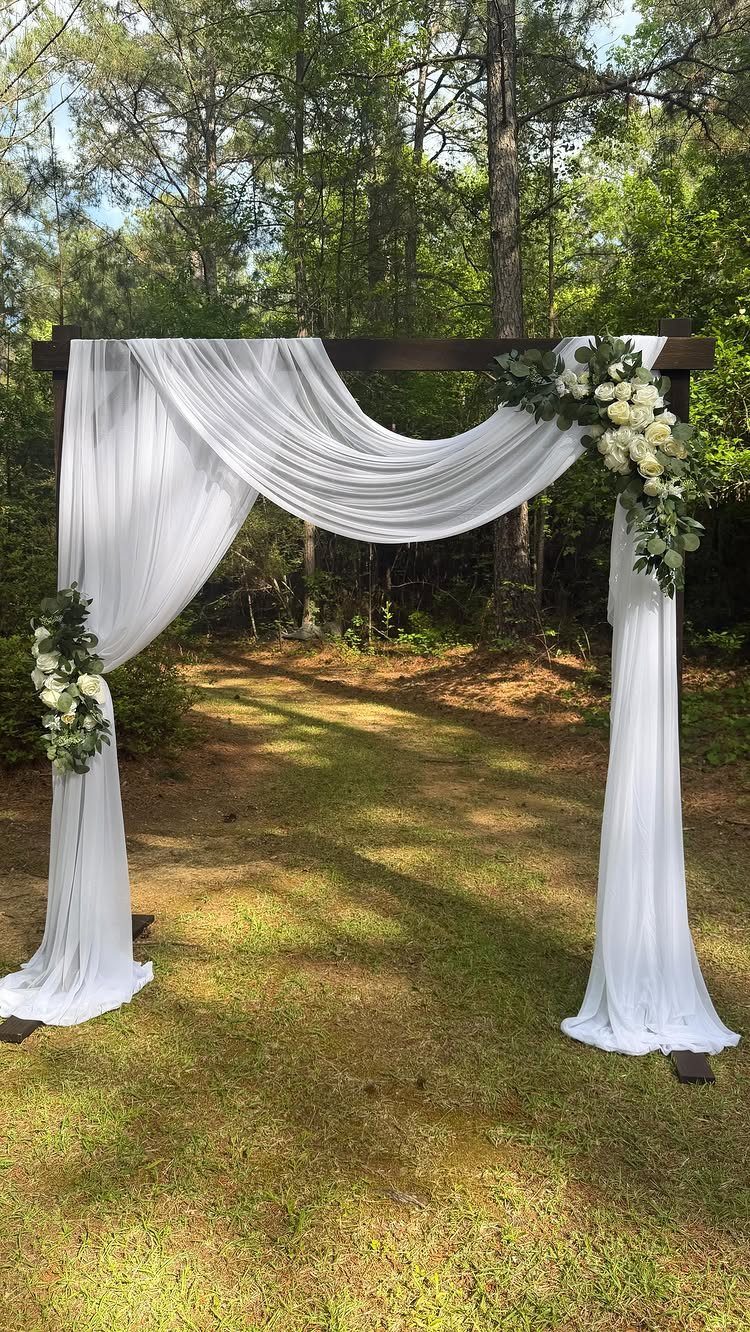
A wooden frame arch gives the ceremony a focal point where otherwise there is only lawn and fence.
Check the ground before you commit to this shape. A rectangular frame needs level footing or it leans; one leg sinking into soft turf ruins the photograph and the moment.
If your yard slopes or holds water after rain, build a temporary platform or choose a lighter metal arch that stakes down instead. Fabric and flowers are the easy part; stability is what you solve first.
6. Draped Canopy Entrance
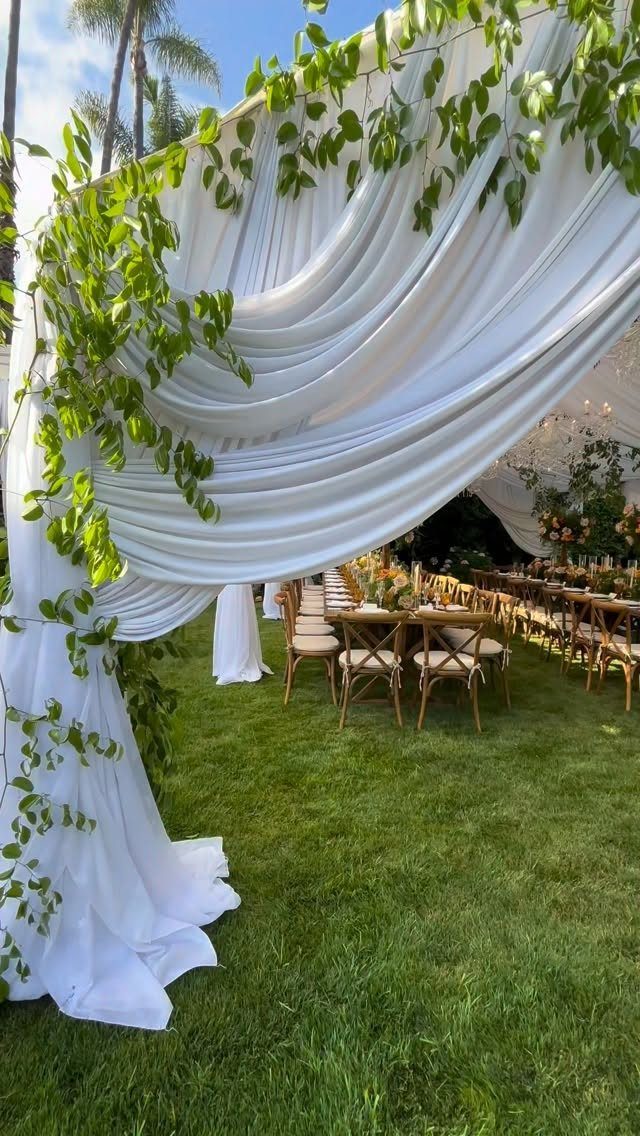
Fabric draped over a tent entrance turns a functional opening into the first thing guests see when they arrive.
This works best when the entrance faces your house or a hard surface guests walk in on. Fabric trailing in wet grass stains fast and trips people in heels.
Secure the drapes to the tent frame itself rather than hanging freestanding; wind in an open yard shifts constantly, and a collapsed entrance arch is a memorable greeting for the wrong reasons.
Test your knots the morning of, then test them again an hour before guests arrive.
7. Plan for Alcohol Service
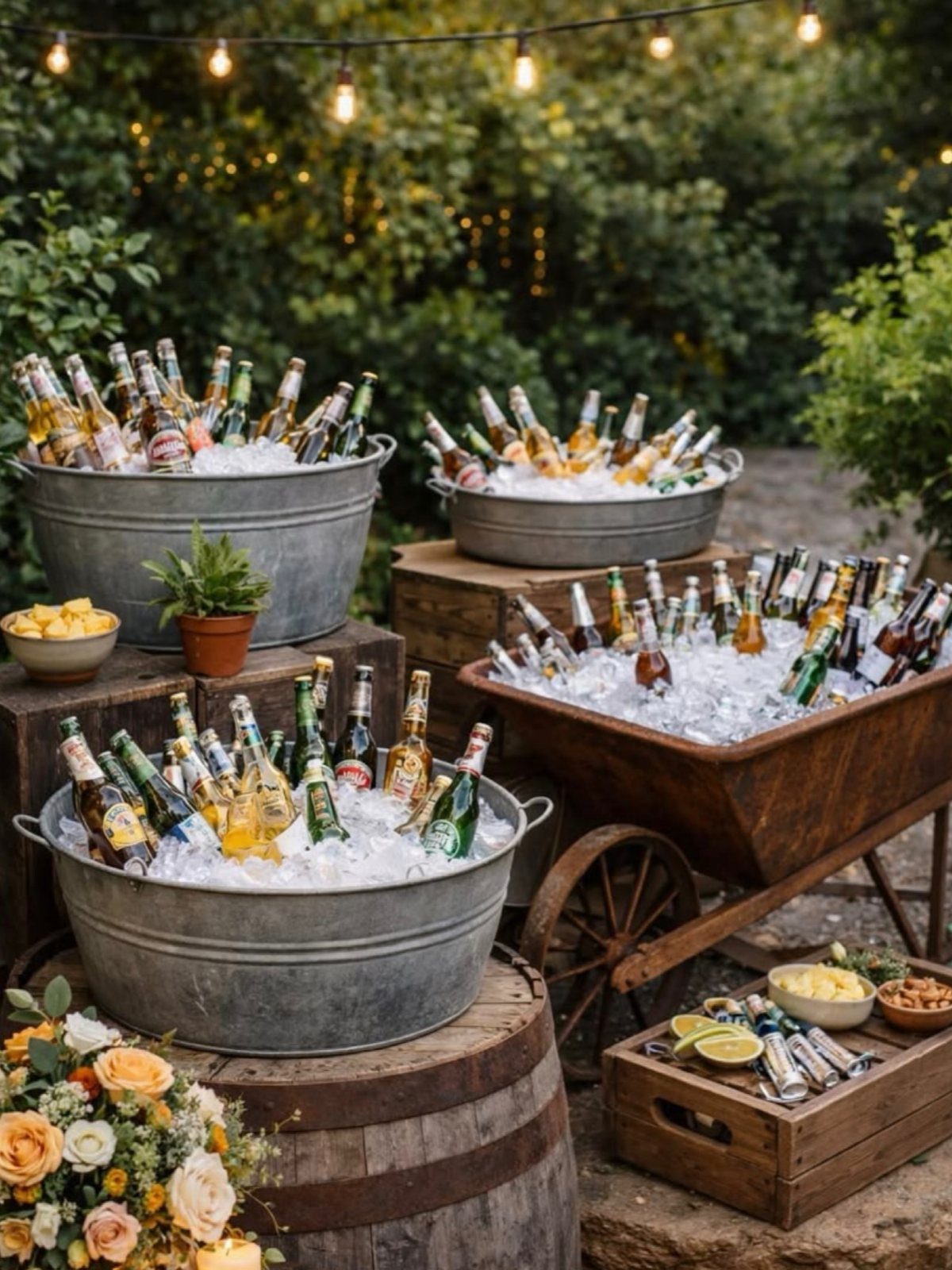
A drink station built from wooden barrels and metal tubs keeps beer cold without renting a full bar setup.
This is the cheapest route for alcohol at a backyard wedding; you buy the bottles, pile the ice, and guests help themselves.
BYOB cuts cost but shifts work to someone in your family, usually the person who should be celebrating. A hired bartender costs more and checks IDs, which matters if your crowd runs young.
Some local bars will staff an outdoor event for a flat fee plus stock; call early, since weekend wedding season overlaps with their own busy nights.
Whatever you choose, count the ice heavy: summer tubs melt fast, and lukewarm IPA is a hard memory to shake.
8. Lighting Setup
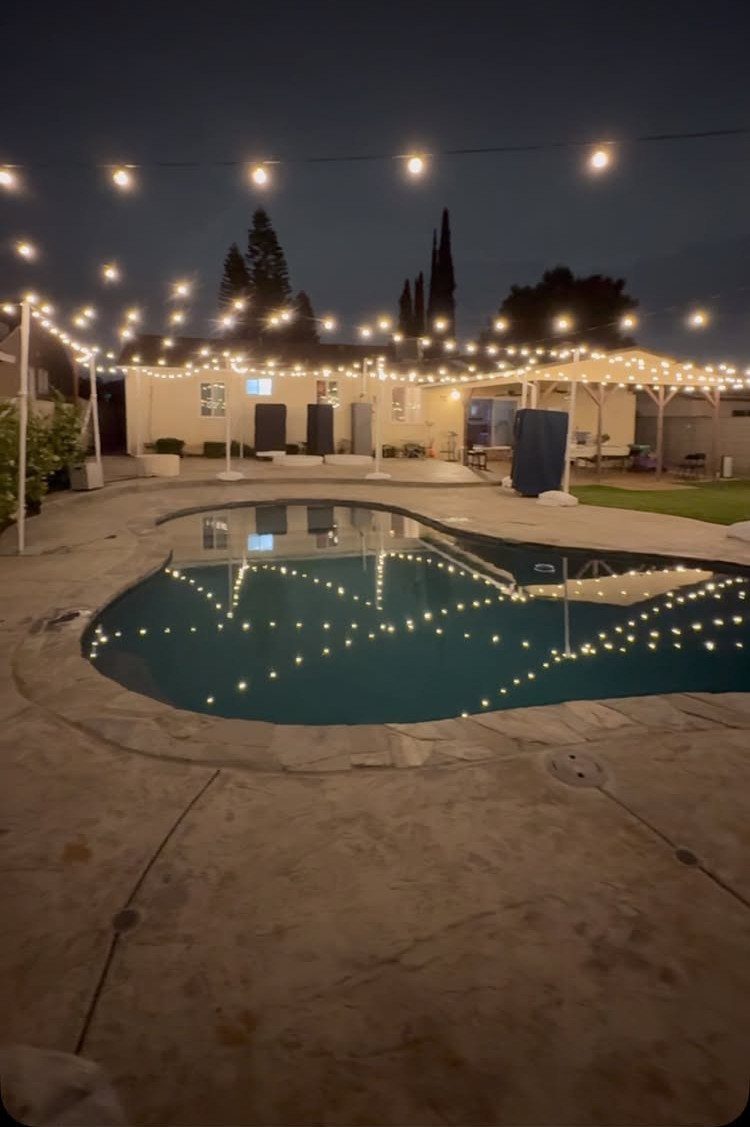
String lights strung over a pool and patio give a backyard the feel of a permanent venue without building one.
Start with string lights crisscrossed above the space guests actually use; it is the most reliable pattern for turning a yard into a room after dark.
Candles need enclosures; wind in open yards blows out tapers and knocks over tall ones. Solar path lights along walkways to parking and restrooms look decorative and keep guests from stumbling in the dark.
A generator becomes necessary if your house outlets cannot handle the load; test the circuit before you rent one, not after guests arrive.
9. Family Photos, Memorabilia, and Custom Signage
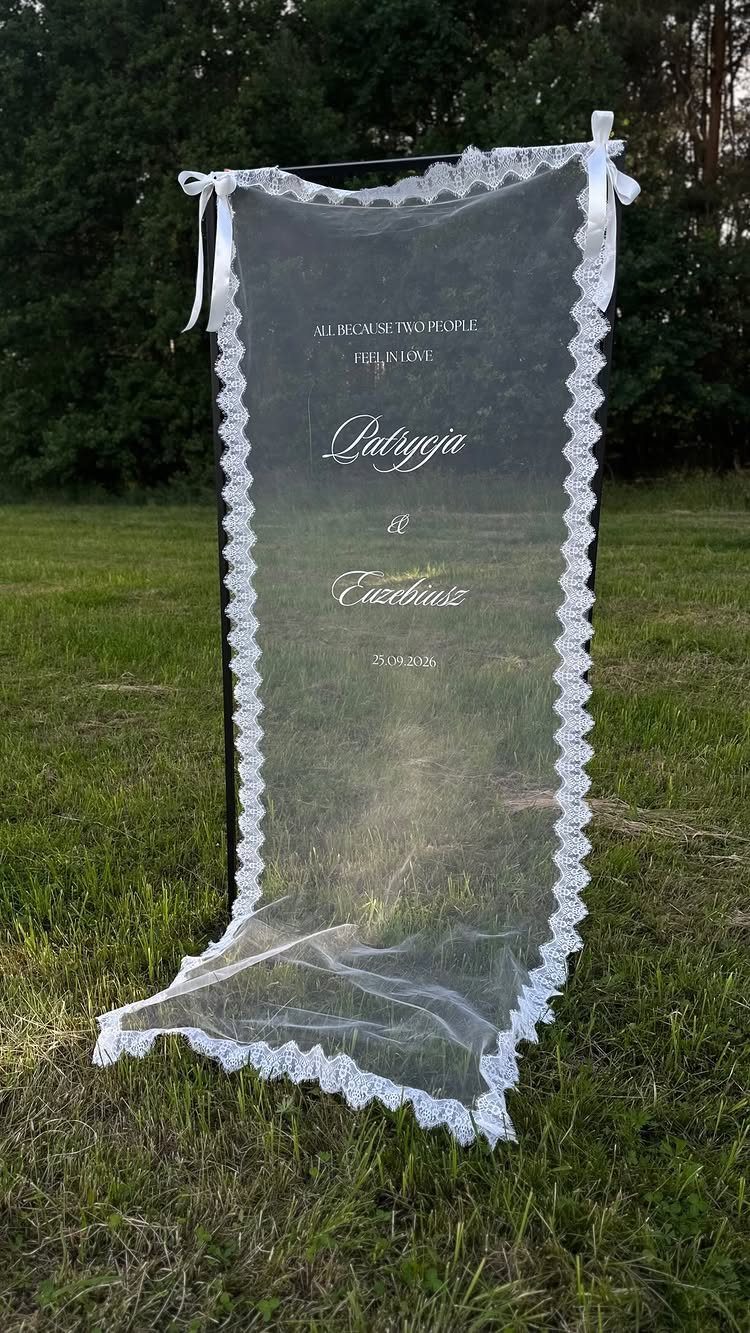
A printed veil hung as a sign turns family history into something guests read as they walk in.
A fabric banner carrying names and a date looks considered rather than stuck on when the typeface matches the rest of the wedding.
I would use this same idea on a smaller scale: table numbers printed on old family photographs, or a welcome sign painted on a board from your parents’ first house.
Wedding china as place settings is lovely if you own it, but borrowed pieces break and insurance complicates. Signage is safer ground for sentiment; it does not leave the table.
10. Incorporate Games
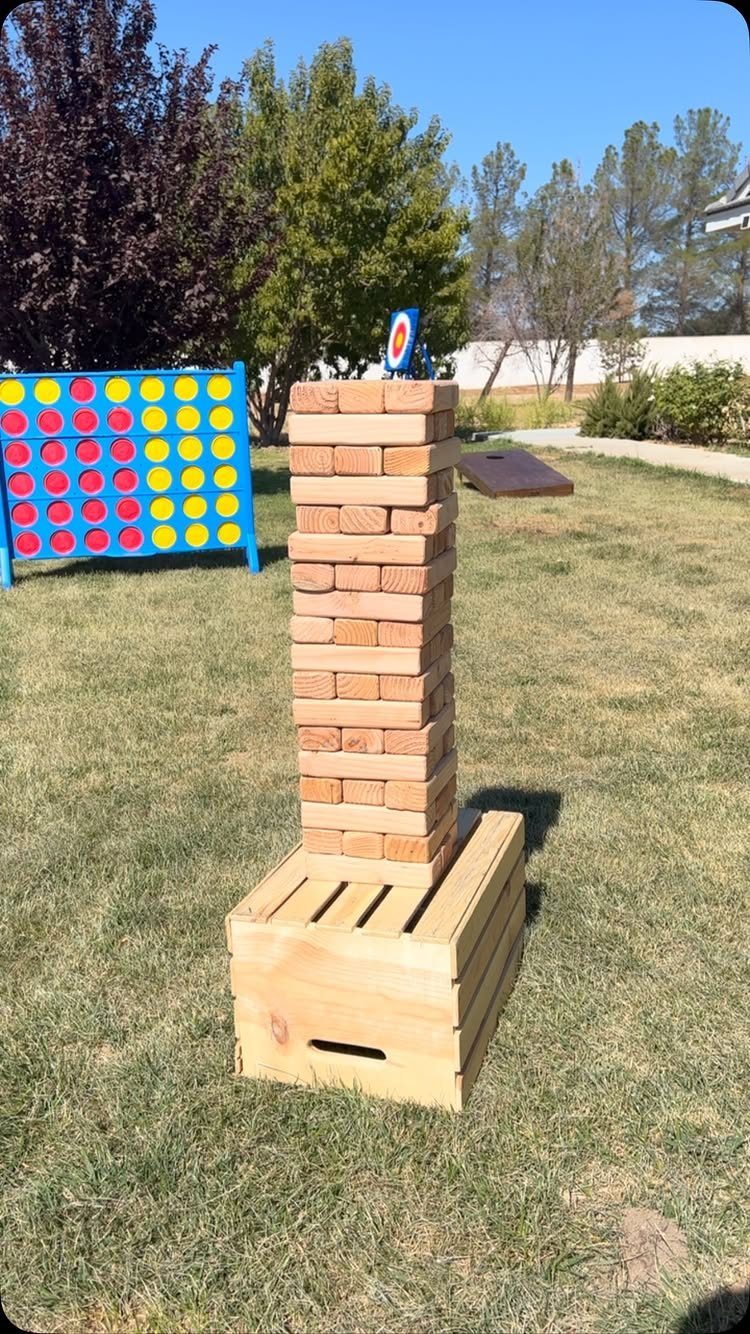
Giant Jenga and an oversized Connect Four board give guests something to do with their hands while the couple finishes photographs.
Lawn games large enough to be watched from a chair are the right scale; pocket-sized card games disappear into purses and never come out.
Cornhole works at any backyard wedding because the bags fly straight and the boards store flat.
I would set games near the edges of the space, not in the center where they block traffic to food and drink. One warning: competitive guests get loud, and the ceremony arch is probably not far enough away.
11. Dance Floor
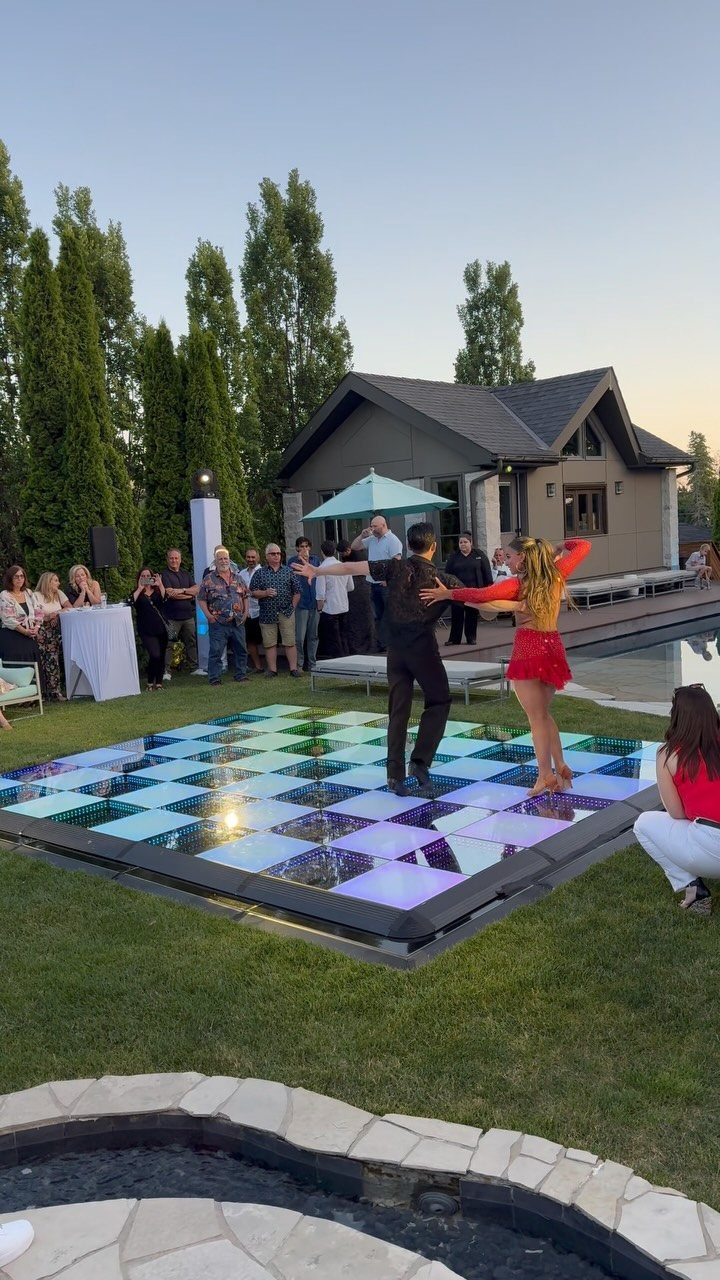
A checkered LED floor dropped on grass gives dancers a level surface and gives photographs a focal point that grass alone cannot provide.
The rental costs more than asking guests to wear wedges, but heels still sink in lawn even with protectors, and Rescue Flats or borrowed flip-flops create their own problem of mismatched shoes in every frame.
Your house patio, if it is large enough, avoids the rental entirely.
If not, event flooring comes in sections that lock together; order early, since summer weekends book out. An LED dance floor adds its own light, which helps if your string lights do not reach that corner of the yard.
Budget Considerations
A backyard wedding only saves money if you treat the yard itself as the venue and nothing else.
The average careful couple spends around $10,000, which matches a modest traditional venue; spend without discipline and you hit the same total with twice the coordination to do.
A good rental coordinator will size the tent, match fabrics to your vision, and catch the items you forgot.
Ask for a site visit before you book; they measure slope, check stake placement, and spot problems you will not see until setup day.
DIY Opportunities
The backyard itself is the personal touch; what you add should tell a story rather than fill space.
Start with a theme that fits the yard you have, whether that reads garden, bright party, classic black and white, or laid-back rustic, then build decor and lighting from there.
DIY works best on details guests encounter close up. Old photographs work as table numbers if you already own them, and a piece of barn wood from my grandfather’s shed became the welcome sign with only a router and stain.
Test any layout on your actual table a week ahead.
Home can be the ultimate sanctuary, tying together a sense of nostalgia, comfort, family, and one’s own design sensibility. So when choosing a wedding venue, it’s no surprise that backyard weddings happen to be a favorite amongst the stylish set.
— Vogue
Permits and Regulations
Check noise ordinances and permit requirements before you send a single invitation. The wrong paperwork means the wrong visitor in a uniform.
A door-to-door visit to nearby houses, with a small gift in hand, reduces the chance of a complaint call. Tell them when music starts and when it ends.
The conversation may feel awkward; a shutdown feels worse. Some jurisdictions require event insurance for gatherings over a certain size, and some neighborhoods have covenants that override local law.
Call your city clerk and read your deed restrictions; the answers belong to you, not to a vendor who may assume.
Weather Planning
Start with ideal weather and work backward on your date, then plan for everything else.
A tent on standby is not optional; tent posts can be wrapped with greenery so they read as design, not desperation.
Rain in the days before may require flooring if the ground softens, so keep that option available. Wind can be worse than rain; check the forecast for speed, not just precipitation, and secure linens with clips, not hope.
LED candles replace flame, and weighted menus or napkin rings keep paper from scattering. Parasols, umbrellas, and shawls on hand keep guests comfortable and double as gifts they will actually use.
Frequently Asked Questions
Can you have a wedding in your backyard?
Yes, and many couples do exactly that.
A backyard wedding trades venue restrictions for the freedom to set your own rules on timing, decor, and vendors. The intimacy of a familiar space usually outweighs the extra coordination of building a venue from scratch.
How much does a backyard wedding cost?
A careful couple spends around $10,000, which matches a modest traditional venue. The yard saves the venue fee, but everything else still bills: a tent starts around $1,500 and climbs past $5,000 before you add a single chair or fork.