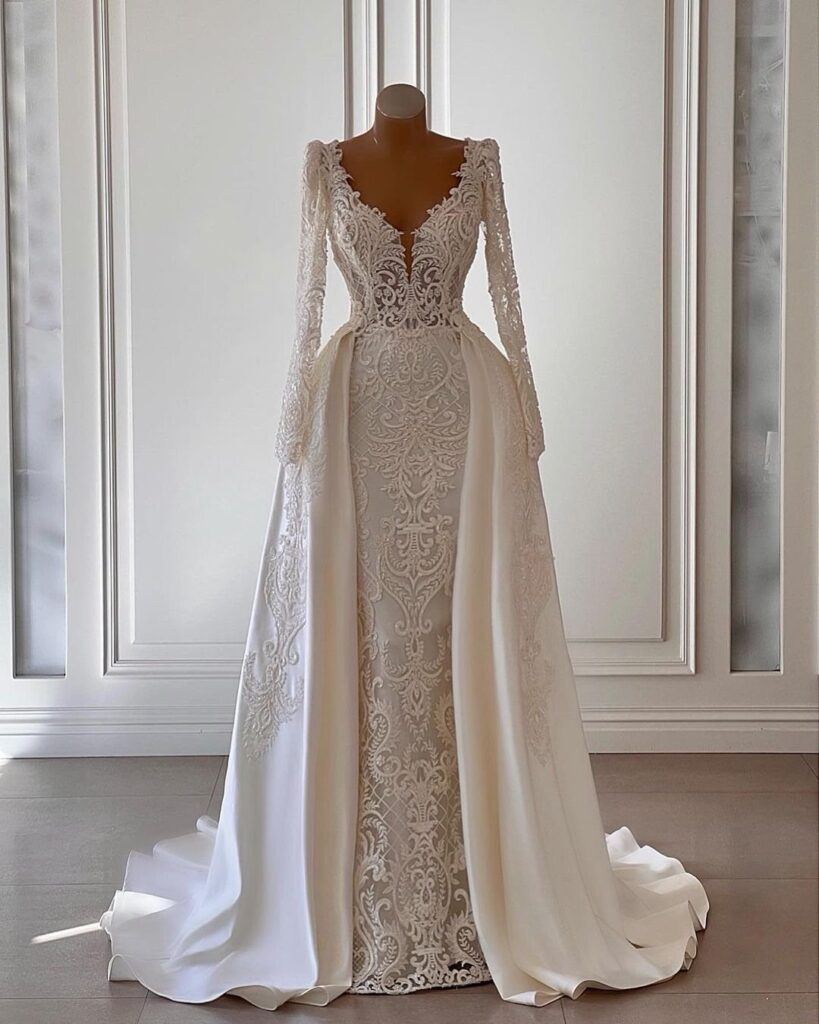
The tight lace wedding dresses here include a white floral lace gown, a mermaid cut, long sleeves, open and corset backs, a sweetheart neckline, sheer illusion panels, and a scalloped train, so the deciding factor is which part of the dress you want to do the work: the cut, the back, or the lace itself.
1. White Floral Lace Gown
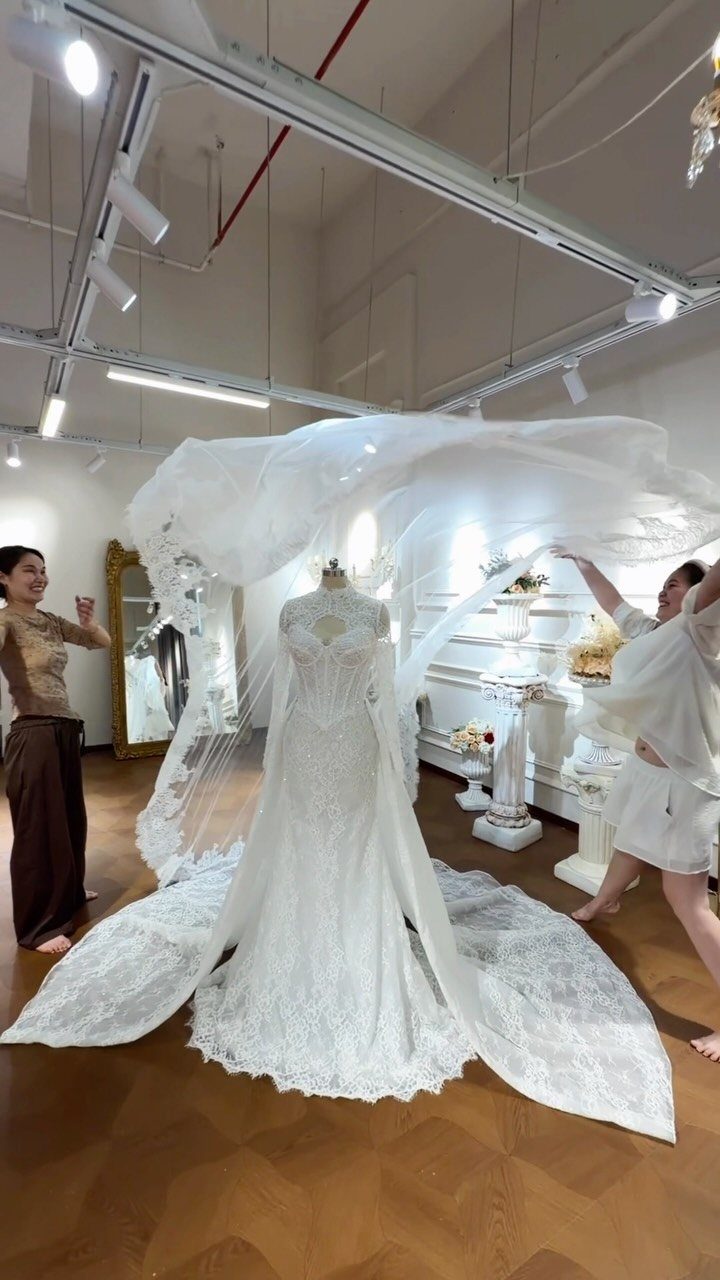
A white floral lace gown carries its pattern across the whole dress so the fabric itself does the work. The spaghetti straps and low V-back keep the line clean from a distance, then the eye catches the embroidery up close.
I like this for a bride who wants one statement piece rather than stacking accessories; the long train adds the drama without extra jewelry.
If you are ordering custom, ask whether the lace is appliquéd or woven in; appliqué sits higher and catches light differently in photographs.
2. Mermaid Gown
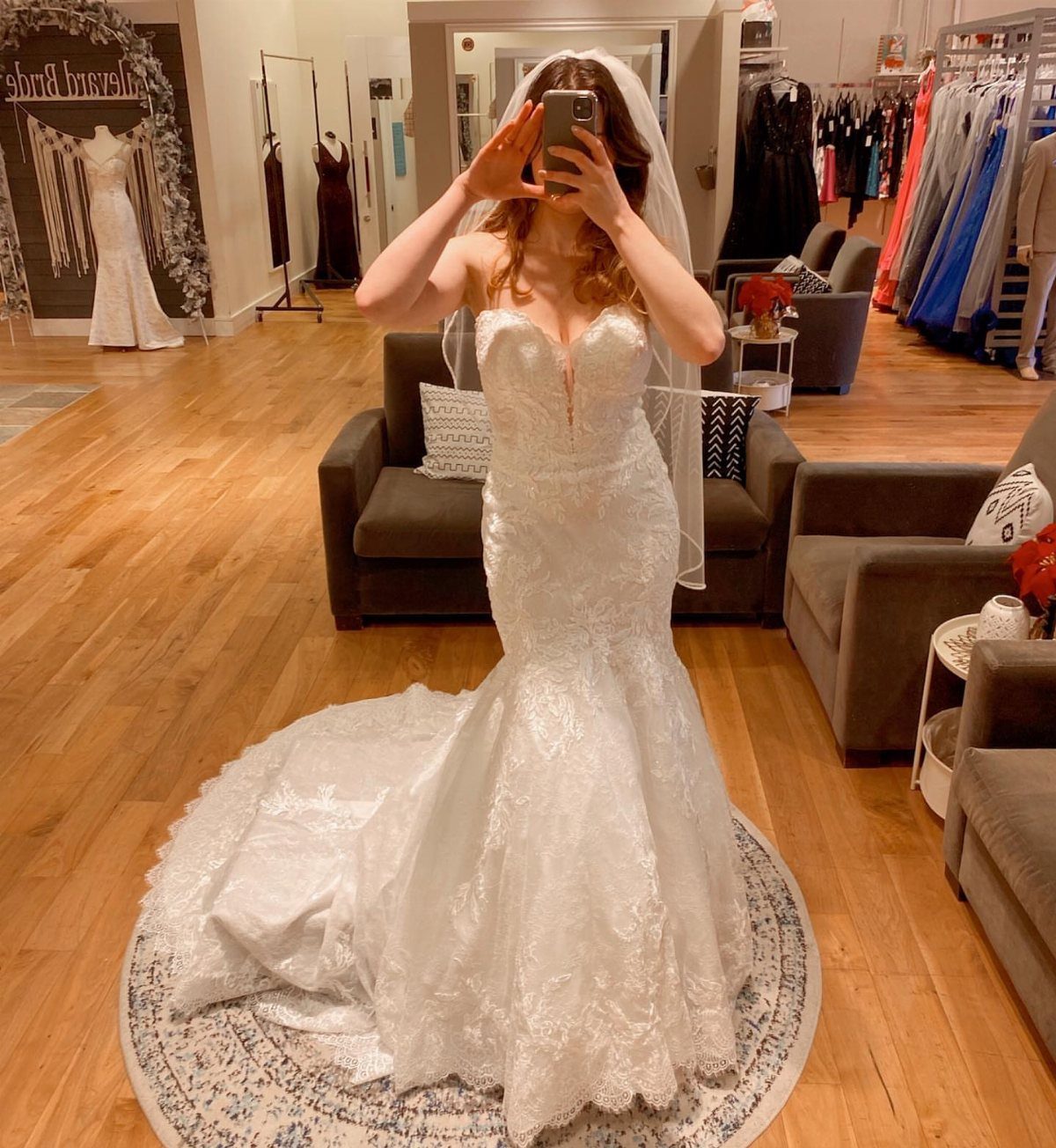
The mermaid cut holds tight through the hip and flares at the knee, which gives a fitted lace gown its structure.
Without that flare, the same lace would read as a column dress; with it, the silhouette carries you down the aisle with movement.
This shape asks more of the fabric than a looser cut, so check that the lace has some stretch or that the seam allowance lets you sit comfortably.
Intricate floral embroidery shows best here because the fitted panels give it a continuous surface to travel across.
3. Long-sleeved Lace Dress
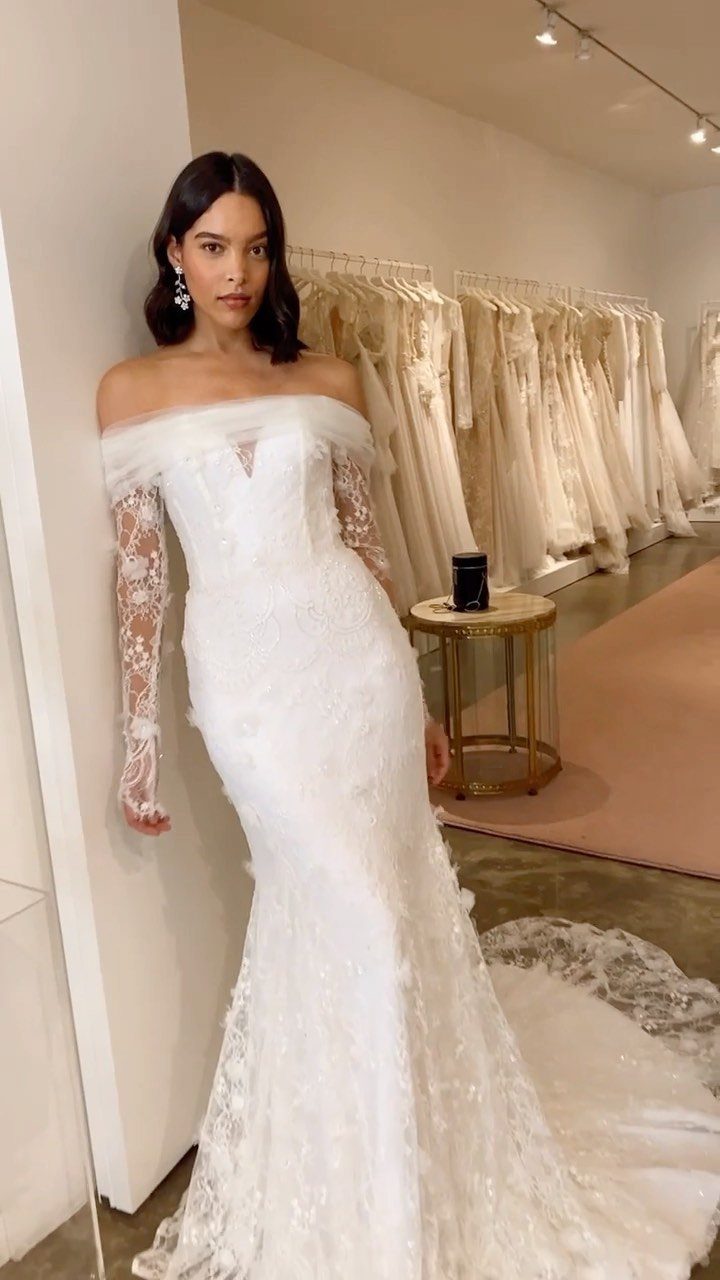
Long lace sleeves solve the problem of bare arms in a church or a November ceremony without throwing a jacket over the dress.
An off-the-shoulder neckline keeps long lace sleeves from reading as too covered up; a fitted bodice underneath holds everything in place.
One maker I ran across offers these as a separate 3D floral lace topper, which means you can wear the sleeved look for the ceremony and lose it for the reception without a full change.
If you go that route, confirm the attachment points will not show on the bodice underneath.
4. Open Back Design
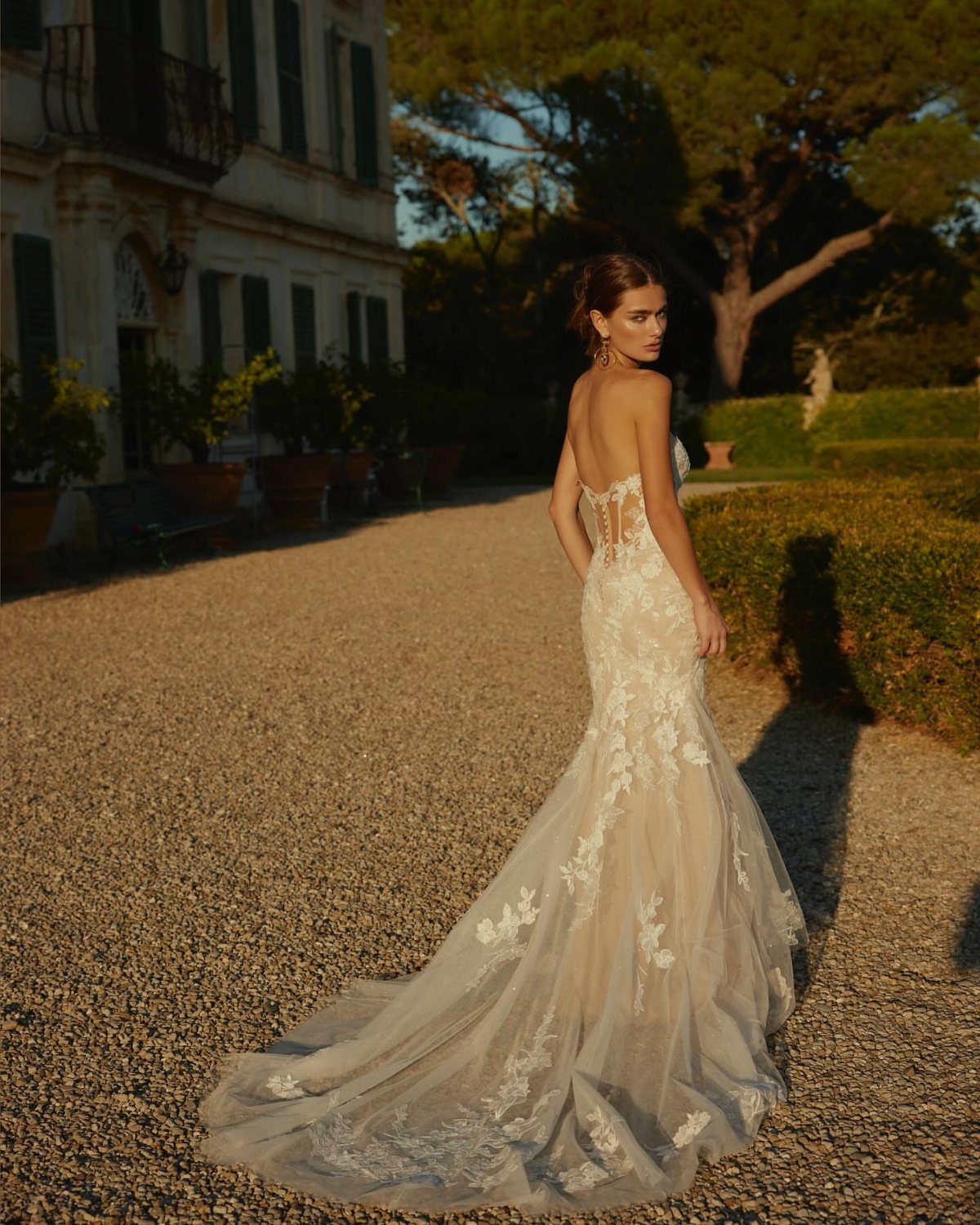
An open back in a lace gown trades the coverage of a high back for the line of your spine and the drape of the train from behind.
Corset lacing does double duty: it holds the fit snug and turns the closure itself into the detail. This works best when the front is relatively simple, so the back has room to be the moment.
Ask your photographer about timing; the open back reads best in the last hour of daylight or with a single soft source behind you.
5. Sweetheart Neckline
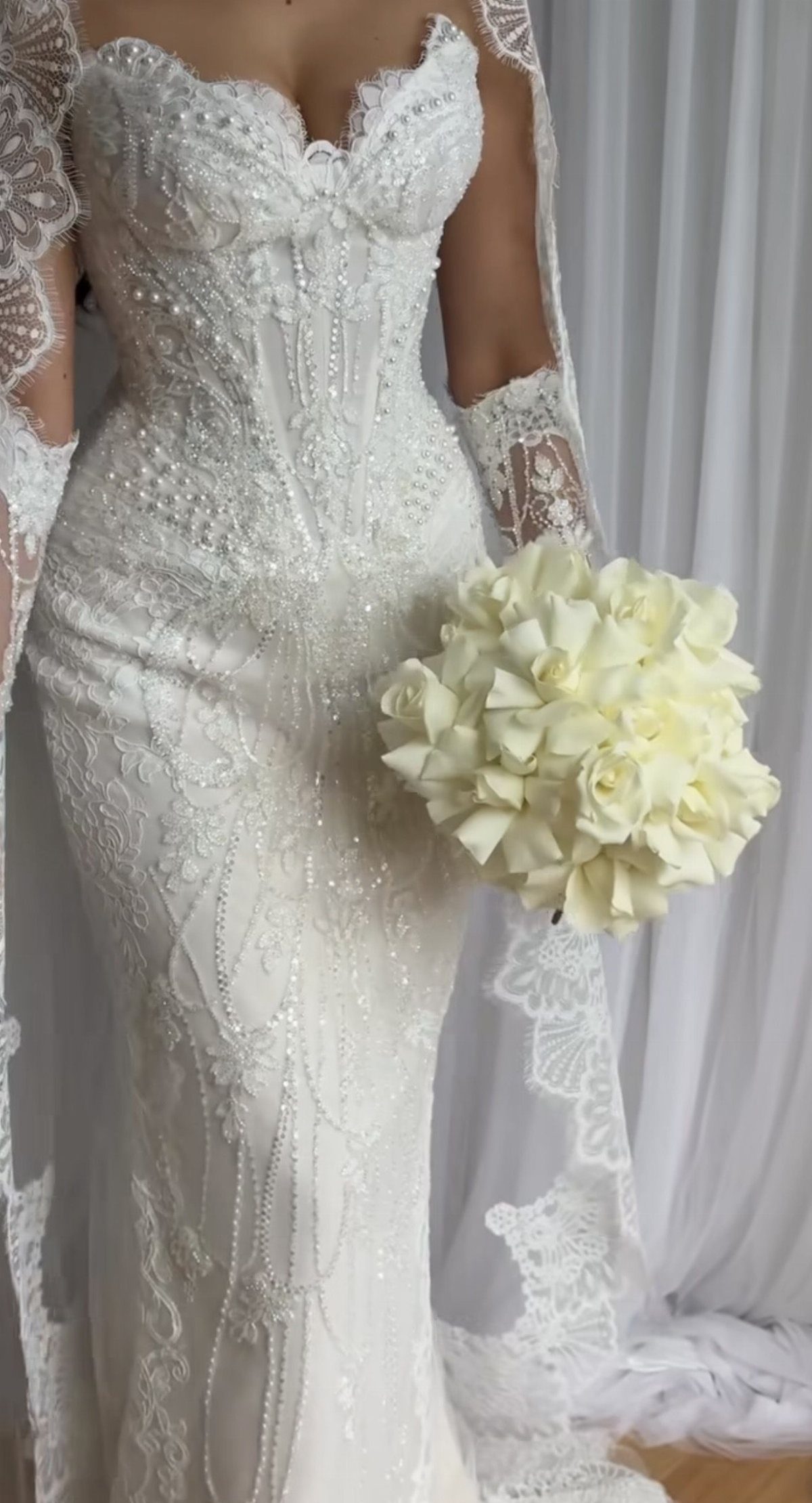
The sweetheart neckline dips to a point at center bust, which shapes the lace rather than cutting across it.
In a fitted gown this draws the eye up and in, giving structure to the bodice without a hard edge. Beading that sits right at the sweetheart curve lets the lace and the embellishment share the same arc.
I would choose this if you are carrying a simple bouquet; the neckline already holds enough detail that competing ornament feels like too much.
6. Corset Back
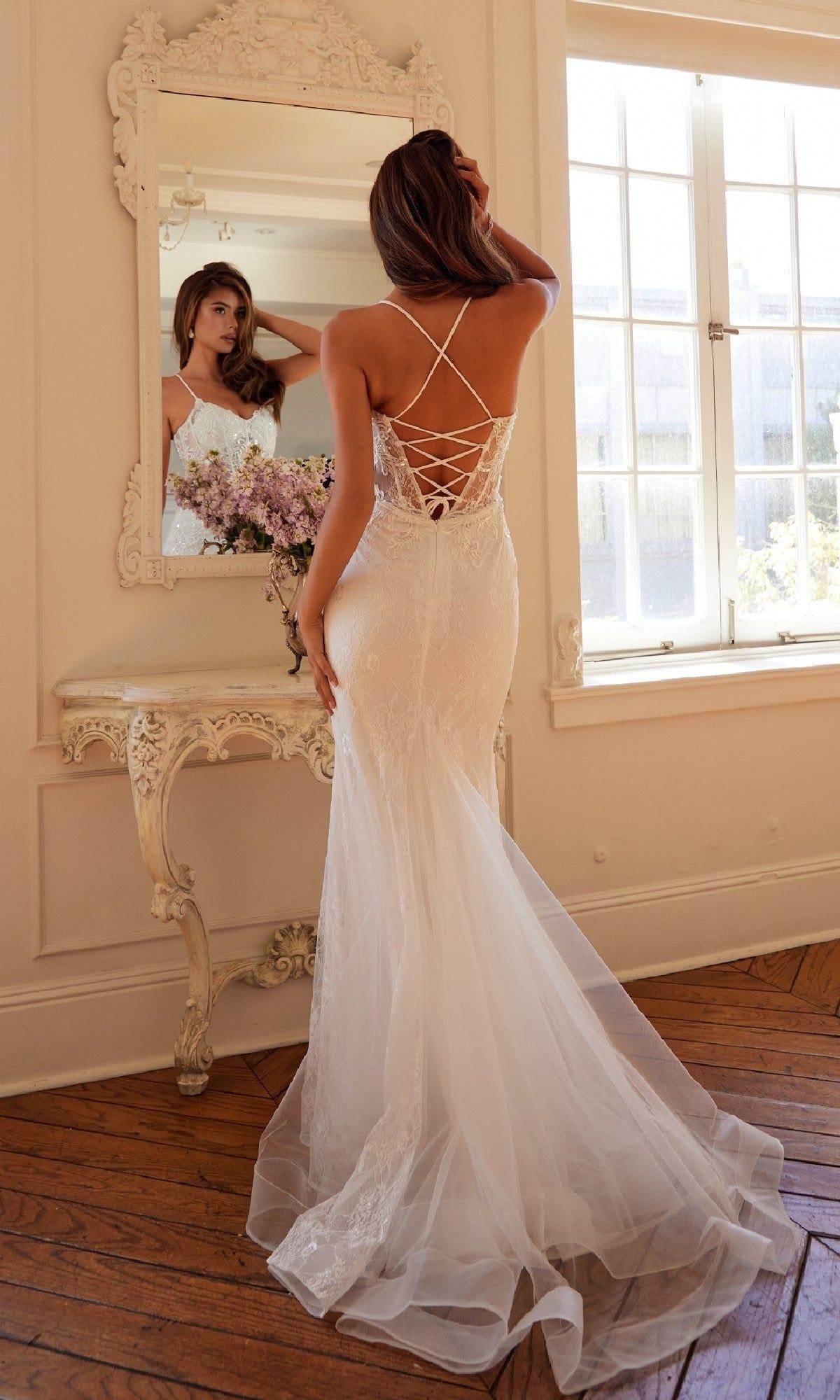
A corset back laces through eyelets so you can pull the fit tighter than any zipper allows, which matters in a lace gown with no stretch.
Satin ribbon running through ivory lace appliqués turns the functional part into the decoration.
This is the cut to choose if your weight might shift during engagement, or if you want to cinch the waist on the day itself rather than hoping the alterations guess right.
A lace-up back takes longer to fasten than a zipper; assign someone you trust to help, and practice once before the morning.
7. Sheer Illusion Lace Wedding Dress
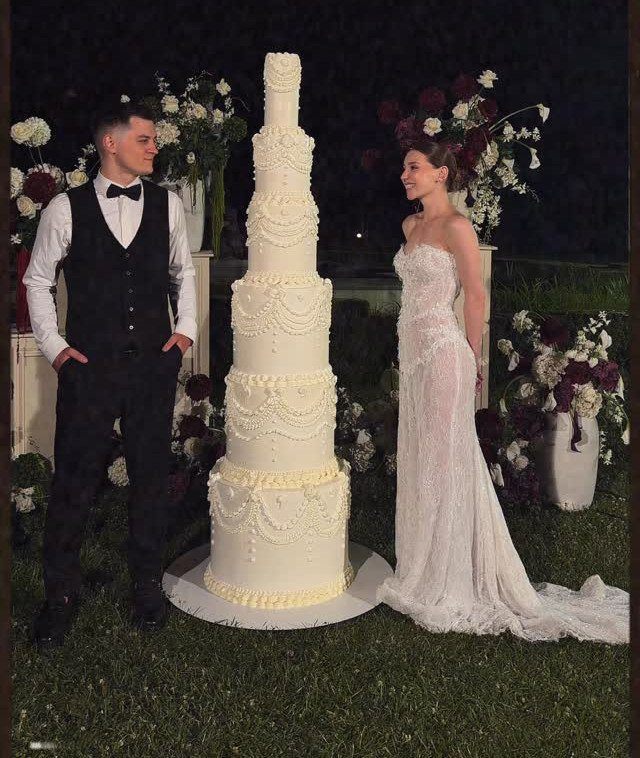
Sheer illusion lace lets the pattern sit on your skin rather than on a solid backing, so the gown reads as lace floating in place.
This suits a bride who wants coverage without weight; the tulle or mesh beneath holds the shape while the appliqués do the visual work.
In a fitted cut, check that the illusion panels align with your body lines, since there is no opaque fabric to hide a seam that lands wrong.
The 3D floral pieces from some makers sit higher and cast small shadows; if you are outdoors, that texture catches late light differently than flat lace.
Ask whether the appliqués are hand-sewn or machine-attached; hand work costs more but survives dry cleaning intact.
8. Scalloped Lace Train
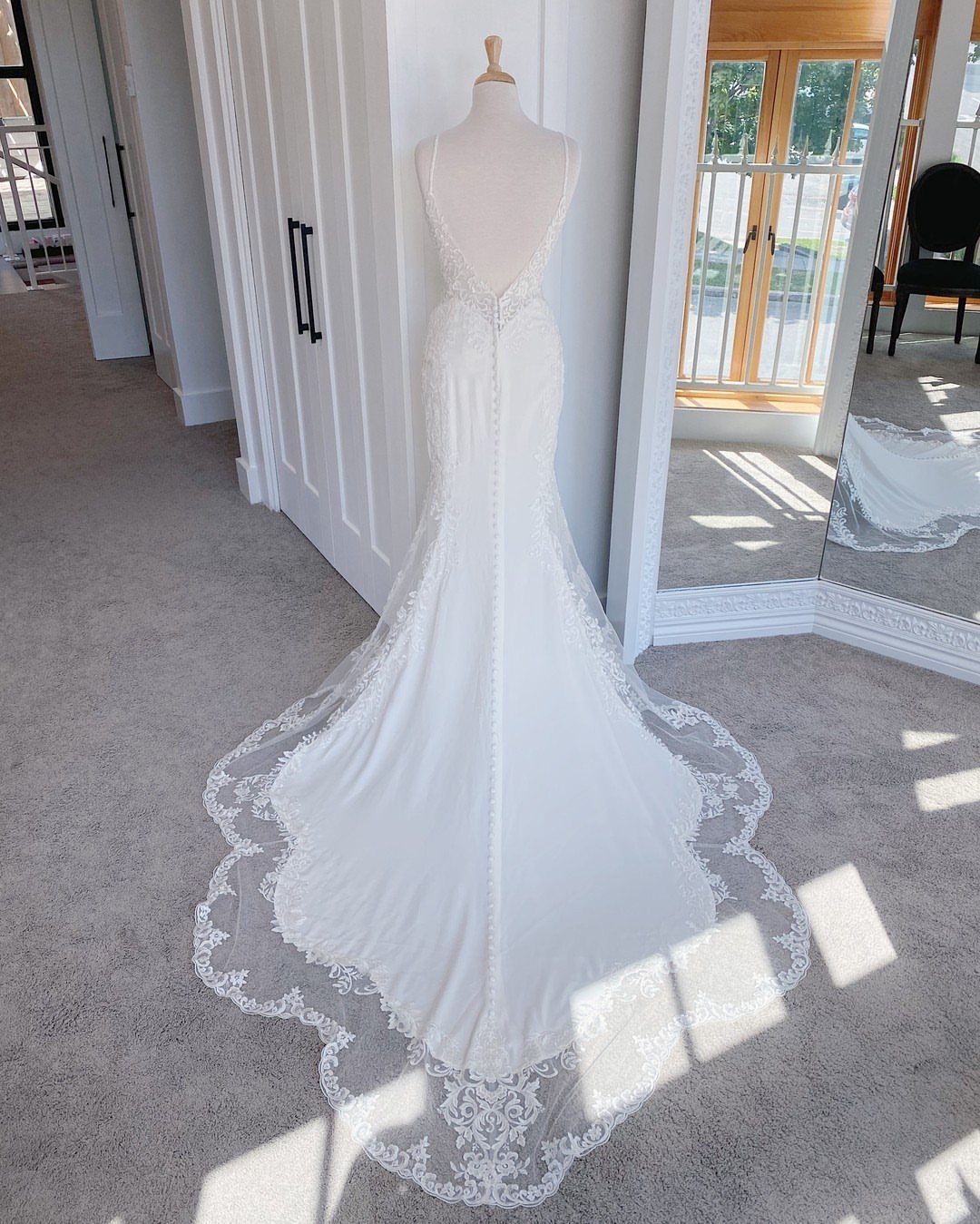
A scalloped edge on a train gives the lace a finished border that looks considered from behind as you walk and as you stand.
The curve repeats the shape of the lace motifs themselves, so the train does not end abruptly; it tapers.
This detail shows best on a fitted gown where the skirt is narrow enough that the train spreads cleanly on the floor behind you.
In a fuller cut, the scallops pile and lose their line. I would choose this for a ceremony with a long aisle or an outdoor processional where guests will watch you move away from them.
The edge takes abuse from floors and heels; confirm your bustle points lift the scalloped border clear of the ground for dancing, or budget for a post-wedding trim of any frayed points.
Current Wedding Dress Trends
Fitted silhouettes are where the attention is right now, and lace is the fabric brides keep choosing to build them in.
I see the same combination turning up repeatedly: white floral lace laid over nude mesh or tulle, cut close through the body with a low back and a long train that carries the pattern behind you.
Spaghetti straps paired with that low scooped back give the neckline a lighter feel than heavier lace work used to have.
What marks these 2027 directions is the willingness to let the lace itself be the only decoration; the cut does the shaping, the overlay does the detail, and the bride does not add much else.
Choosing the Right Fit
The mesh or tulle beneath the lace overlay carries the actual support, so the quality of that layer determines whether the dress holds its shape through hours of wear.
Accessorizing Lace Dresses
A lace gown already carries pattern across the surface, so jewelry competes rather than adds.
I would keep to one piece: small drops at the ear if the neckline is bare, or a thin bracelet if the sleeves are long and the neck is covered.
A veil in matching lace or plain tulle extends the line of the dress without starting a second conversation.
Hair pins with small floral metalwork pick up the lace motif without repeating it literally. The bouquet should be simple; the gown is doing the work.
Fabric Considerations
Lace overlays need something beneath them to hold shape. Nude mesh or tulle is the usual choice for fitted gowns; it disappears against skin while the lace pattern reads clearly.
Satin underlay gives body and weight, which can help a fuller skirt but will read as heavier on a tight silhouette. Crepe beneath lace is less common; the matte surface can flatten the lace texture rather than letting it float.
Where the lace is appliquéd rather than woven, the backing fabric shows between motifs, so its color and hand matter as much as the lace itself.
Ask to see the dress with the underlayer you will actually wear; sample gowns sometimes have temporary linings that change the whole effect.
Frequently Asked Questions
Is a tight dress okay for a wedding?
A fitted lace gown works when the cut lets you move and sit through the ceremony and reception.
A mermaid cut flares at the knee so the fitted top half does not pin you in place; check that the lace has some stretch or that seam allowances give you room to move.
Comfort through hours of wear is the measure, not the silhouette itself.
What are the hottest wedding dresses right now?
Fitted silhouettes in white floral lace over nude mesh or tulle are where the attention is, with spaghetti straps, a low scooped back, and a long train carrying the pattern behind you.
Brides right now are letting the lace be the only decoration rather than adding competing jewelry or ornament. The cut shapes the body, the overlay provides the detail, and the look stays spare.
Is it inappropriate to wear lace to a wedding?
Lace is a standard wedding fabric, not a faux pas. Floral lace, scalloped edges, and illusion panels are all discussed as ordinary options, not as risks.