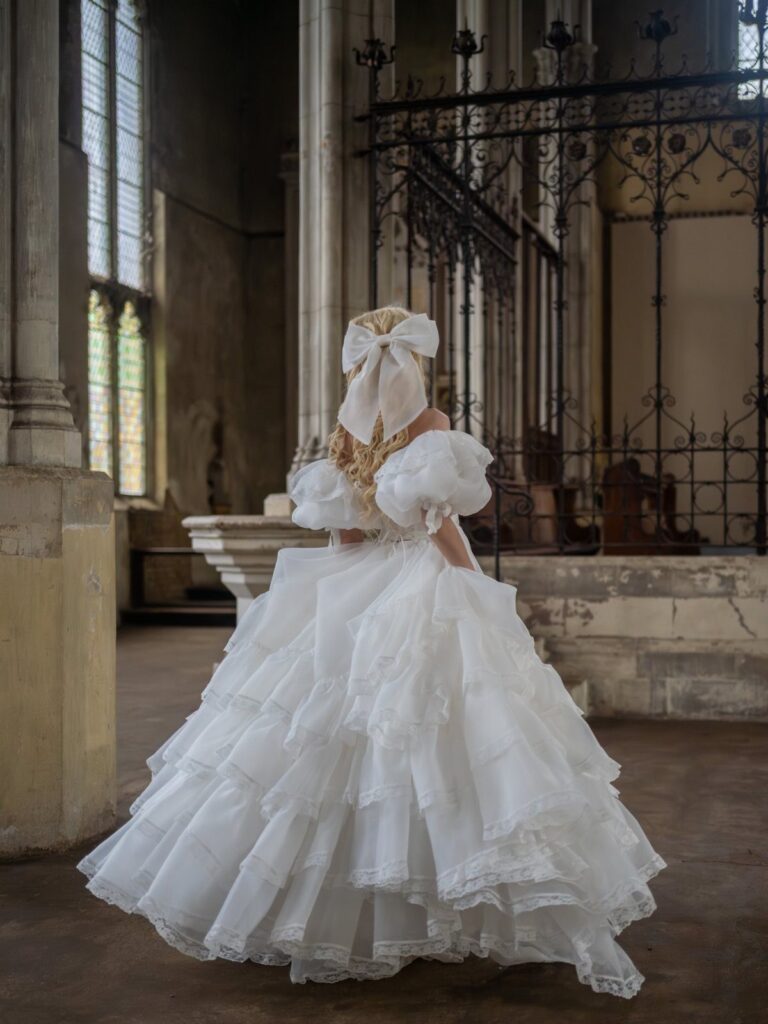
A fairytale wedding dress only works if your venue can handle the drama or fight it; a ball gown needs space to move, and a butterfly-wing bodice needs light to catch.
A ball gown’s horsehair-trimmed hem needs a cathedral aisle and a ballroom floor to do its job; squeeze it into a restaurant with low ceilings and the dress wears you.
1. Princess Ball Gowns
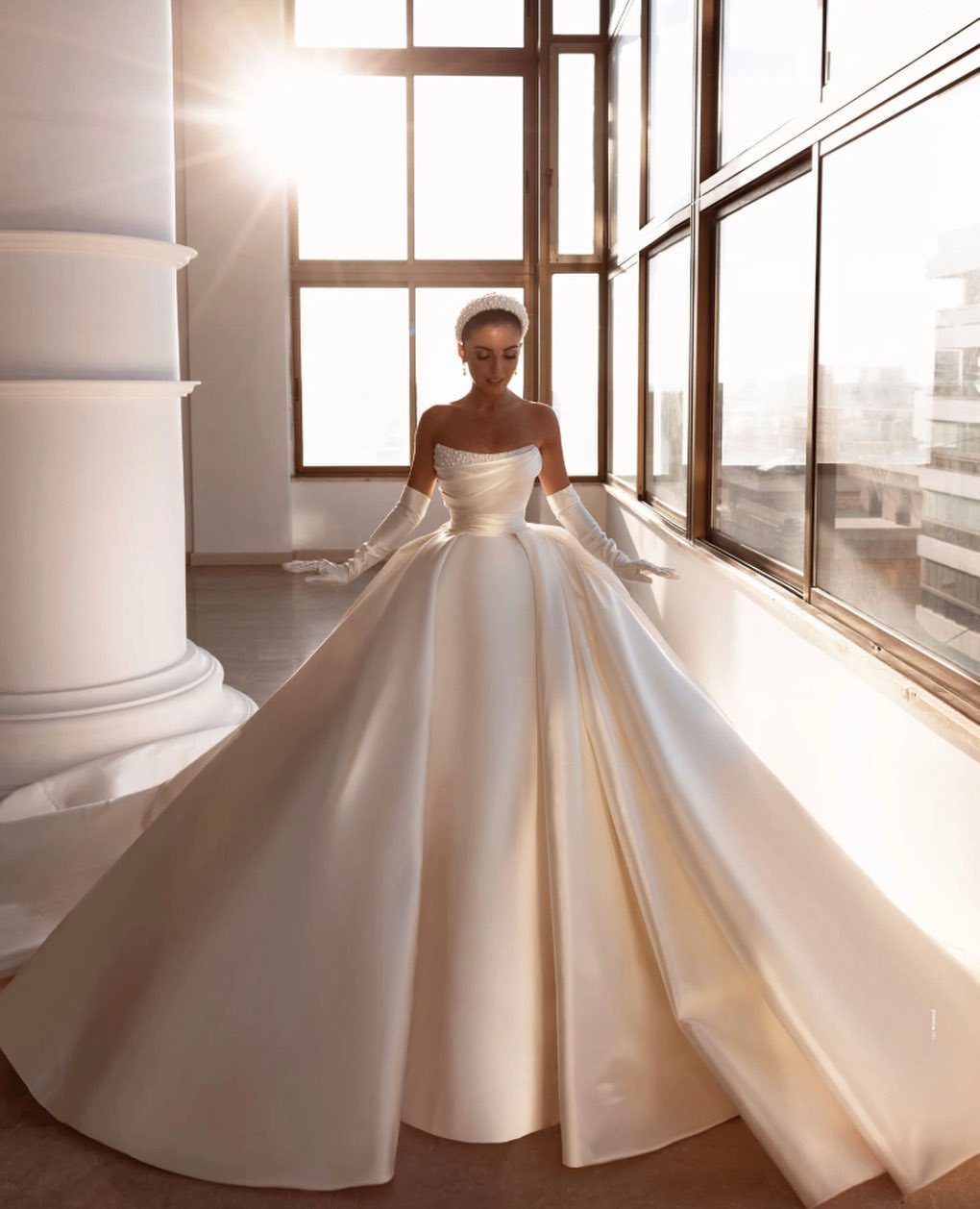
A princess ball gown is built on volume: layers of satin or tulle held out by a petticoat, with a fitted corset bodice that nips the waist before the skirt erupts.
The strapless bodice and long cathedral train are the details that signal royalty, not costume.
The structure matters more than the trim.
A supportive corset (lace-up or boned) keeps the dress from sliding down during hours of standing and dancing; without it, the weight of the skirt wins. Horsehair trim at the hem adds the crisp stand-out shape you see in photos.
This silhouette eats budget. The fabric yardage runs double a sheath dress, and alterations to the bodice are specialized work.
It also demands space: narrow aisles, packed reception tables, and small cars are enemies. A bride with a modest venue or a small guest list might feel the dress owns the room instead of her.
If the dream is specific, the cost or the space it demands is worth it. I would put money into the corset fit and cut back on beading; the shape does the work.
2. Sparkly Tulle Wedding Gowns
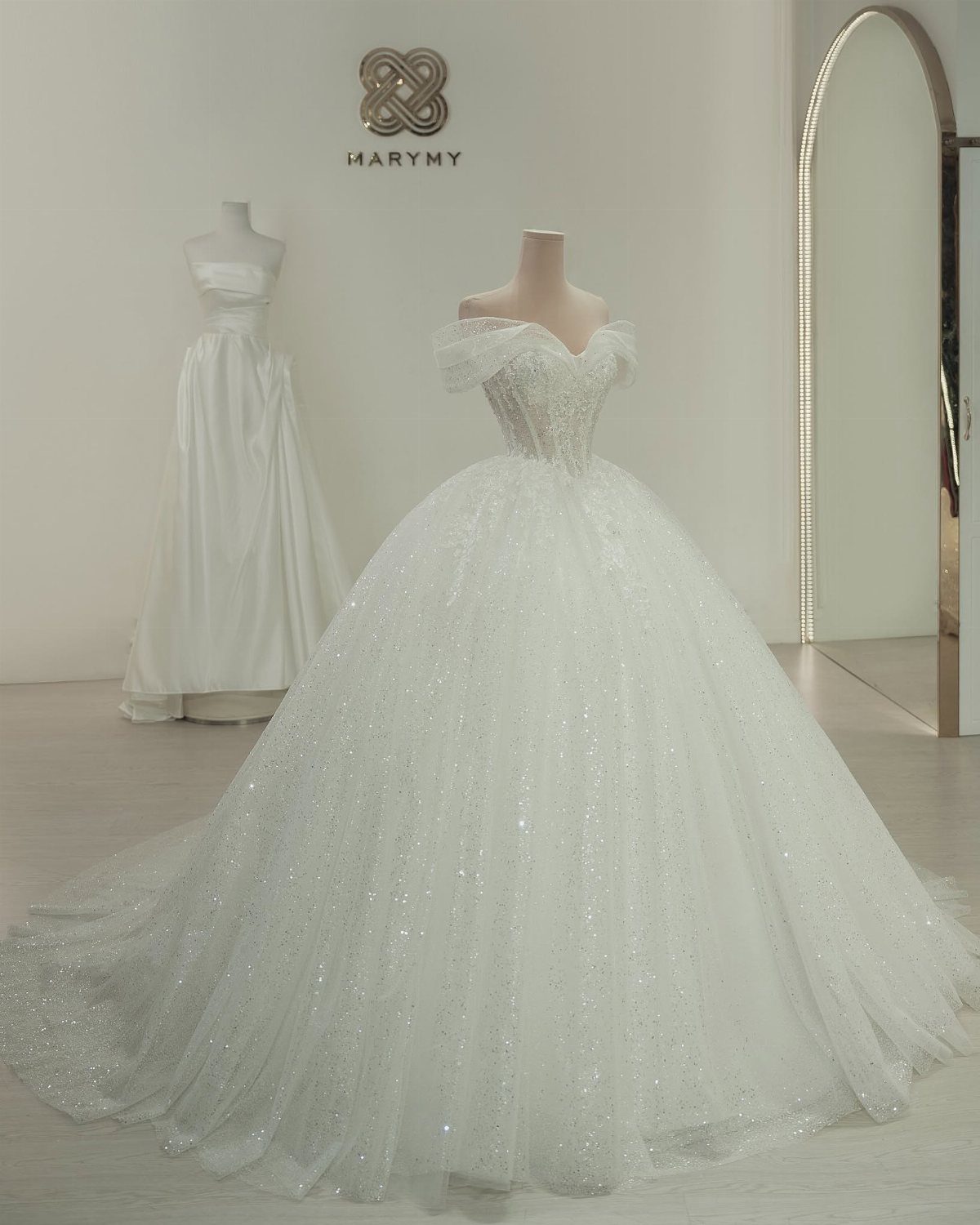
Sparkle on tulle reads differently than sparkle on satin. The mesh layers diffuse light outward, so the dress glows rather than glitters, and the movement of tulle keeps the shimmer alive when you walk.
Sequins or scattered beads on the bodice, with tiered tulle below, give the red-carpet effect without the pageant weight.
The exposed corset bodice is the detail I’d watch for.
It adds structure that strapless construction often lacks, and the visible boning photographs well from angles where a plain bodice goes flat. Sweetheart necklines pair naturally with this; they keep the line romantic where a straight-across cut turns severe.
3 tiers is the usual balance: enough for the bell shape, not so many that the skirt stiffens into a lampshade. Detachable sleeves, offered on some versions, let the same dress serve ceremony and reception without a full change.
Check how the sequins are attached. Hand-sewn lies flatter and survives dry cleaning; glued sheds on furniture and skin.
3. Off-the-Shoulder Wedding Dresses
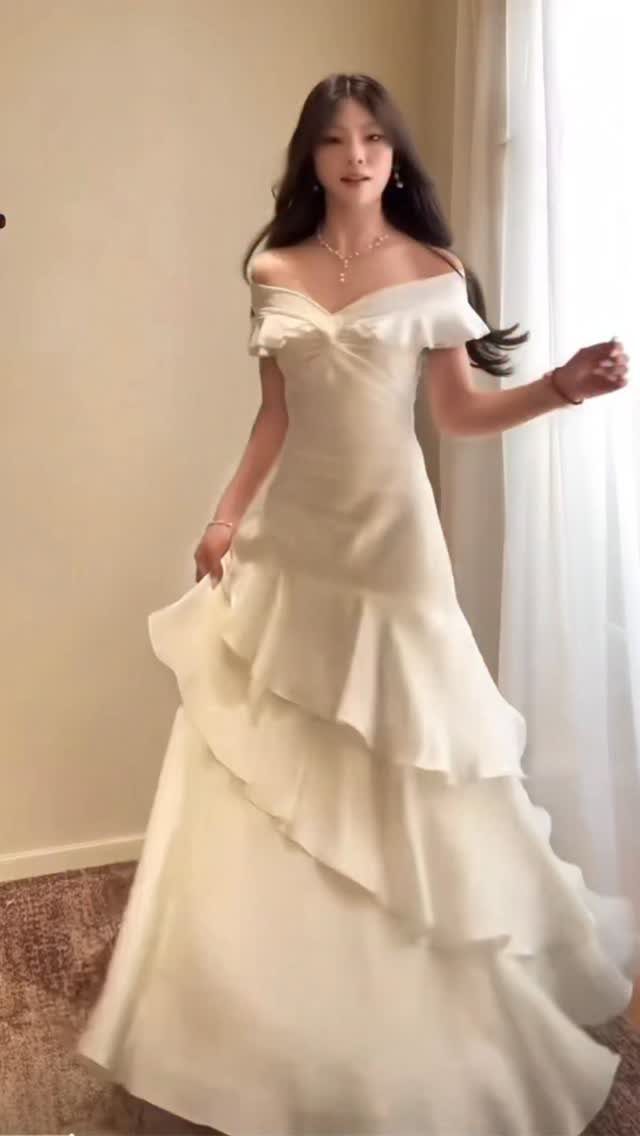
An off-the-shoulder dress frames the collarbone and shoulders, which is flattering if you like that line exposed and problematic if you don’t.
The sleeves hang from the upper arm, not the shoulder joint, so reach and lift are restricted: hugging guests, raising a bouquet, or dancing with arms overhead all pull the bodice down.
The tiered ruffled skirt visible here is soft tulle with structure from horsehair trim at each hem.
That trim is what keeps the tiers from collapsing into each other; without it, the skirt reads as limp and the silhouette loses its architecture.
Decide before trying: do you want the sleeves attached or detachable? Attached gives security; detachable lets you lose the restriction for the reception.
Also check whether the bodice is boned or built on elastic. Elastic is cheaper and lighter but slides; boning stays put and carries the weight of a full skirt.
4. Wedding Dresses with 3D Floral Appliques
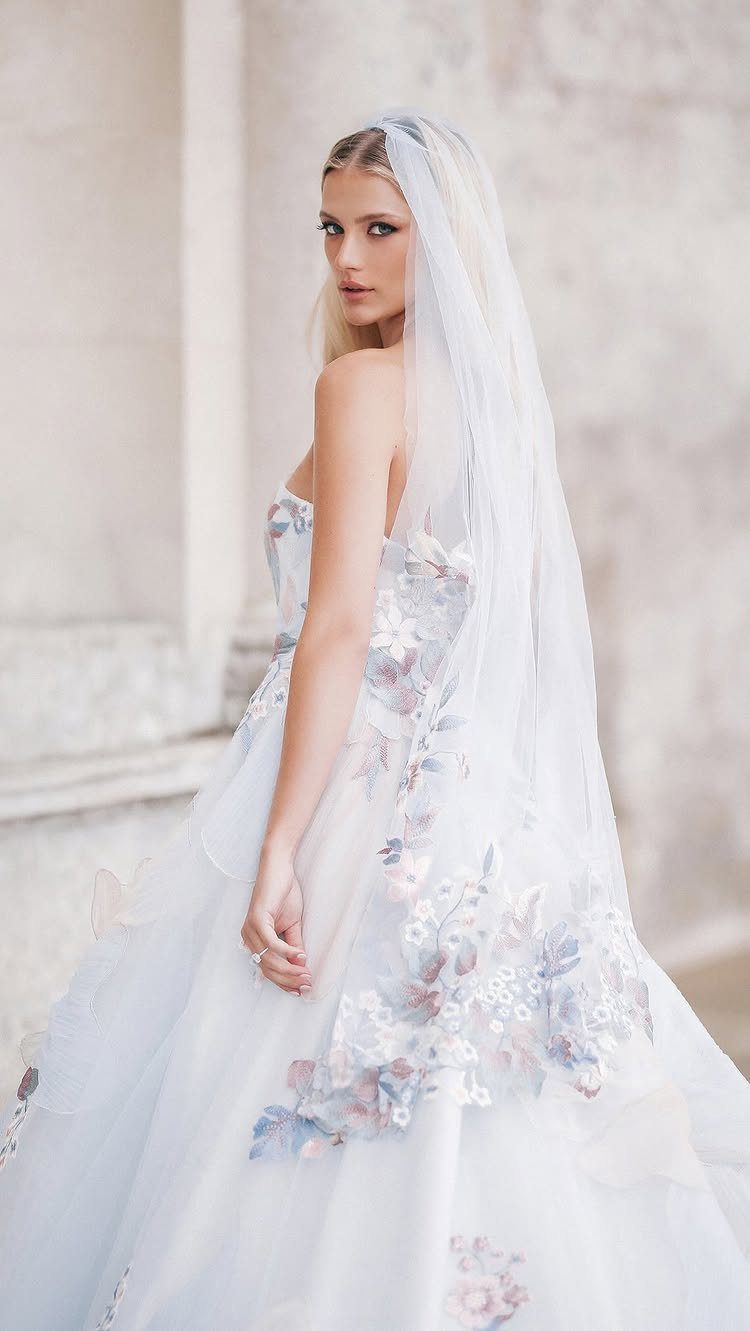
Three-dimensional florals on a gown catch light and cast tiny shadows, which flat embroidery cannot do. The appliques sit on tulle or organza overlays, often climbing from skirt to bodice so the dress reads as grown rather than decorated.
What I like about the visible version: the flowers carry color, not just ivory-on-ivory.
Three-dimensional floral appliques catch outdoor light with real depth and keep the dress from vanishing against a white altar or pale stone. The long sheer veil extends the floral motif upward, so the head-to-toe look coheres.
Detachable sleeves are practical here. The floral bodice with sleeves reads ceremonial; the same bodice sleeveless, with the flowers still crawling the neckline, works for dancing.
Illusion paneling at the sides is another variation to ask about: it gives waist definition without a tight cinch, useful if you will sit for a long dinner.
Custom sizing matters more with appliqued bodices than plain ones. The flowers must sit at the bust and waist, not float between; off-the-rack often misses by an inch.
5. Ivory Shiny Dress with Puffy Sleeves
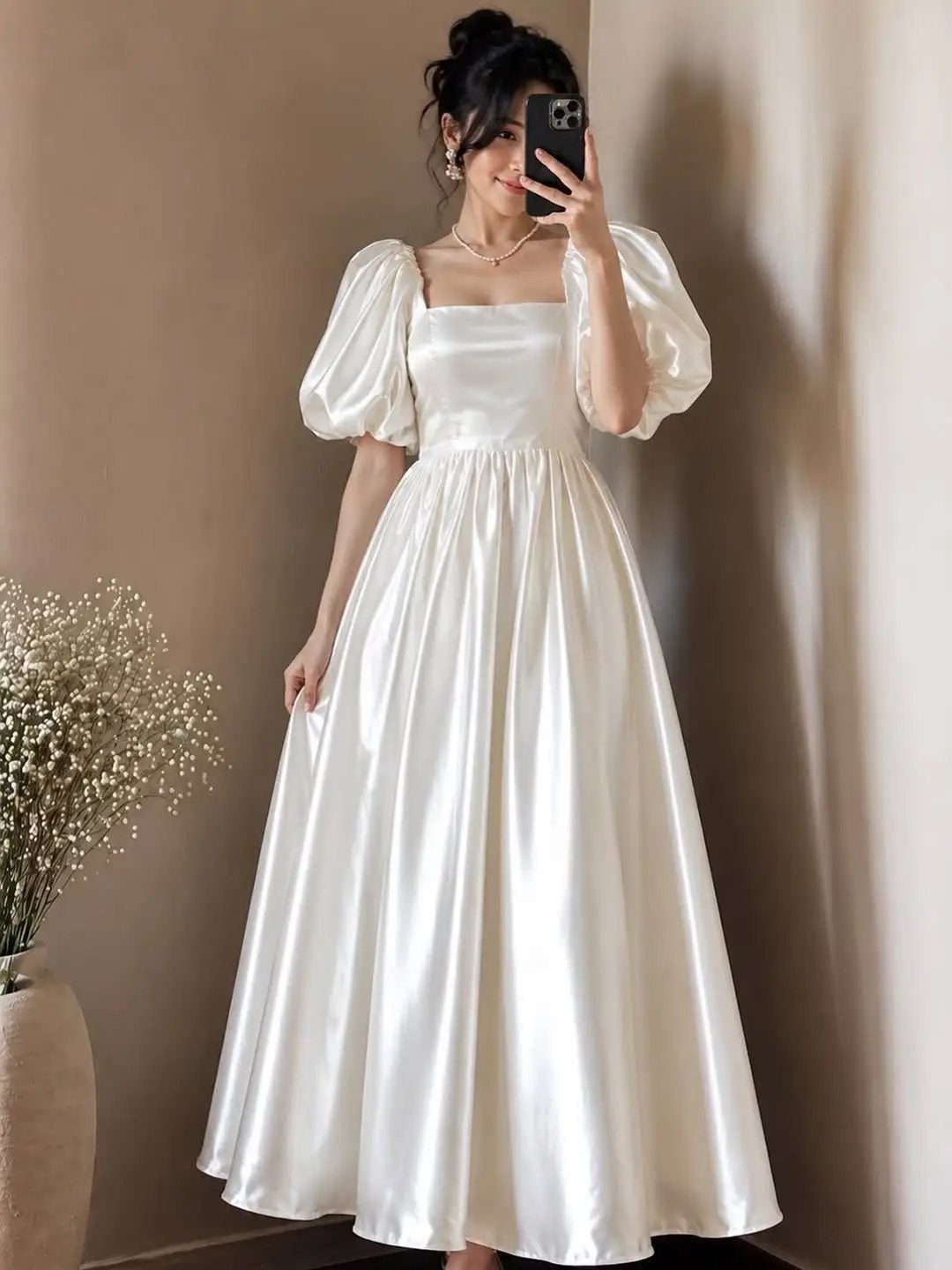
Puffy sleeves on ivory satin give the immediate impression of a dress remembered from storybooks, not fashion magazines. The square neckline keeps it from reading as costume; it references portraits, not cartoons.
Satin’s shine is the risk here.
Under direct flash photography, it blows out to near-white; in dim reception light, it dulls to beige. If your ceremony is candlelit or your photographer uses heavy flash, expect a different dress than the one you tried on.
A flared cut that skims rather than clings leaves room to move, eat, and breathe through a long day.
You can sit, step into cars, and eat without the dress dictating posture. Lightweight polyester organza, used in similar styles, trades some of the satin’s depth for movement and lower maintenance.
I would choose this for a reception with controlled uplighting where the fabric catches the glow, and I would skip it for direct sun or flash photography.
6. Pastel Ruffled Fairytale Gowns
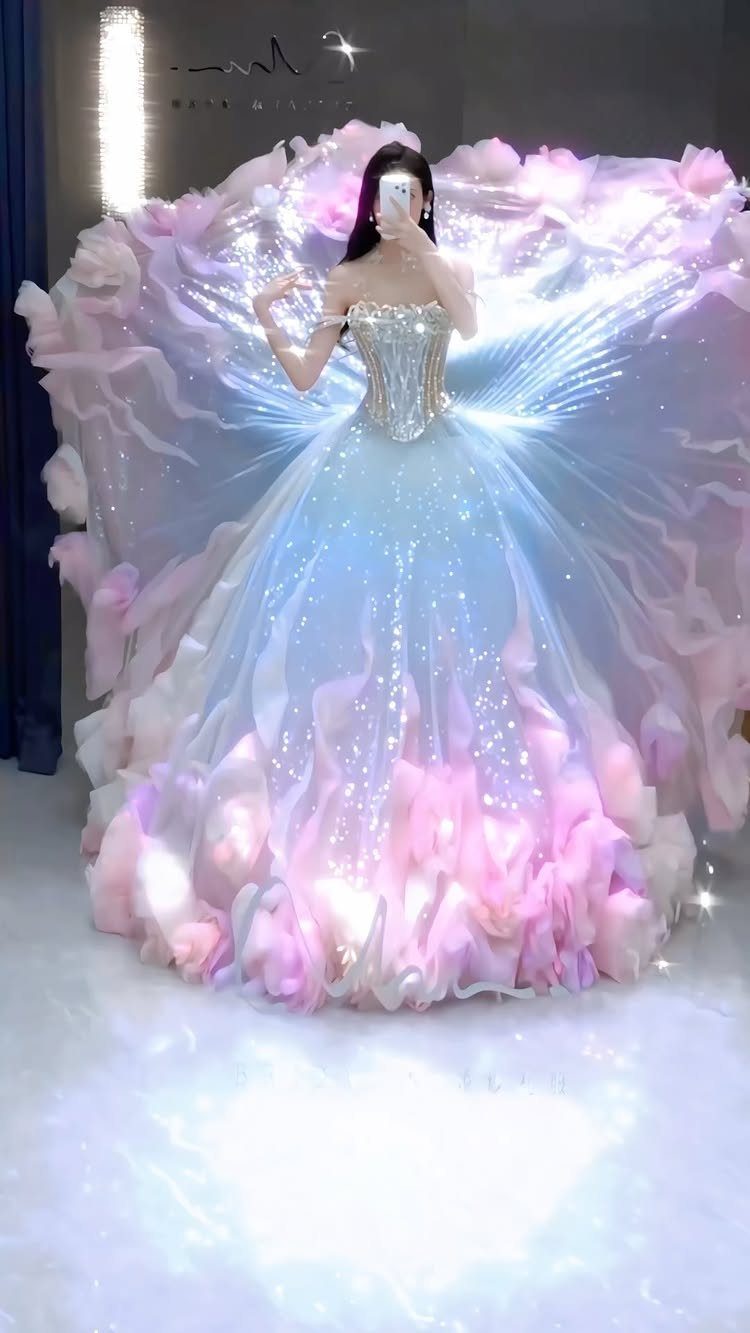
Pastel layers in a ball gown read as fairytale because they break the white-dress convention without leaving the wedding vocabulary.
The pink and blue ruffles here are built from tiered tulle over a structured underlayer; the volume holds the color at different depths, so the skirt shifts as you move.
The crystal-embellished corset bodice is doing heavy lifting.
Ruffles below demand discipline above; without the fitted bodice, the whole dress becomes frosting. The V-neck or sweetheart shape typical with this construction keeps the neckline open enough to balance the mass below.
This is not a subtle choice. A guest count under 100, a venue with low ceilings, or a bridal party in mismatching colors will make this dress feel like it arrived from another event.
It suits the bride who has built the rest of the look around it: dyed shoes, specific flowers, maybe a colored veil echo.
Ask whether the pastel is achieved through dyed tulle or overlay panels. Dyed tulle can shift color if steamed; panels let the maker control the hue exactly and replace if damaged.
7. Butterfly Wing Bodice Gowns
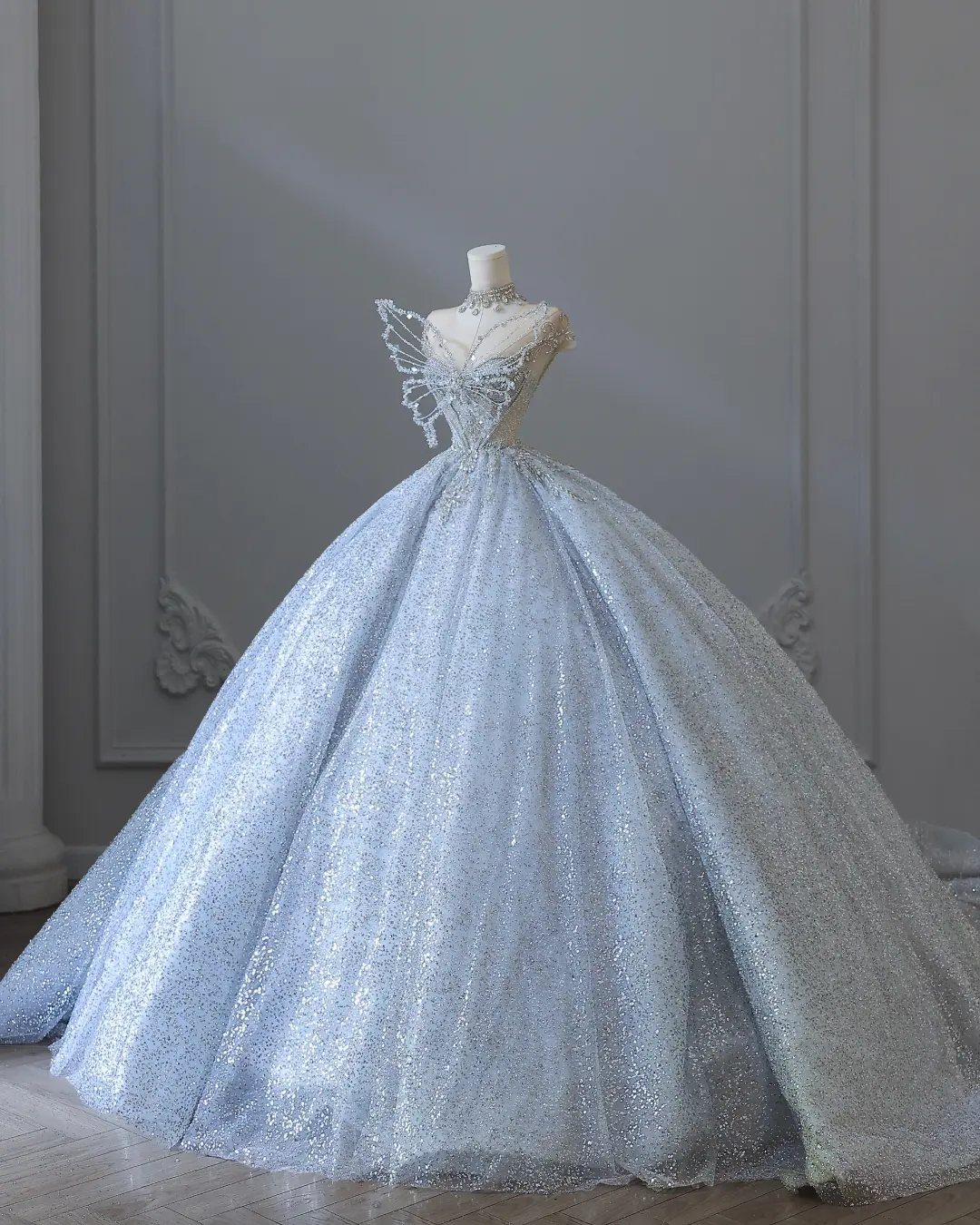
A butterfly wing bodice takes its shape from structured panels that extend beyond the shoulder line, creating the silhouette of open wings without literal costume.
The beading or embroidery follows the wing veins, drawing the eye upward and widening the upper body in a way that balances a full skirt below.
Light blue or ombré tulle carries the fairytale reference without naming it. The color shifts from deeper at the waist to pale at the hem, which reads as sky or water rather than costume.
Sparkles distributed through the layers catch candlelight or flash; dense beading on the bodice keeps the effect from reading as children’s dress-up.
This silhouette demands a formal venue. Low ceilings, outdoor grass, or casual guest attire make the structure feel overdressed.
The bodice construction is specialized: boning, possibly a harness, and hours of handwork. Alterations are limited; the wing shape is built to a specific frame.
I would wear this for an evening ceremony in a ballroom or historic house, and I would keep jewelry minimal. The bodice is the statement.
Incorporating Personal Style
A fairytale dress only works if it feels like yours, not borrowed. A pastel ruffled skirt and a full set of butterfly wings sit at opposite ends of the same idea, and most brides land somewhere in the middle.
Before you commit, name the 3 details that made you catch your breath: the volume, the color, the bare shoulder, the sparkle catching light. Those specifics are your compass, not the category name.
If your daily style is minimal, a fully built ball gown will feel like a performance you cannot sustain through hours of greeting guests.
Consider instead where your own taste meets the fairytale register: maybe it is the satin shine in a simpler cut, or the 3D florals on an otherwise plain bodice.
The dress should amplify what you already like wearing, not replace it.
Choosing the Right Silhouette
The ball gown and the A-line share the full skirt and the nipped waist, but they move differently.
A ball gown erupts from the waist and holds volume all around; an A-line releases gradually from the hips, giving the same sweep with less fabric.
The A-line eats less budget, fits narrower aisles, and photographs almost as grand. The ball gown demands the space and rewards it.
Studio Levana builds both from the same corset, which isolates the choice: do you want the skirt to follow your body or declare itself separately?
If you will dance, step into cars, or navigate tight reception seating, the A-line forgives. If the photograph of the dress standing alone is what you return to, the ball gown is worth the trade.
Budget Considerations
Fairytale construction carries fairytale pricing. Kleinfeld’s Disney line starts around $3,500 and tops out near $10,000, which gives you a fixed anchor for what licensed fairytale styling costs off the rack.
Below that, the typical fairytale dress with corsetry, layered tulle, and handwork lands in the low thousands; the modest budgets mentioned earlier may need to rent, buy sample, or select simpler construction.
Set the number before you try anything on.
The sales environment is designed to make you stretch, and the mirror is persuasive. Know whether your ceiling includes alterations, which on these silhouettes run high; bodice work and hemming through multiple tulle layers are specialized labor.
If the dress you love exceeds your number, ask what element drives the cost. Often the beading or the brand markup is the gap, and the same shape exists without it.
Not only does Kleinfeld have 30,000 square feet filled with the largest selection of wedding dresses in the world, it also has the greatest professional staff of over 200 employees who are dedicated to finding and perfecting your bridal look.
Accessorizing Your Dress
A tiara reads differently in a low-ceilinged restaurant than under the vault of a church.
Scale the accessory to the architecture: small crystals for intimate spaces, height and structure for rooms that can hold it. Keep jewelry minimal when the bodice is already doing the work, as with butterfly wings or heavy beading.
Consider when you wear what.
A veil for ceremony, a hairpin or nothing for reception: this is common practice, not a rule. Detachable sleeves on the dress itself, noted above, accomplish the same shift without a second purchase.
One piece of real impact beats several competing for attention. Pick the single accessory that matches the moment you want to remember, and let the rest go.
Frequently Asked Questions
What styles are best for a fairytale wedding?
Ball gowns with tulle and lace layers are the classic choice, though A-line skirts give a similar sweep with less fabric and fewer practical headaches.
The silhouette that photographs grandest is the ball gown, with its skirt erupting from a nipped waist; the one that fits narrow aisles and packed receptions is the A-line.
Both share the corset bodice and full skirt, so the choice comes down to whether you need the dress to declare itself or to move with you.
Are sparkly wedding gowns appropriate for all weddings?
Tulle catches light differently than satin does, spreading it across the skirt like a soft haze instead of throwing it back in sharp points, though even that gentler effect needs the right room to work.
Heavy sequins and dense beading suit formal spaces with controlled lighting; in a low-ceilinged restaurant or bright midday garden, the same dress can feel overdressed or washed out.
Sequins sewn by hand hold up through cleaning and press flat against the fabric; the glued kind flake onto your arms, your seat, anyone who hugs you.