The ideas below run from a borrowed instant camera and a shoebox to hand-painted portraits for each table, so the deciding factor is how much of your budget you are willing to spend on storage versus how much on the moment of creation itself.
A memory jar with smooth stones and cream paper costs little but requires guests who already share stories; custom portrait place cards demand commission timelines you will want to start early.
1. In Loving Memory Table
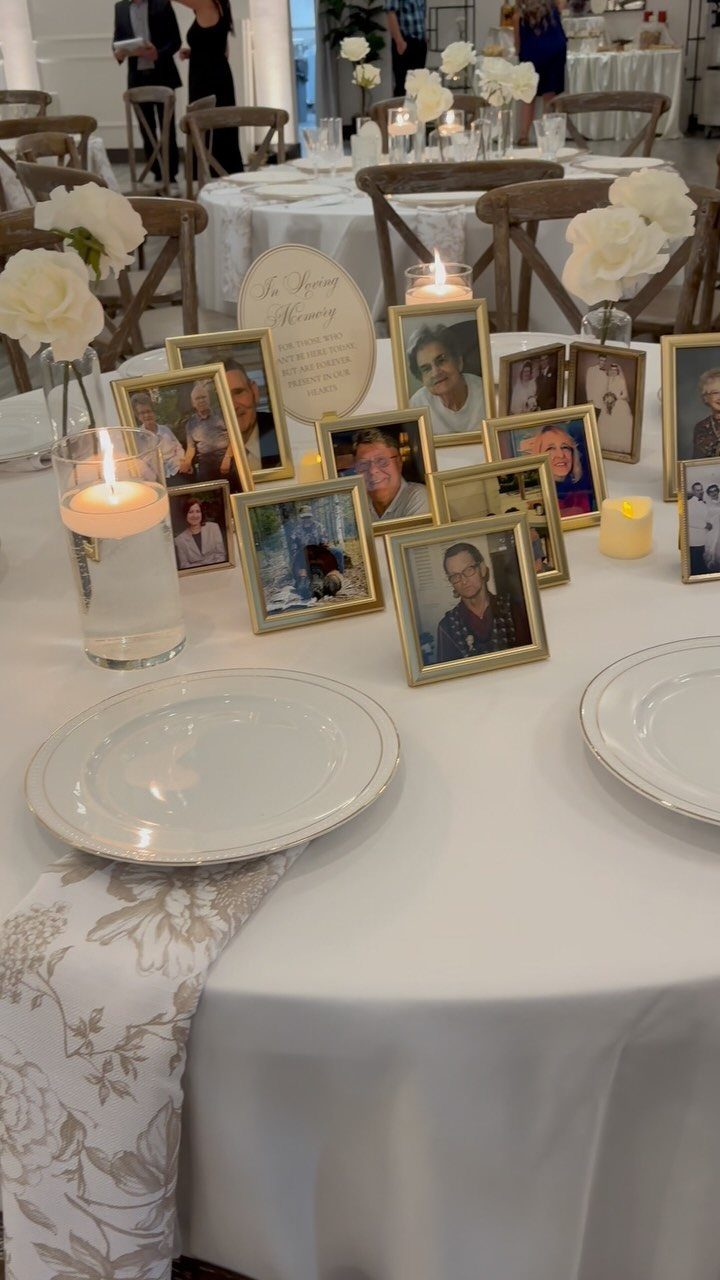
A quiet table near the entrance or beside the guest book gives absent family their place at your wedding.
White roses in a simple vase, small votive candles, and framed photographs arranged on a fabric runner turn the corner into something intentional without looking like a shrine.
I have seen this done with gold frames that match the room’s hardware and with plain wood that matched nothing at all; both worked because the couple chose one look and stayed with it.
A printed sign reading "In Loving Memory" is easy to order, though a hand-lettered piece on good cardstock costs less and takes only a steady hand.
2. Guest Memory Cards
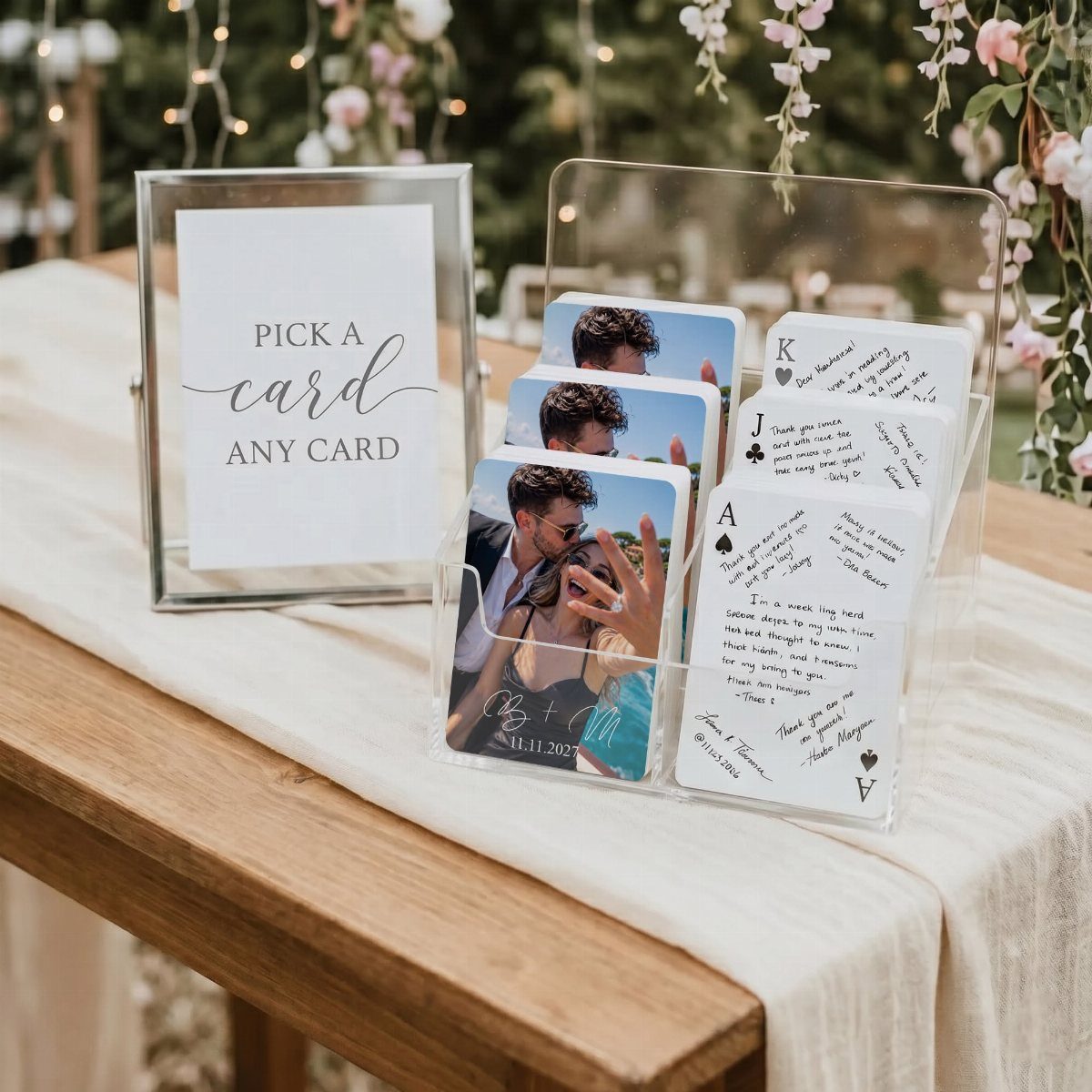
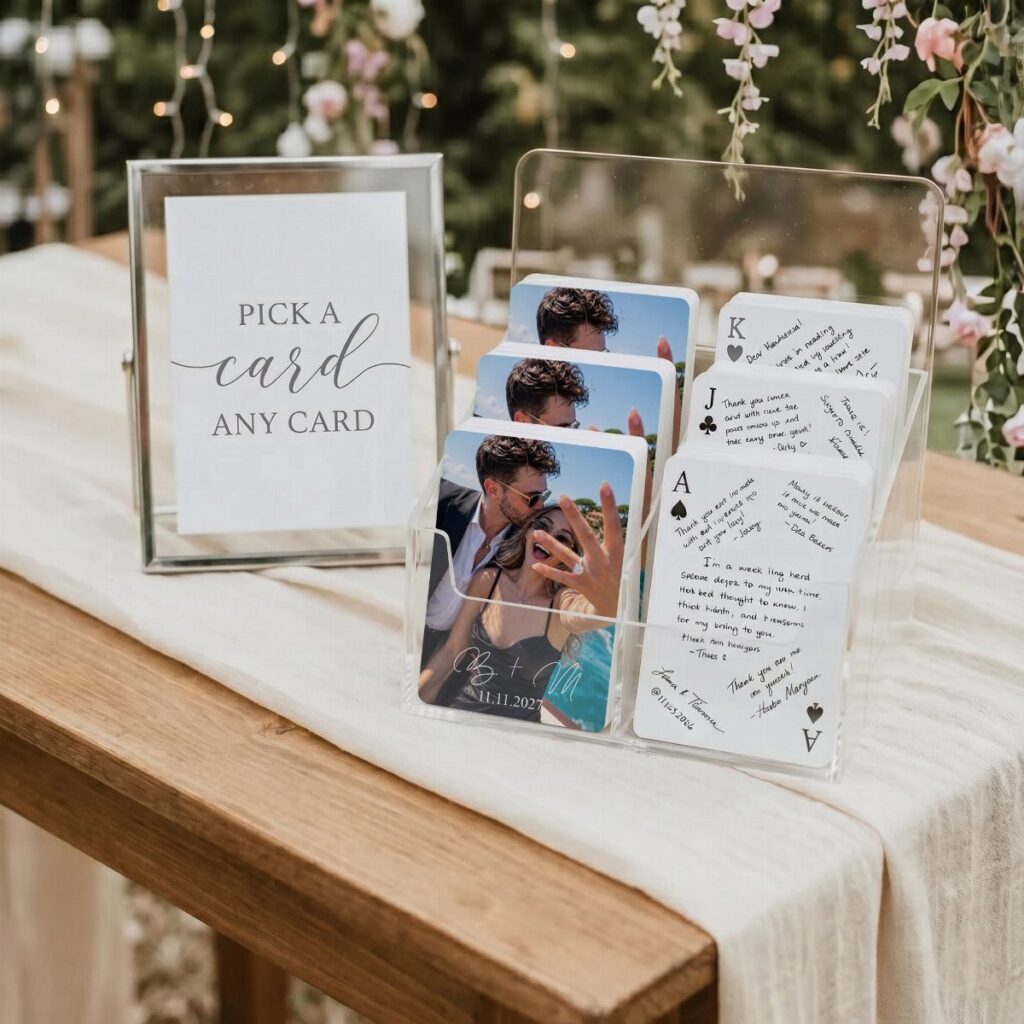
Playing cards printed with your engagement photo become the paper guests write on, one memory or joke per face, collected later like a dealt hand you never fold.
The acrylic stand keeps them upright on an outdoor table where wind would scatter loose sheets.
I like this for the guest who freezes at blank pages: the card’s small size and familiar shape give them something to fill, not invent.
Store the completed deck in whatever box you will actually open; a memory box built for the purpose keeps the set together, though a shoebox in your closet does the same job if you label it with the date.
3. Polaroid Guest Book
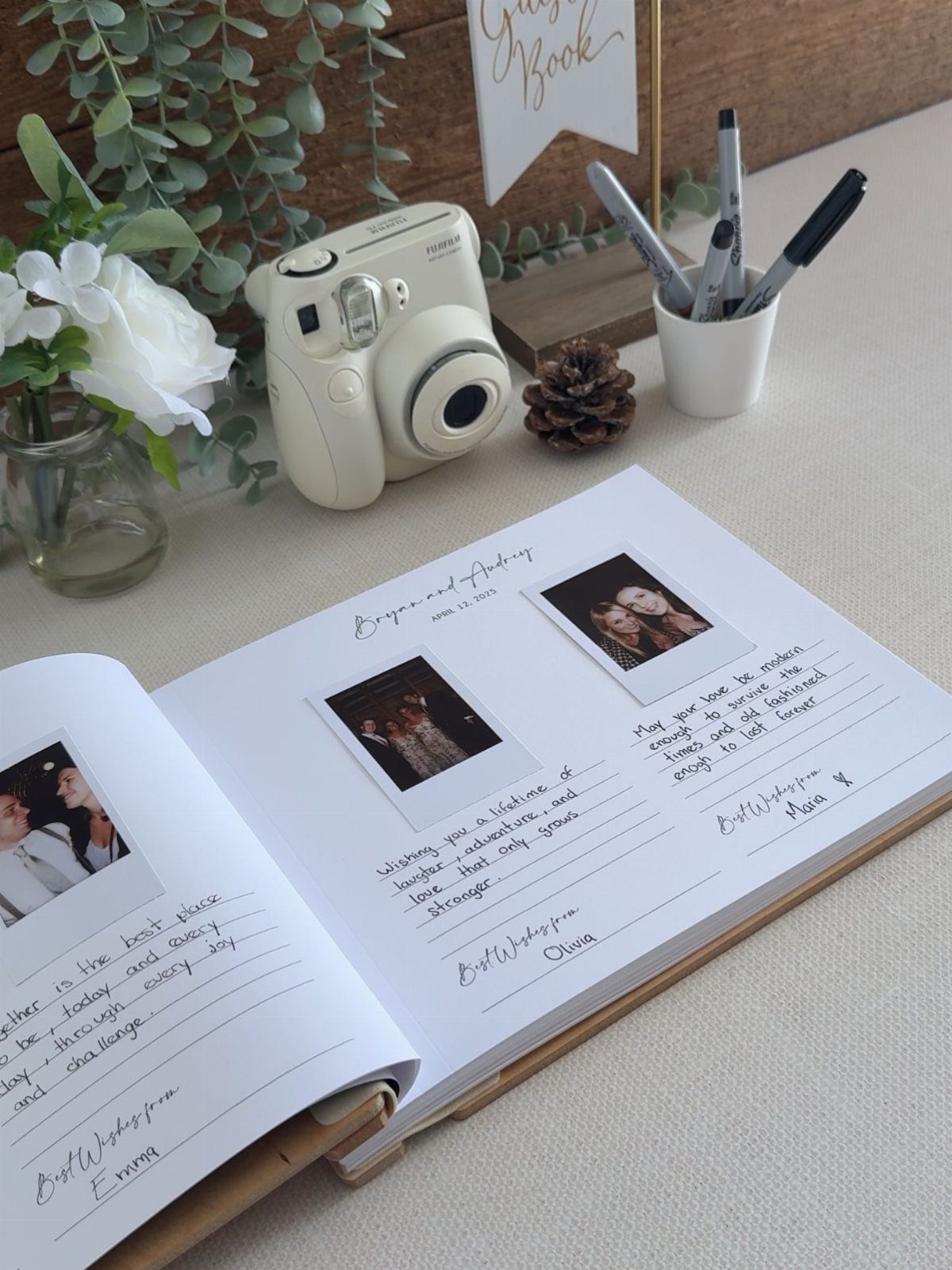
An instant camera on a decorated table with pens and an open book turns shy guests into willing photographers.
The photo develops fast; the message beside it takes longer, which is the point. I have watched lines form at these stations when the dance floor empties for a slow song, guests escaping with purpose.
The camera itself is the real cost, and film packs run more than you expect; borrow a friend’s Instax for the night if your budget is tight.
One book I saw used black pages with silver gel pens, the contrast sharp against the washed-out Polaroid tones. Engraved wooden covers are available from several makers if you want the object to last as long as the marriage.
4. Memory Jar
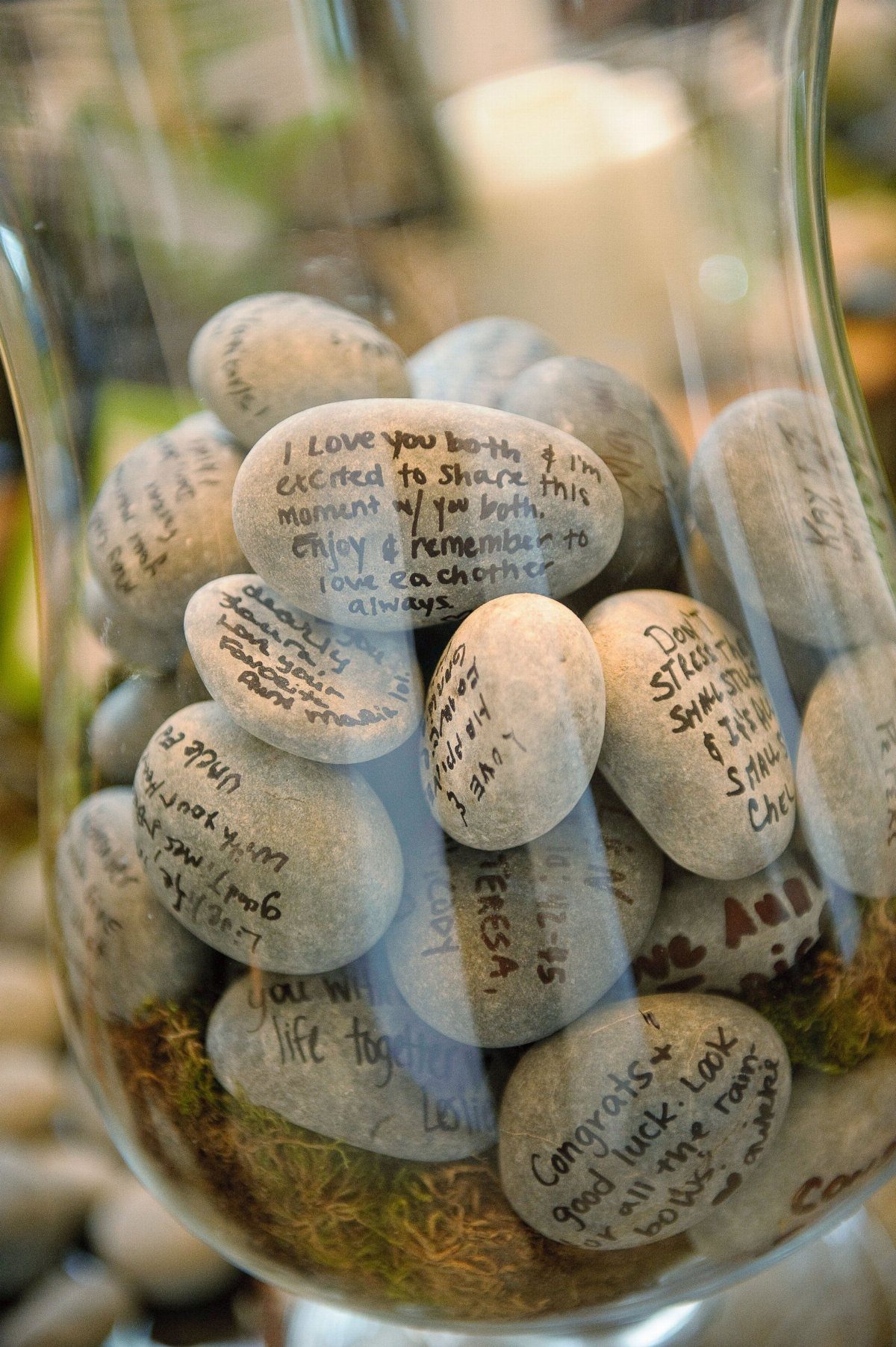
Smooth stones inside a clear jar give guests a way to leave something: a weight to hold with handwritten messages to read later.
The moss at the bottom hides the mechanics and keeps the stones from looking dropped in by accident.
I prefer this to the standard guest book for weddings where most guests know each other; the notes reference shared history you will not understand without context, which is exactly the kind of memory worth preserving.
A framed sign explaining the choice helps, or the jar sits ignored beside the bar. Handwriting on those stones changes over the years, settling into something you could identify blind.
5. Wedding Memory Box
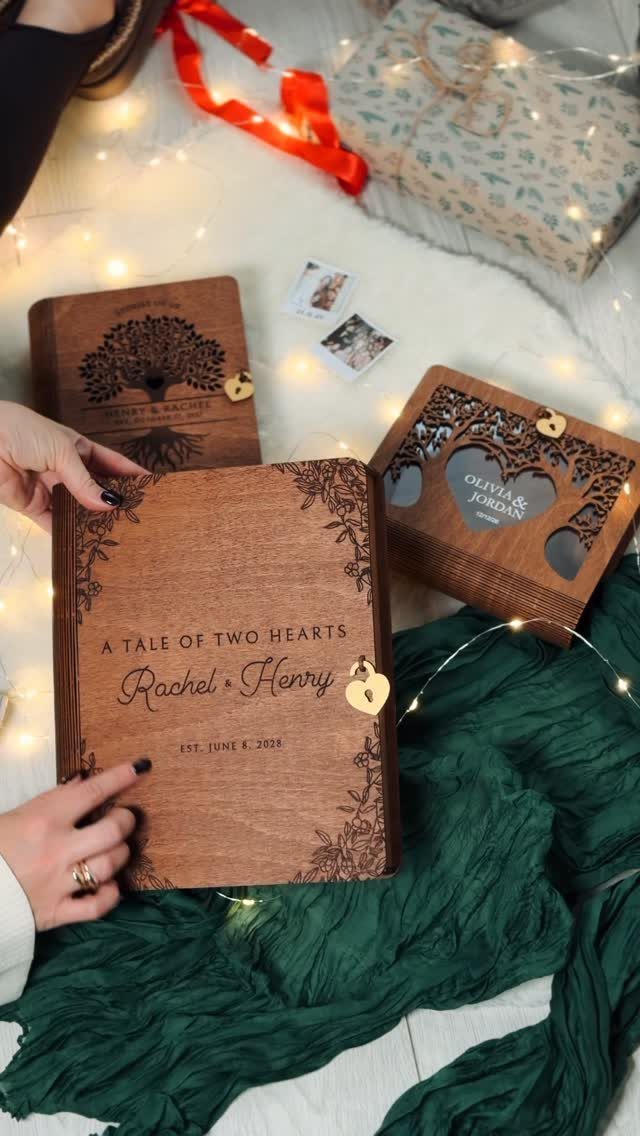
An engraved wooden box with your names and a phrase that is not quite a quote becomes the container for everything you cannot throw away: the invitation, dried boutonnieres, handwritten cards, the ribbon from your bouquet.
"A Tale of Two Hearts" is one maker’s default, replaceable with whatever you actually say to each other.
Choose hardwood over soft; the oils from handling a memory box over years will dent pine but only darken walnut. Fairy lights in the display photograph do not travel inside; they are staging, not storage.
6. Personalised Memory Box
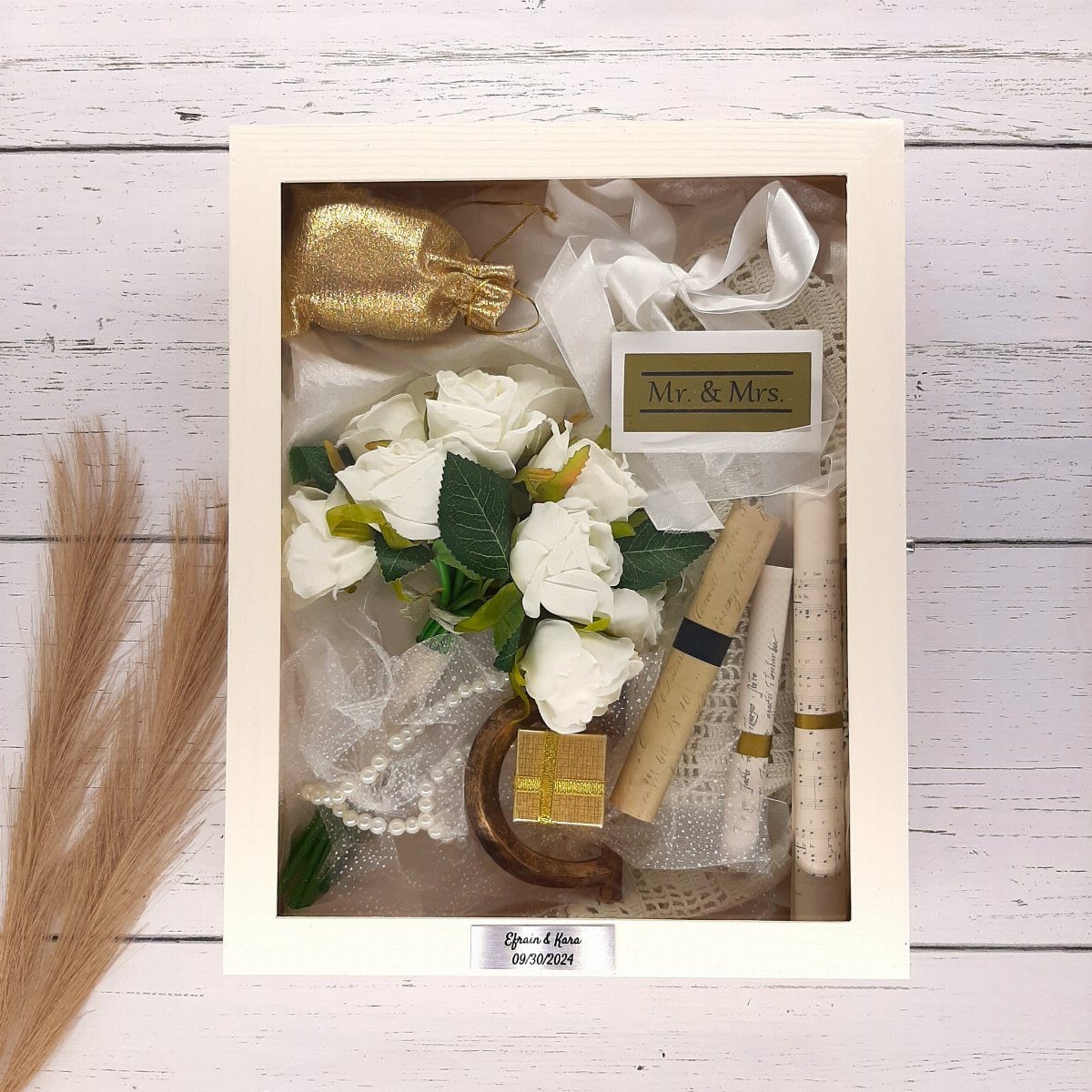
A shadow box with glass front and engraved plaque lets you arrange, not just store: the rolled documents, the "Mr. & Mrs." card, the white roses pinned in place where you can see them without opening anything.
The date format on the plaque is fixed by the maker unless you specify otherwise.
I would ask for month spelled out; the numbers alone read like an expiration date. 5 sizes hold prints from 4×6 up to 6×8 inches according to the maker, though I would measure my largest item before ordering.
The white finish in the photograph suits modern decor; stained wood versions exist for rooms with more history than minimalism.
7. Memory Shadow Box
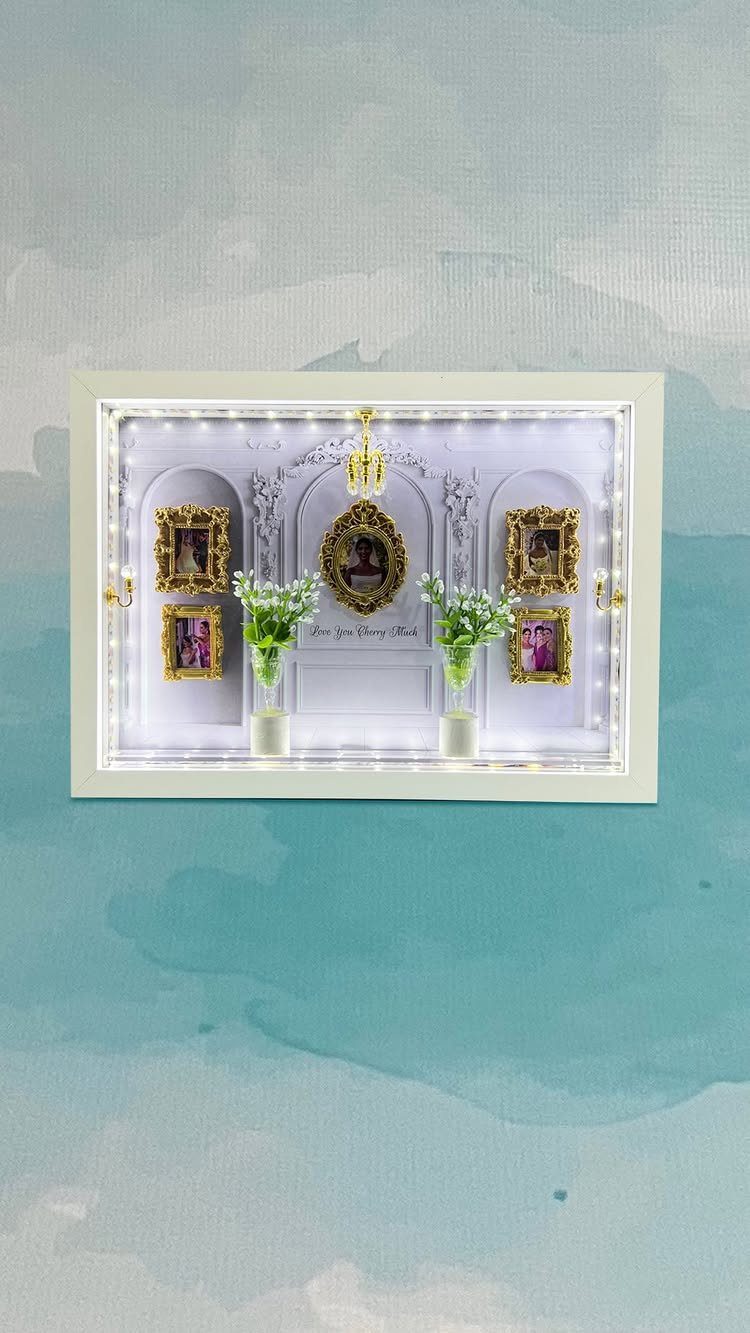
The miniature ballroom inside that white frame, complete with gold-framed photographs and a working chandelier, turns wedding keepsakes into a scene you stage rather than store.
Small vases holding real dried flowers and the couple’s own phrase painted or lettered across the base give each shadow box its specific story.
I would measure the depth before buying anything three-dimensional; a deep shadow box frame holds a small chandelier or a boutonniere without flattening it against the glass. Fairy lights strung inside need battery packs hidden behind the tallest item.
A handful of objects fill a square shadow box without crowding; more than that and the eye has nowhere to rest. Secure each piece with archival glue or small wires, not tape, which yellows.
8. Digital Frame Keepsake Display
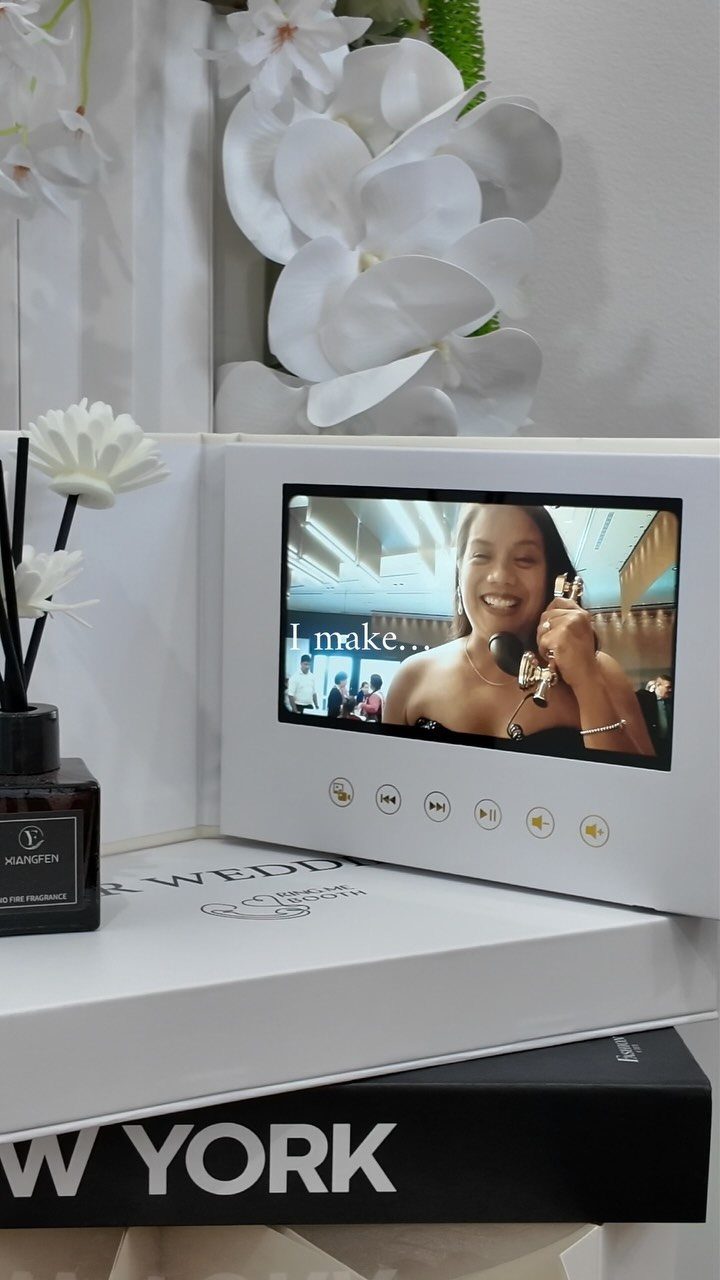
A folding digital book plays video on a small screen beside your flowers or on a shelf after the wedding, the one object that moves where everything else stays still.
Cost is the trade-off. A basic digital frame runs cheap, though the folding book style with its hinged cover costs more and is harder to find secondhand.
Upload through USB or SD card; check whether the format your photographer delivers matches what the frame accepts. Some require conversion.
The battery lasts long enough for the reception if you charge it the night before, though continuous play drains it fast. Afterward it lives wherever you keep memories you actually look at.
9. Custom Portrait Place Cards
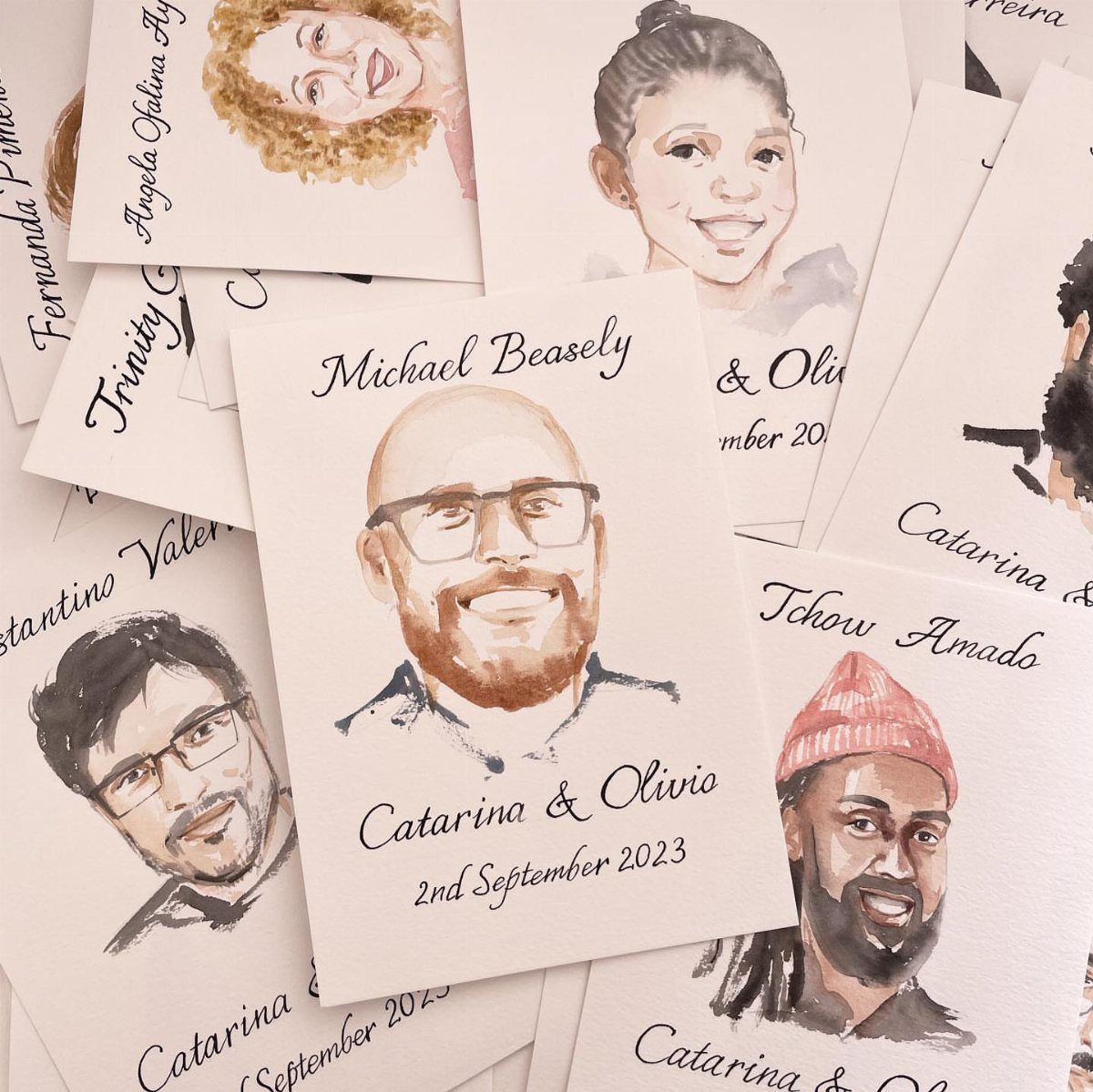
Watercolor portraits of each guest, named beneath the painting and dated with your wedding, turn the seating chart into individual favors guests pocket on their way out.
Michael Beasely’s card painted him in a style that matters less than whether the artist captures something recognizable.
Commission early. Lead times for painted portraits run long for seated dinners of a hundred or more, and rush fees add steeply.
Digital watercolor, where the artist works over a photograph in tablet software, costs less and ships faster; the cards in the photograph read as hand-painted but may be. Ask to see one sample before the full order.
Hand-painted cards cost more per seat than digital, and the gap widens as your guest list grows. Guests who do not attend still get their portrait if the work is already done; mail it with a note as a consolation.
Personalizing Keepsakes
Engraving turns a useful object into one you keep. Names and dates are the standard, though a short phrase you actually use matters more than something borrowed.
The cursive on dark walnut boxes reads formal; the same layout on light wood with floral borders suits a different wedding entirely. Laser work costs by the character usually, so a long quote adds up.
I would spell the month out on any date you engrave. Numbers alone look like expiration dates on packaging, and this box is meant to outlast you.
Updating Your Memory Box
A memory box sealed after the wedding ends up forgotten. Leave room when you pack it the first time, and plan to open it again.
I add to ours on anniversaries: a ticket stub, a map, a note from a morning that turned out to matter.
Over the years the box fills with the marriage itself, not just the day it began. Hardwood withstands this handling; soft woods dent where fingers reach year after year.
Passing the box down works only if someone wants it. That desire grows from familiarity, from seeing you open it, from knowing what waits inside.
A closed box is an obligation; an open one is an invitation. Add to it where your children or guests can watch.
Honoring Loved Ones
The memorial chair at a ceremony needs marking or guests sit in it by mistake.
A draped sash with printed text and a small illustration turns any wooden chair into reserved seating; baby’s breath tucked at the joint softens the formality.
Placing it away from the guest book keeps the memorial separate from the celebration guests are arriving for.
A chair sash travels easier than a table for a destination wedding.
Both keep the person present without turning the day toward absence. Choose one method and stay with it; mixing memorial styles scatters the attention you are trying to focus.
Frequently Asked Questions
How to remember passed loved ones at a wedding?
Near the entrance, a small table set aside for absent family lets them be present without pulling the day toward grief. A linen runner, a few votives, and framed photos grouped close give the space purpose without ceremony.
What do wedding guests remember most?
Guests remember the emotional moments and personal touches more than the decor budget.
Guests who dodge the dance floor will still line up for a Polaroid strip, and the notes they drop in the jar later read like inside jokes you forgot you told.
These interactive stations give guests purpose and something to do during lulls, which is what they talk about afterward more than the centerpieces.
What are some unique memorial ideas for a wedding?
A memory jar with smooth stones and cream paper slips gives guests 2 ways to leave something physical, with moss at the bottom hiding the mechanics.
A slim digital frame cycling through video clips sits among the floral arrangements, the only thing in the room that still moves.