The cakes below run from a wildflower arrangement you could finish the morning of to a forest-themed build with sugar mushrooms and edible moss that tests a pastry chef’s patience.
What settles it is your venue: a barn or tent with wood tables already says nature, so the cake can echo with simple greenery, while a white ballroom needs the cake to carry the whole statement.
Ask about that 14-inch wood slice for anything over three tiers; green wood weeps sap under refrigeration, and a split base ruins more than dessert.
1. Wildflower Wedding Cake
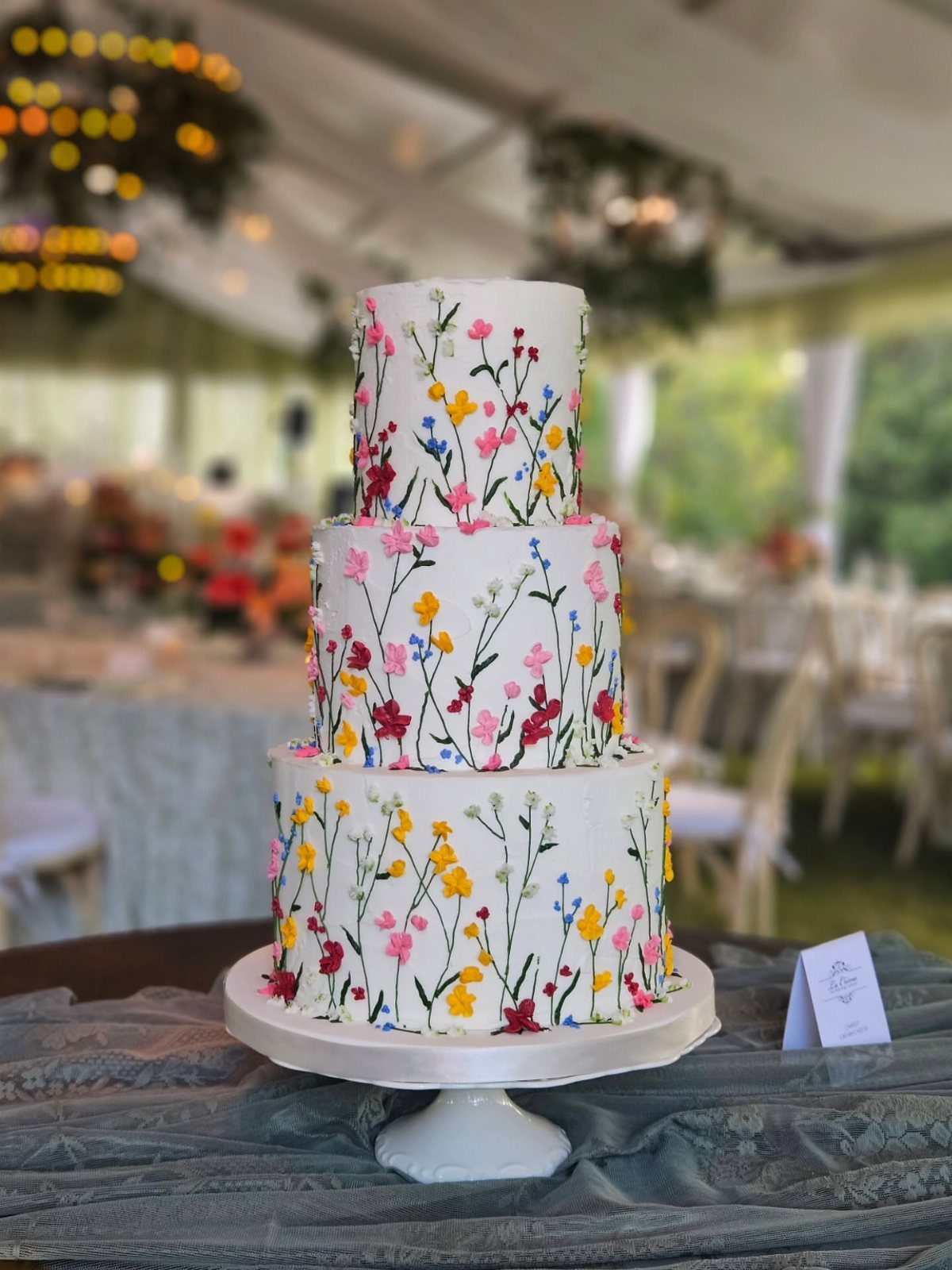
A wildflower cake brings the actual meadow to your dessert table, not a florist’s interpretation of one. The buttercream base stays soft and workable, letting the sugar daisies, lavender, and pansies sit at real angles instead of a symmetrical pattern.
I like this for couples working with a bakery rather than a pastry chef; the technique is forgiving and the flowers can be piped days ahead.
Ask your baker to cluster the blooms where vines would naturally tangle, leaving stretches of plain white between.
A climbing arrangement spreads the color without covering every inch. This keeps costs down compared to full fondant coverage and reads as garden-grown rather than decorated.
2. Semi-naked Cake
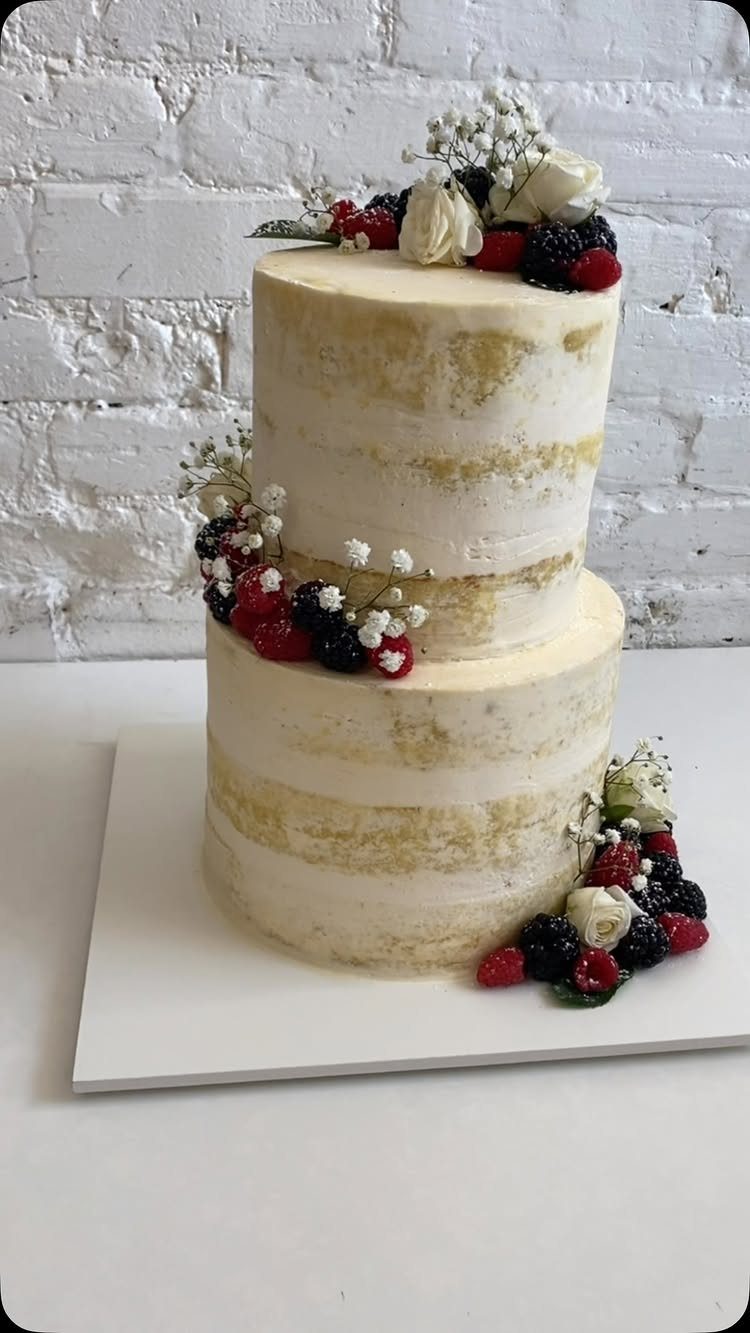
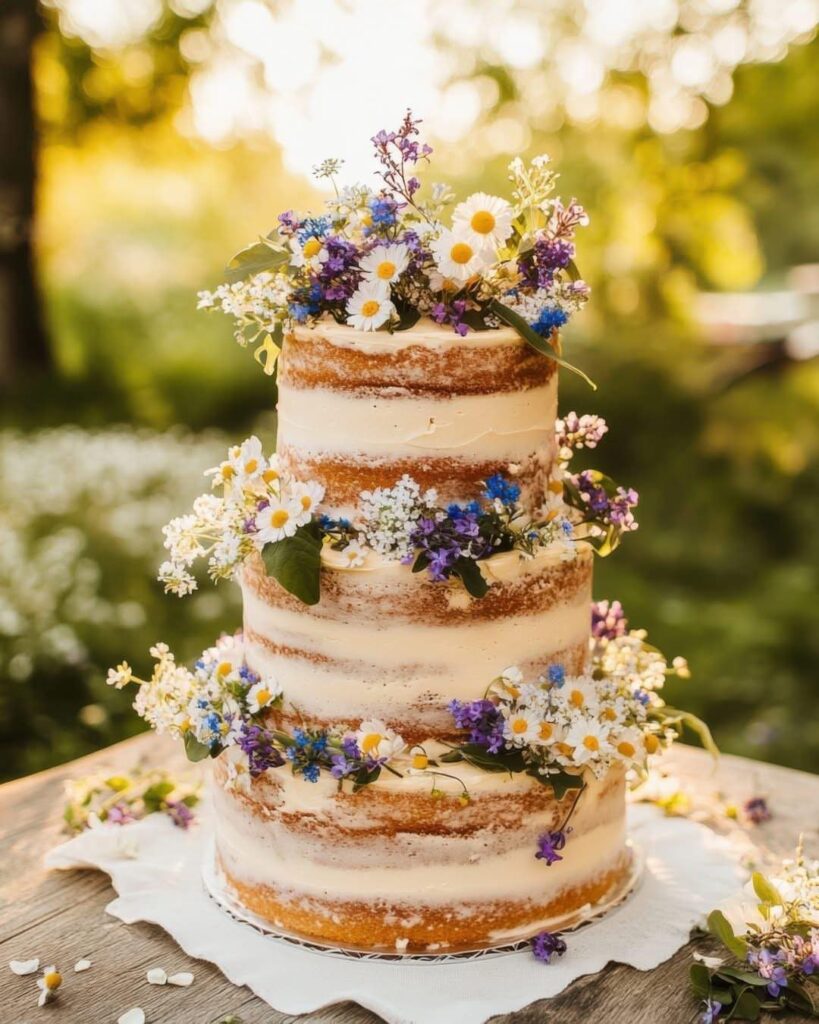
The semi-naked cake trades full coverage for honesty about what is inside.
You see the sponge layers through the thin coat of buttercream, which means the cake itself needs to be worth looking at: a good vanilla or lemon will hold its color, chocolate risks reading as dry from a distance.
Berries and small blooms sit where the frosting is thinnest, hiding nothing and decorating simultaneously.
This style suits a baker you trust or a budget that does not run to fondant work.
The minimal frosting means less sugar per slice, which matters when you are serving after a full dinner. Keep the display cool; exposed cake dries faster than a sealed one.
3. Textured Buttercream Cake
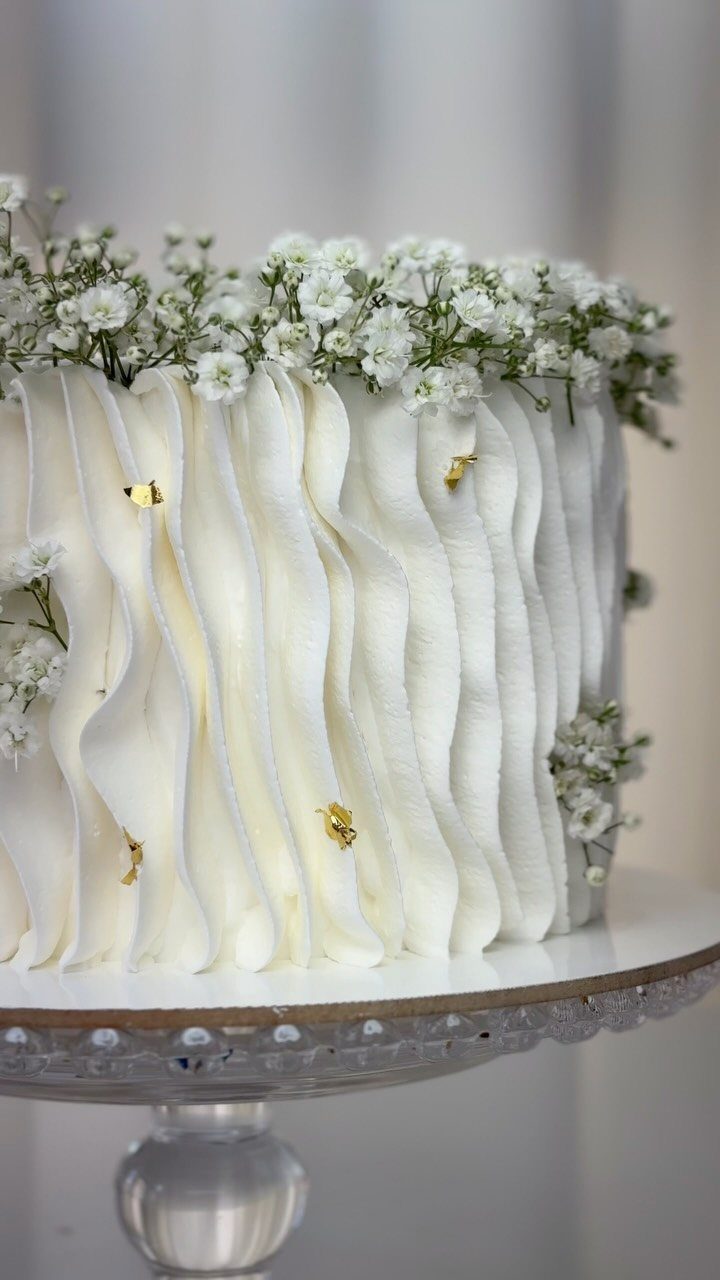
Vertical ruffles in buttercream catch light the way bark or flower petals do, giving a natural texture without literal tree references.
Gold leaf adds formality, though I would skip it for a daytime outdoor wedding where the sun does the same work for free. The baby’s breath reads as meadow weed, which is exactly the point.
This technique needs a steady hand or a piping tip designed for the fold; ask to see a sample ruffle before committing.
The texture hides small imperfections that would show on smooth fondant, so bakery costs often run lower than a mirror-finish cake. Fresh flowers push in easily between ridges.
4. Forest-themed Cake
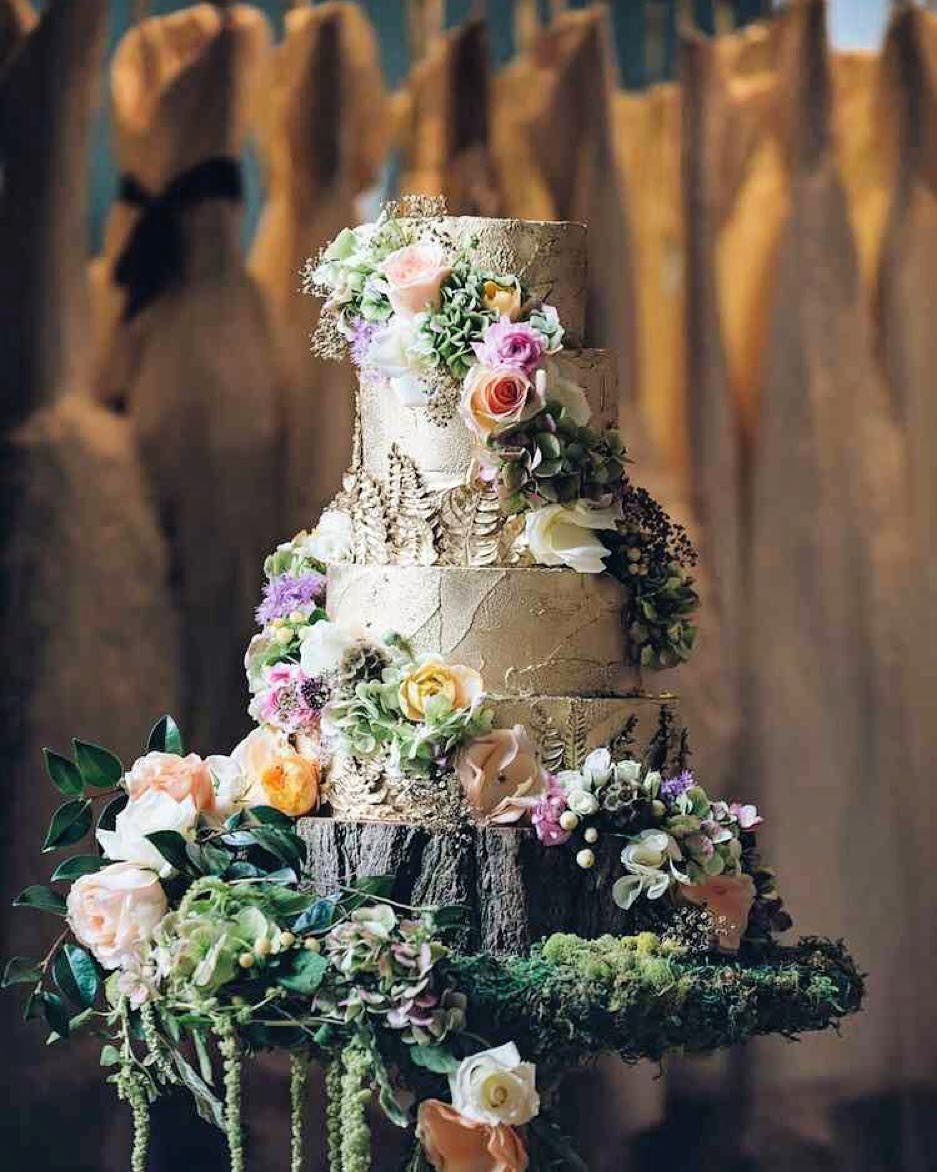
Forest-themed cakes risk looking like a diorama unless the elements stay edible and scaled to the tier. Real pine cones and moss, not sugar work, mean your baker is sourcing from a florist or foraging supplier and charging accordingly.
Painted scenery, like a mountain and teal pines in buttercream or food coloring on a smooth base, is the lighter option with no extra weight on the structure.
I would choose painted over built-up for any cake over 3 tiers.
The sugar mushrooms and edible moss are charming on a single-tier cutting cake, but they read as craft project when multiplied. A tree-stump stand grounds the theme without requiring the cake itself to carry every idea.
5. Cake with Greenery
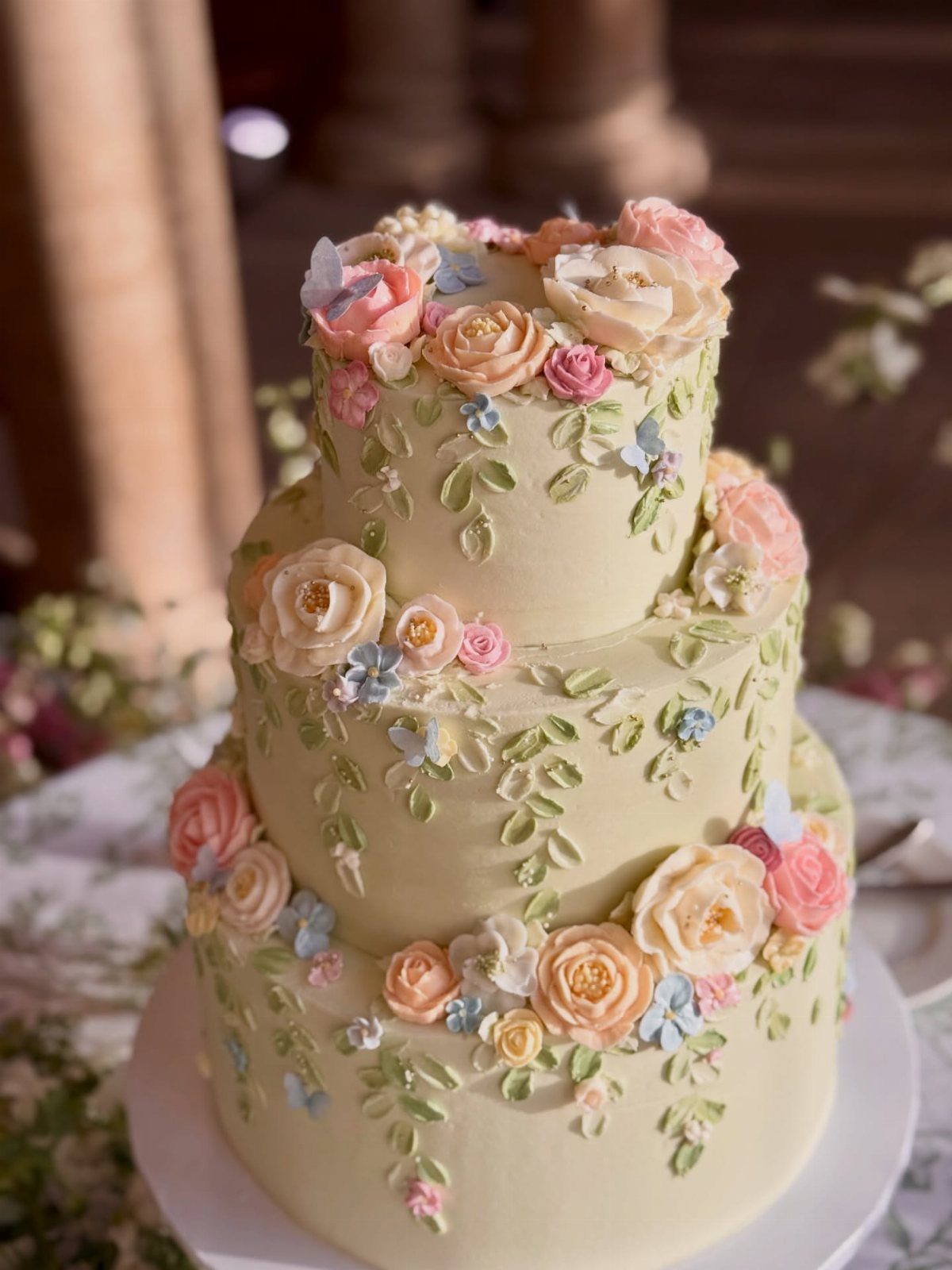
Greenery on a cake works best when the leaves are the decoration, not a filler around flowers. Piped vines wrap the tiers like they grew there, with small butterflies placed where a real vine would fork.
Olive branches or eucalyptus, laid flat against buttercream, give a cleaner look for a modern venue; the sculpted vines suit a tent or barn.
Buttercream greenery can be piped in advance and refrigerated, while fresh branches need water picks and last-minute placement.
Factor that into your timeline if you are DIYing the setup. A pale yellow base is a better ground for green than pure white, which can read as clinical.
6. Two-tier Wedding Cake with Fresh Flowers
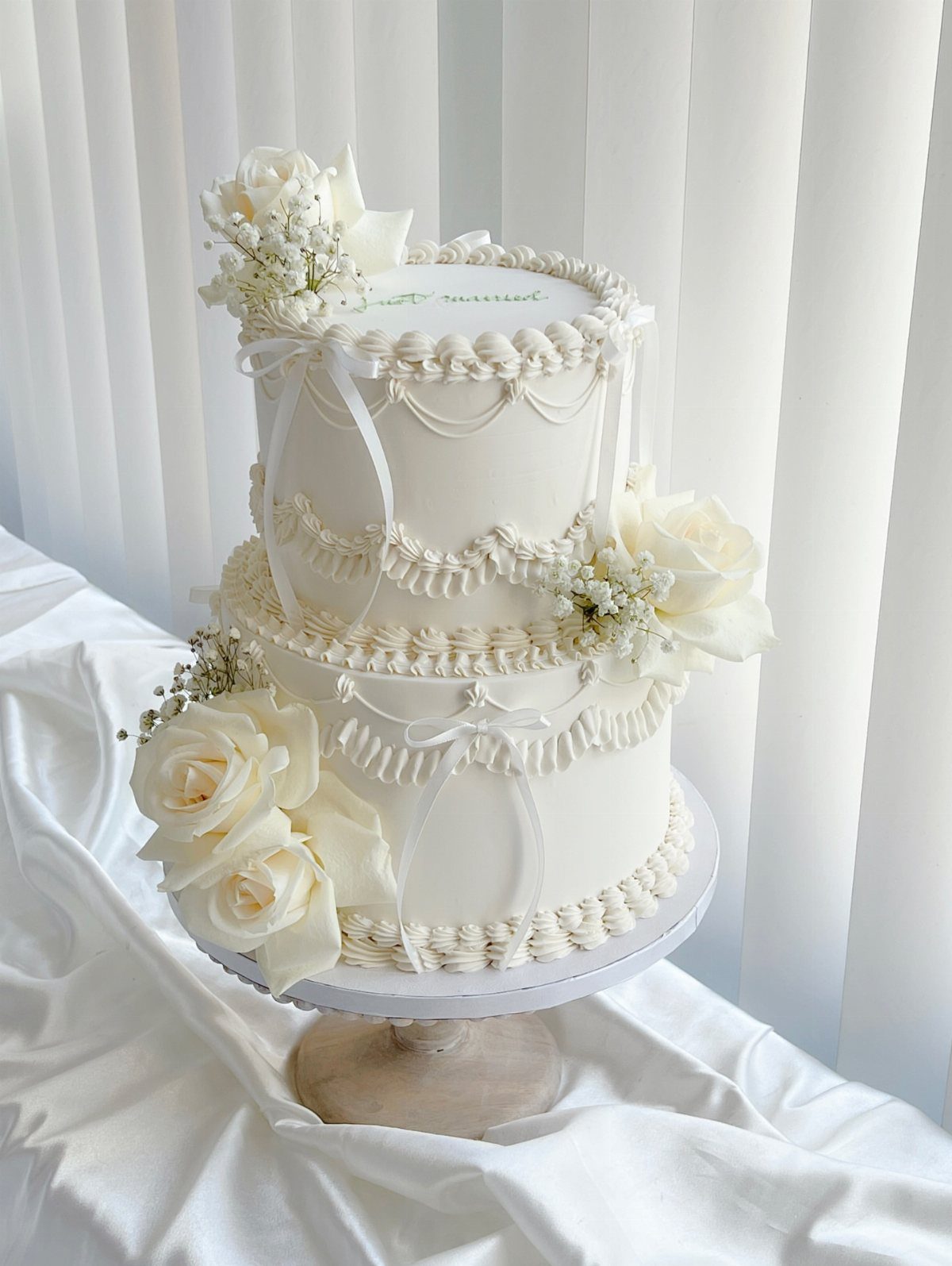
2 tiers keep the cake intimate and the flower budget contained. White roses and baby’s breath are standard wedding fare, but a wood pedestal and thin ribbon bows make it feel chosen rather than default.
Fresh flowers on cake need to be pesticide-free and inserted with food-safe picks; most florists know this, but confirm rather than assume.
This format suits a small guest list or a dessert table where the cake is one option among several.
The visible ribbon is grosgrain or satin, tied simply, which a craft-minded bridesmaid could manage the morning of. Without a third tier, there is no structural worry about sinking, so the display can go up early.
The 3-tier cake featured a ruffled white layer topped with a pink layer splashed with gold. The top white layer featured gold calligraphy and it was personalized with the bride and groom’s intials making it an even more personal experience for Meg and Phillip.
7. Wedding Cake on Natural Wood Slice Base
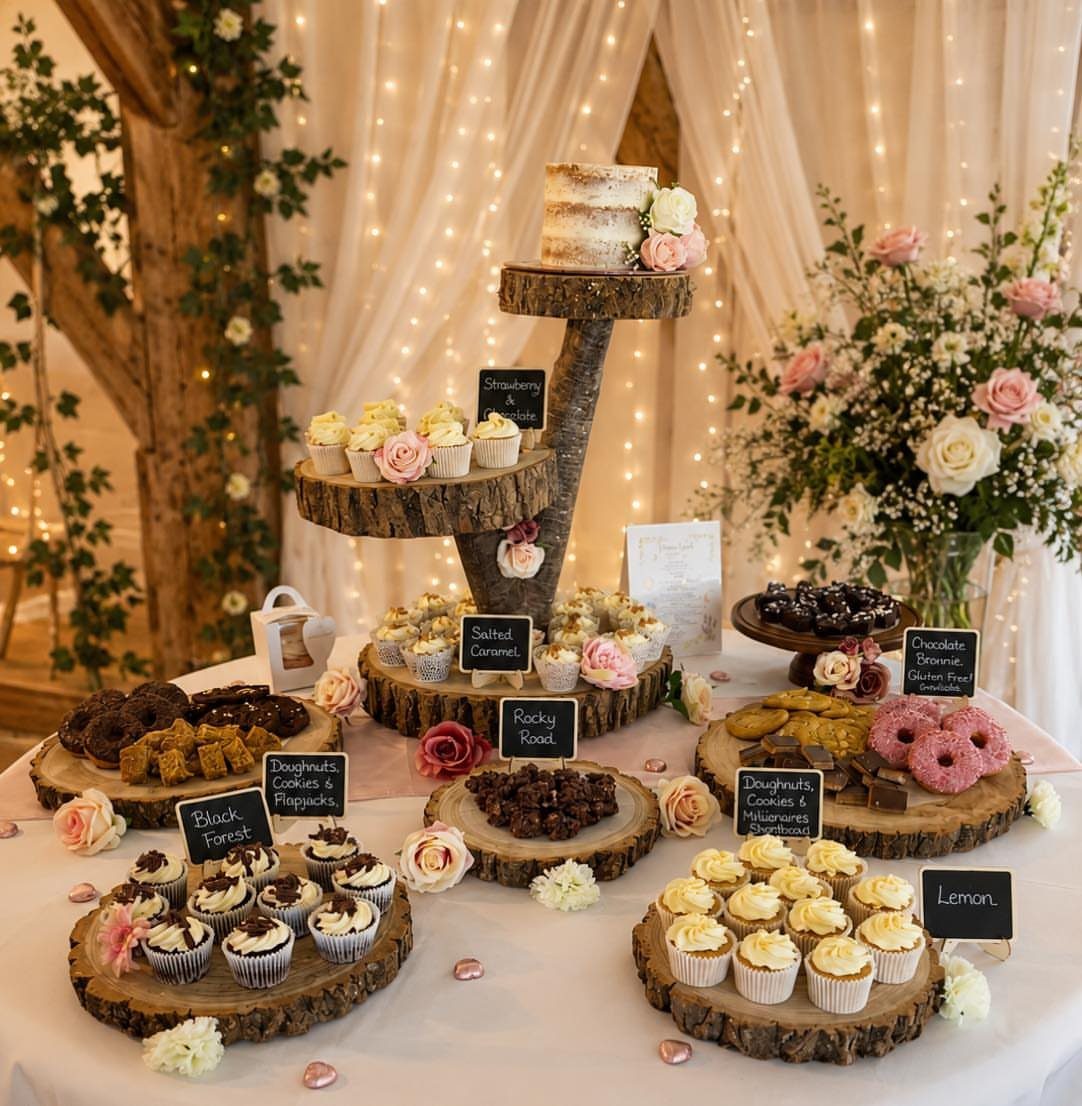
A wood slice base does the thematic work so the cake itself can stay simple.
The rings and bark edge read as forest floor without any sugarcraft required, which matters when your cake budget is modest and your venue already has wood tables or a barn wall.
The slice needs to be level and fully dried; green wood can split or weep sap under refrigeration.
Ask your rental company if they seal theirs with food-safe wax, or source from a dedicated cake stand supplier rather than a craft store.
A three-tier cake wants a slice at least 14 inches across for stability, with the bark trimmed flush so ribbons or linen can tuck underneath cleanly.
Semi-naked or textured buttercream styles work best here; fondant looks odd against raw wood. For a dessert table, matching wood platters for cupcakes continue the material without repeating the exact stand shape.
8. Cake with Fruit Accents
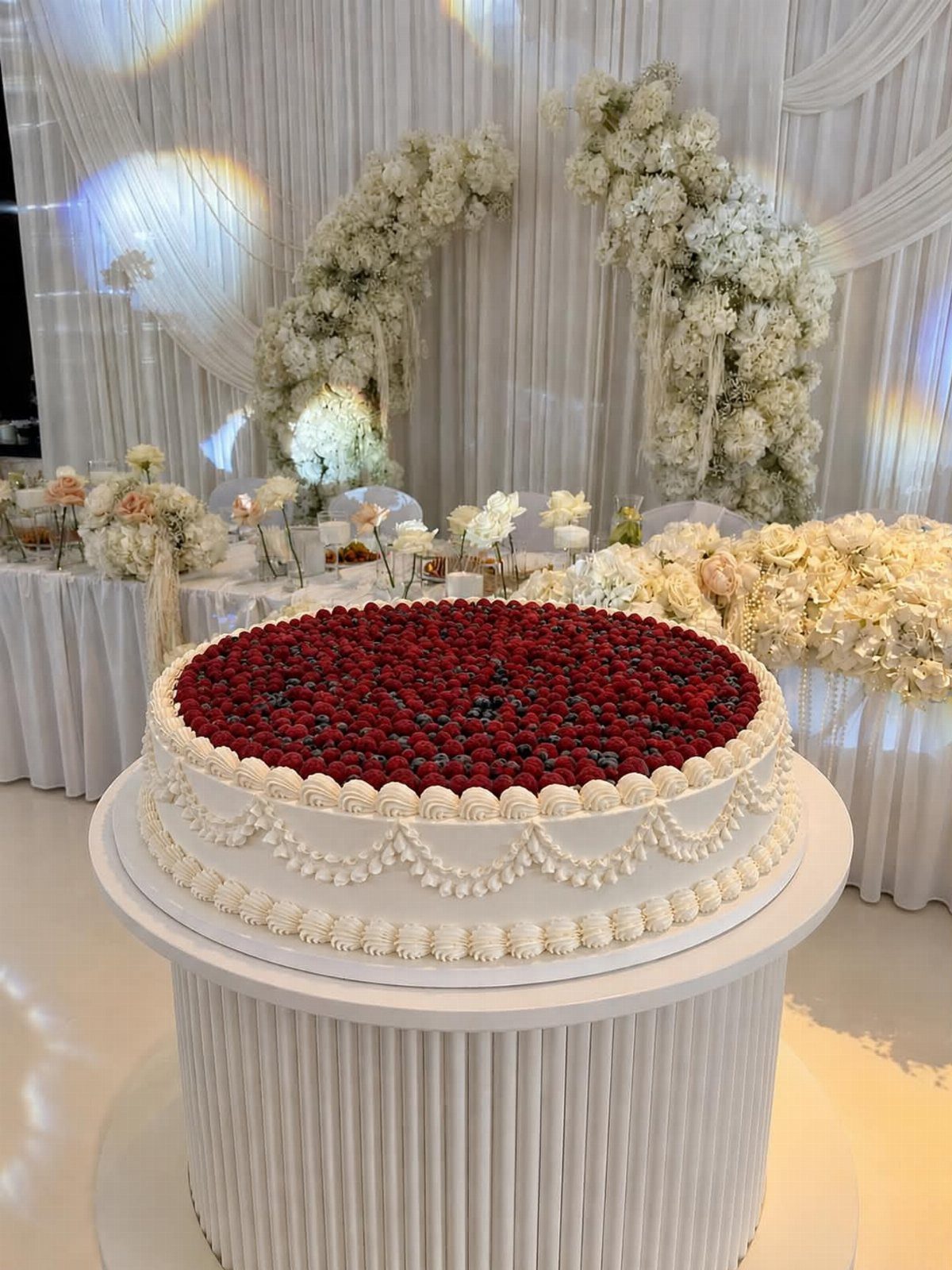
Fresh fruit on a cake signals summer and a farm-to-table mindset more reliably than any sugar flower.
Berries sit on top or cluster at the base where buttercream meets the stand; peaches or figs, sliced and fanned, work better on the sides where their flat face adheres.
The fruit must be ripe but firm, set in place within an hour of display, and washed completely dry or the moisture will weep into the frosting.
Grocery store fruit is grown for eating and held to food safety standards, so ask your baker if they source from a produce supplier who certifies growing method.
Fresh fruit on a cake ties in well if your reception already uses greenery elsewhere or if you are at a farm venue where the fruit picks up what is on the menu.
In winter, dried citrus wheels and sugared cranberries substitute; the look shifts from orchard to preserve pantry, which is its own honest statement.
Decorating Tips
Fresh flowers and greenery do the same work on a cake that they do on a table runner, but the scale is smaller and the placement matters more.
A single vine placed too low on a tier will read as a mistake; the same vine tucked under the top edge reads as growth.
Ask your florist to deliver blooms the morning of, already cleaned and on short stems, rather than pre-arranged in picks that limit where they sit.
Edible flowers add color without the pesticide question, though they are harder to source in quantity and cost more per bloom than standard wedding roses.
I would use them as accents only, clustered where the eye lands naturally rather than scattered evenly. Most guests will not eat them anyway; the value is in the visual honesty of food that could be eaten.
Choosing a Wedding Cake Style
A nature-themed cake sits differently in a barn than on a hotel terrace.
The painted forest with teal pines and hand-worked moss reads as intentional outdoors but can look dropped-in where the walls are white plaster and the chairs are gilt.
In that setting, the cascading green branches and textured white buttercream do the same job with less scenery to compete against.
Your venue’s existing materials should do some of the theme work. Wood tables, stone walls, or tent canvas already say nature; the cake can echo rather than announce.
Where the room is neutral, the cake carries more of the statement, and a painted mountain scene or heavy greenery coverage makes sense. Match the weight of the decoration to the weight of the surroundings.
Presentation Ideas
The stand is half the display. A wood slice base with visible rings does immediate thematic work, though the bark edge and dried autumn flowers read more heavily than a clean pedestal with fresh orange and purple blooms.
The rustic option suits afternoon or outdoor settings where the light is uneven; the refined pedestal works in a ballroom where the cake competes with chandeliers.
For the wood slice, check that the surface is level to within an eighth of an inch or the tiers will read as tilting even when they are not.
A linen square or ribbon wrap at the base hides the hardware and softens the transition from wood to table.
On a pedestal, a simple grosgrain band at the stand’s neck echoes the ribbon on the cake itself without adding another material.
Flavor Considerations
Seasonal fruit on a cake tastes better because it is ripe, but it also tells the truth about when the wedding falls.
Peaches and figs in late summer, berries in June, sugared cranberries when the orchard is bare. The flavor should match the look: a lemon sponge with fresh fruit reads as one decision, chocolate with winter citrus as another honest pairing.
Buttercream takes flavor well; fondant does not. A natural-theme cake leans toward buttercream anyway, which means the cake itself can carry lavender, honey, or Earl Grey if those suit your season and menu.
Ask for a tasting that includes the finishing elements, not just the base layers. Fresh fruit changes moisture and sweetness both, and a cake that balances in the bakery may read differently once the berries are added.
Frequently Asked Questions
What are the trends for wedding cakes in 2026?
Natural elements, wildflowers, and rustic designs are leading the way.
For 2026, I am seeing wildflower cakes with sugar daisies and lavender, semi-naked cakes that let the sponge show through thin buttercream, and textured finishes that look like bark or petals instead of formal piping.
These styles suit outdoor and barn venues where the cake echoes the setting rather than competing with it.
What is the wedding cake style in architecture?
Tiered designs are the defining structure.
Weight and scale matter more than most couples expect: painted scenery like mountains and teal pines reads better on taller cakes, while built-up sugar elements can start looking like craft projects once they repeat across every tier.
What is so special about a wedding cake?
It is the visual and symbolic center of the reception, and in nature-themed weddings it also tells the truth about season and place.
A cake with ripe figs or sugared cranberries marks when the wedding falls; buttercream with lavender or honey ties to the menu and venue.
A cake should match the weight of its surroundings rather than trying to override them; in a barn or meadow, that usually means quieter tones and simpler shapes than the ballroom equivalent.