These 13 ideas run from pumpkins on the ground to a full mountain ceremony with shuttle logistics, and the one that fits your wedding depends on whether your guests will be sitting in chairs, standing on leaves, or hiking forest trails to get there.
Battery-operated pillars inside glass lanterns keep the aisle lit through a wet October evening, and they photograph the same at dusk without the drowning risk on a stone patio that pools water.
1. Pumpkins
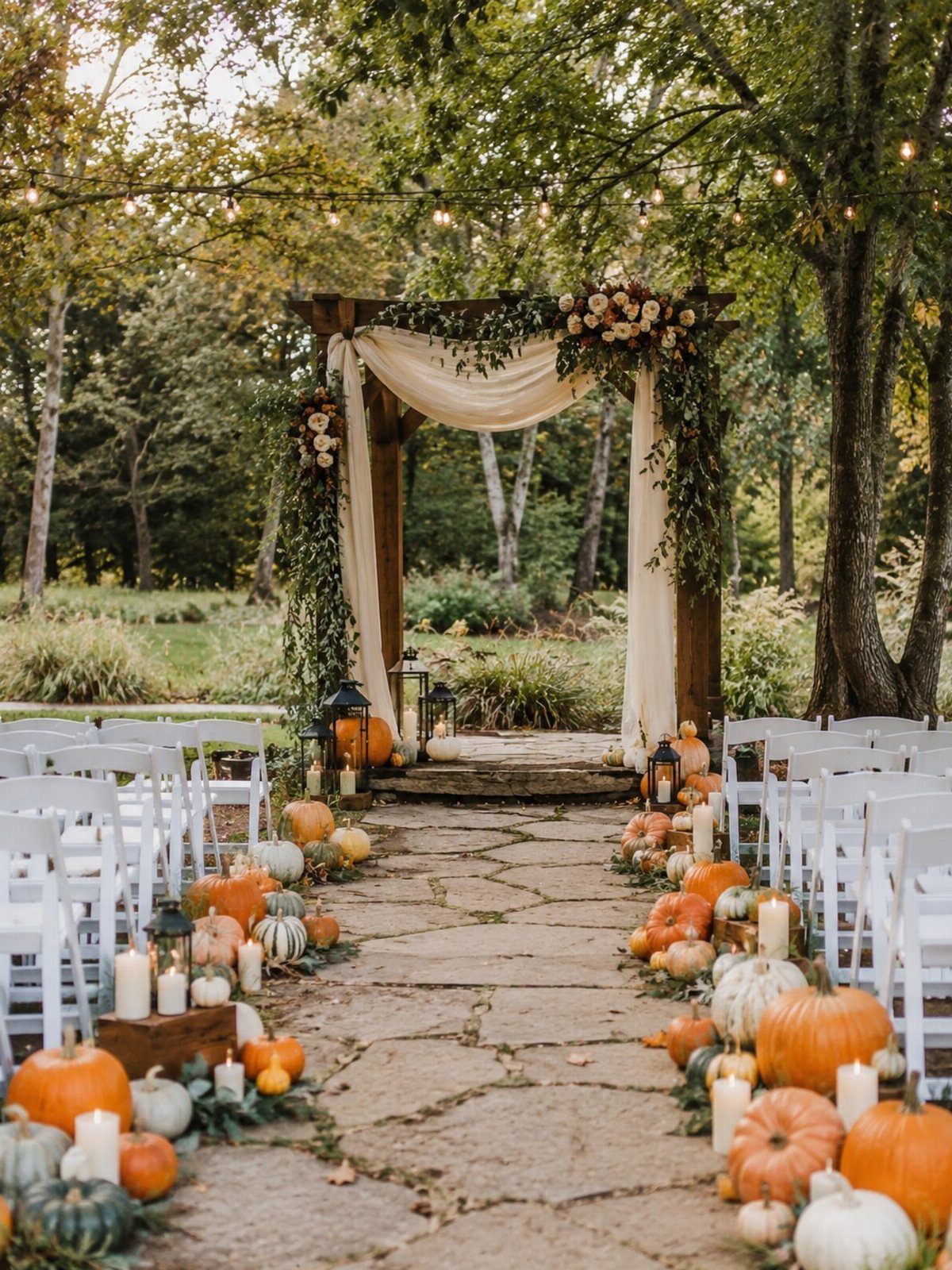
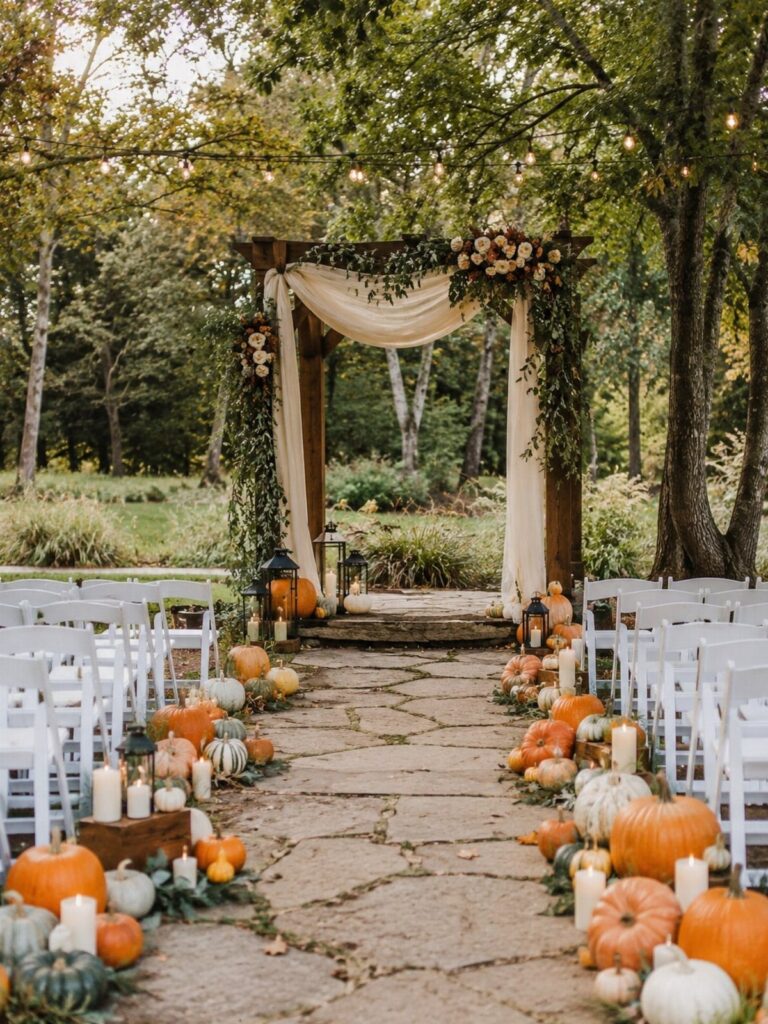
Pumpkins lining a stone aisle feel inevitable for October, but the heirloom varieties keep it from reading like a porch decoration.
I cluster them in threes at uneven intervals, mixing pale Jarrahdales with deep Rouge Vif d’Etampes so the color shifts as guests walk toward the arch. Keep stems on and surfaces unmarked, no carved faces or glitter.
A wet November ceremony needs a backup plan; set them on wooden rounds or risers so drainage doesn’t leave them sitting in puddles. For a Halloween date, I would still skip orange-only; the mixed palette reads autumn rather than holiday.
2. Fall-themed Floral Arrangements
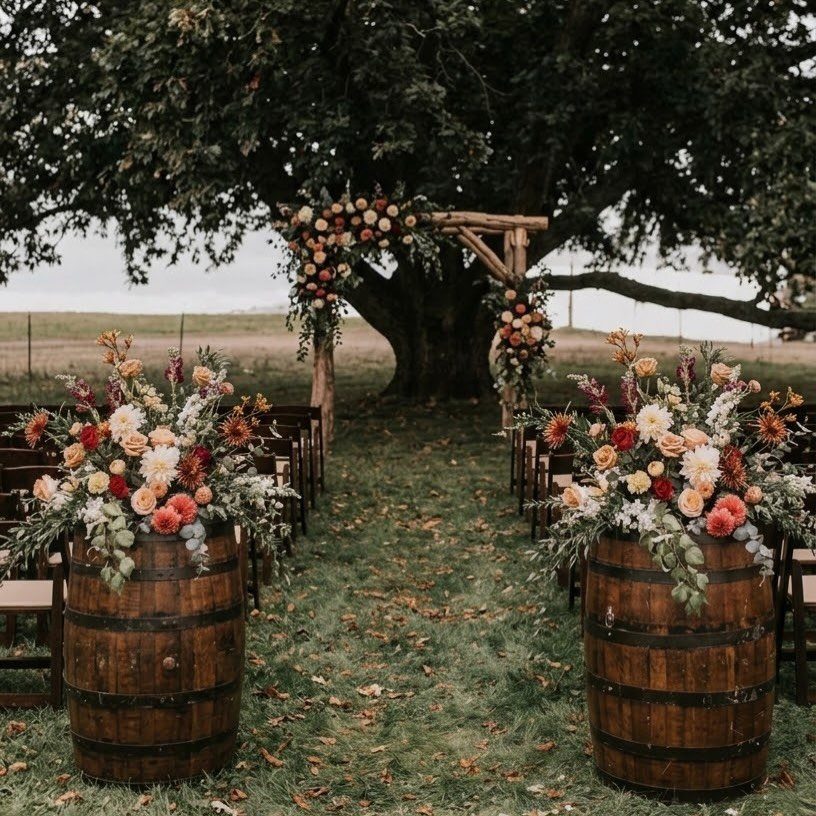
Seasonal flowers for fall run toward dahlias, chrysanthemums, and the last roses before the hard frost, set in arrangements that pull from the muted end of the spectrum rather than bright summer pastels.
Massing flowers on wooden barrels flanking grass solves a problem I have seen at outdoor ceremonies: blooms at ground level disappear once guests stand. Barrels lift the eye to the color without blocking the aisle.
Match your invitation tones to these blooms and the whole day ties together before anyone reaches the venue. Skip spring flowers flown in; they cost more and look out of place against October leaves.
3. Lantern-Lined Patio Ceremony Aisle
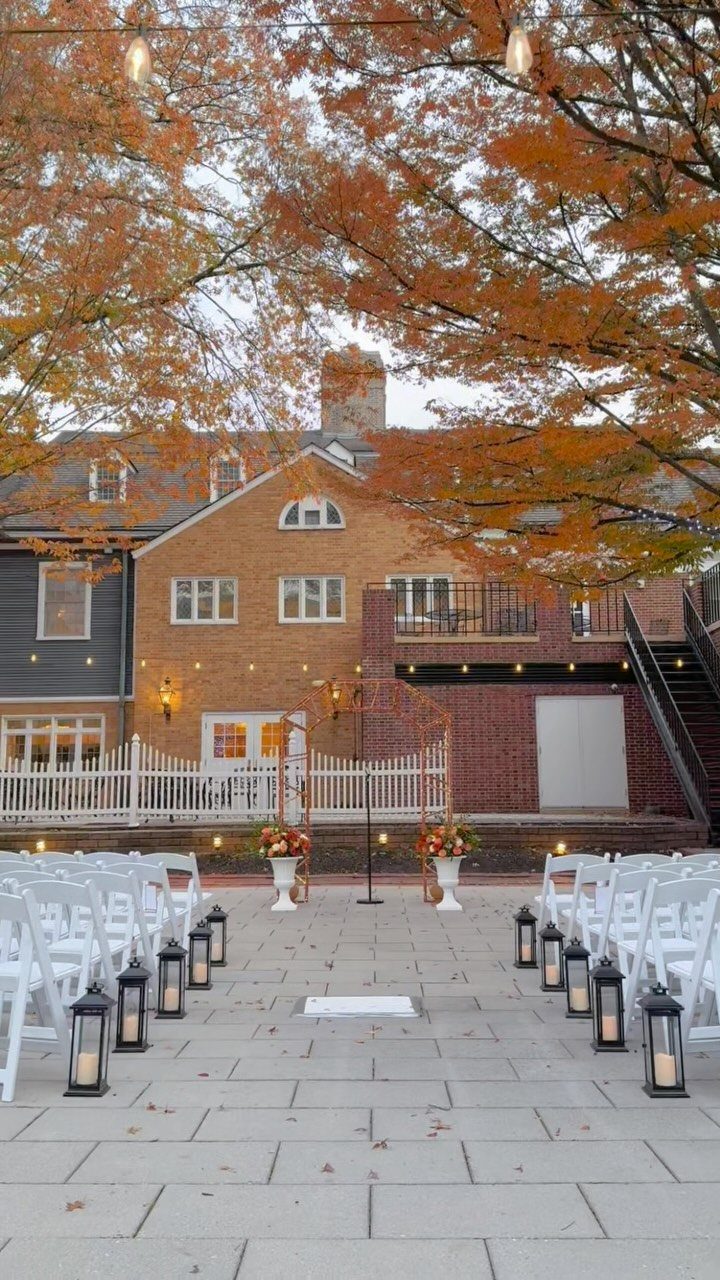
A stone patio gives you a flat, predictable surface that grass or meadow soil never does, and the lanterns mark the aisle without competing with overhead color from turning trees.
I check 2 things before committing to this setup: whether the venue permits open flame, and whether the patio surface drains.
A sudden shower on stone leaves standing water that soaks hems and extinguishes candles; battery-operated pillars inside real glass lanterns solve both problems and photograph the same at dusk.
Space them closer than you think, since guests’ bodies block the light from farther apart.
4. Dark Red Bridesmaid Dresses
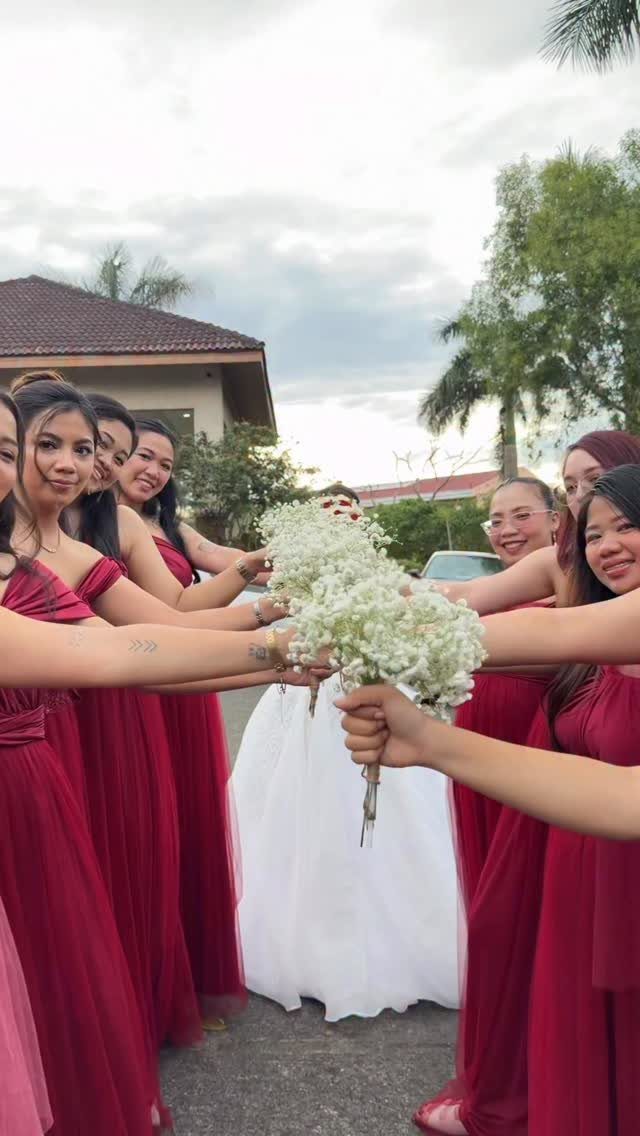
Deep red bridesmaid dresses work in fall for a reason that surprised me when a photographer explained it.
Summer sun sits high and reflects strong color onto skin, so bold reds and oranges throw discoloration onto pale faces; by October the angle is lower and the light diffuses, so the same shades read as rich rather than harsh.
The floor-length cut keeps the look formal against bare branches and brown grass, and the baby’s breath bouquets stay neutral so the dresses carry the color statement.
I would not try this shade in July, but from late September through November it is one of the safer bold choices.
5. Floral Cross Ceremony Altar
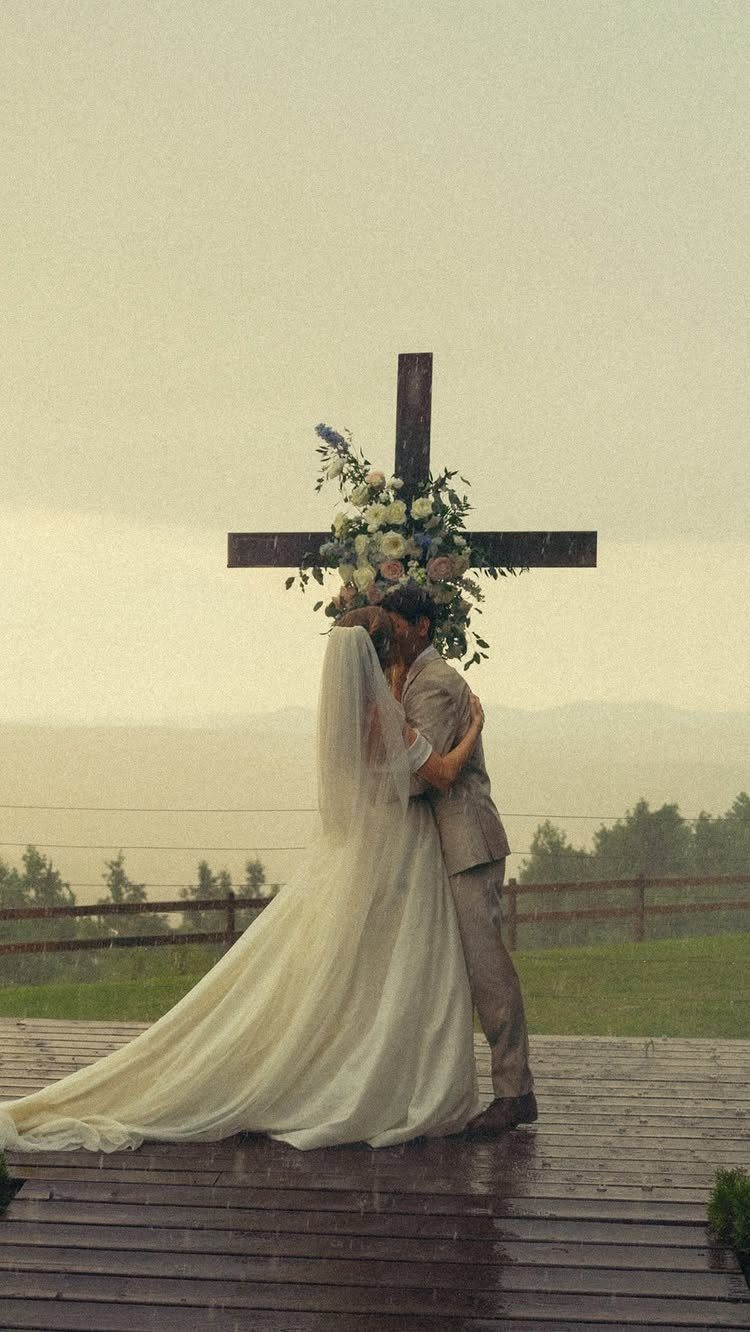
A floral cross as ceremony backdrop suits couples for whom the symbol carries weight, and the rain shows why a covered deck matters in mountain country.
I ask about the structure’s dimensions and whether the venue provides it; a cross too small for the space looks stranded, too large dominates the couple.
Fresh flowers wired to wood need water tubes or foam for anything beyond a short ceremony, and autumn wind strips loose petals fast.
Silk is an option I would consider for exposed sites, though real blooms can hold up in mist. Check that the deck surface is nonslip when wet; a soaked bride and groom make memorable photos for the wrong reasons.
6. Rust Draped Wooden Arch
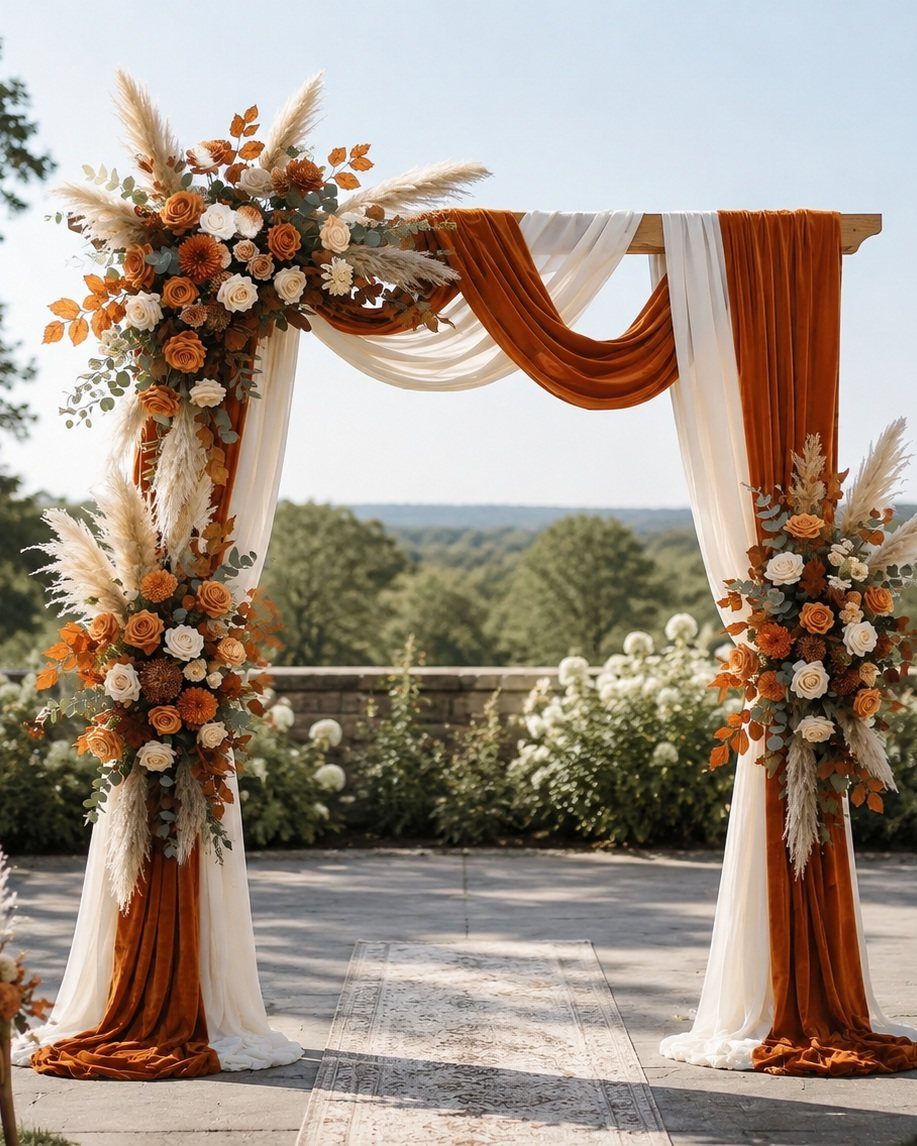
Rust fabric against wood reads autumn without needing literal leaves or gourds, and the pampas grass in this arch gives height that stays light, not dense.
I would ask the florist to wire the plumes securely; wind at hilltop venues sends loose pampas drifting into guests’ laps.
The cream second tone keeps the rust from going heavy, and orange roses bridge the two. Draping takes more yardage than you expect, and the fabric weight matters: too light blows horizontal, too heavy pulls the structure off-balance.
I have seen couples use muslin or lightweight linen in this color range; both photograph warm in late afternoon light, which is when most fall ceremonies run.
7. Autumn Leaves Recessional Toss
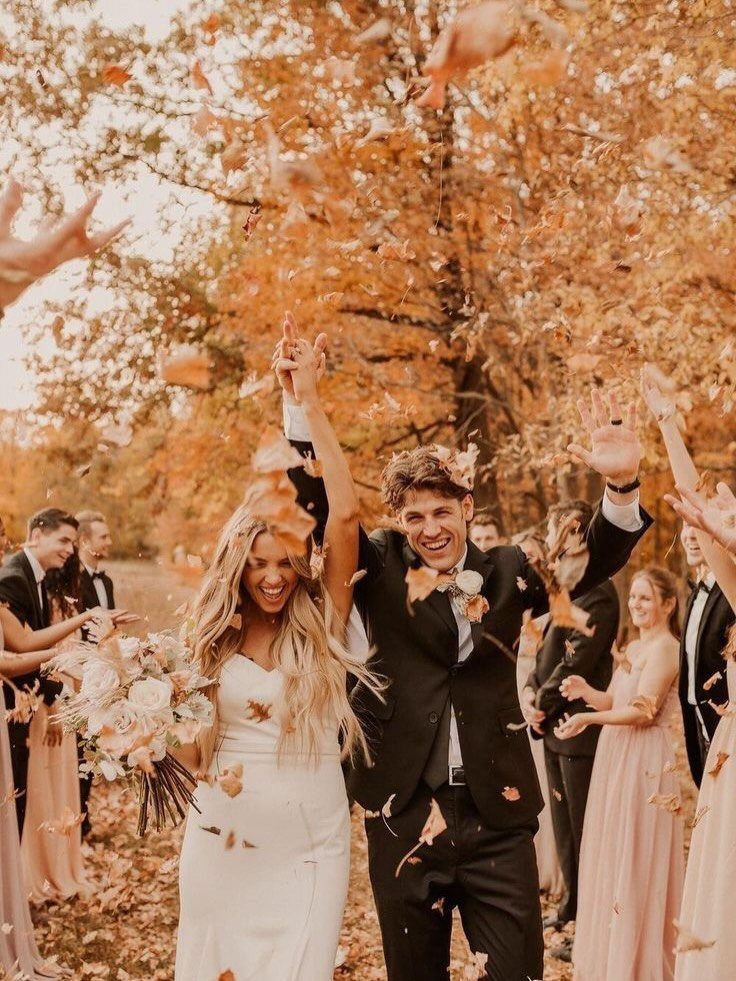
Dried leaves tossed during the recessional give guests something active to do while the couple walks back down the aisle, and the photos catch motion that posed portraits rarely do.
I gather leaves a week ahead and press them flat under boards so they flutter rather than clump; wet or freshly fallen leaves stain white dresses and stick to hair.
Outdoor ceremonies in wooded venues have the material ready, but check whether the site allows scattered debris, since some parks require complete cleanup.
Indoor ceremonies need buckets or cones to hold the leaves and ushers to distribute them. A forest aisle gives you built-in cleanup: leaves fall where they already belong.
8. Calla Lily Chair Decor
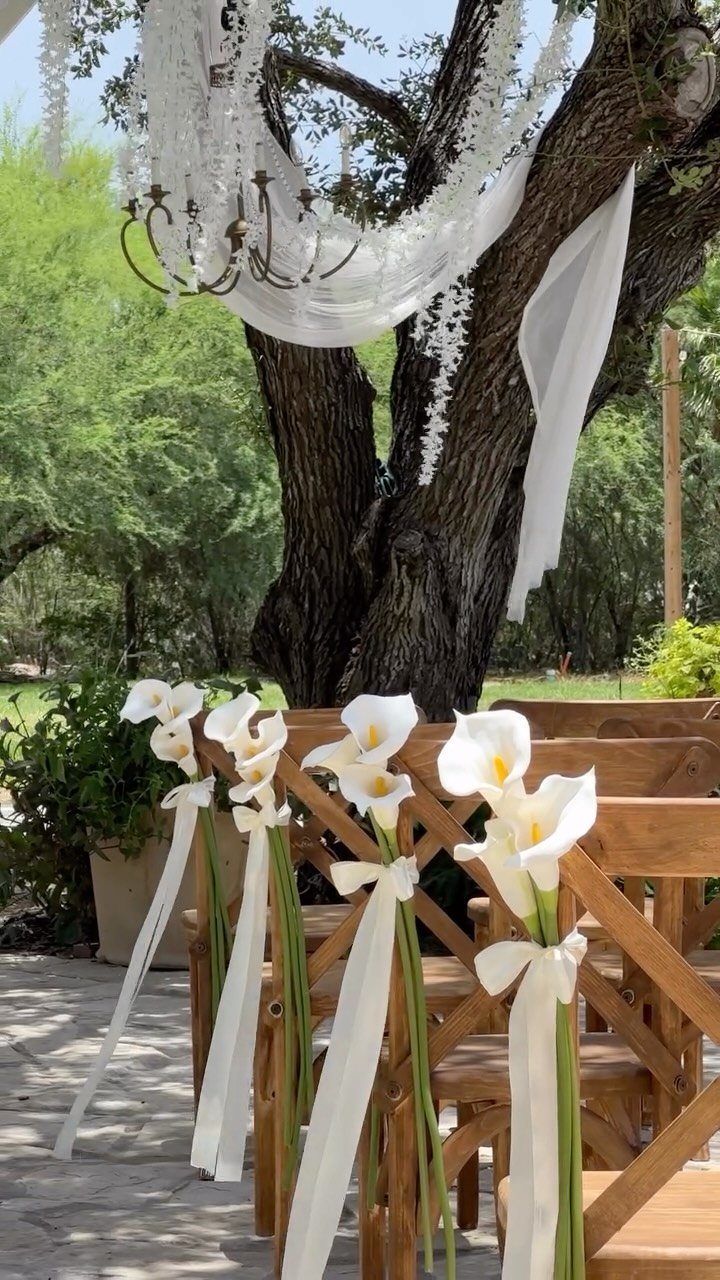
White calla lilies tied to wooden cross-back chairs with trailing ribbon read formal against rustic wood, and the long stems keep the bloom visible from the aisle rather than tucked behind a guest’s shoulder.
I would use satin ribbon in a width that holds a bow; organza slides and grosgrain looks too casual for this flower.
Check that the knots do not snag clothing as guests take their seats, and have scissors ready for removal before the chairs move to the reception.
The single variety keeps it quiet; mixed flowers here would compete with the drapery and chandelier overhead.
9. Sunflower Wedding Aisle Markers
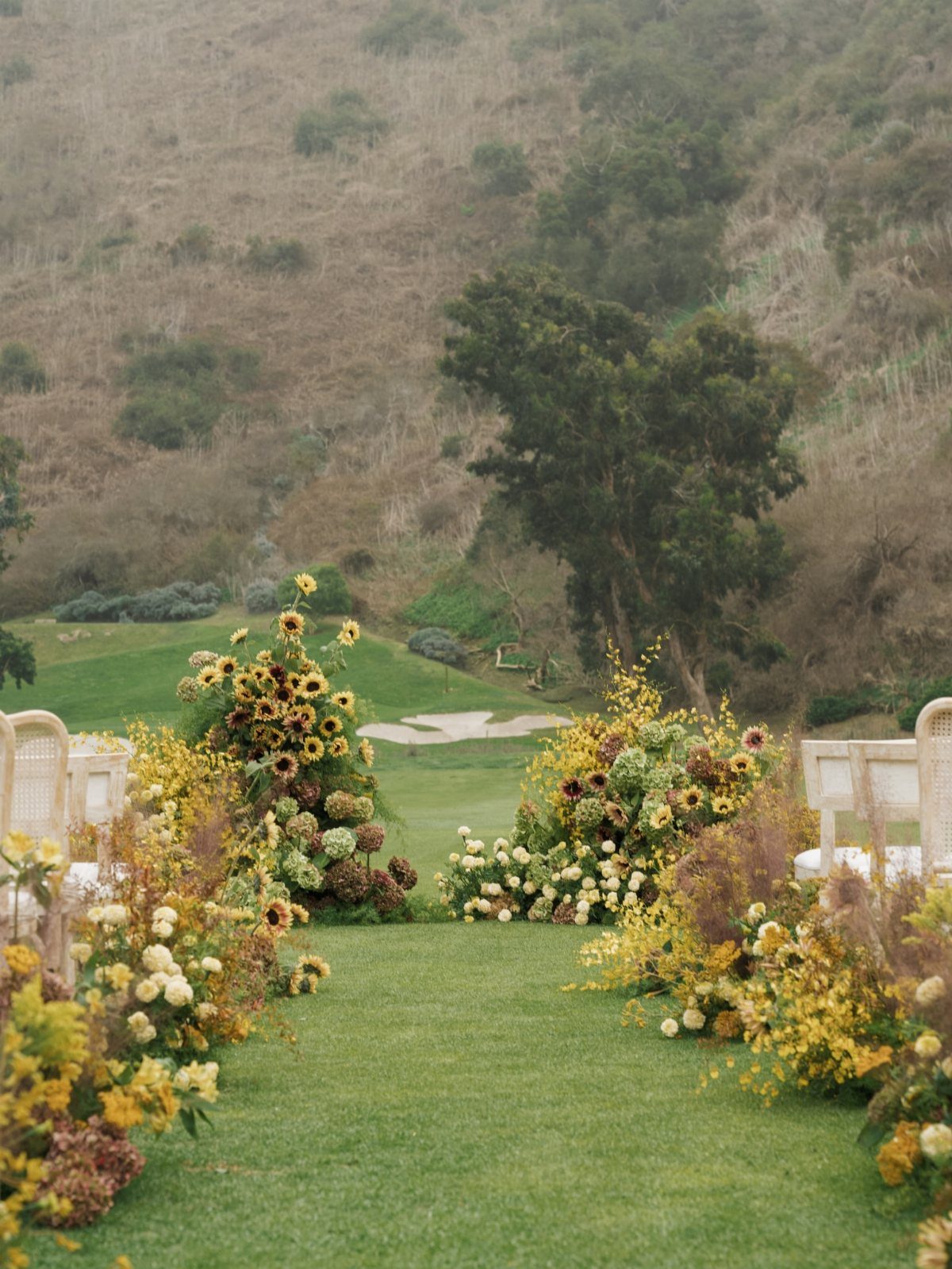
Sunflower aisle markers on lawn need weight at the base that grass alone does not provide; shepherd’s hooks driven deep or weighted urns keep arrangements upright in October wind.
The white blooms and dried grasses in these markers keep the sunflowers from going too country-fair, and the green lawn gives a late-season freshness that bare ground would not.
I would confirm the venue allows stakes or holes in the turf, since some groundskeepers charge for repair.
Guests on a hillside look up at an angle, so keep markers below eye level or the flowers block the view you chose that spot for.
10. Fall Leaf Indoor Aisle Runner
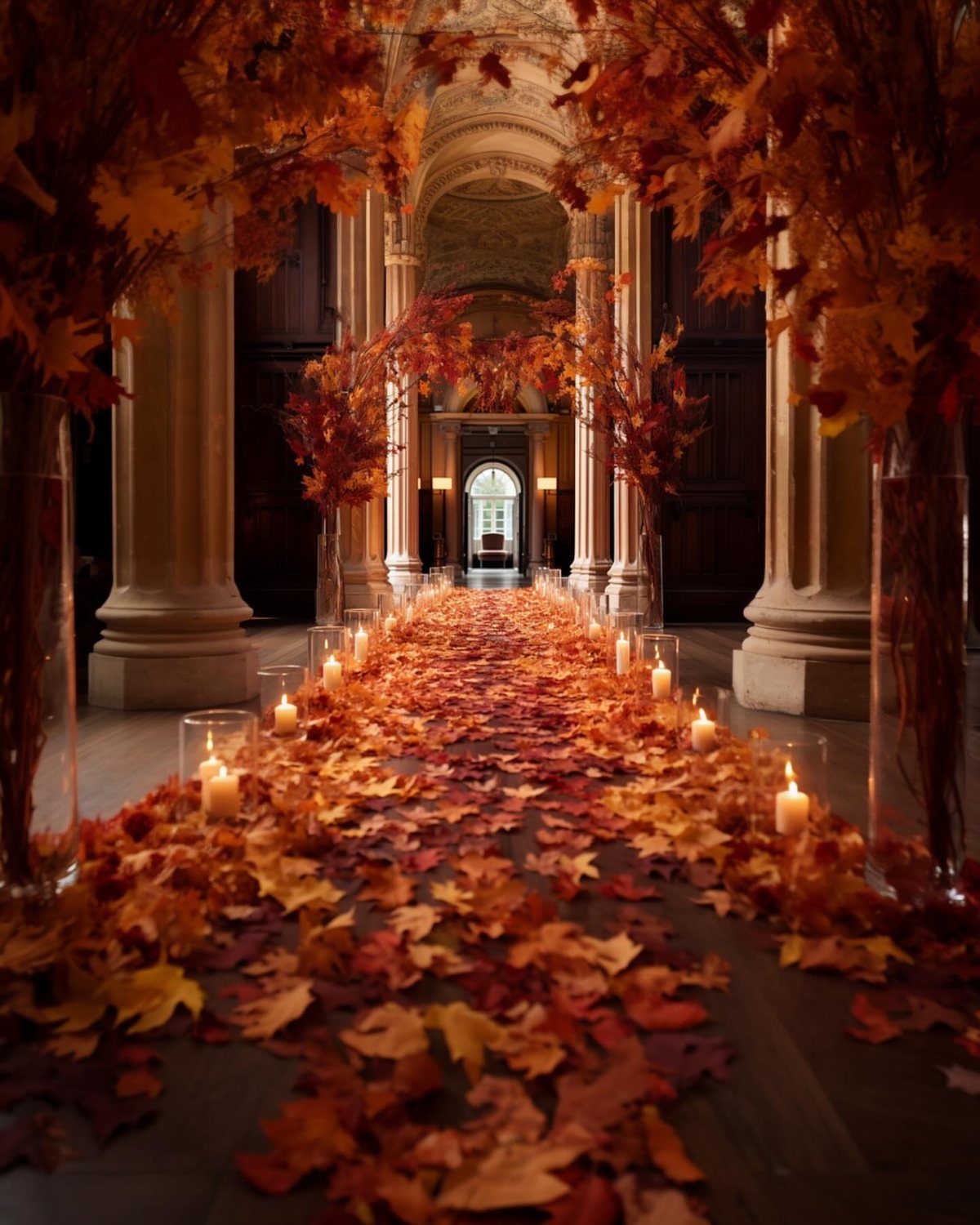
A leaf-covered aisle indoors solves what an outdoor version cannot: no wind to scatter the material, no rain to mat it down, and the candles stay lit.
The cylinder glass holders here protect flame from fabric hems and give the glow a columned rhythm that matches the hall’s architecture.
I would use battery candles if the venue requires them, since real flame near loose leaves needs constant tending and most historic halls have rules.
Sweep the leaves rather than blowing them, which sends debris into the arrangements. Dense coverage reads abundant; sparse scattering looks forgotten rather than intentional.
11. Sheer Draped Black Altar Frame
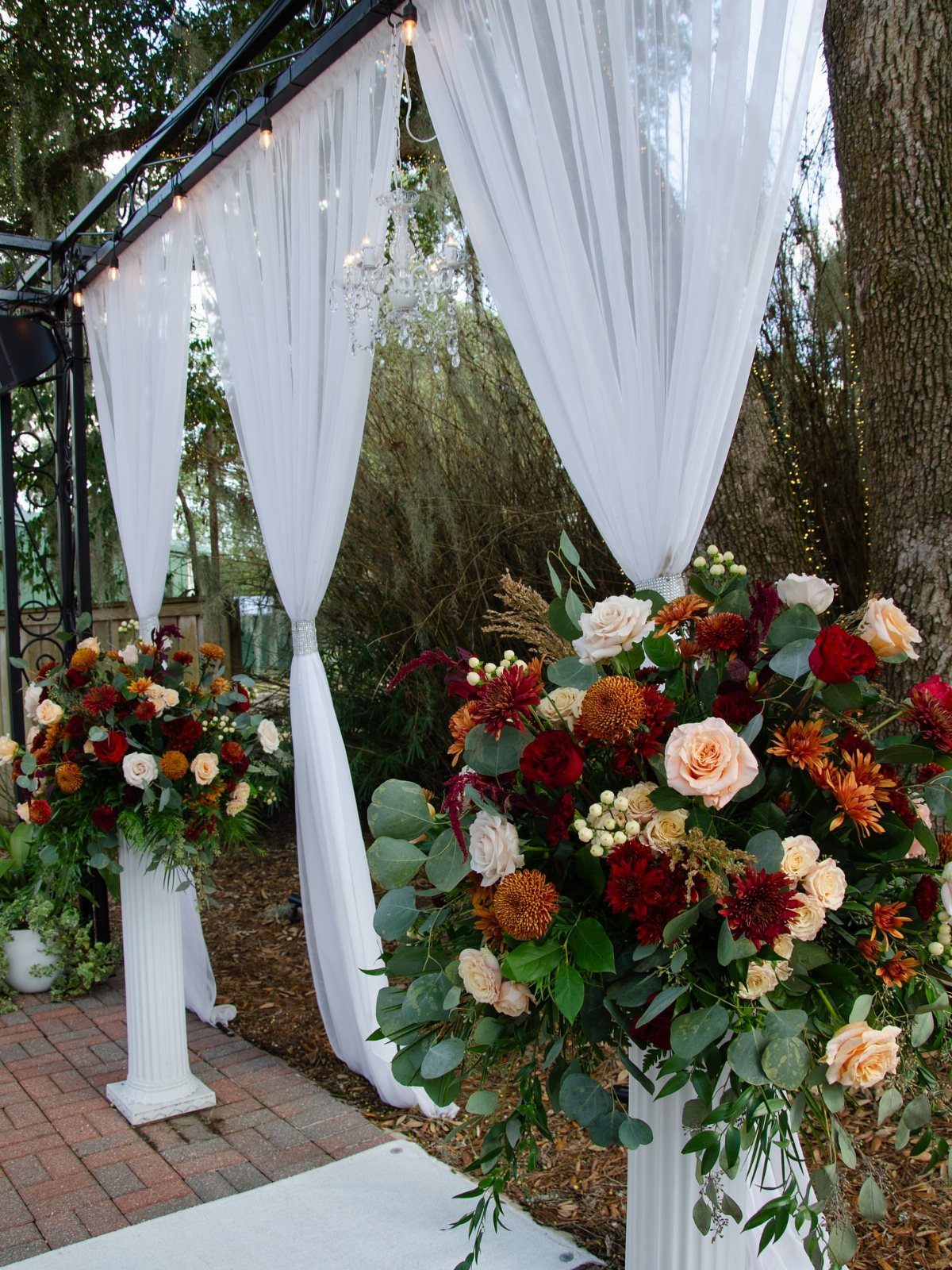
A black metal frame draped in sheer white fabric gives structure without the wood-tone warmth that most fall arches default to, and the contrast makes the autumn florals on the pedestals read brighter.
I would check the frame’s footing; outdoor setups on uneven ground need sandbags or stakes that the drapery can hide. The chandelier adds weight that requires secure hanging, and wind catches sheer panels more than heavier cloth.
The classical pedestals here need level placement or the arrangements read crooked in photos. This setup suits couples who want modern lines against natural color rather than rustic texture throughout.
12. Fall Dessert Table
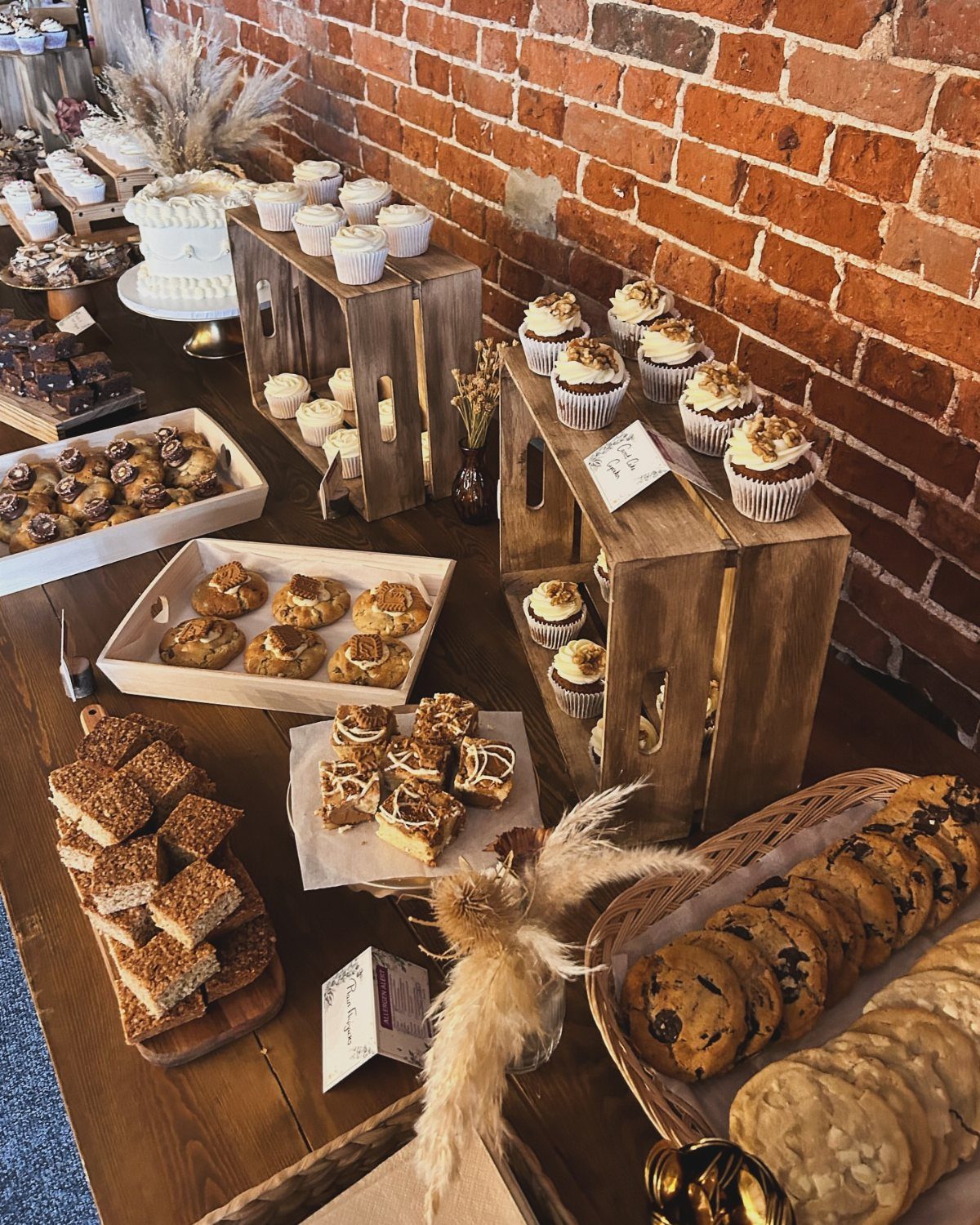
Pumpkin cupcakes, pecan pies, and apple strudel bites give guests the flavors they associate with October even if the wedding runs early in the month before local orchards peak.
The wooden crates and brick wall in this setup need no additional theming, which saves budget for the desserts themselves. I would label allergens clearly, since nut-based fall desserts catch guests who expect only flour and sugar concerns.
Dried pampas grass on the table repeats a texture from the ceremony without competing for attention. The small cards visible here let guests choose quickly, keeping the line moving during a short cocktail hour.
13. Mountain & Forest
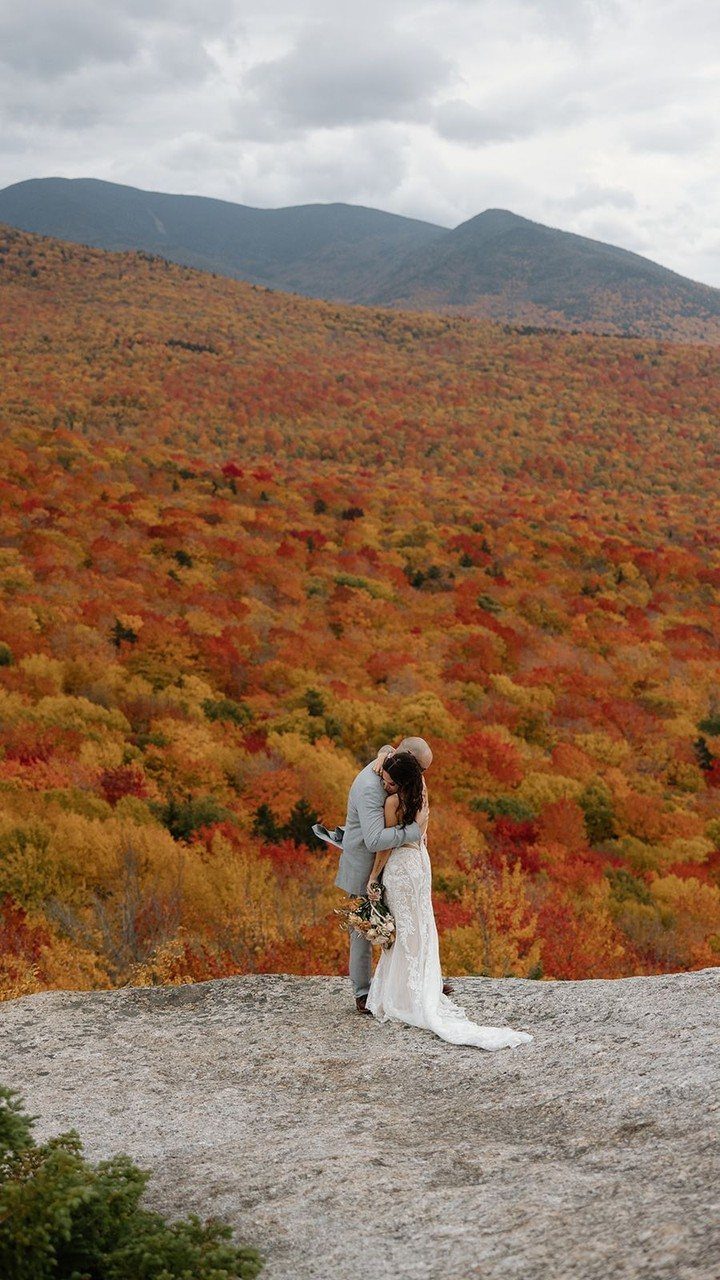
A ceremony on exposed rock at altitude puts fall color at your back without bringing a single leaf indoors.
The temperature drops fast as elevation climbs, so I would check the hourly forecast for wind and plan layers the wedding party can shed for photos without ruining the look.
Mountain roads in October close without warning for early snow; I always confirm access the morning of, not the week before, and keep the guest count small enough that one shuttle handles everyone if parking fills.
The trade is real: no venue staff, no power for sound, and the nearest restroom may be a half mile down the trail.
Couples who choose this are trading convenience for the view, and the view only works if weather holds.
Consider Weather Factors
Fall weather turns on you faster than any other season. Rain plans need more than a tent; they need a decision time written into the timeline, far enough ahead that vendors are not scrambling to reroute power while guests arrive.
Concrete or stone surfaces get slick before they look wet, so I ask venues about nonslip treatments or temporary mats for the aisle.
If the ceremony runs at altitude or on exposed ground, the wind chill can sit well below the forecasted low, and that gap matters for sleeveless dresses and thin suit fabrics.
Communicate the actual conditions, not the optimistic version, and guests will thank you for it.
Photography Considerations
Fall daylight disappears earlier than most couples plan for, and the sunset does not negotiate.
In the Pacific Northwest, afternoon portraits need to finish well before 5 p.m. in October, which means a first look is not romantic optional; it is logistical necessary.
Autumn sun sits lower all afternoon, so you get that warm, angled glow for hours instead of the brief window of a July evening.
I build timelines backward from sunset, not forward from the ceremony, because ceremonies run late and post-ceremony portraits are where the light runs out first.
Flash in the last half of a portrait session breaks the visual consistency of the whole gallery, and no editing fixes that.
Schedule the bulk of couple and wedding party portraits before the ceremony, and treat any post-ceremony time as bonus, not baseline.
Venue Selection Tips
Barns, ranches, and farms carry their own decor, which saves budget for the parts you have to bring in.
The wood grain and metal fixtures do the autumn work without additional theming, and most have indoor and outdoor spaces for a ceremony that moves if weather turns.
I look for venues where the existing palette already leans warm; paint and plastic siding fight fall color instead of supporting it. Wineries work similarly, with the added benefit of established landscaping that turns on schedule with the season.
Outdoor-only sites need a hard backup, not a hopeful one: a covered deck the whole party fits under, or a separate building minutes away, not across a muddy field.
Ask about parking surfaces too; grass lots in October become ruts by cocktail hour.
Guest Experience Enhancements
Guests remember temperature and hunger more than color schemes.
I set out warm cider or mulled wine before the ceremony starts, since the gap between arriving and the first drink can stretch an hour in fall, and cold guests do not focus on vows.
Blanket baskets near the back rows handle the ones who dressed for the invitation’s optimism, and a short note on the program suggesting layers keeps the hint polite.
The coziness is the point; fall weddings that feel cold feel forgotten, and the smallest warm detail, a heated tent entrance or hand warmers in the welcome bag, earns more goodwill than an extra floral arrangement ever will.
Frequently Asked Questions
What are the trends for fall weddings in 2026?
Fall weddings lean into the season’s built-in palette rather than fighting it, with couples using muted dahlias and late roses instead of flown-in spring blooms, and heirloom pumpkins in mixed varieties rather than standard orange.
A thermos of hot cider or mulled wine handed out before the processional is the kind of detail guests remember; shivering through vows helps no one.
Venues that already carry autumn in their bones, barns and wineries with warm wood tones, save budget for the parts couples must bring in.
What is appropriate for a fall wedding?
Thicker cloth and more skin covered just look correct once the air turns; groomsmen in wool and bridesmaids in velvet stay warm enough to smile, and October light flatters a sleeve far more than a bare shoulder.
Deep reds and rust tones that would throw harsh color onto skin in July read rich and warm under autumn’s lower, diffused sun.
A backup plan matters as much as the outfit: tents, umbrellas, or an indoor move if rain arrives, since fall weather turns faster than any other season.