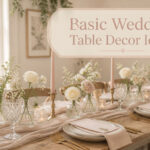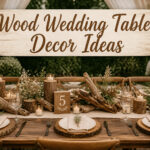
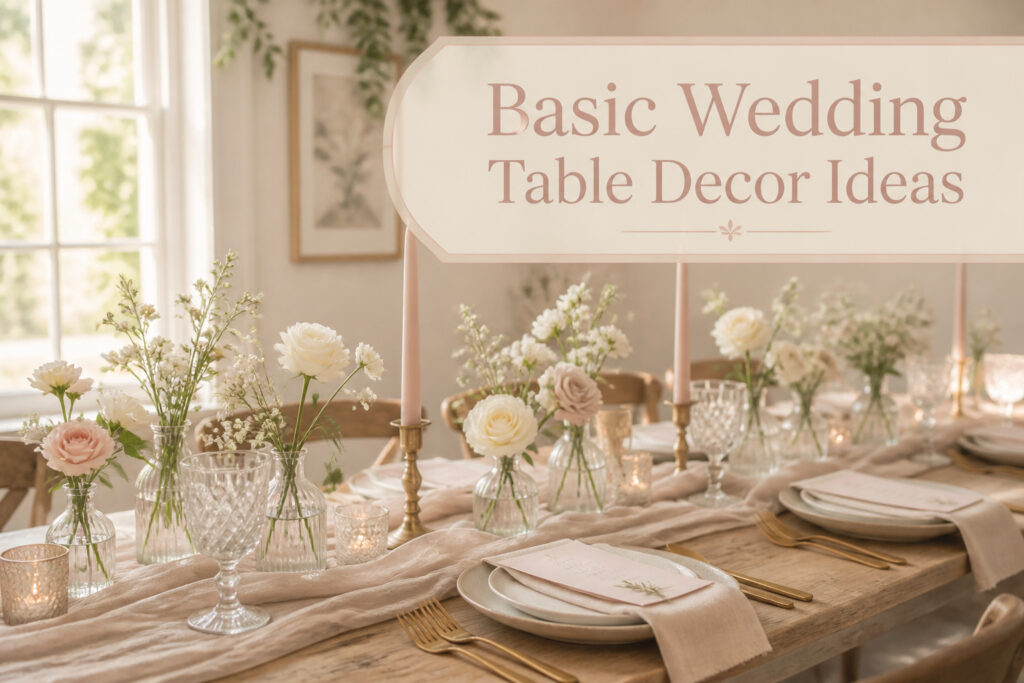
Basic wedding table decor spans from a few bud vases per table to full floral installations, and the deciding factor is usually whether the couple wants to rent or buy. Renting centerpieces keeps costs down for large guest counts, while buying makes sense for consumables like taper candles that store flat and see use again. A single linen runner down a pine farm table costs far less than full coverage and leaves fifty years of grain visible to guests.
1. Floral Centerpieces
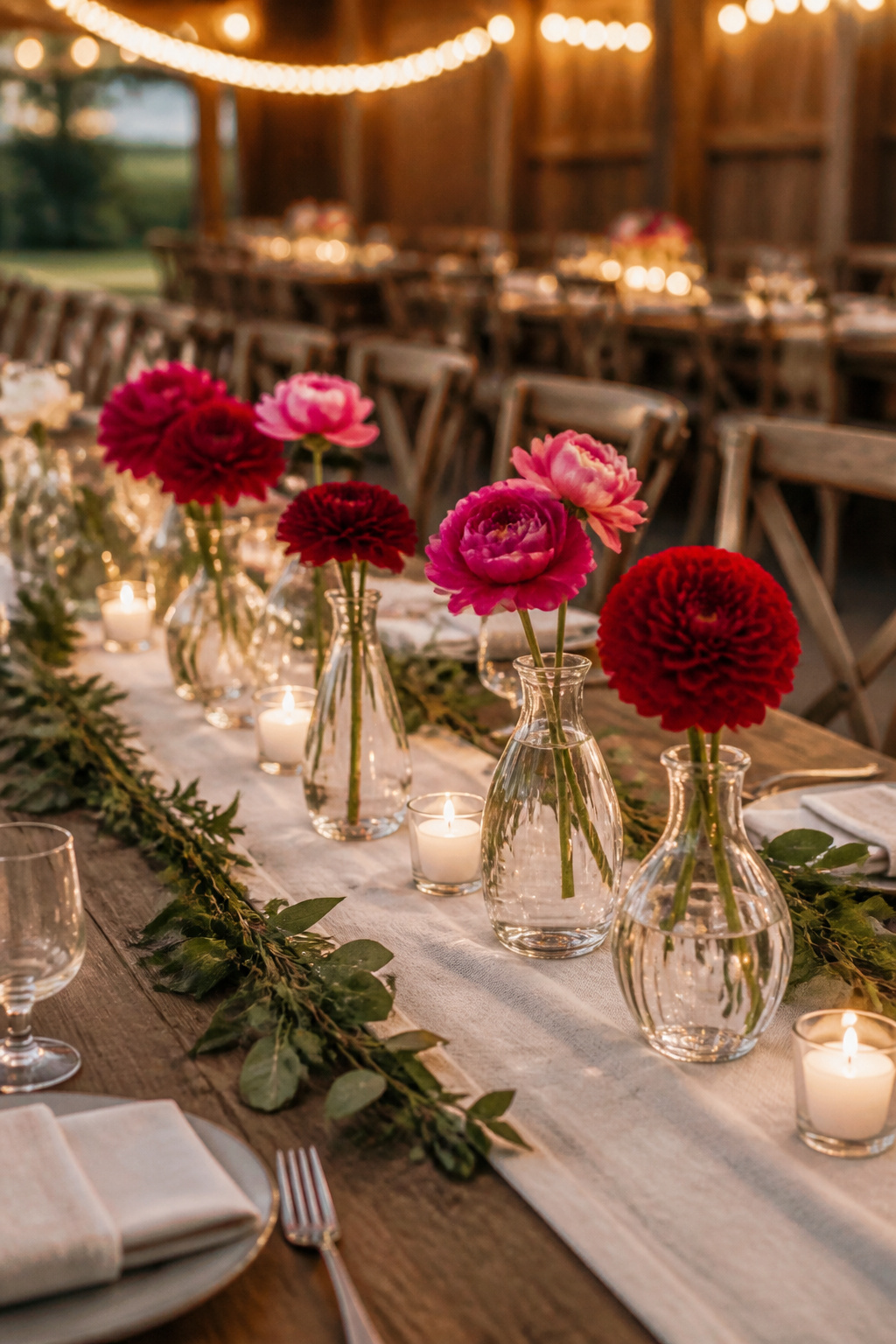
Flowers are a classic for a reason. They still do the heaviest lifting on wedding tables because they anchor the visual weight in a way nothing else quite manages. A single bold arrangement or a scattering of small pieces gives guests something to gather around without crowding the conversation.
The range is wider than most couples first expect. Bud vases with one or two blooms each run down a table for a lighter, often less expensive look than one large centerpiece. At the other end, elaborate displays fill the space for a more formal dinner. Either approach works; the choice depends on your style and what the budget allows.
Renting the arrangements instead of buying everything outright is worth considering if you want the full effect without the hassle of purchasing dozens of pieces you’ll only use once. The rental route keeps the tablescape looking finished while sidestepping the question of what to do with ten centerpieces the morning after.
2. Taper and Votive Candles
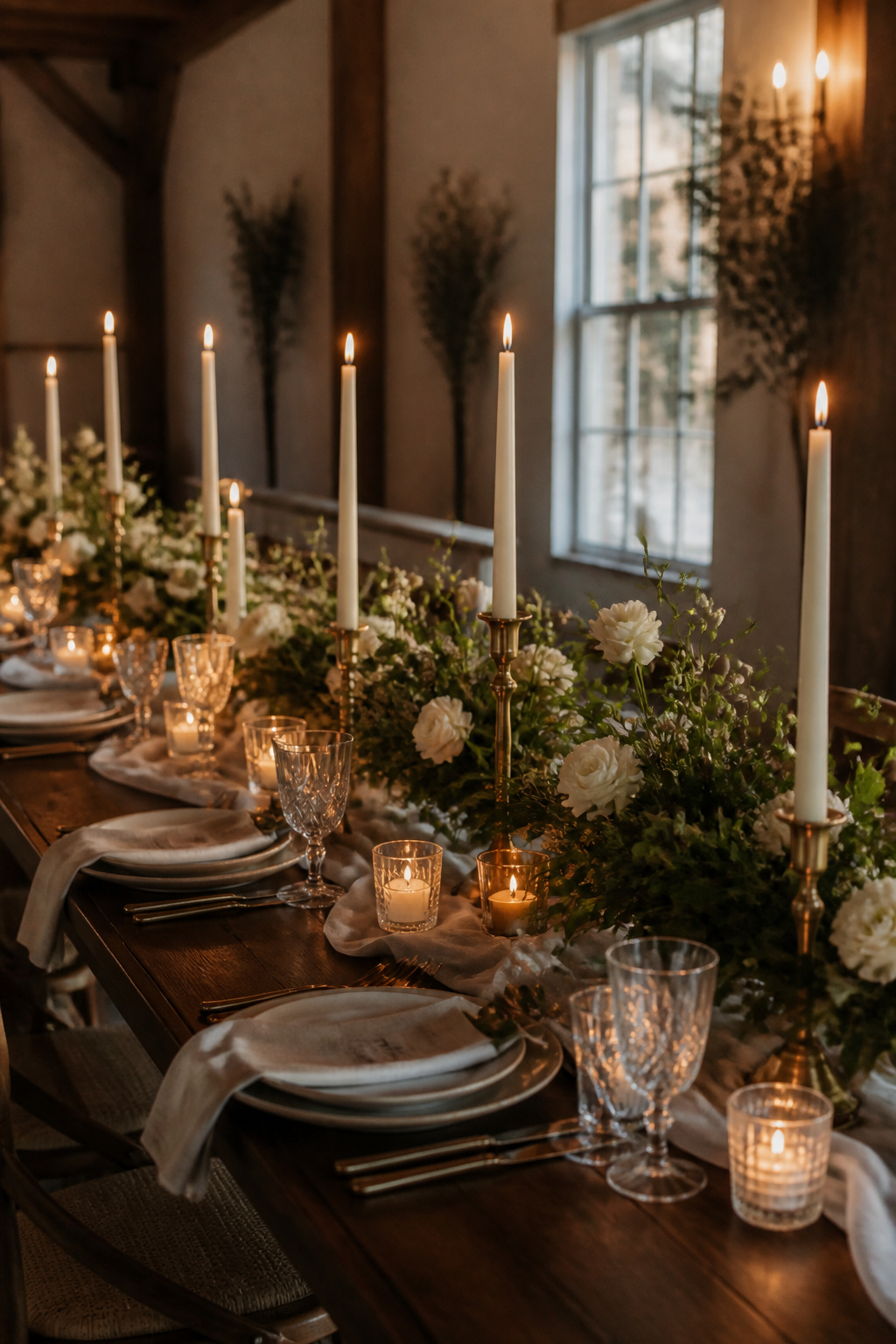
Taper candles add instant warmth and romance, something I noticed right away when I started shooting evening receptions. The tall, slim shape draws the eye upward and breaks up the flat plane of a long table without blocking conversation across it. I usually see them placed between loose flower clusters or marched down the center of a farm table in groups of three or five.
Votives do a different job entirely. Scattered between place settings or tucked against centerpiece bases, they put light at eye level where guests actually sit. The glow is softer and more contained, which matters in a tent or a room with white walls that bounce light around.
Open flame rules vary by venue, and that variation can derail a whole look if you find out too late. Some spaces require enclosed glass for every flame, others ban tapers outright for insurance reasons, and a few allow only LED substitutes during peak fire season. Checking that detail belongs on the same list as head counts and load-in times, not treated as an afterthought.
3. Table Runners and Tablecloths
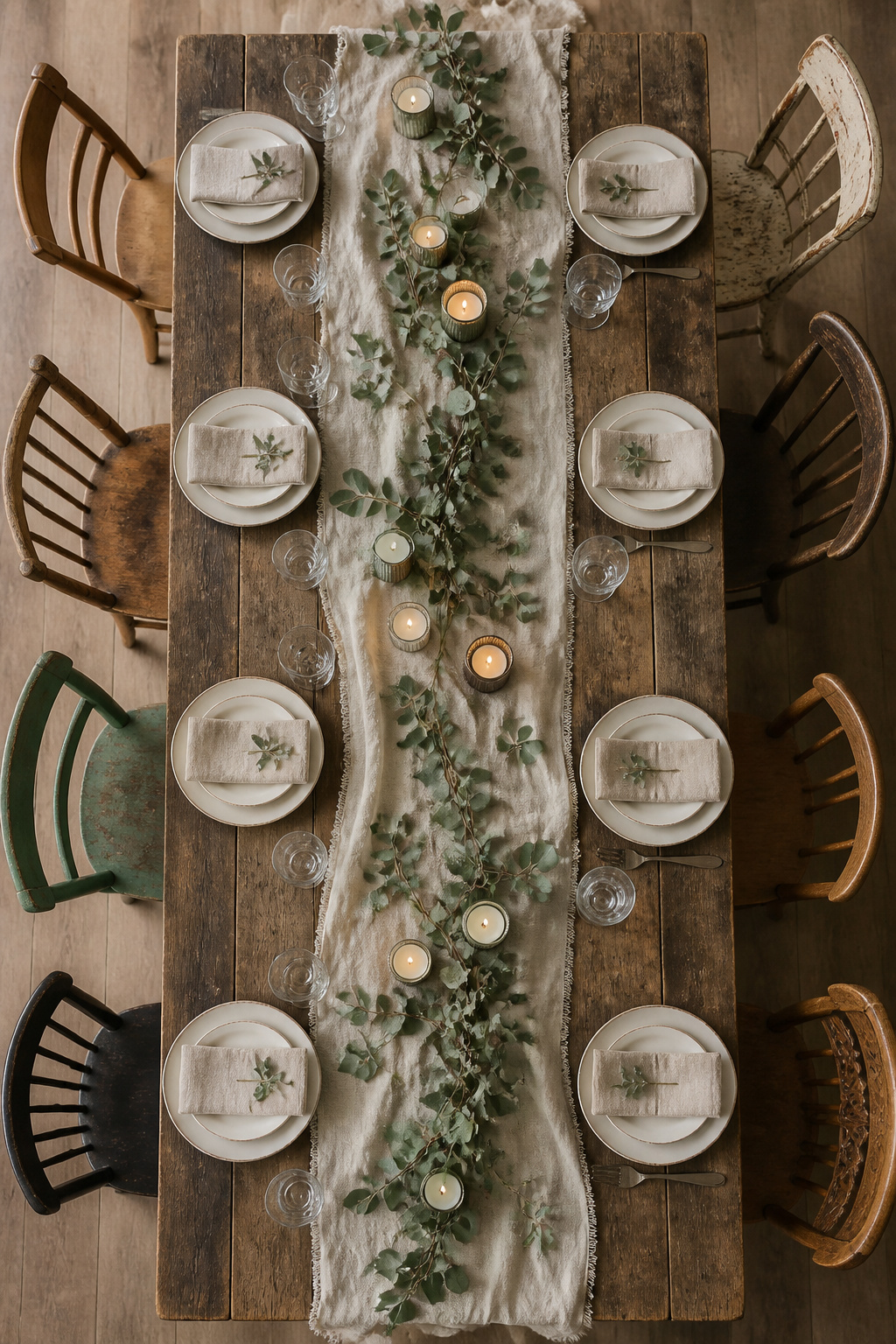
A runner adds color and texture without covering the entire table, which makes it the right call when the table itself deserves attention. Last spring I watched a couple set up in a converted barn with long pine farm tables that had fifty years of character in the grain. A full cloth would have buried that history; a simple linen runner down the center let the wood speak while still anchoring the candles and greenery.
The shape matters too. Runners work best on rectangular tables, where a single length draws the eye straight down the middle and frames whatever sits above it. Round tables fight the geometry; a cloth that drops evenly to the floor looks more intentional there.
Venue style finishes the decision. A runner suits anything rustic, industrial, or deliberately spare. A ballroom with standard rented banquet tables usually needs the full coverage; the cloth hides the institutional surface and gives you a clean slate to build on. The mistake is defaulting to one or the other without looking at what the table actually is.
4. Table Numbers
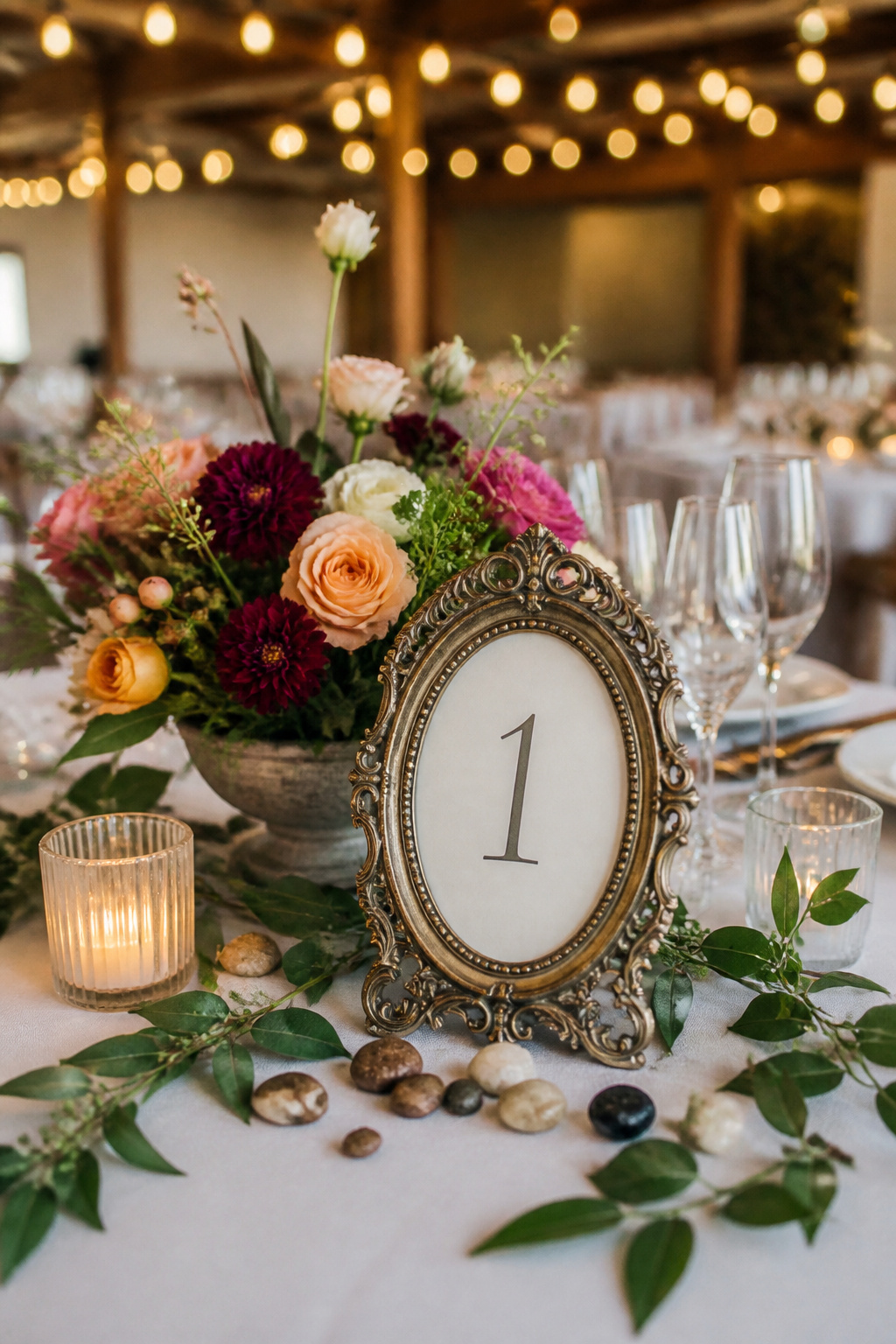
Table numbers don’t have to be boring. At a reception last summer, the couple had tucked theirs into small vintage frames that matched the brass candlesticks on each table, and guests kept pausing to look closer. The number became part of the centerpiece instead of an afterthought.
Frames are the easiest place to start. A simple swap from standard card holders to something with texture, wood grain or a thin acrylic edge, turns a functional piece into decor that earns its space. The frame should share a finish with another element on the table, not fight it. Acrylic works well for modern settings where you want the number to float above the arrangement. Wood grounds softer, rustic palettes.
Some couples build the number straight into the centerpiece itself. A painted tile leaning against a vase, a small routed wooden block tucked among greenery, or a paper cutout clipped to a holder that also carries the menu. The display matters more than the material. What breaks the effect is height: a number sitting below the candle line gets lost, and one towering above the flowers blocks sightlines across the table. Keep it at or just above the centerpiece’s highest living element, and guests find their seats without hunting.
5. Place Settings
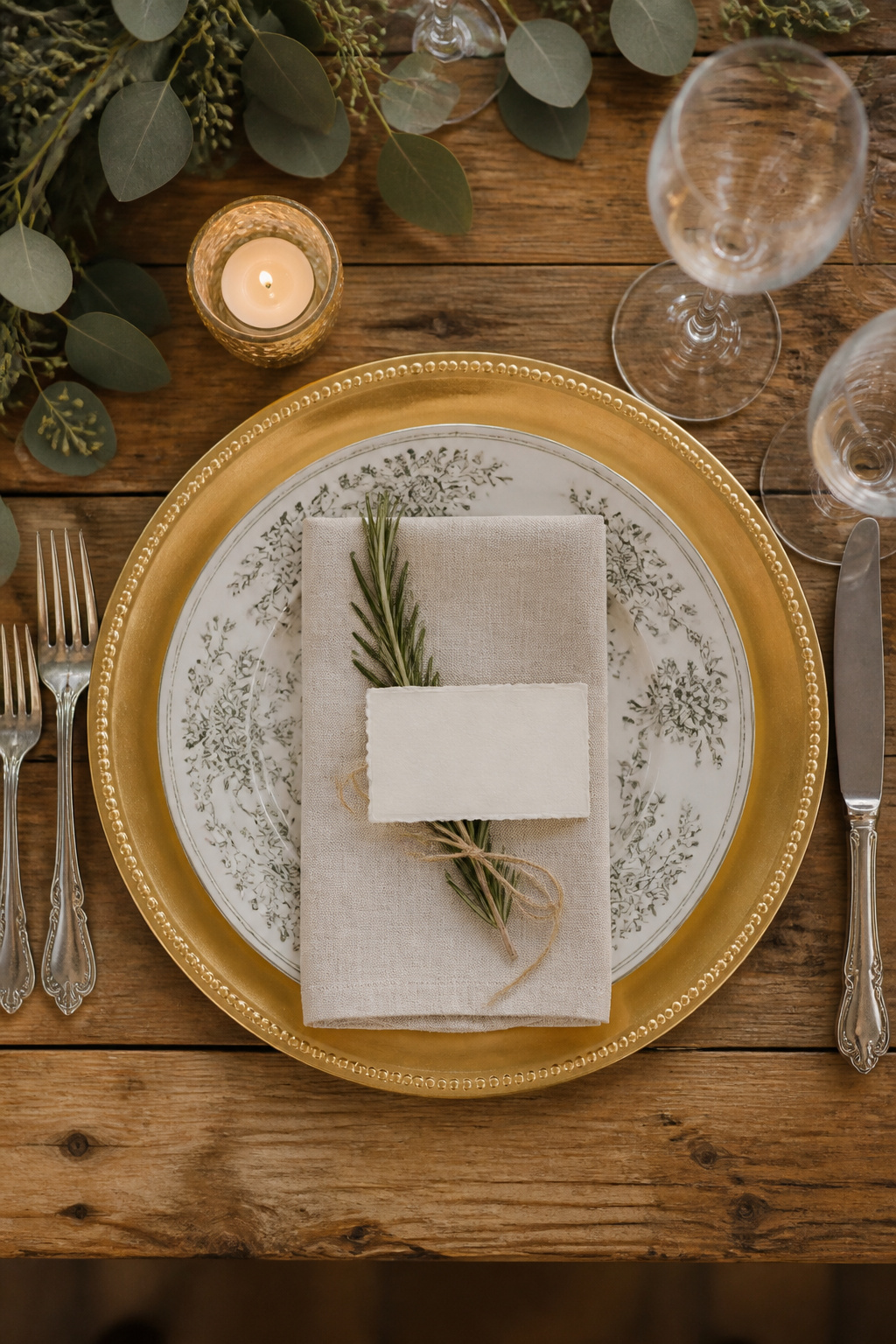
A solid place setting starts with three non-negotiable pieces: the plate, the silverware, and the napkin. Everything after that is optional, which is where most couples either add polish or clutter. A charger underneath the dinner plate adds weight and frames the setting without demanding extra centerpieces. For a guest count under 50, buying your own tableware can work if you have storage and a plan for afterward; above that, rentals keep the post-wedding pile manageable.
What convinced me, reading through the guidance on this, is how much the overall mood shifts when these pieces actually coordinate. Spring and summer weddings tend toward lighter palettes, fall and winter toward moodier ones, but the real test is whether the setting fits the venue and the rest of your aesthetic choices. A mismatched fork or the wrong napkin texture breaks the photograph every time.
Place cards that double as favors are the smartest move here. A small potted herb, a packet of seeds, or a wrapped confection with the guest’s name attached does two jobs at once: it marks the seat and gives them something to carry home. The table feels intentional, not decorated.
6. Personalized Place Cards and Menus
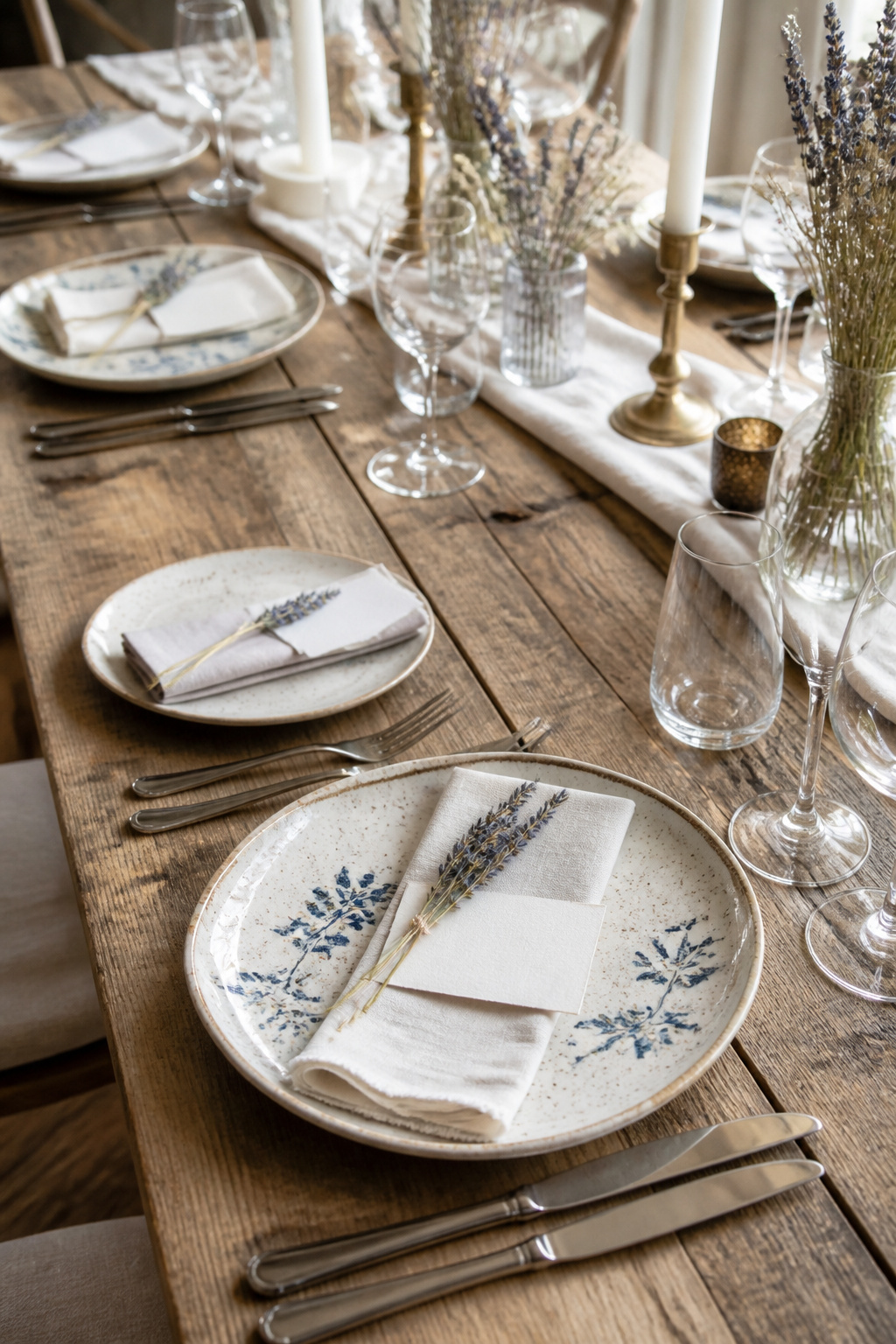
Personalized place cards and menus turn a standard table setting into something guests notice the moment they sit down. The trend couples are leaning into for 2026 is using these details to reflect their own style while making every guest feel specifically welcomed, not just seated.
Some place cards double as favors for guests to take home, which cuts one line item from the budget while keeping the table looking finished. A simple card with a handwritten name, a small sprig of dried lavender, or a printed menu that nods to how the couple met adds a unique touch without the cost jump of upgrading every centerpiece or rental. One bride ordered personalized plates for each guest based on their astrological sign; the gesture cost more than paper, but the principle scales down. A printed menu card tucked into the napkin with the guest’s name at the top hits the same note for pennies per person.
The trick is choosing one personal element that guests can actually take with them or read, rather than layering monograms onto every surface. That restraint keeps the spend low and the effect sharp.
7. Greenery Garlands
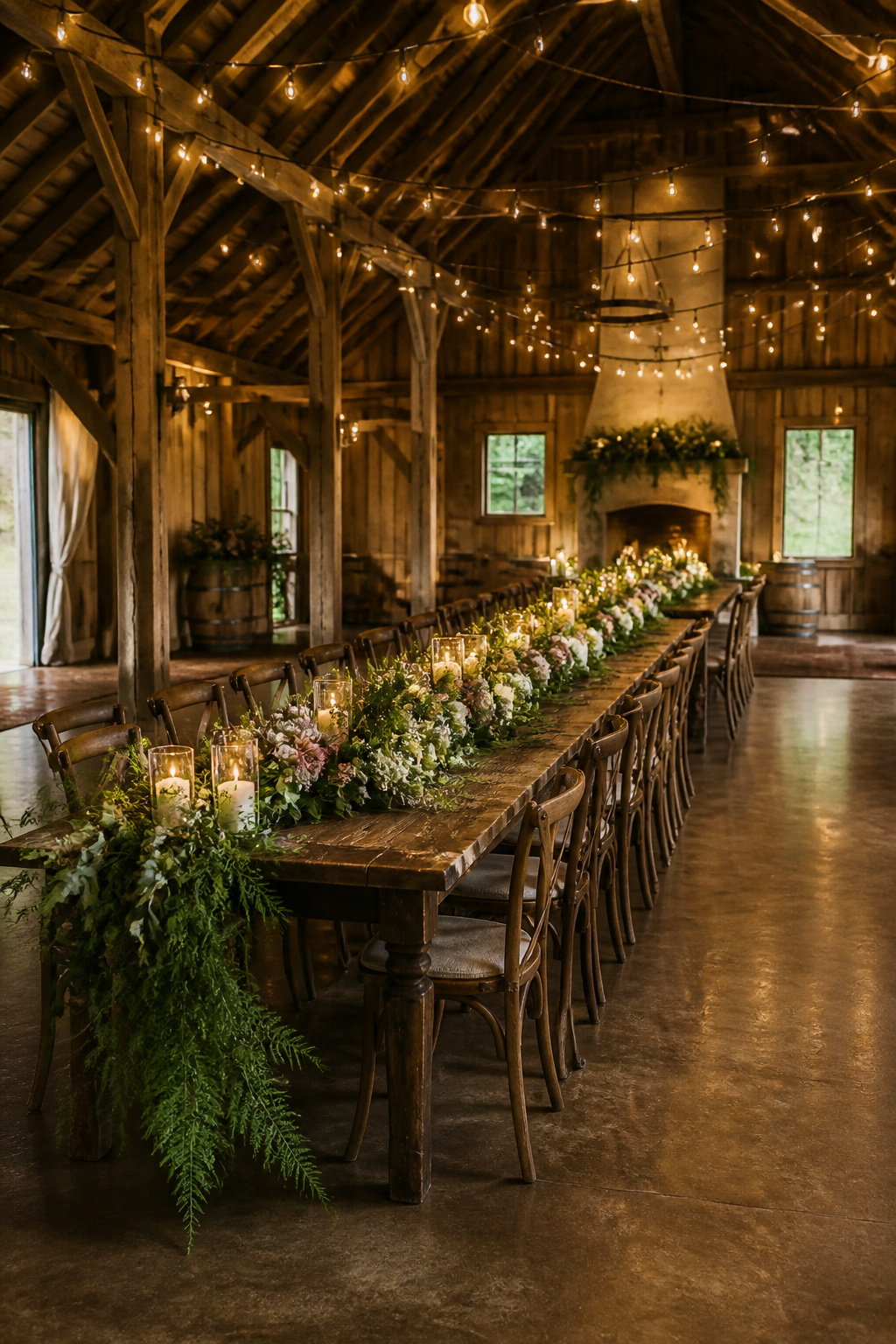
A greenery garland makes a beautiful runner for long tables. The idea works best when you have the length to let it travel, which is why farm tables or any rectangular layout carry it better than round tables, where the shape fights the line and you end up cutting or bunching. For round tables, you are usually better off with a centerpiece that sits still.
The garland itself is a base you can build on. Add flowers for color, candles for height, or even fruit if you want texture that breaks up the green. Those extras turn a simple runner into something that reads as intentional rather than leftover.
If you are trying to keep costs down, garlands also let you skip the flower-heavy centerpieces entirely. A long strip of eucalyptus or fern costs less than full arrangements every few feet, and it fills the same visual space without the labor of arranging dozens of separate pieces.
8. Mini Wedding Favors
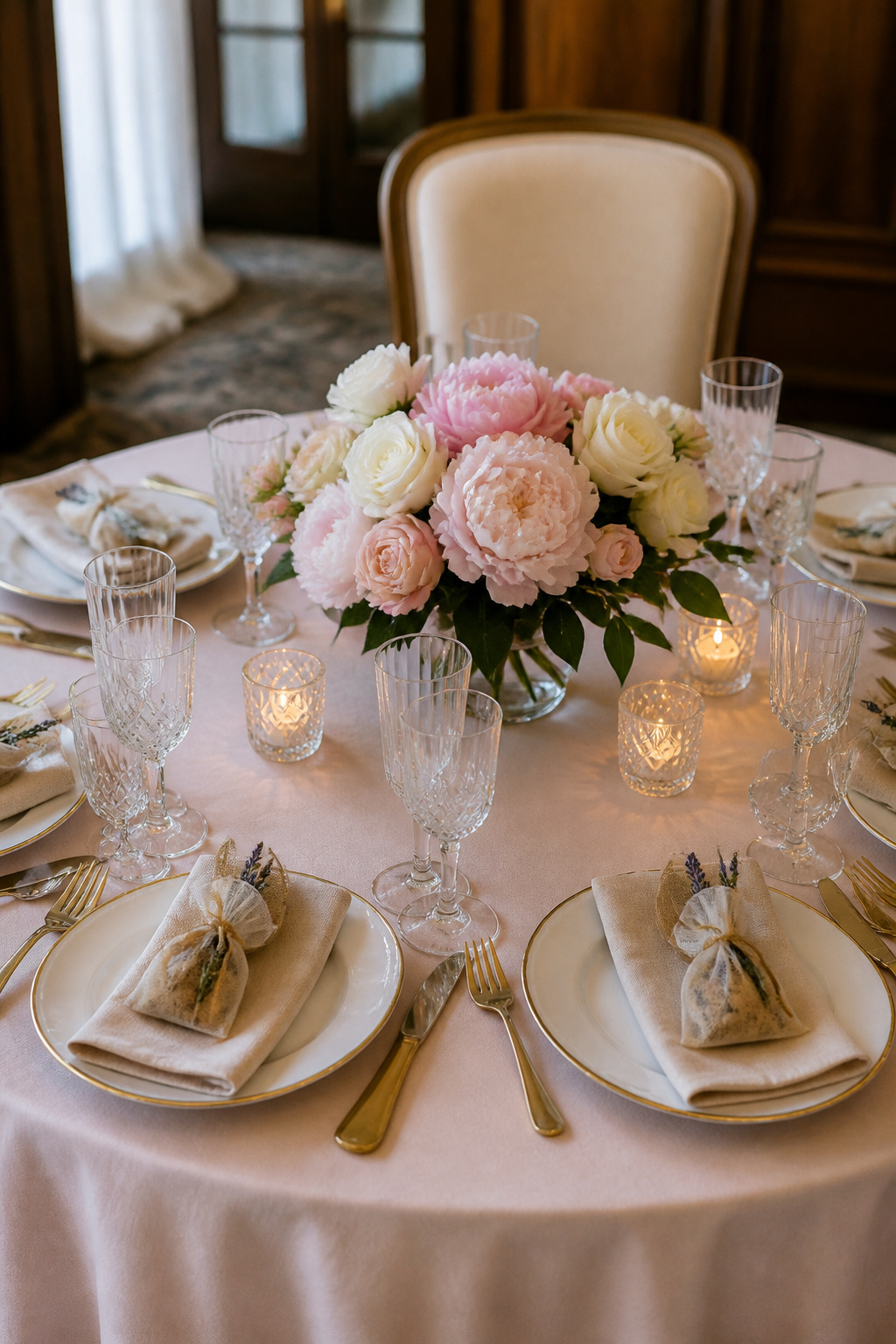
Small candles, treats, matchboxes, seed packets, or magnets can pull double duty as basic wedding table decor when every inch counts. I learned this the hard way at a friend’s reception where the tables were barely thirty inches across; the favors became the only decoration that fit.
A favor sitting on the plate solves two problems at once. It marks where someone sits, so you skip a separate place card, and it gives guests something to take home. The Italian tradition of candy-covered almonds, called confetti, works this way: a small pouch on top of the menu and name card covers both the gift and the visual interest for that setting.
The matchbox route is my preference for evening weddings. A tiny struck match beats a generic votive when the lights go down, and guests actually use them. Seed packets work better for afternoon garden receptions where the theme carries through.
Where this goes wrong is size. Anything larger than a matchbox or single candle starts eating space you do not have. The limit is small enough to sit on a bread plate without crowding the fork.
9. Seasonal Decorations
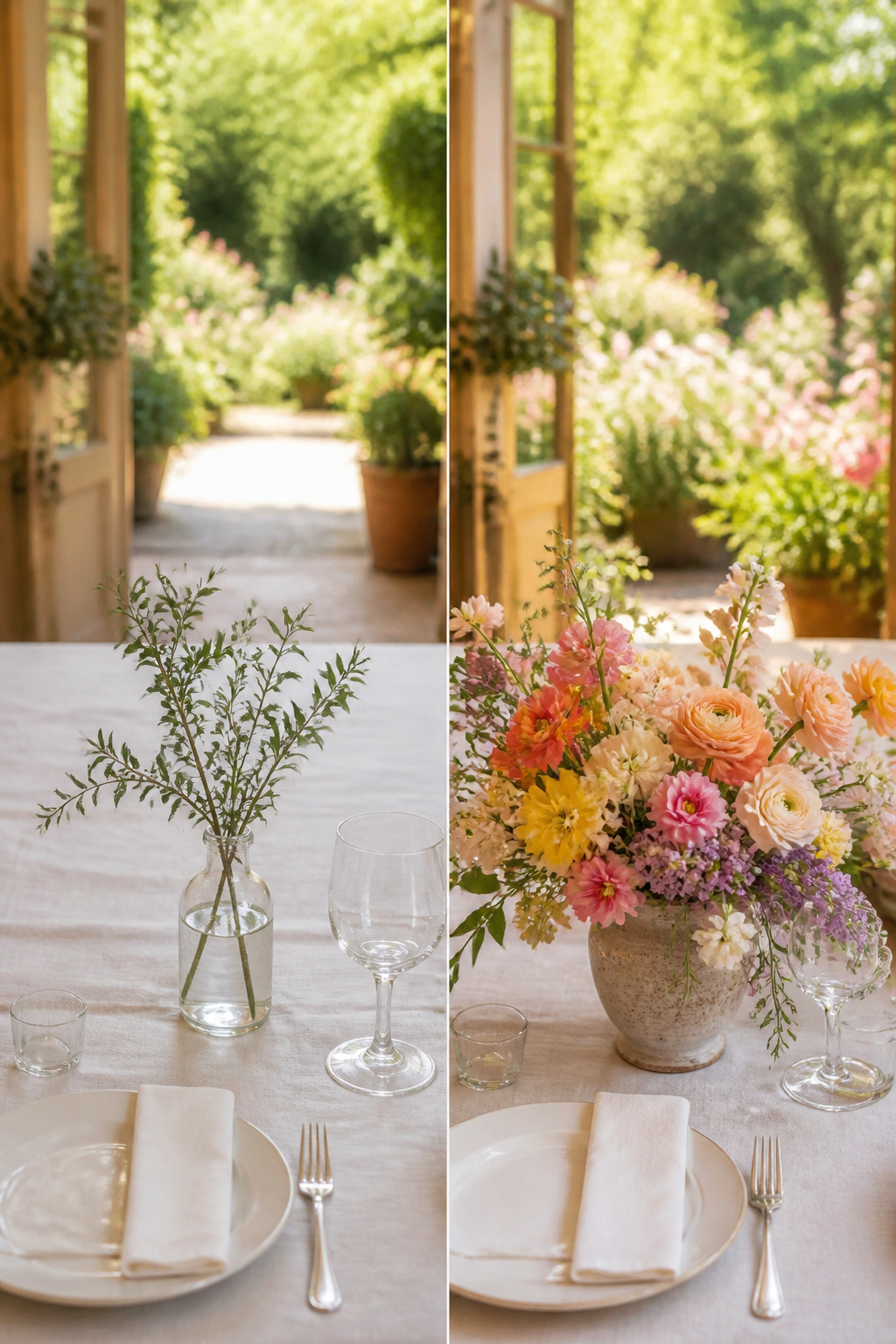
Peonies in August cost three times what they do in May, and they arrive looking like they made the trip under protest. Seasonal flowers and greenery that actually belong to the month solve both problems at once. Spring tables with ranunculus and sweet pea carry themselves without much help. Late summer needs zinnias and dahlias, not roses forced in a greenhouse.
The cost gap is real. Off-season stems ship from farther away, pass through more hands, and still open smaller than their in-season cousins. Local greenery bought in bulk, the kind that works as a runner or a base for candles, costs less and lasts longer through the reception.
A bride I read about described her English countryside wedding with climbing trees and long floral centerpieces surrounded by moss so the arrangements looked grown straight from the table. That effect comes easier when you are not fighting the season. The moss, the branches, the mood of the flowers all pull in the same direction because the weather outside agrees with the choice inside.
10. Colored Glassware and Chargers
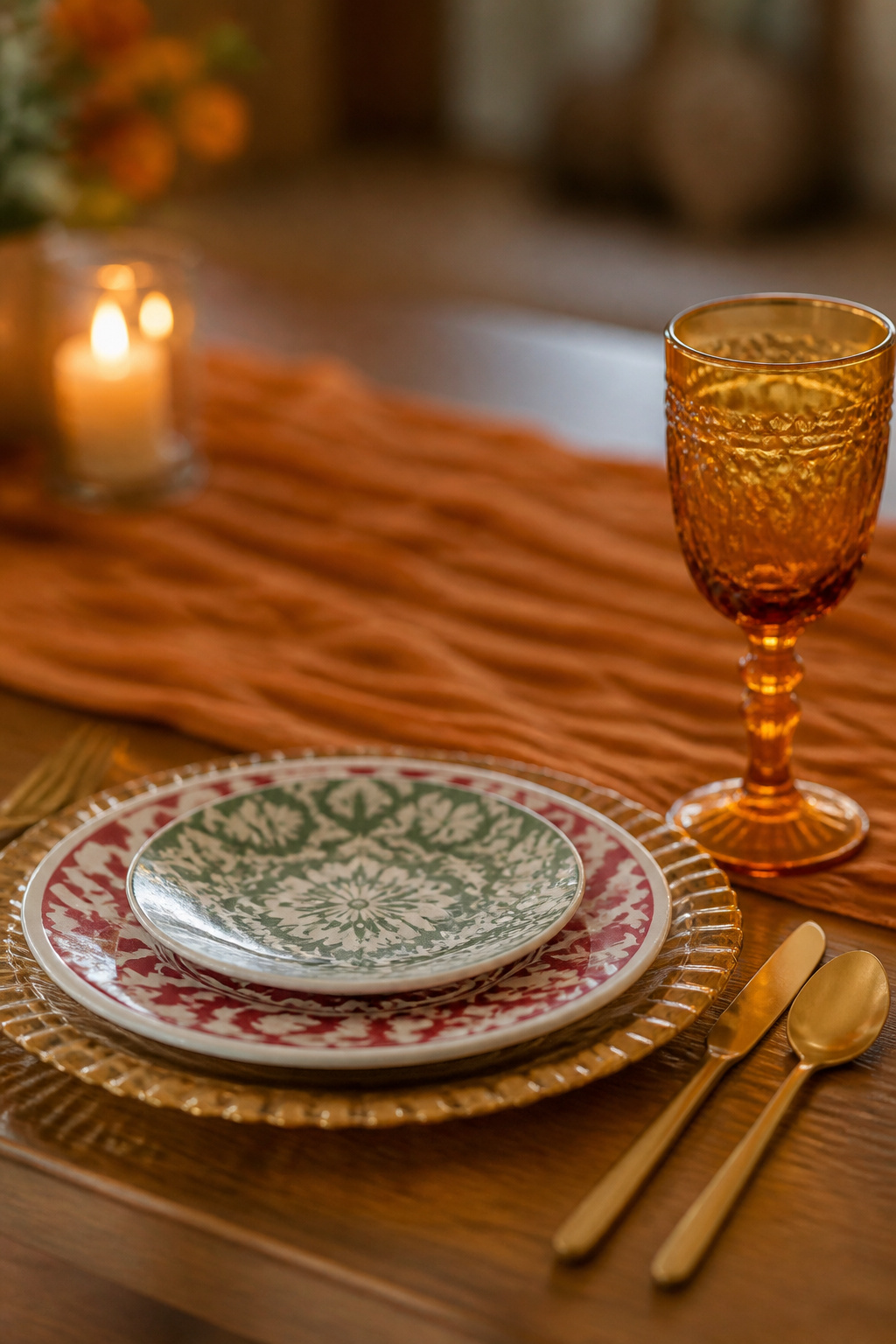
Colored water or wine glasses can become part of the decor all by themselves. I noticed this first at a spring reception where the couple had chosen amber-stemmed goblets for every seat; the vertical color caught the light across the room in a way flat linens never managed. Chargers work as your base layer, sitting beneath the dinner plate to frame each place setting with shape or pattern. Boho shapes and mismatched patterns turn the tabletop into something worth looking at between courses. For a welcome dinner, one bride worked with her planner to pair pink, yellow, orange, and purple blooms with equally vivid La DoubleJ tableware, and the chargers carried that same energy. The trick is committing to one direction: either let the charger anchor a quieter setting, or let the glassware carry the color upward, but give both room to read.
Rent or Buy
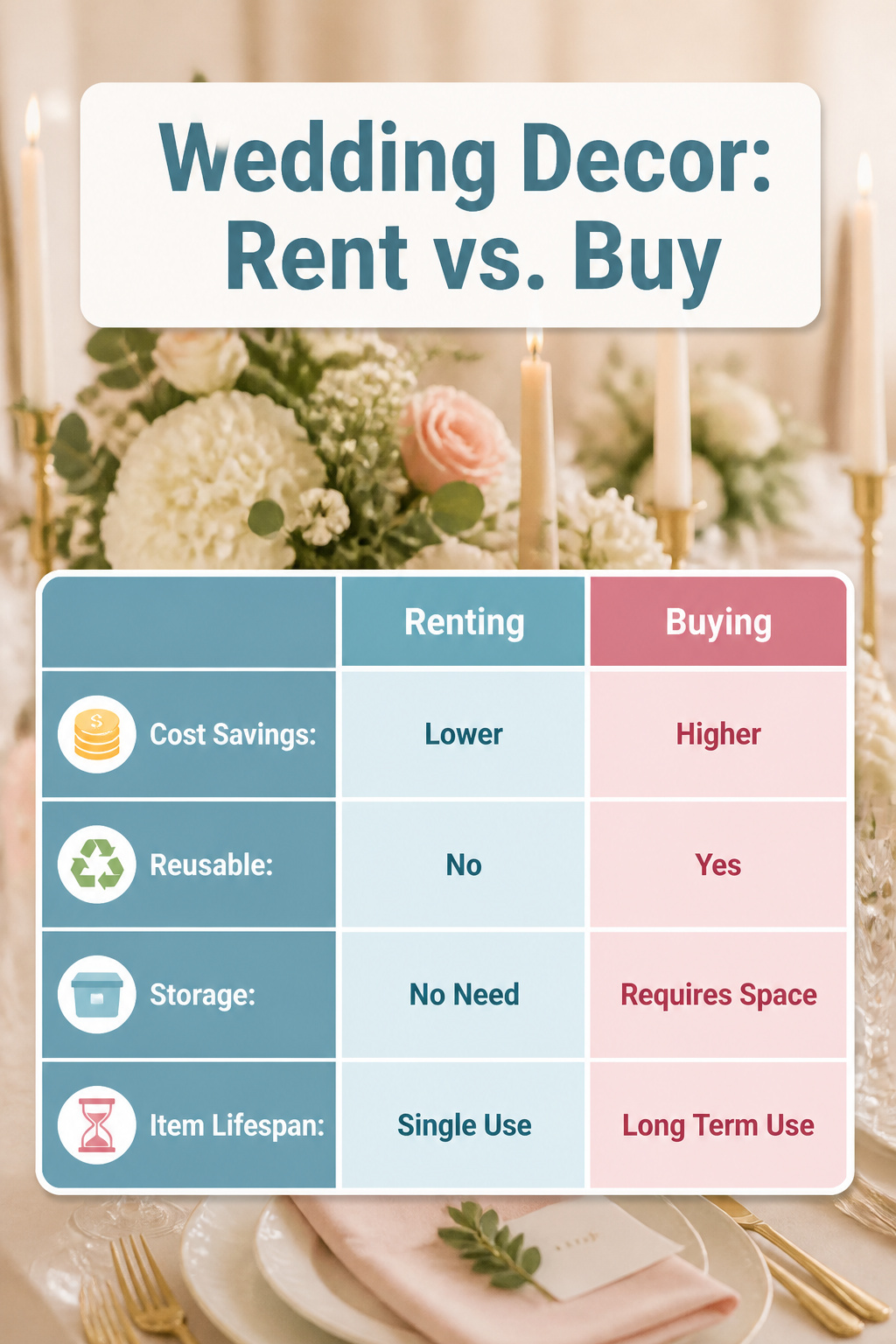
The first time I priced out floral centerpieces for a hundred-guest wedding, the quote made me sit down. Renting those arrangements cuts the bill and the waste in one move, which matters when every table needs its own piece and the marriage lasts longer than the petals do. Candles run the other way. Taper candles in bulk make sense to buy, because the leftovers store flat and you will find uses for them: dinner parties, holidays, the next event. The centerpieces do not store well and they do not travel to a second life easily. Renting wins when the guest list is large and the item is single-use. Buying wins when the thing is consumable or when you already know the long use it will get.
What Goes on the Table
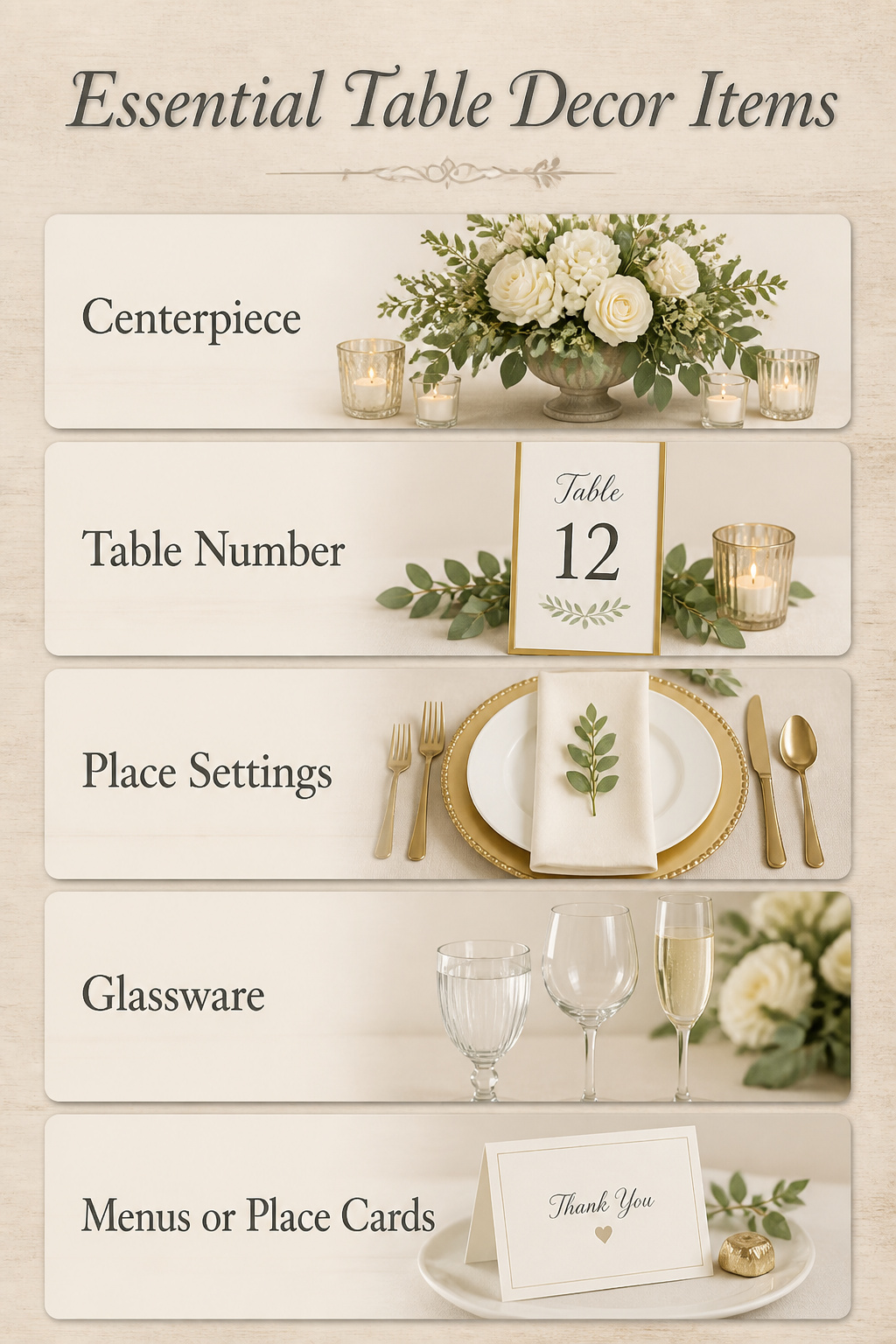
A typical wedding reception table needs centerpiece, table number, place settings, napkins, glassware, and either menus or place cards to function as a system rather than a pile of separate choices. The place settings themselves can pull double duty: a well-chosen plate and folded napkin frame the centerpiece and give guests their first cue about the evening’s formality, while place cards that double as favors keep the table from feeling cluttered with single-use paper.
Candles, greenery, chargers, and favors layer on top of that foundation, but the table still reads as complete without them. What convinced me, reading through a dozen of these breakdowns, is that the stripped-down version wins for smaller guest counts. Under fifty guests, buying a few select pieces you can use or give away afterward sometimes costs less than rentals, though you will need storage space or a donation plan. Past that point, rental becomes the practical choice unless you want fifty mismatched plates haunting your garage. The season and venue matter here too: spring and summer tables tend toward lighter palettes, fall and winter toward moodier tones, but the rule is flexible. What matters is that the whole system, from charger to menu card, reads as one intentional choice rather than ten separate Pinterest saves that happened to land on the same linen.
Season and Venue Palette
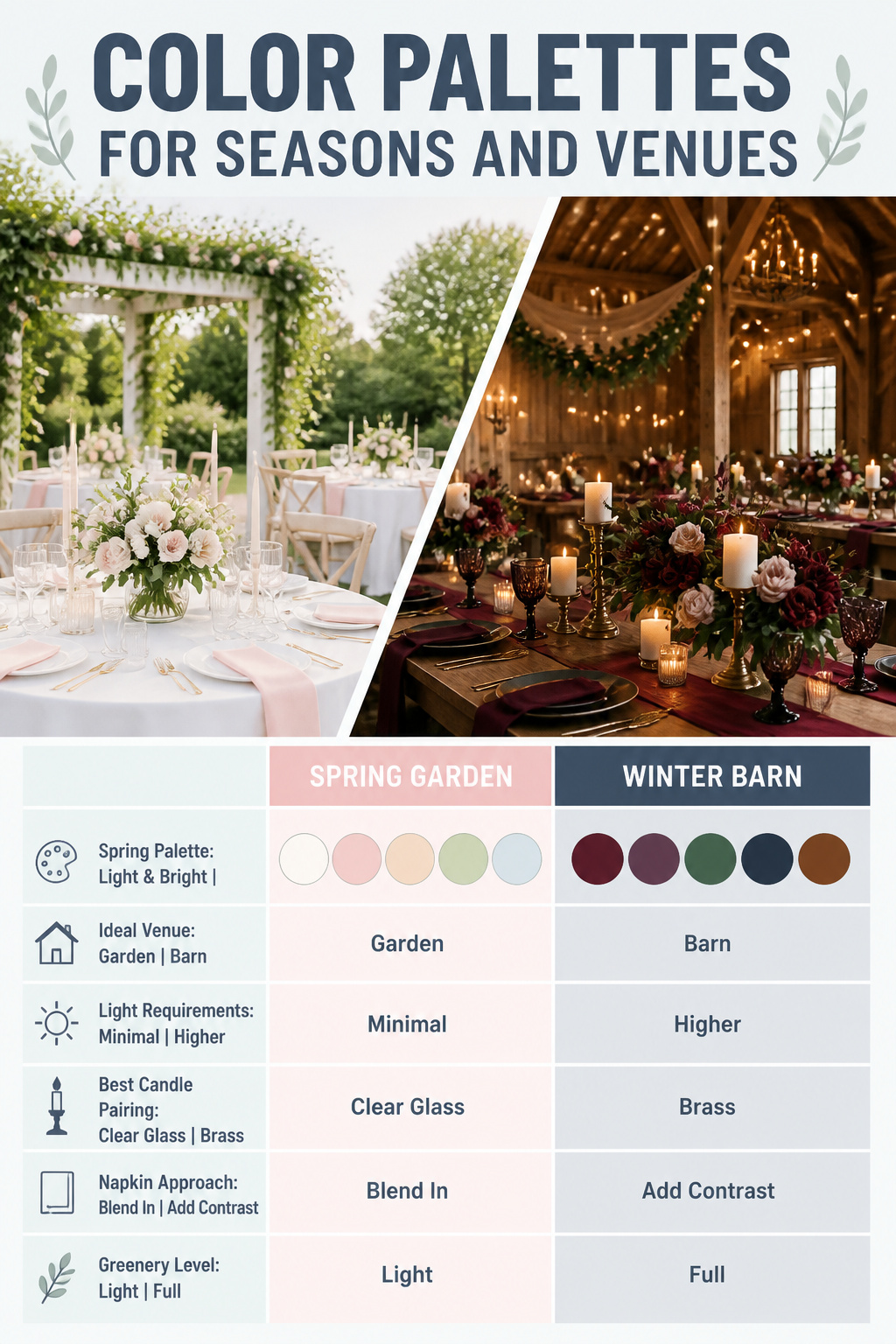
A spring garden reception and a winter barn wedding ask for two completely different approaches to basic wedding table decor, and the mistake couples often make is forcing the same palette across both. Lighter palettes for spring and summer, moodier colors for fall and winter is not a hard rule, but it is a useful starting point that keeps the room from fighting the light coming through the windows.
The overall mood you set with color directly shapes every practical choice on the table. A June afternoon with white linens and pale candles needs less visual weight to feel complete; the same setup in a November loft reads as unfinished. That shift affects whether you reach for brass candlesticks or clear glass, whether the napkins should add contrast or blend in, and how much greenery it takes before the centerpiece looks intentional rather than sparse.
Venue matters as much as season. A glass-walled space already carries its own brightness, so a lighter palette there risks washing out entirely. A timber-framed barn in October can handle deeper burgundies and forest tones without the table feeling heavy. The couple who ignores this relationship ends up renting decor that works against the room rather than with it.
Creative Display Frames
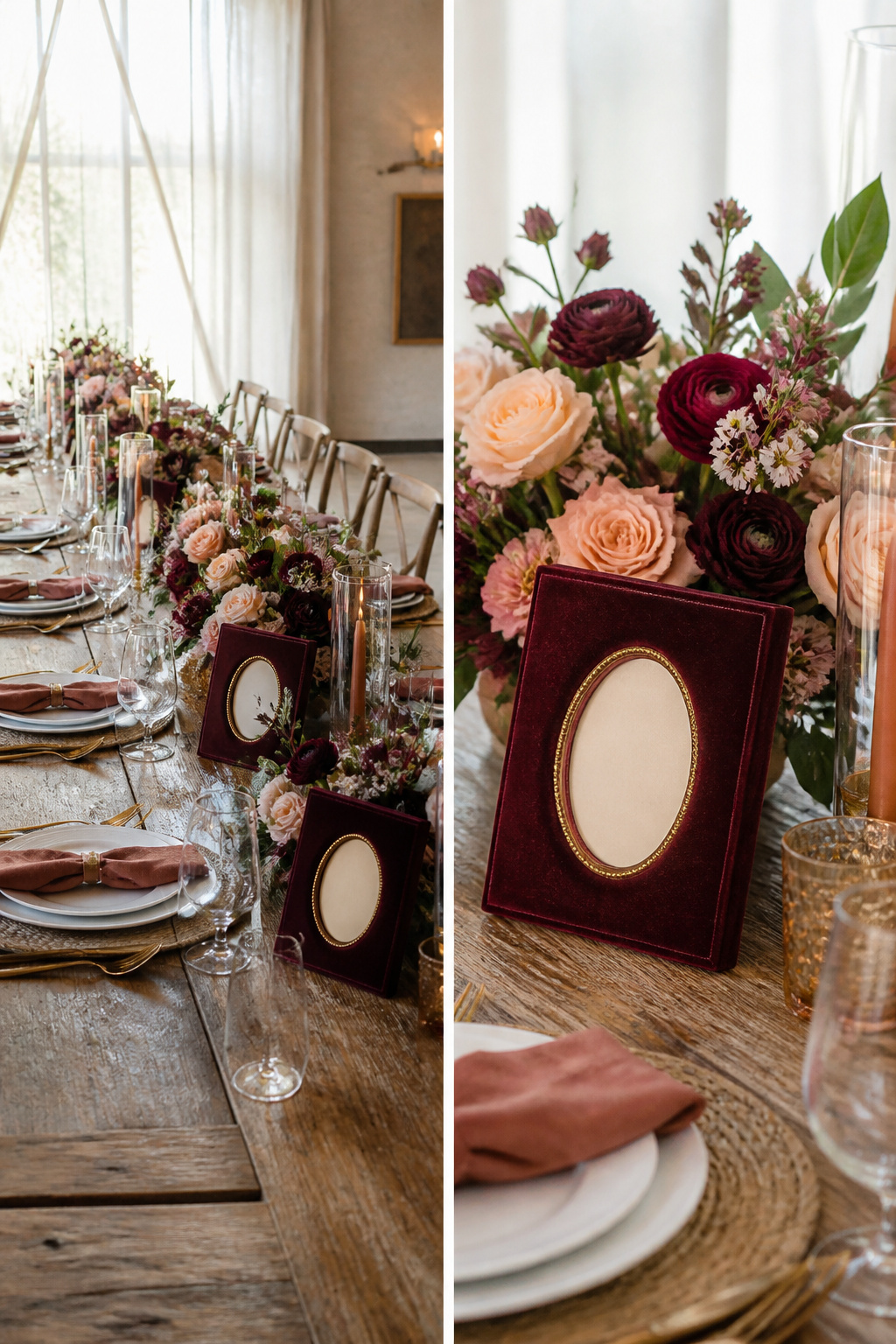
Small frames turn table numbers and favors into part of the centerpiece instead of clutter that fights for space. At a reception I shot last spring, the couple used 4-by-6-inch velvet frames tucked directly into their floral arrangements, one per table. The numbers stayed readable, the favors sat beside them in matching frames guests could lift free, and nothing sat orphaned on bare tablecloth.
Acrylic and wood work the same way, though acrylic catches candlelight and wood softens under string bulbs. The trick is choosing a frame small enough that it reads as an accent, not a second centerpiece. A stand or wine bottle holder raises the number to eye level, which helps in a crowded room where flowers run tall.
Velvet reads as luxe without adding much cost; the texture does the work. Coordinate the frame material with your reception signage, or let it contrast deliberately, but pick one approach and hold to it. Two finishes on the same table, and the eye starts hunting instead of resting.
Frequently Asked Questions
What are the essential elements of a wedding table setting?
A solid place setting starts with three non-negotiable pieces: the plate, the silverware, and the napkin. Everything after that is optional, which is where most couples either add polish or clutter. A charger underneath the dinner plate adds weight and frames the setting without demanding extra centerpieces.
How do I choose the right table setting for my venue and season?
Lighter palettes work best for spring and summer, while moodier colors suit fall and winter. A June afternoon with white linens and pale candles needs less visual weight to feel complete; the same setup in a November loft reads as unfinished. The venue matters too: a glass-walled space already carries its own brightness, so a lighter palette there risks washing out entirely.
What goes on a wedding reception table?
A typical wedding reception table needs a centerpiece, table number, place settings, napkins, glassware, and either menus or place cards to function as a system. Candles, greenery, chargers, and favors layer on top of that foundation, but the table still reads as complete without them. Place cards that double as favors keep the table from feeling cluttered with single-use paper.