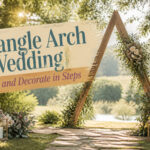
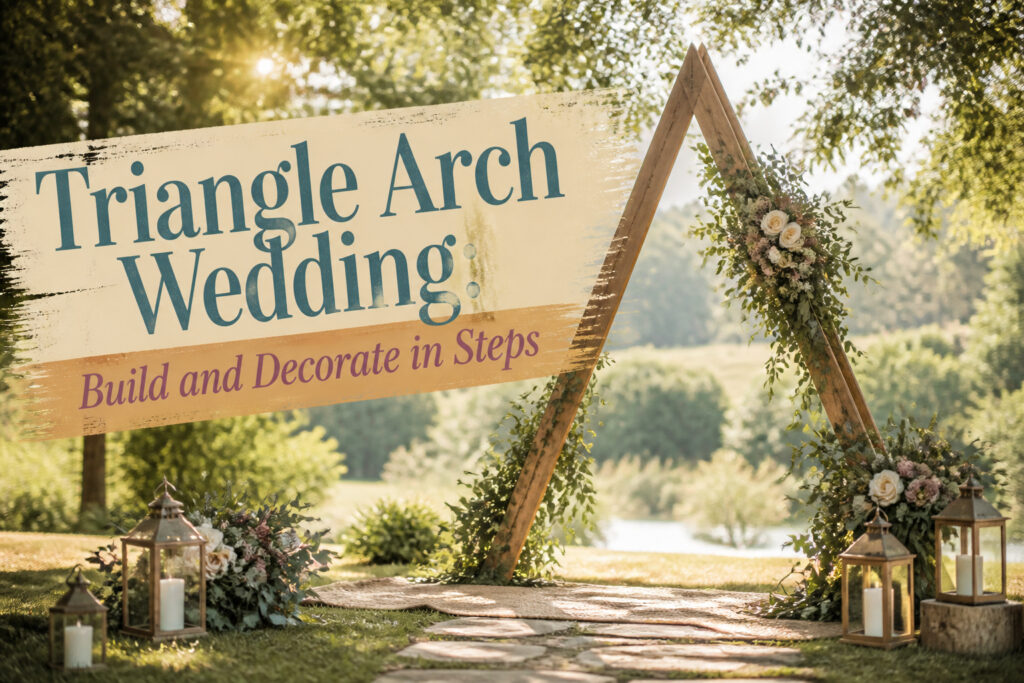
A triangle arch wedding is a three-sided wooden frame couples build themselves instead of renting, and the catch is the peak angle: cut it at 22-1/2 degrees off square, not 22 or 23, or the joint gaps and the first gust pulls it apart. The whole frame costs about $50 in basic lumber, a number that held up at my local yard and surprised me against rental quotes.
1. Cut and Size the Frame

Two 2×6 boards at 104-5/8 inches form the triangle’s legs, with one end cut at 45 degrees and the other at 22-1/2 degrees off square. The long point to long point measurement matters here; getting it wrong throws off the peak later. A third 2×6 at 96 inches serves as the base. I set the miter saw to 22-1/2 degrees for the leg cuts, which sounds fussy until you remember the 45-degree peak needs both halves to meet flat. The whole frame runs about $50 in basic lumber, a number that held up at my local yard and surprised me against rental quotes. Four 24-inch 2x6s come next for leg bracing, though that waits for the assembly step. If 2x4s are what you have, the cut list stays identical; the geometry does not change.
2. Assemble the Peak
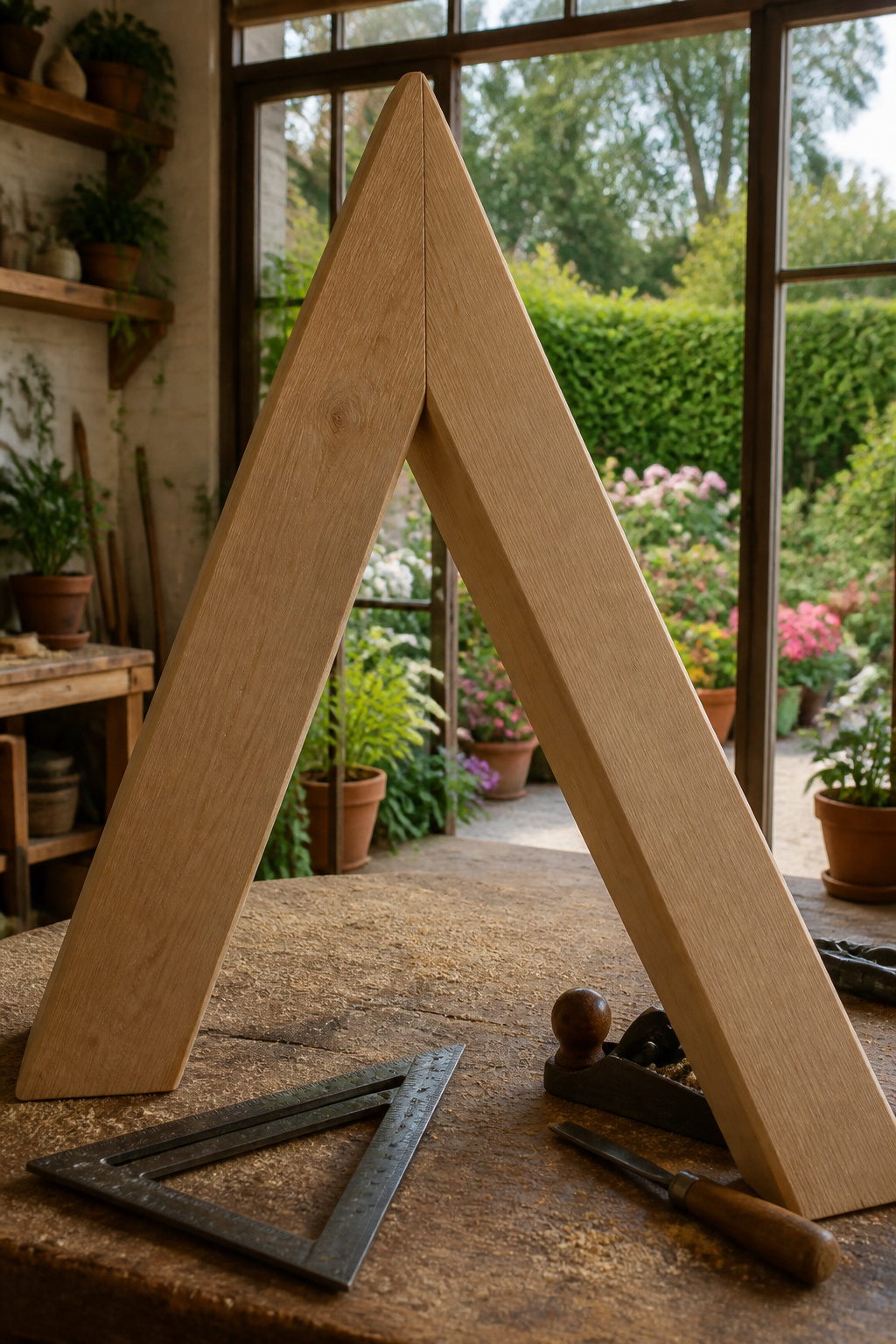
The peak is where the triangle arch wedding either stands or sags, and the angle is what decides it. Two 2×6 boards, each cut to 104-5/8 inches, meet at the top with a 22-1/2 degree miter off square. Set your saw to that exact angle, not 22 or 23, because even a half-degree drift opens a visible gap and weakens the joint.
Criss-cross the planks or bring them to a single vertex, then drive screws through the face of one board into the end grain of the other. I have watched these joints fail at outdoor ceremonies when the angle was guessed instead of cut. The boards look right from ten feet away, but the gap collects stress, and the first gust or the weight of fabric pulls the peak apart.
A single screw lets the joint twist; two, placed an inch apart, lock it square. Check the angle with a framing square before you drive the second screw. The triangle shape forms here, and this is also where it falls apart if you rush.
3. Stabilize the Legs
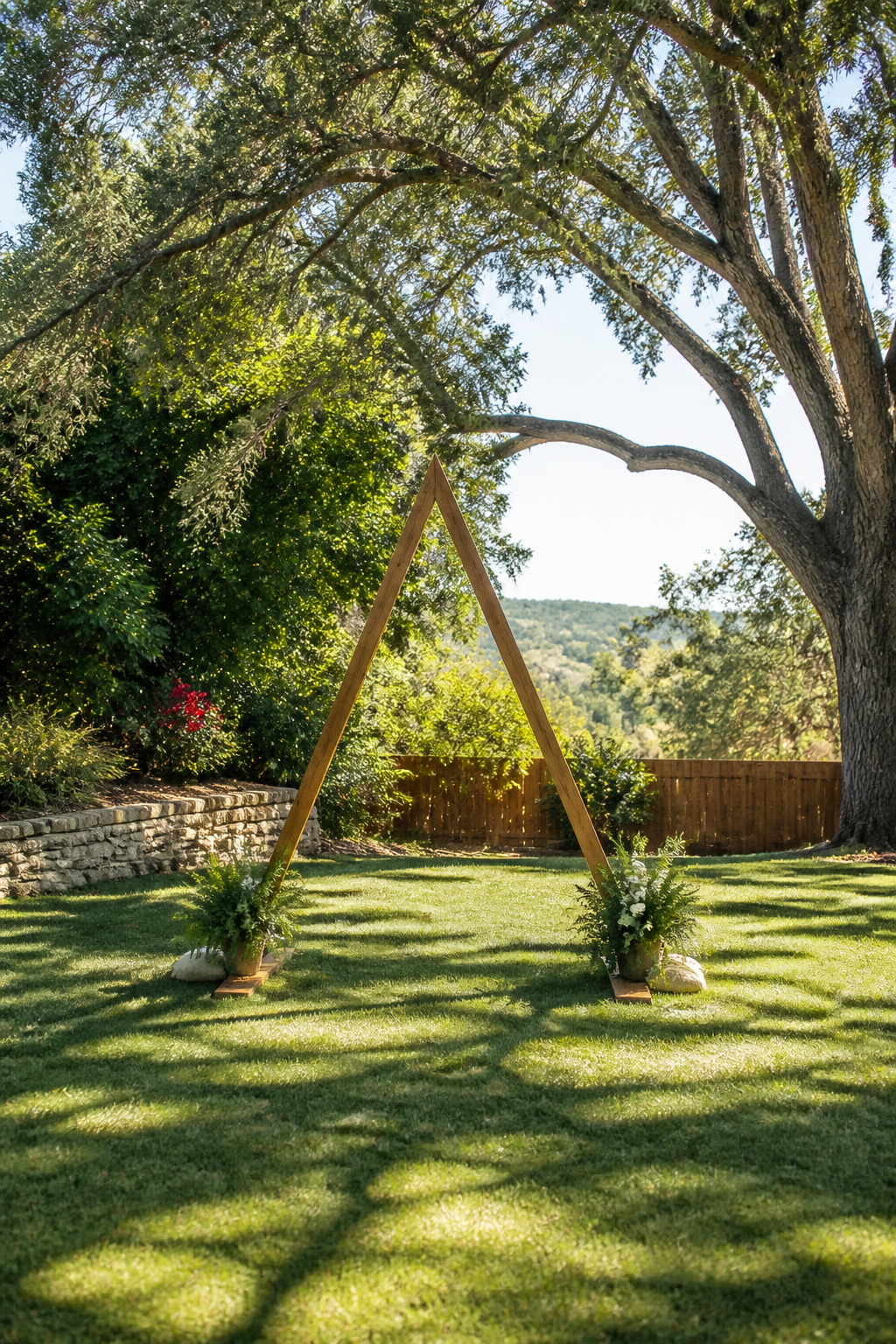
Small planks screwed to the bottom of each post leg are what keep a triangle arch wedding upright. The peak gets all the attention, but the base is where the physics actually happen. I learned that the hard way watching one lean three inches off vertical on a lawn that looked perfectly flat from five feet away.
Ground that looks level almost never is. A slight grade toward the aisle, a soft spot under the sod, a dip where the sprinklers run, any of it translates into weight shifting sideways the moment you add fabric and flowers up top. The planks spread that load and give you surface to shim. Without them, you are balancing a tall, narrow structure on two points that will sink or tilt at different rates.
Sandbags or heavy planters set on those planks finish the job, especially if the ceremony space catches any breeze. Covering the ballast with drapery or greenery keeps the mechanics invisible in photos, which matters more than most couples expect until they see the proofs.
4. Anchor for Wind
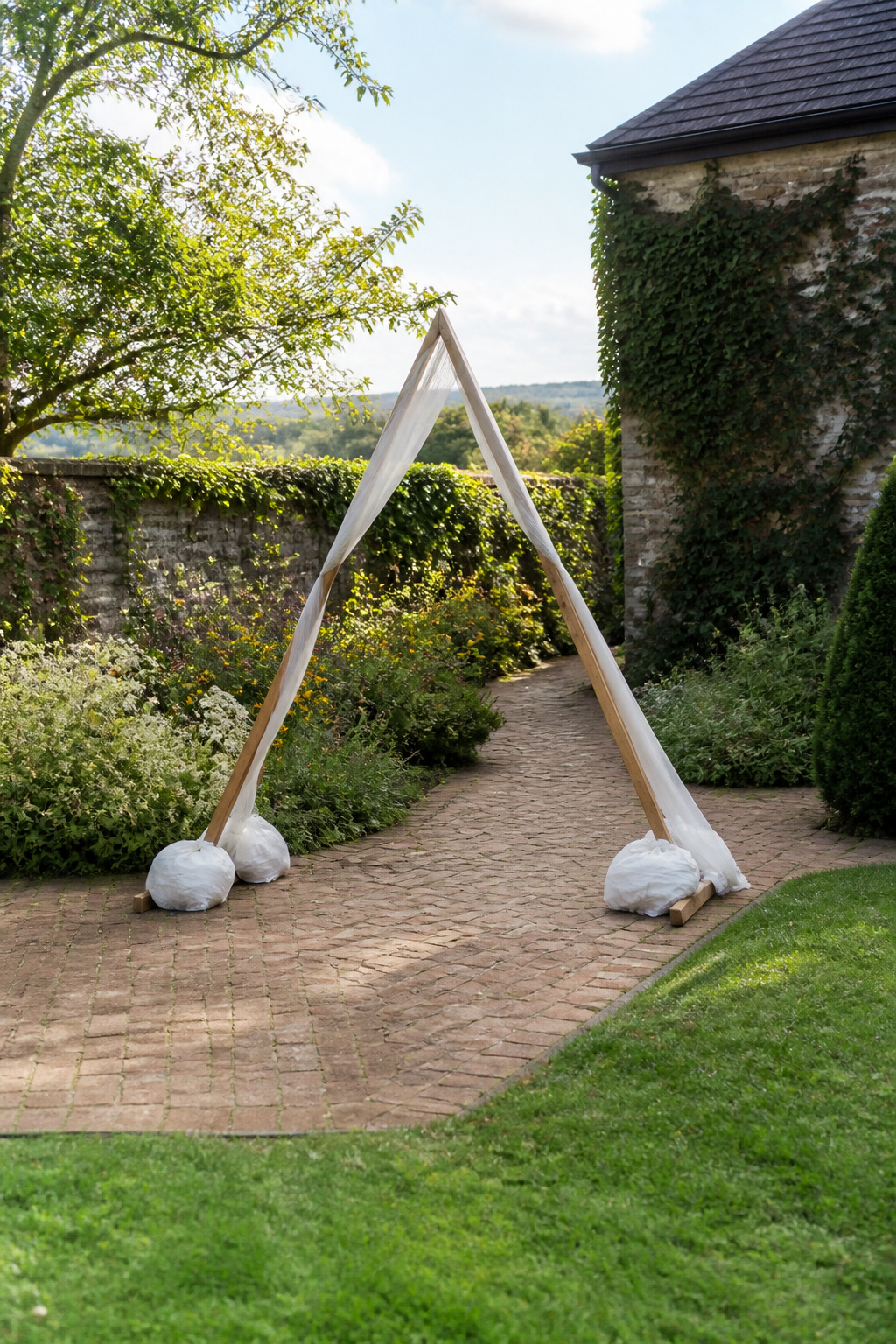
A gust at the wrong moment can turn a triangle arch wedding into a sail. Sandbags are the simplest fix, and about forty pounds on each leg has held steady through ceremonies I have watched from the sidelines. Anything lighter, and the arch has wobbled the moment the wind picked up. Heavy columns or decorative planters filled with concrete, stones, or soil work as alternatives if sandbags clash with the look. The trick is hiding the ballast. Drapery fabric, faux flowers, or whatever matches the arch decorations can cover the supports so guests never notice the engineering. I have seen planters left bare, and the weight becomes a distraction in every photo. Cover it, and the arch stands without stealing attention from the couple.
5. Floral Foam and Flower Placement
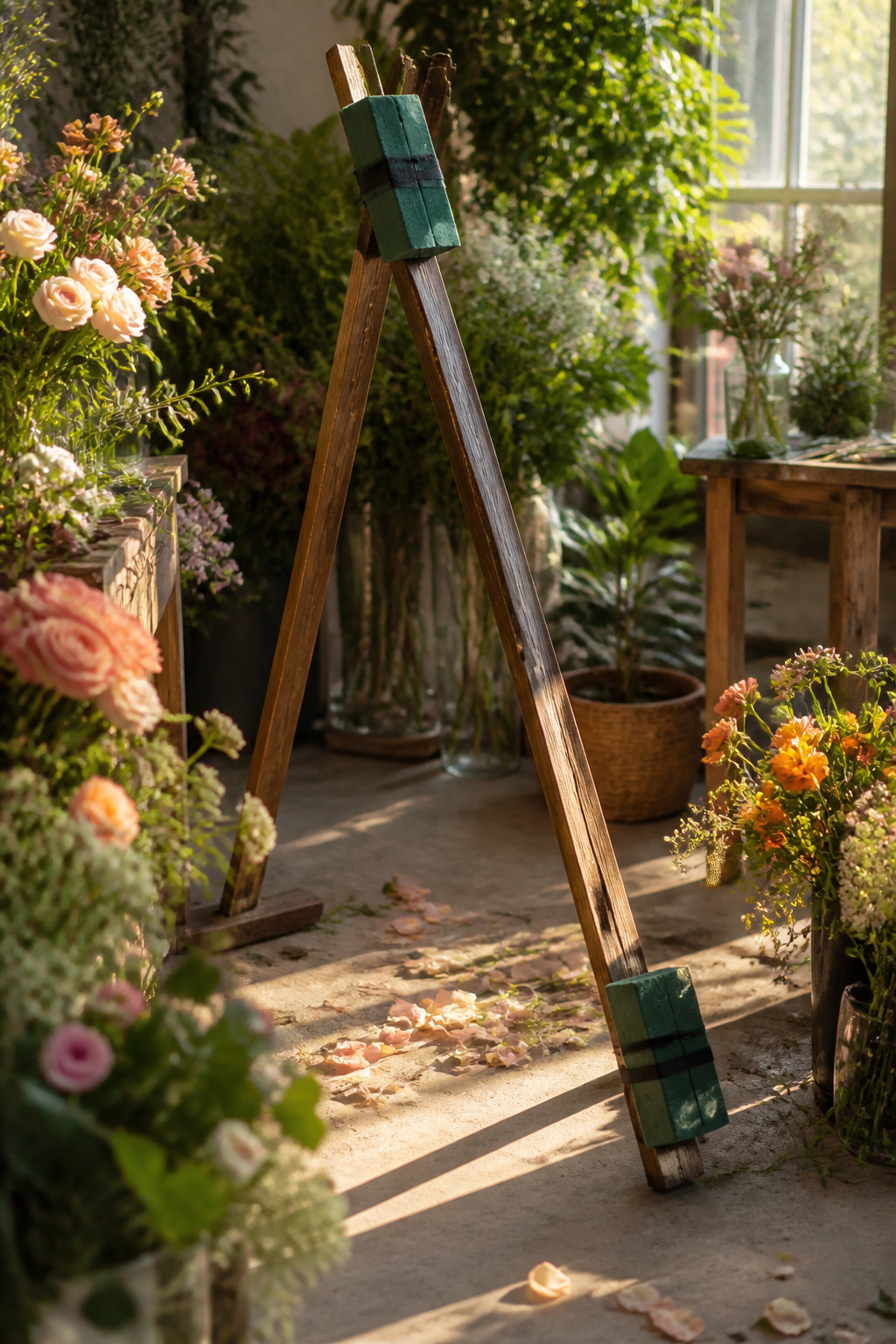
Two blocks of floral foam ran about $10, enough to anchor flowers along the top corner and down one vertical post of a standard triangle arch. I tie the foam directly to the frame with cable ties, then wedge stems in at angles so the greenery hides the block itself.
The mistake is spacing the foam too far apart. Gaps wider than a hand’s width leave stretches where stems have nothing to grip, and the foam shows through as an ugly green interruption. I cluster the blocks at the focal points, the upper joint and the base of one leg, then let trailing greenery bridge the rest. Artificial flowers with wire stems push in easily; heavier silk bunches may need hot glue at the entry point to keep them from drooping after an hour in sun.
6. Fabric Drapes and Final Touches
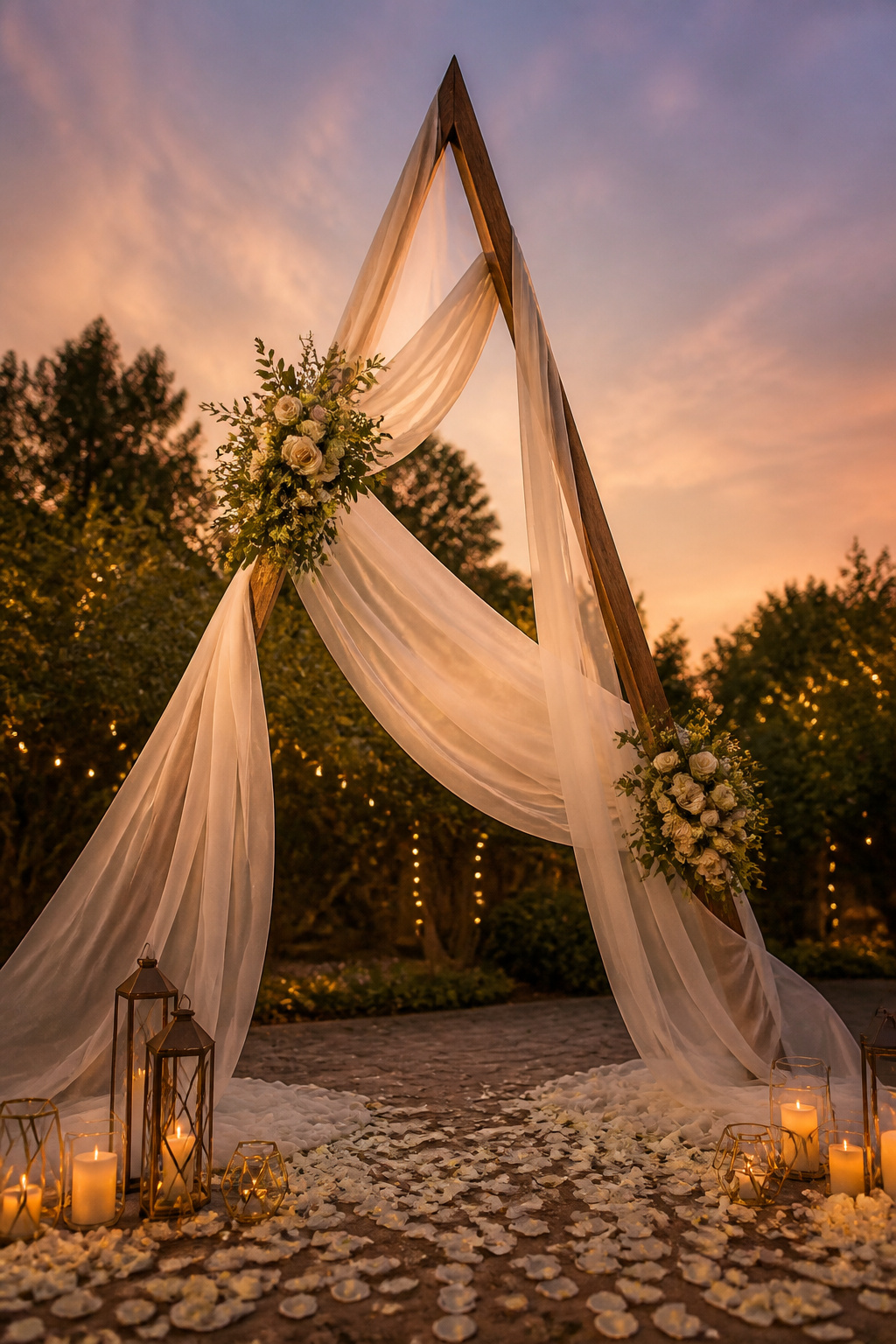
Sheer fabric changes everything on a triangle arch, but the order matters more than most couples expect. Drapes go on before flowers, not after. I learned this the hard way at a spring ceremony where I tried to tuck chiffon around finished arrangements; the fabric snagged, shifted, and I spent twenty minutes redoing work that should have taken two.
Lightweight materials work best. Sheets of delicate fabric, string lights, and lanterns all hang cleanly from the wooden frame without adding meaningful weight. Pool string lights at the bottom of the arch, or wind them through the upper joints where the peak meets the legs. Lanterns and candles sit well on the ground beside the base, especially with potted plants or silk petals scattered nearby.
The classic finish is still flowers and foliage. Once your drapes are secured and your lights tested, add the primary blooms and lighter spherical flowers for fill. Step back, look for gaps or exposed foam, and patch with leaves or smaller stems. Asymmetric draping paired with evenly dispersed color gives the arch movement without looking messy.
Materials and What They Cost
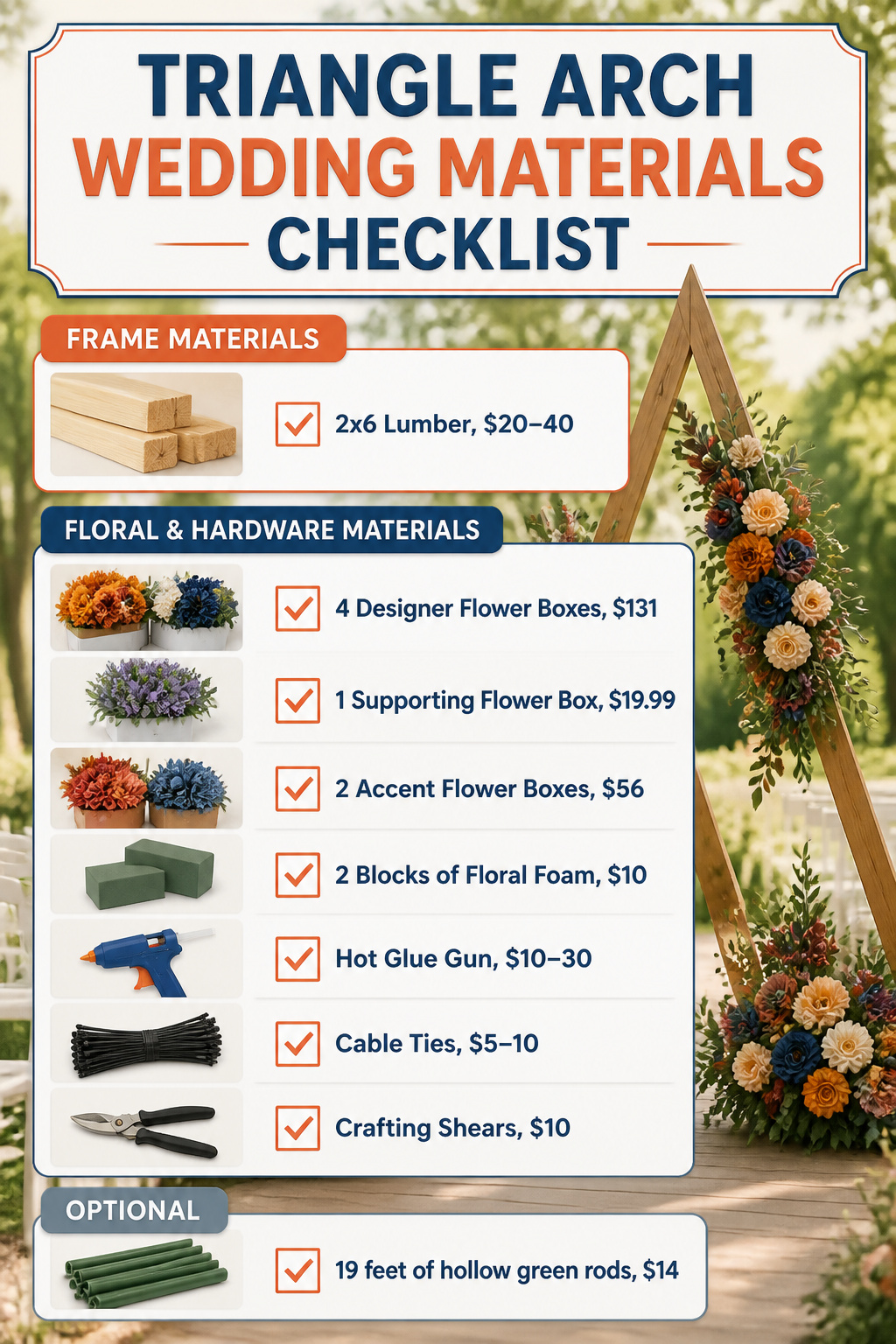
A full triangle arch wedding build runs about $330–$410 if you are buying designer flowers, or roughly $50 if you already own blooms and just need the frame.
Here is what goes on the shopping list:
- 2×6 lumber for the frame. The cut list calls for two pieces at 104-5/8 inches and four at 24 inches, with angled ends. Standard lumber runs $20–40 depending on local pricing and whether you go with 2×6 or 2×4 stock.
- Four designer flower boxes in Burnt Orange and Navy Grand, at $32.99 each for about $131 total. These form the bulk of the color.
- One supporting flower box in Provence at $19.99.
- Two boxes of accent flowers in Russet Orange and Denim Blue at $27.99 each, so about $56.
- Two blocks of floral foam. A two-pack runs around $10.
- A hot glue gun, $10–30 for a basic model.
- Cable ties, about $5–10 for 50–100 ties. You will use more than you expect.
- Crafting shears starting around $10.
- Optional: 19 feet of hollow green rods at about $14 if you want extra stem support.
Skip the designer boxes and the total collapses. Spend on those and you are past $300 before glue.
Seven to Eight Feet Tall

A 7- to 8-foot triangle arch wedding frame hits the mark for most indoor and outdoor ceremonies. That range clears the couple without swallowing the aisle or blocking the photographer’s sightlines to guests. At six feet, the peak sits barely above a tall groom’s head, and the whole structure starts to read like a garden trellis that forgot to grow. Nine feet shifts the problem the other way: the eye goes straight up, the floral budget stretches thin trying to fill that vertical space, and a standard-height ceiling leaves almost no breathing room above the peak.
Width tracks with height even if guides do not spell it out. A 7-foot arch at 4 feet wide looks balanced; stretch the same height to 6 feet wide and the triangle goes squat and awkward. The ratio matters more than any single number. Before cutting lumber, the ceiling height and floor dimensions at the venue settle the decision. A barn with 14-foot rafters can carry something taller; a hotel ballroom with 9-foot drop ceilings needs the lower end of the range, or the arch starts to feel like furniture in a room that is already full.
Match the Season and Theme
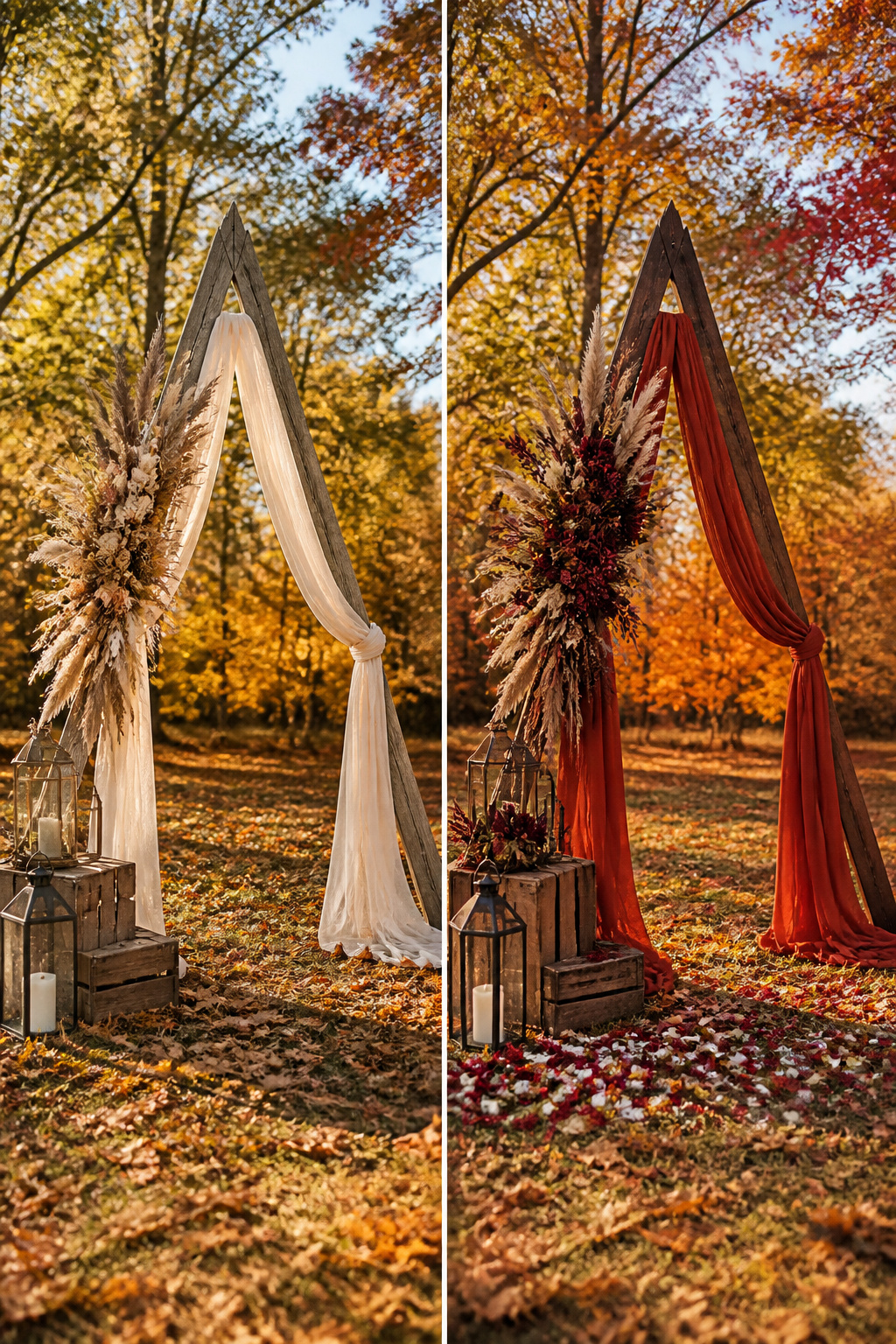
A triangle arch wedding frame reads clean and architectural with almost nothing on it, or it reads handmade and rooted with the right clutter. The geometry itself is the first thing guests notice, so the question is whether you want that sharp peak to feel like a modern chapel or a forest lean-to.
Spring and summer palettes lean into the contradiction. Soft pinks, pale yellows, and white blooms against raw wood make the triangle feel accidental, like branches fell that way. The same arch painted black or brass, with orchids or single-stem callas placed only at the joints, turns it into a gallery piece. Fall weddings get the easiest match: burgundy dahlias, dried grasses, and rust-colored fabric drapes fill the negative space without fighting the lines. Winter is harder. Evergreen boughs work, but too much volume and the triangle disappears into a green blob; sparse greenery with citrus or white amaryllis keeps the shape visible.
Some themes simply do not fit. A vintage Victorian look fights the geometry because that era loved curves and excess ornament, neither of which the triangle offers. Great Gatsby styling, with its strong lines and metallic finishes, aligns almost without effort. Beach weddings can work if you let the arch stay bare and weathered, but draped chiffon in seafoam reads costume-y fast. The arch does half the styling work for you; the mistake is adding so much that you hide the shape you chose.
Frequently Asked Questions
How tall should a triangle wedding arch be?
Seven to eight feet works for most indoor and outdoor ceremonies. That height clears the couple without blocking the photographer’s view of guests or swallowing the aisle. Check the venue ceiling and floor dimensions before cutting lumber; a 9-foot hotel ceiling needs the low end, while a 14-foot barn rafter can carry something taller.
What materials do I need to build a triangle wedding arch?
The frame needs 2×6 lumber cut to length, plus screws for assembly. For decorating, grab floral foam blocks, cable ties, a hot glue gun, and crafting shears. The whole build runs about $50 for just the frame, or $330–$410 if you add designer flower boxes, accent blooms, and optional hollow rods for extra stem support.
How do you stabilize a triangle wedding arch?
Screw small planks to the bottom of each leg to spread the load across the ground, then weigh them down with about forty pounds per leg. Sandbags work, or use heavy planters filled with concrete, stones, or soil if the look matters. Cover whatever ballast you choose with drapery or greenery so it stays out of photos.
How do you decorate a triangle wedding arch?
Start with fabric drapes before adding anything else; trying to tuck chiffon around finished flowers wastes time. Then wind string lights through the upper joints or pool them at the base. Anchor floral foam blocks at focal points with cable ties, insert stems at angles to hide the foam, and fill gaps with trailing greenery. Finish with lanterns, candles, or potted plants on the ground nearby.